March 20, 2026
In the rapidly evolving world of IoT, smart logistics, and industrial automation, the demand for real-time, long-distance identification and data transmission is growing fast. Businesses no longer want isolated RFID readers—they want fully integrated systems that can read, process, and transmit data instantly across networks.
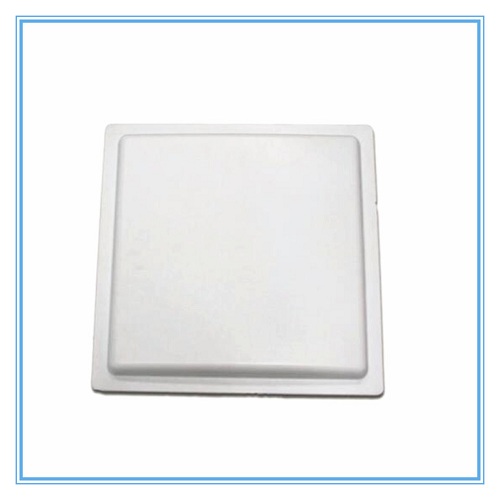
This is exactly where the 20M GPRS RS232 Integrated Long Range RFID Reader stands out.
Combining UHF RFID technology, long-range reading capability (up to 20 meters), and GPRS wireless communication, this device delivers a powerful, all-in-one solution for industries such as logistics, transportation, access control, and asset tracking.
In this comprehensive SEO guide, we’ll break down everything you need to know—from technical specifications and working principles to real-world applications and competitive comparisons.
What Is a 20M GPRS RS232 Integrated Long Range RFID Reader?
A 20M GPRS RS232 Integrated RFID Reader is a UHF RFID device designed to:
-
Read RFID tags at distances up to 20 meters
-
Communicate with external systems via RS232 interface
-
Transmit data remotely using GPRS (cellular network)
Unlike traditional RFID readers, this device integrates three core technologies into one unit:
-
Long-range UHF RFID reading
-
Serial communication (RS232)
-
Wireless data transmission (GPRS)
This makes it ideal for remote monitoring and real-time tracking systems.
Feature
- Long-range reader, 232, Wiegand, GPRS coexistence of the three data output.
- Can add low-temperature treatment, to -40 degrees environment, industrial 6000V lightning.
- Free warranty for two years, has done CE, FCC certification.
- The device encryption, authorization card, anti-copy.
- Clip code installed pole diameter of not more than 6CM.
Application
- Transportation vehicle management: Monitor and manage the transportation of vehicle and container.
- Custom management: custom clearance and transit of material.
- Logistic management: manage the flow of commodity, mail and package.
- Manufacturing sequence: monitor parts during the whole productive process.
- Device management: monitor the flow of device.
| Item No. | |
| DO-8290W | RS232,WIFI,Wiegand |
| DO-8290B | RS232,TCP/IP,Wiegand |
| DO-8290A | RS232,RS485,Wiegand |
| DO-8290G | RS232,GPRS,Wiegand |
| Performance Parameters | |
| Working Frequency | 902~928 MHz or 865~868MHz |
| Protocol | ISO18000-6C(EPC C1 GEN2) |
| RF power | 0~30dBm(Adjustable) |
| Software & SDK | DEMO and C#, VC, VB, Java, DELPH, etc., |
| Encryption | Can be directly encrypted, copy prevention. |
| Reading range | stable reading range 25M(Depends on tag & environment) |
| Industrial lightning protection | 6000V |
| Low temperature protection | Northeast, Northwest extremely cold region, low temperature protection |
| Frequency modulation | hopping or fixed frequency |
| Input/output port | Two-way relay output(customized), one-way trigger input |
| Antenna gain | 12dBi polarization |
| Working way | Buzzer |
| Power | 12V/3A Adaptor |
| Physical Parameters | |
| Item size | 450x450x50mm |
| Package size | 600x480x110mm |
| Net weight | 5KG |
| Shell material | ABS |
| Working temperature | -20℃~+65℃ |
| Storage temperature | -45℃~+95℃ |

Core Features and Advantages
1. Long-Range Reading (Up to 20 Meters)
This reader supports high-performance UHF RFID scanning, enabling:
-
Vehicle identification at gates
-
Container tracking in yards
-
Pallet monitoring in warehouses
It reduces the need for multiple readers, lowering infrastructure costs.
2. Built-in GPRS Communication
With integrated GPRS:
-
No need for wired Ethernet
-
Real-time data transmission over cellular networks
-
Ideal for remote or outdoor environments
This feature is especially valuable in areas where Wi-Fi or LAN is unavailable.
3. RS232 Interface for Industrial Integration
The RS232 interface ensures:
-
Stable communication with PLCs and controllers
-
Easy integration with legacy systems
-
Reliable data exchange
4. All-in-One Design
Traditional systems require:
-
RFID reader
-
Communication module
-
Controller
This device integrates all three, offering:
-
Easier installation
-
Lower system complexity
-
Reduced maintenance
5. High-Speed Multi-Tag Reading
Supports anti-collision algorithms:
-
Reads multiple tags simultaneously
-
Ideal for high-throughput environments
6. Durable Industrial Design
-
Weather-resistant housing
-
Suitable for outdoor deployment
-
Stable performance in harsh conditions
How the System Works
Step-by-Step Workflow
-
RFID tags enter the reading zone
-
Reader emits UHF signals
-
Tags respond with stored data
-
Reader processes the data
-
Data is sent via RS232 or GPRS
-
Cloud/server receives real-time updates
This creates a fully automated identification and tracking system.
Application Scenarios
1. Vehicle Access Control
-
Parking systems
-
Toll stations
-
Fleet management
Vehicles equipped with RFID tags can be identified automatically without stopping.
2. Logistics & Transportation
-
Container tracking
-
Cargo monitoring
-
Yard management
3. Smart Warehousing
-
Pallet tracking
-
Inventory automation
-
Dock door management
4. Industrial Automation
-
Production line tracking
-
Asset monitoring
-
Equipment identification
5. Remote Infrastructure Monitoring
Perfect for:
-
Oil & gas sites
-
Mining operations
-
Remote logistics hubs
Advantages Over Traditional RFID Readers
| Feature | Integrated Reader | Traditional Reader |
|---|---|---|
| Communication | GPRS + RS232 | RS232 only |
| Installation | Simple | Complex |
| Remote Access | Yes | No |
| Cost | Lower (total system) | Higher |
| Flexibility | High | Medium |
Comparison with Competing Technologies
1. Integrated RFID Reader vs Fixed UHF Reader
| Feature | Integrated (GPRS) | Fixed Reader |
|---|---|---|
| Connectivity | Wireless | Wired |
| Deployment | Flexible | Limited |
| Use Case | Remote areas | Indoor systems |
2. GPRS RFID vs Wi-Fi RFID
| Feature | GPRS | Wi-Fi |
|---|---|---|
| Coverage | Wide (cellular) | Limited |
| Stability | High | Depends on network |
| Setup | Easy | Requires infrastructure |
3. UHF RFID vs HF/NFC
| Feature | UHF RFID | HF/NFC |
|---|---|---|
| Range | Up to 20m | <1m |
| Speed | High | Medium |
| Use Case | Logistics | Payments, access |
Installation Guide
Step 1: Site Survey
-
Identify reading zones
-
Check signal interference
Step 2: Mounting
-
Install at optimal height (2–5 meters)
-
Align antenna direction
Step 3: Power Connection
-
Connect DC power supply
Step 4: Communication Setup
-
Configure RS232 parameters
-
Insert SIM card for GPRS
Step 5: System Integration
-
Connect to server or cloud platform
-
Test data transmission
Maintenance Tips
-
Regularly clean antenna surface
-
Check cable connections
-
Monitor signal strength
-
Update firmware when needed
Customization Options
Manufacturers can provide:
-
Custom frequency bands
-
External antenna support
-
OEM branding
-
Protocol customization
-
Software API integration
ROI and Business Benefits
Key Benefits
-
Reduced manual labor
-
Real-time tracking
-
Improved accuracy
-
Faster operations
ROI Example
A logistics company can achieve:
-
30% efficiency improvement
-
50% reduction in tracking errors
-
Payback within 12–18 months
Limitations
1. GPRS Speed
-
Slower than 4G/5G
2. Signal Interference
-
Metal and liquids may affect performance
3. Initial Setup
-
Requires configuration expertise
Future Trends
1. 4G/5G Integration
Replacing GPRS for faster data transmission.
2. IoT Platform Integration
-
Cloud dashboards
-
Real-time analytics
3. AI-Based Tracking
-
Predictive logistics
-
Smart automation
How to Choose the Right Supplier
Key Considerations
-
Experience in RFID systems
-
Customization capability
-
Global certifications
-
Technical support
Conclusion
The 20M GPRS RS232 Integrated Long Range RFID Reader is a powerful, flexible, and cost-effective solution for modern tracking and automation systems.
It combines:
-
Long-range UHF RFID performance
-
Reliable RS232 communication
-
Wireless GPRS connectivity
Compared to traditional RFID readers and competing technologies, it offers:
-
Greater flexibility
-
Easier deployment
-
Real-time remote data transmission
For businesses aiming to build scalable, intelligent, and connected systems, this integrated reader is not just a device—it’s a gateway to smarter operations.
And if your assets could talk, this reader would be the one giving them a very loud, 20-meter voice