August 13, 2026
Product Overview
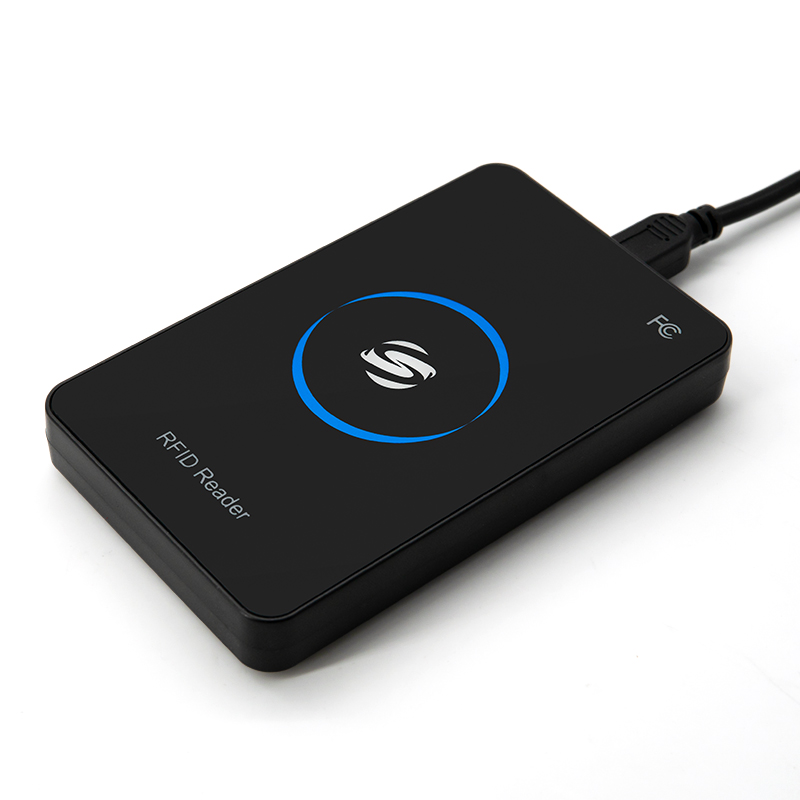
Operating at 13.56 MHz, this contactless RFID reader writer uses the ISO/IEC 15693 protocol to communicate with compatible high-frequency RFID cards and tags. Unlike low-frequency 125 kHz RFID readers, HF RFID technology provides a different communication architecture and is commonly selected for applications that require contactless data exchange and reusable smart-card functionality.
The device is designed as a USB-connected reader writer, making it suitable for desktop computers, workstations, and other systems where a simple wired connection is preferred. Its compact 104 × 68 × 10 mm housing allows it to be installed or positioned conveniently at an enrollment desk, service counter, charging station, or equipment interface.
The reader can be used not only for reading card identification data but also for writing supported RFID data when the card and application permit write operations.
Specifications
| Item | Parameter |
| Frequency | 13.56mhz |
| Protocol | ISO/IEC15693 |
| Support Cards | I Code 2/TI2048 |
| Working Voltage | DC +5V(Allow user to customize 3.3V) |
| Working Current | 100mA |
| Communication Format | USB |
| Communication Speed | 106Kbit/s |
| Read range | 0mm-100mm (related to the card or the environment) |
| Store Temperature | -20℃ ~ +80℃ |
| Working Temperature | 0℃ ~ +95℃ |
| Size | 104mm×68mm×10mm |
| Size(Package) | 128mm×87mm×32mm |
| Weight | 120G |
| Development | Linux Jave、Linux QT、Delphi、VC6.0、C#、VB |
Key Features
- 13.56 MHz HF RFID operation for compatible high-frequency contactless cards.
- ISO/IEC 15693 protocol for communication with supported ISO 15693 RFID products.
- I Code 2 and TI2048 support according to the current product specification.
- USB interface for straightforward connection to a host computer.
- 106 Kbit/s communication speed for host communication.
- Up to 100 mm read range, depending on the card, antenna, and surrounding environment.
- 5 V DC operating voltage, with 3.3 V customization available.
- Compact 104 × 68 × 10 mm design for desktop and embedded applications.
- Multi-platform development support for several programming environments.
- Demo.exe testing software for product evaluation and application development.
- Suitable for member management, charging systems, identification, and other RFID applications.
Device instruction
Provided multi-platform routines for secondary development library, and there is a PC software we provided for testing, the name of software is “Demo.exe”.
Application
Member management systems, charging systems and so on.


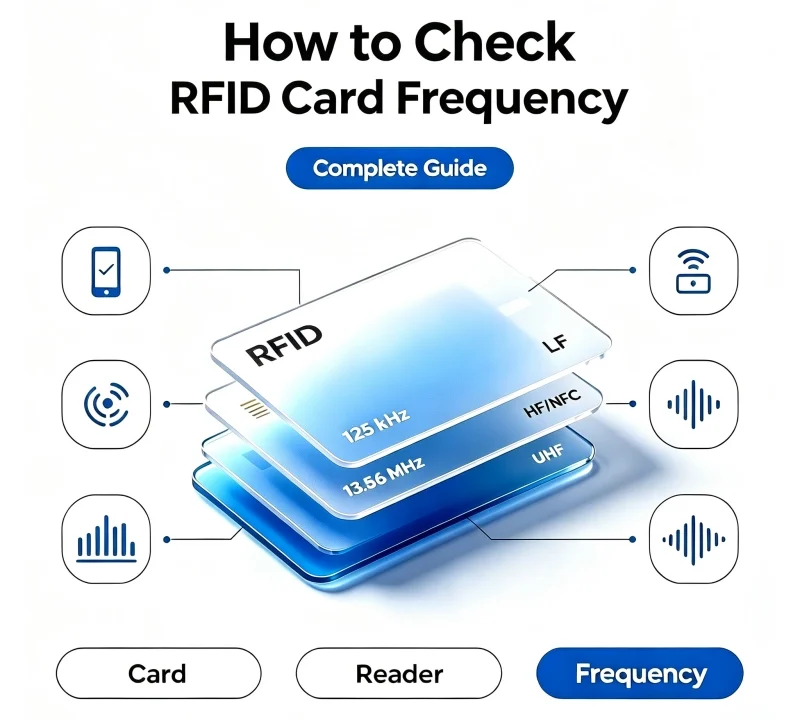
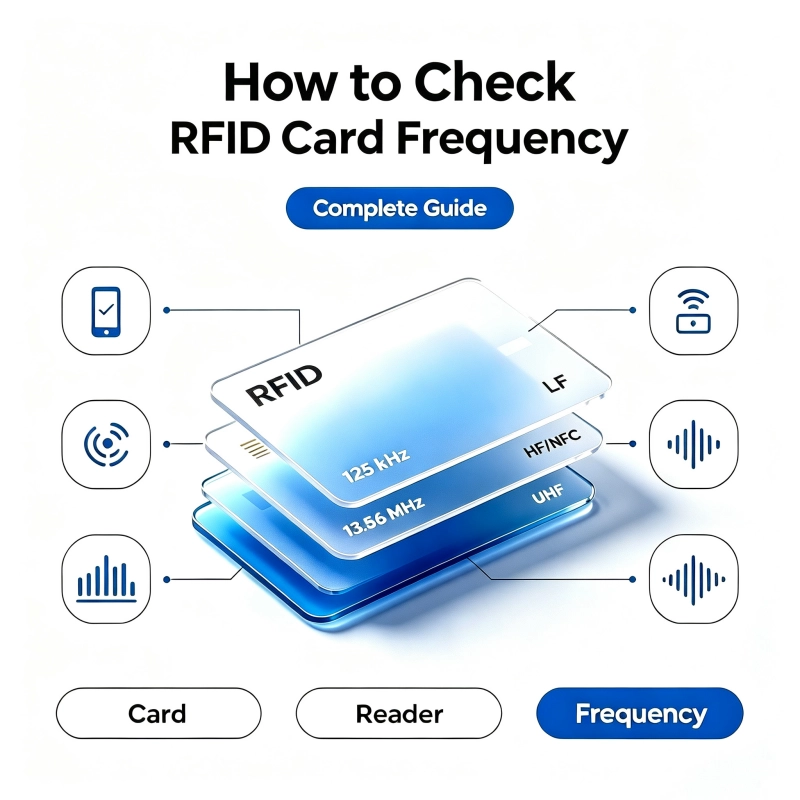
ISO 15693 RFID Reader vs. Other RFID Technologies
Selecting an RFID reader starts with identifying the frequency and card protocol used by the existing RFID system. The following comparison provides a general guide.
| RFID Technology | Typical Frequency | Common Protocol | Typical Use | Compatibility with This Reader |
|---|---|---|---|---|
| LF RFID | 125 kHz | EM4100 and similar | Basic access control, identification | No |
| HF RFID | 13.56 MHz | ISO/IEC 15693 | Asset identification, smart cards, member systems | Yes, for supported cards |
| HF RFID | 13.56 MHz | ISO/IEC 14443 | MIFARE, NFC and contactless smart cards | Not specified for this model |
| NFC | 13.56 MHz | ISO/IEC 18092 / NFC Forum | Smartphones, NFC tags, contactless applications | Not specified for this model |
| UHF RFID | 860–960 MHz | EPC Gen2 / ISO 18000-63 | Long-range inventory and logistics | No |
The table highlights an important point: 13.56 MHz does not automatically mean that every 13.56 MHz RFID card is compatible. The reader must support the specific communication protocol and card technology.
ISO 15693 vs. MIFARE: What Is the Difference?
The term “MIFARE” is often used broadly in the RFID industry, but MIFARE products do not all use the same protocol as ISO 15693 products.
ISO/IEC 15693 is a high-frequency RFID standard designed for contactless vicinity applications. I Code products are commonly associated with the ISO 15693 technology family.
MIFARE products, on the other hand, include several product families based on different technologies. Many common MIFARE cards use ISO/IEC 14443 Type A rather than ISO/IEC 15693.
Therefore, the product title may contain the term “MIFARE,” but buyers should verify the exact card IC and protocol before placing an order. This particular specification identifies ISO/IEC 15693 as the communication protocol and I Code 2/TI2048 as supported cards.
For projects using MIFARE Classic, MIFARE DESFire, or other ISO 14443 products, a reader specifically supporting the required protocol should be selected.
Supported Card Technology
The current specification lists I Code 2 and TI2048 as the supported card types.
When selecting RFID cards for a project, compatibility should be evaluated at the IC and protocol level rather than only by the operating frequency. Two RFID products may both operate at 13.56 MHz while using different communication standards.
For this reason, project engineers should confirm the following before deployment:
- RFID card IC or product family.
- Communication protocol.
- Required read and write commands.
- Memory requirements.
- Required reading distance.
- Host communication requirements.
- Software development environment.
This approach reduces compatibility problems during system integration.
How the ISO 15693 RFID Reader Writer Works
The reader communicates with a compatible passive RFID card through electromagnetic coupling.
First, the reader generates a 13.56 MHz RF field. When a compatible passive RFID card enters the operating field, the card receives energy from the reader and activates its RFID IC.
The reader and card then exchange information according to the supported ISO/IEC 15693 communication protocol. Depending on the application and card capabilities, the host software can process identification information or perform supported read/write operations.
The reader transfers information to the connected computer through USB. Application software can then use the RFID data for identification, membership management, charging, database operations, or other business functions.
Because the card does not require its own battery for normal passive operation, RFID cards can remain thin, lightweight, and suitable for repeated contactless use.
USB Interface and Software Development
USB communication makes the reader suitable for PC-based RFID applications where the reader needs to exchange data with application software.
The manufacturer provides multi-platform routines for secondary development, together with Demo.exe for PC testing. Supported development environments listed in the product specification include:
- Linux Java
- Linux QT
- Delphi
- VC6.0
- C#
- Visual Basic
This range of development environments gives system integrators flexibility when connecting the RFID reader to existing software.
A typical integration process includes connecting the reader to the host computer, installing or configuring the required software, testing card communication with Demo.exe, and then integrating the reader functions into the customer’s application.
Before mass deployment, developers should test the exact RFID cards, operating system, USB environment, and application workflow that will be used in the final system.
Applications
Member Management Systems
The reader can be used to identify RFID cards in membership management systems. A user can present a compatible contactless card to the reader, allowing the application to retrieve the card information and associate it with a customer record.
Potential applications include clubs, membership organizations, service centers, and other environments where contactless identification is required.
Charging and Payment-Related Systems
The original product specification lists charging systems as an application. The reader can provide the RFID communication interface required to identify compatible cards and exchange supported data with host software.
The actual payment, account balance, authorization, and transaction functions depend on the application software and card technology used in the complete system.
Identification and Data Collection
The reader can be integrated into desktop identification stations where operators need to capture RFID card information quickly.
USB connectivity makes it practical for workstations, registration counters, service desks, and other locations where a computer is already available.
Access and Service Management
Compatible ISO 15693 cards can also be used as identification credentials in systems that require contactless card presentation. The reader can provide the card data to the host application, while authorization rules are handled by the customer’s software or access-control system.
Advantages of a USB ISO 15693 Reader Writer
| Advantage | Benefit |
|---|---|
| 13.56 MHz operation | Supports compatible HF RFID applications |
| ISO/IEC 15693 | Provides standardized communication with supported cards |
| USB connection | Easy connection to computers and development systems |
| Compact enclosure | Convenient for desktop installation |
| Read/write capability | Supports applications requiring RFID data exchange |
| Multi-platform development | Easier integration with different software environments |
| Demo software | Helps developers test the reader before integration |
| 5 V operation | Simple power requirements |
For applications that already use compatible ISO 15693 cards, a dedicated reader can simplify system architecture and reduce unnecessary protocol conversion.
Read Range and Installation Considerations
The specified read range is 0–100 mm, but this should not be interpreted as a guaranteed 100 mm distance for every card.
RFID performance depends on multiple factors, including the card antenna, reader antenna, card orientation, surrounding metal, electromagnetic interference, mounting structure, and operating environment.
For reliable deployment, the actual card and reader combination should be tested in the intended installation position.
When the reader is installed near metal surfaces or other electronic equipment, system integrators should conduct practical RF testing before finalizing the enclosure and mounting structure.
How to Choose the Right RFID Reader
The correct reader should be selected according to the RFID card technology rather than the reader’s frequency alone.
Use the following selection process:
| Requirement | Recommended Check |
|---|---|
| Existing RFID card | Identify the exact IC and protocol |
| 13.56 MHz card | Confirm whether it is ISO 15693 or another HF technology |
| I Code card | Verify the specific I Code product generation |
| Computer connection | Check USB compatibility |
| Application software | Confirm available SDK or development support |
| Read distance | Test the actual card and installation environment |
| Read/write operation | Confirm the required commands and card permissions |
| Large-scale deployment | Request samples and perform integration testing |
If the project uses ISO 15693-compatible I Code 2 or TI2048 cards, this reader can be considered as a suitable option based on the published specifications.
If the project uses MIFARE Classic, MIFARE DESFire, NFC, or ISO 14443 cards, the required protocol should be confirmed before selecting this model.
Why Choose DO RFID Reader?
DO RFID Reader provides RFID reader and writer solutions covering different frequencies, protocols, interfaces, and application requirements.
The product range includes HF RFID readers, NFC readers, ISO 15693 readers, MIFARE-related products, LF RFID readers, UHF RFID equipment, and customized RFID solutions. The company also provides RFID cards, reader modules, desktop readers, and products designed for integration into access control, identification, inventory, and management systems.
For OEM, ODM, and project-based requirements, customers can discuss the required RFID protocol, card type, communication interface, enclosure, operating voltage, software integration, and other specifications with the manufacturer.
Frequently Asked Questions
Is this an ISO 15693 RFID reader?
Yes. The published specification identifies ISO/IEC 15693 as the communication protocol and 13.56 MHz as the operating frequency.
What cards does this reader support?
The published specification lists I Code 2 and TI2048 as supported cards. For other ISO 15693 cards, compatibility should be confirmed before deployment.
Can it read MIFARE cards?
The product title includes MIFARE, but the detailed specification identifies ISO/IEC 15693 and I Code 2/TI2048. Since different MIFARE families use different protocols, compatibility with a particular MIFARE card should be confirmed by its exact IC and protocol.
What is the maximum reading distance?
The published read range is 0–100 mm. Actual performance depends on the RFID card, antenna, orientation, and surrounding environment.
Does the reader use USB?
Yes. The communication interface is USB, with a listed communication speed of 106 Kbit/s.
What programming languages are supported?
The manufacturer lists Linux Java, Linux QT, Delphi, VC6.0, C#, and Visual Basic among the supported development environments.
Is software provided for testing?
Yes. The manufacturer states that multi-platform secondary-development routines are provided and that a PC testing program called Demo.exe is available.
Can the operating voltage be customized?
The standard working voltage is DC 5 V. The manufacturer states that 3.3 V customization is available.
Conclusion
The ISO 15693 RFID MIFARE contactless card reader writer is a compact 13.56 MHz USB RFID solution designed for compatible ISO/IEC 15693 cards and tags. With support for I Code 2 and TI2048, a specified reading distance of up to 100 mm, USB communication, and multi-platform development support, it is suitable for applications such as member management, charging systems, identification, and contactless data collection.
The most important selection consideration is protocol compatibility. Although RFID products operating at 13.56 MHz may look similar, ISO 15693, ISO 14443, MIFARE, and NFC technologies are not automatically interchangeable. Before deployment, users should confirm the exact card IC, protocol, required read/write functions, and operating environment.
For projects using compatible ISO 15693 cards, this USB RFID reader writer provides a practical starting point for testing, software integration, and system development. For OEM or customized projects, the reader can also be evaluated according to the required voltage, software environment, card technology, and application scenario.
Feel free to leave us a message anytime.