
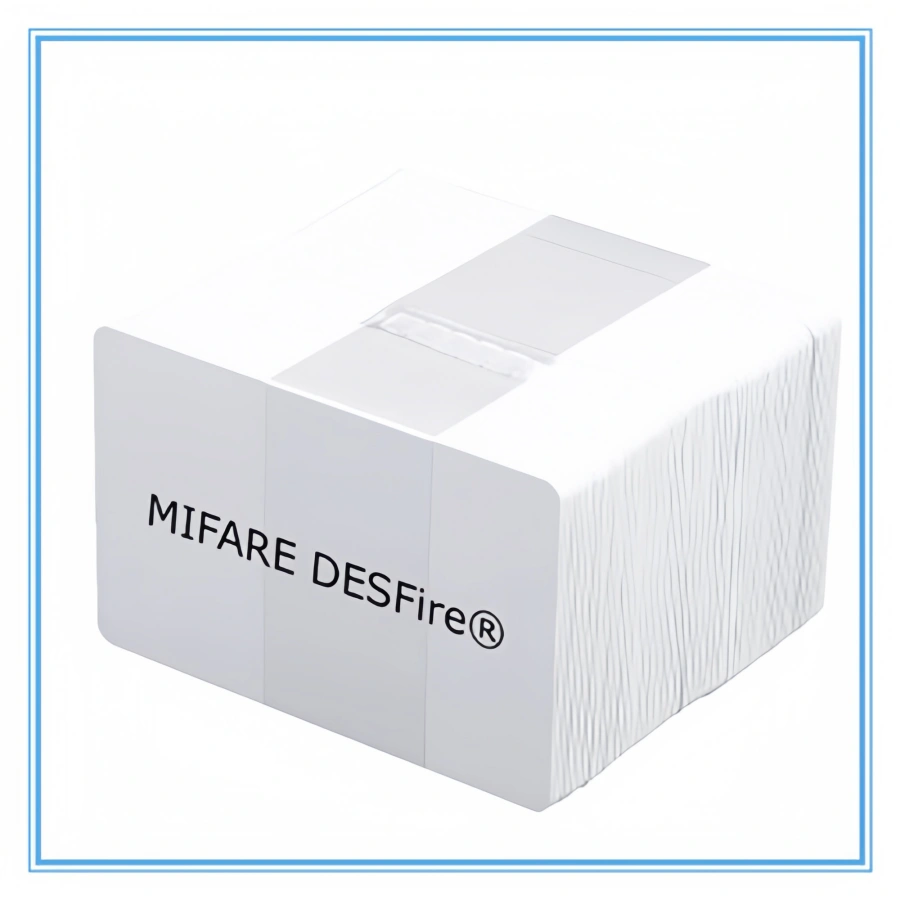
Secure Contactless Smart Card for Advanced Access Control and Smart City Applications
Introduction: Why High-Security Contactless Cards Matter
As cities, enterprises, and institutions digitize physical access and identity systems, security has shifted from locks and keys to cryptography and credentials. A modern access card is no longer just a token—it is a secure computing platform that must protect sensitive data, support multiple applications, and remain reliable for years.
The NXP MIFARE DESFire EV1 2K card sits squarely in this reality.
Designed by NXP Semiconductors, DESFire EV1 is widely recognized as one of the most secure and flexible contactless smart card platforms available today. It is used globally in public transportation systems, enterprise access control, government IDs, campus cards, and smart city infrastructure.
This article provides a comprehensive SEO product introduction to the MIFARE DESFire EV1 2K card, covering its architecture, security model, memory structure, applications, advantages, and how it compares to other RFID and NFC card technologies.
What Is the NXP MIFARE DESFire EV1 2K Card?
The MIFARE DESFire EV1 2K card is a high-security contactless smart card operating at 13.56 MHz and compliant with ISO/IEC 14443 Type A standards.
Key characteristics:
Based on NXP DESFire EV1 IC
2 KB EEPROM memory
True multi-application support
Advanced AES and DES/3DES encryption
Designed for secure, scalable systems
Unlike simple RFID cards that only store an ID, DESFire EV1 cards function as secure microcontrollers with file systems, access rights, and cryptographic authentication.
Understanding “DESFire”: What the Name Really Means
The name DESFire is not marketing poetry—it describes the core design philosophy:
DES: Data Encryption Standard (and later AES support)
Fire: Fast, flexible, and secure
DESFire cards are built for:
High transaction speed
High security
Complex application logic
The EV1 designation refers to “Evolution 1,” a major upgrade over earlier DESFire versions, improving performance, security options, and reliability.
Memory Structure: What Does “2K” Mean in Practice?
The 2K in DESFire EV1 2K refers to 2 kilobytes (2048 bytes) of EEPROM memory available for applications and data storage.
How the Memory Is Organized
DESFire EV1 memory is structured hierarchically:
Master Application
Multiple user applications
Files within each application
Each application can contain:
Standard data files
Backup files
Value files
Record files
This structure allows multiple independent services to coexist securely on a single card.
Why 2K Memory Is Often the Sweet Spot
While DESFire EV1 is available in 2K, 4K, and 8K variants, the 2K version is widely used because it:
Meets most access control and transit needs
Offers lower cost
Reduces unnecessary complexity
Is easier to manage at scale
For many enterprise and municipal projects, 2K memory provides the best balance between functionality and cost efficiency.
Security Architecture: Where DESFire EV1 Truly Excels
Security is the primary reason organizations choose DESFire EV1 over simpler cards.
Supported Cryptographic Algorithms
DESFire EV1 supports:
DES
2K3DES
3K3DES
AES-128
AES-128 is the industry standard for modern secure systems and is widely mandated in:
Government projects
Financial systems
Smart city deployments
Mutual Authentication
DESFire EV1 uses mutual authentication, meaning:
The card authenticates the reader
The reader authenticates the card
This prevents:
Unauthorized readers
Card cloning
Replay attacks
Secure Messaging
After authentication, DESFire EV1 supports:
Encrypted communication
Message authentication codes (MAC)
Protection against eavesdropping and data manipulation
Security is not optional—it is baked into every transaction.
Multi-Application Capability: One Card, Many Services
One of the most powerful features of the MIFARE DESFire EV1 2K card is true multi-application support.
Each application:
Has its own cryptographic keys
Is isolated from other applications
Can be managed by different service providers
Real-World Example
A single DESFire EV1 card can simultaneously support:
Office door access
Public transport ticketing
Parking access
Cashless vending
Library services
Each service remains secure and independent.
Compliance and Standards
The DESFire EV1 card is compliant with:
ISO/IEC 14443 A
ISO/IEC 7816-4 (file system concepts)
Common Criteria EAL4+ (chip level)
These standards make it suitable for:
Government tenders
Large infrastructure projects
International deployments
Compliance reduces risk and simplifies certification.
Physical Card Specifications
Typical DESFire EV1 2K cards are available in:
PVC
PET
ABS
Composite materials
Standard form factors include:
CR80 (credit card size)
Key fobs
Wristbands
Stickers (with limitations)
Cards can be:
Printed
Laser engraved
Serialized
Embedded with holograms or UV features
Operating Frequency and Communication Performance
Frequency: 13.56 MHz
Typical read range: 2–10 cm (depending on antenna and reader)
Data rate: Up to 848 kbps
Short read range is a security feature, not a limitation. It reduces the risk of unauthorized interception.
Typical Applications of MIFARE DESFire EV1 2K Cards
Access Control Systems
DESFire EV1 is widely used in:
Corporate offices
Data centers
Hospitals
Universities
It supports:
Role-based access
Time-based permissions
Secure credential updates
Public Transportation and Ticketing
Many transit authorities choose DESFire EV1 because it:
Handles fast transactions
Supports fare structures
Prevents ticket cloning
Works with offline validation
The 2K version is sufficient for most transit use cases.
Campus and Enterprise ID Cards
Universities and large enterprises use DESFire EV1 cards for:
Building access
Attendance tracking
Cashless payments
Library services
One card replaces multiple credentials.
Smart City and Government Projects
DESFire EV1 is suitable for:
Citizen cards
Municipal access systems
Secure identification programs
Its security model aligns with public-sector requirements.
DESFire EV1 vs MIFARE Classic
| Feature | DESFire EV1 2K | MIFARE Classic |
|---|---|---|
| Security | AES / 3DES | Proprietary (broken) |
| Memory structure | File system | Sector/block |
| Multi-application | Yes | Limited |
| Compliance | ISO + CC | Limited |
| Recommended for new projects | Yes | No |
MIFARE Classic is considered obsolete for secure applications.
DESFire EV1 vs DESFire EV2 / EV3
DESFire EV1 remains popular because:
It is mature and stable
Broadly supported by readers and SDKs
Lower cost than newer generations
EV2 and EV3 add advanced features, but EV1 2K still covers most mainstream requirements effectively.
Personalization and Card Issuance
DESFire EV1 cards support:
Secure key loading
Application pre-configuration
UID or random ID modes
On-site or centralized personalization
Proper personalization is critical to system security.
Reader and Infrastructure Compatibility
DESFire EV1 cards work with:
NFC readers
Access control readers
Turnstiles
POS terminals
Mobile NFC devices (with proper software)
Most modern readers support DESFire EV1 by default.
Data Privacy and Compliance
DESFire EV1 supports:
Random UID (to prevent tracking)
Encrypted data storage
Secure key management
This helps organizations comply with:
GDPR
Data protection regulations
Internal security policies
Cost Considerations and ROI
While DESFire EV1 cards cost more than low-security RFID cards, they deliver:
Longer lifecycle
Lower fraud risk
Reduced system upgrades
Better scalability
In most projects, total cost of ownership is lower, not higher.
Common Industry Pain Points Solved
DESFire EV1 2K cards solve:
Card cloning
Credential sharing
System fragmentation
Security audits failures
Future scalability limitations
They are a long-term infrastructure choice.
Why Choose NXP Original DESFire EV1 Chips
Using original NXP chips ensures:
Guaranteed security performance
Full standards compliance
Long-term supply stability
Vendor and system certification support
Cloned or compatible chips undermine system security.
Future-Proofing Your Access and Identity Systems
DESFire EV1 is designed to:
Support system upgrades
Enable new applications
Integrate with mobile NFC
Scale across locations and services
It is not just a card—it is a platform.
Conclusion: MIFARE DESFire EV1 2K Is a Secure Foundation, Not a Compromise
The NXP MIFARE DESFire EV1 2K card represents a mature, proven, and highly secure solution for modern contactless systems. It balances strong cryptography, flexible memory structure, and real-world practicality, making it ideal for access control, transportation, and smart infrastructure projects.
In environments where security failures are expensive and trust is non-negotiable, DESFire EV1 2K is not overkill—it is responsible engineering.
Choosing DESFire EV1 means choosing long-term stability over short-term savings, and in secure systems, that choice pays for itself many times over.