September 14, 2026
In today’s connected world, security is not a luxury. It is infrastructure. From metro gates to corporate access doors, from campus IDs to cashless payment systems, contactless smart cards have quietly become the nervous system of modern cities.
Among these technologies, the MIFARE DESFire EV2 4K Card stands out as a high-security, multi-application contactless smart card designed for demanding environments. Built on the ISO/IEC 14443 Type A standard and operating at 13.56 MHz, it delivers advanced encryption, flexible memory structure, and long-term system scalability.
This article provides a comprehensive analysis of the MIFARE DESFire EV2 4K Card — including technical specifications, security architecture, application scenarios, industry pain points it solves, and why it remains one of the most trusted RFID smart card technologies worldwide.
1. What Is the MIFARE DESFire EV2 4K Card?
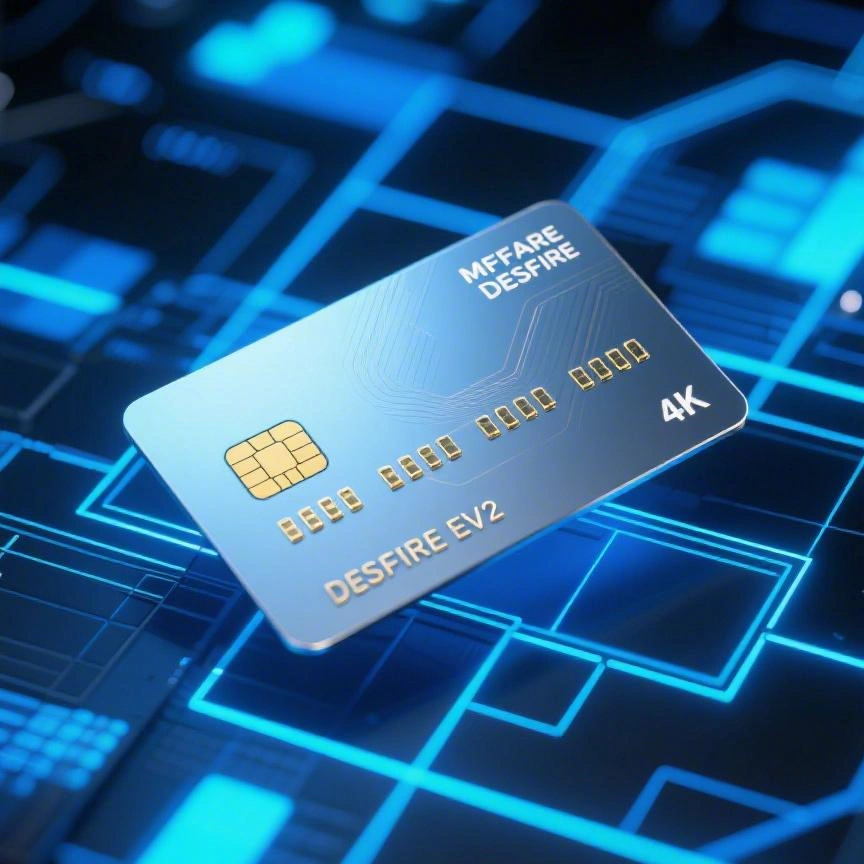
The MIFARE DESFire EV2 4K is a high-security contactless smart card IC developed for secure identification, transportation ticketing, access control, and cashless payment systems.
Let’s decode the name:
- MIFARE – A widely used family of contactless smart card technologies.
- DESFire – Refers to the cryptographic engine supporting DES, 3DES, and AES encryption.
- EV2 – “Evolution 2,” the second generation of enhanced security and performance.
- 4K – 4 kilobytes of EEPROM memory for secure data storage.
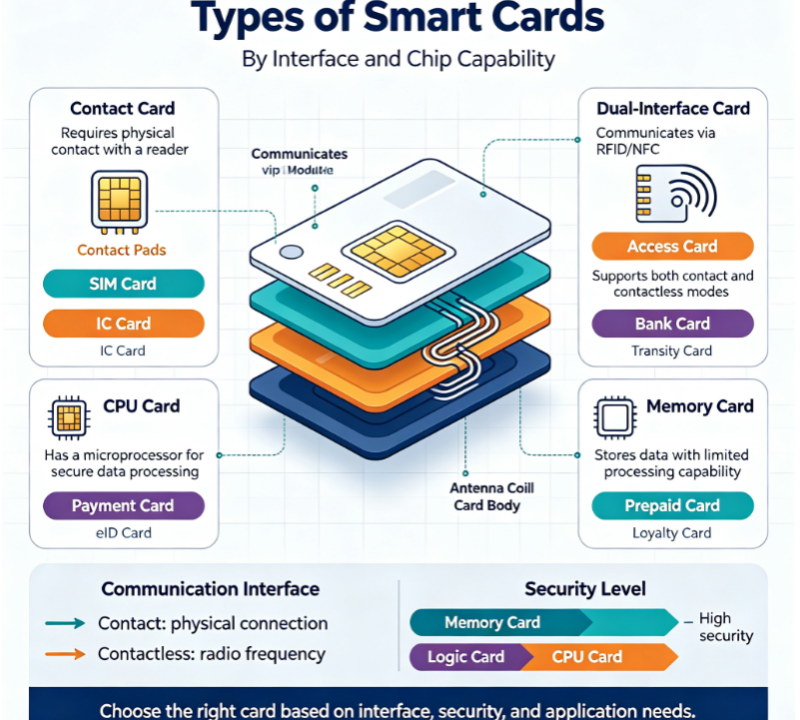
Unlike basic RFID cards that only store a UID (unique identifier), DESFire EV2 is a true microcontroller-based smart card. It supports complex data structures, multiple applications on one card, and mutual authentication with encrypted communication.
In simple terms: it is not just a card. It is a miniature secure computer in your pocket.
2. Technical Specifications of MIFARE DESFire EV2 4K
Below is a detailed technical specification table for the 4K version:
| Parameter | Specification |
|---|---|
| Operating Frequency | 13.56 MHz |
| Standard Compliance | ISO/IEC 14443 Type A |
| Memory Size | 4 KB EEPROM |
| Memory Structure | File-based, multi-application |
| Cryptographic Algorithms | DES, 2K3DES, 3K3DES, AES-128 |
| Communication Speed | Up to 848 kbps |
| UID Length | 7-byte unique identifier |
| Data Retention | 25 years |
| Write Endurance | 500,000 cycles |
| Operating Temperature | -25°C to +70°C |
| Anti-Collision | Yes |
| Mutual Authentication | Yes |
| Transaction Timer | Supported |
| Key Sets per Application | Up to 14 |
| Applications per Card | Up to 28 |
These specifications make it suitable for high-security, high-performance environments such as metro systems and government ID programs.
3. Security Architecture: Why DESFire EV2 Is Trusted
Security is where DESFire EV2 truly shines.
3.1 Advanced Encryption
The EV2 supports:
- DES
- 2K3DES
- 3K3DES
- AES-128
AES-128 is particularly important. It is a globally recognized encryption standard used in banking and government systems. Compared to older MIFARE Classic cards (which have known vulnerabilities), DESFire EV2 provides robust cryptographic protection against cloning and replay attacks.
3.2 Mutual Authentication
Both the card and the reader authenticate each other before data exchange. This prevents rogue readers from accessing card data and prevents cloned cards from fooling legitimate systems.
3.3 Encrypted Communication
All communication between card and reader can be encrypted. Even if someone intercepts the RF signal, the data remains unreadable.
3.4 Secure Key Management
Each application on the card can have its own key set. Different service providers (transport, parking, access control) can manage their own secure domain independently.
This multi-layered approach significantly reduces system-level risk.
Security is not about making hacking impossible. It is about making it economically irrational.
4. Memory Structure and Multi-Application Capability
The 4KB EEPROM memory is structured in a flexible file system.
The card supports:
- Multiple applications (up to 28)
- Multiple files per application
- Different file types:
- Standard data files
- Backup files
- Value files
- Linear record files
- Cyclic record files
This means a single card can function as:
- Employee access badge
- Cafeteria payment wallet
- Parking permit
- Public transportation pass
All on the same physical card, with separate encryption keys and access rights.
From a systems design perspective, this modularity is elegant. It allows centralized identity with decentralized control.
5. Key Application Scenarios
5.1 Public Transportation
The DESFire EV2 4K card is widely used in:
- Metro ticketing
- Bus passes
- Tram systems
- Ferry services
Its fast transaction speed (up to 848 kbps) ensures rapid gate throughput. In high-traffic metro systems, even 100 milliseconds of delay per passenger becomes a bottleneck. EV2 minimizes this risk.
5.2 Access Control Systems
In corporate buildings, government offices, and data centers, DESFire EV2 provides:
- Encrypted badge authentication
- Multi-door permission management
- Anti-cloning protection
Unlike low-cost RFID cards, it prevents UID-based duplication.
5.3 Campus Card Systems
Universities often integrate:
- Library access
- Dormitory entry
- Meal plans
- Printing services
- Attendance systems
All functions can coexist on a single DESFire EV2 4K card.
5.4 Cashless Payment
The value file feature allows secure electronic purse functionality. Stored-value transactions can be protected with transaction MACs (Message Authentication Codes).
5.5 Government ID Projects
Due to its high security and ISO compliance, DESFire EV2 is suitable for national ID or municipal service cards.
6. Industry Pain Points and How DESFire EV2 Solves Them
Pain Point 1: Card Cloning and Fraud
Older 125kHz or MIFARE Classic systems are vulnerable to cloning.
Solution: AES encryption and mutual authentication in DESFire EV2 significantly reduce cloning risk.
Pain Point 2: Multiple Cards per User
Employees often carry separate cards for access, cafeteria, and parking.
Solution: Multi-application architecture allows consolidation into one card.
Pain Point 3: Limited Scalability
Basic RFID cards cannot support expanding service ecosystems.
Solution: DESFire EV2’s file-based system allows adding applications without replacing the card.
Pain Point 4: Slow Transaction Speeds
In transportation systems, slow read speeds cause congestion.
Solution: High-speed communication up to 848 kbps ensures smooth flow.
Pain Point 5: Short Lifecycle
Frequent rewriting can degrade low-end cards.
Solution: 500,000 write cycles and 25-year data retention ensure long-term reliability.
7. Comparison: DESFire EV2 vs Other RFID Cards
DESFire EV2 vs MIFARE Classic
| Feature | DESFire EV2 | MIFARE Classic |
|---|---|---|
| Encryption | AES / 3DES | Proprietary Crypto-1 |
| Security Level | High | Low |
| Multi-Application | Yes | Limited |
| Government Usage | Yes | Rare |
| Cloning Resistance | Strong | Weak |
DESFire EV2 vs NTAG
NTAG is ideal for NFC marketing and basic data storage. DESFire EV2 is built for secure transactional systems.
They serve different ecosystems. Using NTAG for metro ticketing would be like locking a bank vault with a suitcase latch.
8. Card Form Factors and Customization Options
MIFARE DESFire EV2 4K IC can be embedded into:
- PVC cards
- PET cards
- ABS cards
- Key fobs
- Wristbands
- Sticker labels
Customization options include:
- CMYK offset printing
- UV printing
- Laser engraving
- UID printing
- Barcode printing
- Magnetic stripe
- Signature panel
- Hologram overlay
Cards can also comply with ISO 7810 ID-1 size (85.6 × 54 mm).
9. Integration and Compatibility
DESFire EV2 is compatible with:
- NFC-enabled Android devices (in card emulation scenarios)
- ISO 14443A compliant readers
- Many existing DESFire EV1 systems (with migration planning)
System integrators appreciate the backward compatibility and upgrade path from EV1 to EV2.
Migration planning should consider key diversification and firmware compatibility.
10. Lifecycle and Durability
A DESFire EV2 4K card typically offers:
- 500,000 write cycles
- 25-year data retention
- Resistance to bending and temperature variation
PVC card bodies can withstand daily wallet storage, minor flexing, and environmental exposure.
In large-scale deployments, durability directly reduces replacement costs.
11. Why 4K Memory Is Often the Optimal Choice
DESFire EV2 is available in 2K, 4K, and 8K variants.
The 4K version provides a balance between:
- Sufficient application storage
- Cost efficiency
- Performance stability
For most transport and access control projects, 4K is more than adequate.
8K is typically used in complex government or multi-operator transit systems.
12. Future-Proofing with DESFire EV2
Modern smart city systems demand:
- Secure authentication
- Interoperability
- Long lifecycle
- Scalable architecture
DESFire EV2 was designed with these requirements in mind.
It supports proximity check features that help mitigate relay attacks. It also supports transaction MAC functionality for secure offline transactions.
Security evolves. EV2 was built to anticipate that evolution.
13. Environmental and Compliance Considerations
DESFire EV2 cards comply with:
- ISO/IEC 14443
- ISO 7810
- RoHS requirements (card body dependent)
They are suitable for global markets and government tenders.
14. Conclusion: Is MIFARE DESFire EV2 4K the Right Choice?
If your project requires:
- High security
- Multi-application functionality
- Long lifecycle
- Fast transaction speed
- Scalable architecture
Then the MIFARE DESFire EV2 4K card is a strong candidate.
It bridges the gap between simple RFID identification and true secure smart card systems.
In infrastructure terms, it behaves less like a plastic card and more like a cryptographic node in a distributed network.
And that is the real story.
Because in the modern world, identity is not printed on plastic.
It is encrypted, authenticated, and negotiated at 13.56 million cycles per second.
Technology moves quietly. The gate opens. The transaction completes. The system scales.
Behind that simplicity sits a carefully engineered 4 kilobytes of organized certainty.
The MIFARE DESFire EV2 4K card is small. But in secure system design, small things often carry enormous responsibility.

Do RFID is a leading China-based manufacturer with over 15 years of experience. We specialize in customized RFID readers, tags, and cards, delivering high-quality, tailored solutions that meet your unique business needs and drive seamless, efficient identification.