
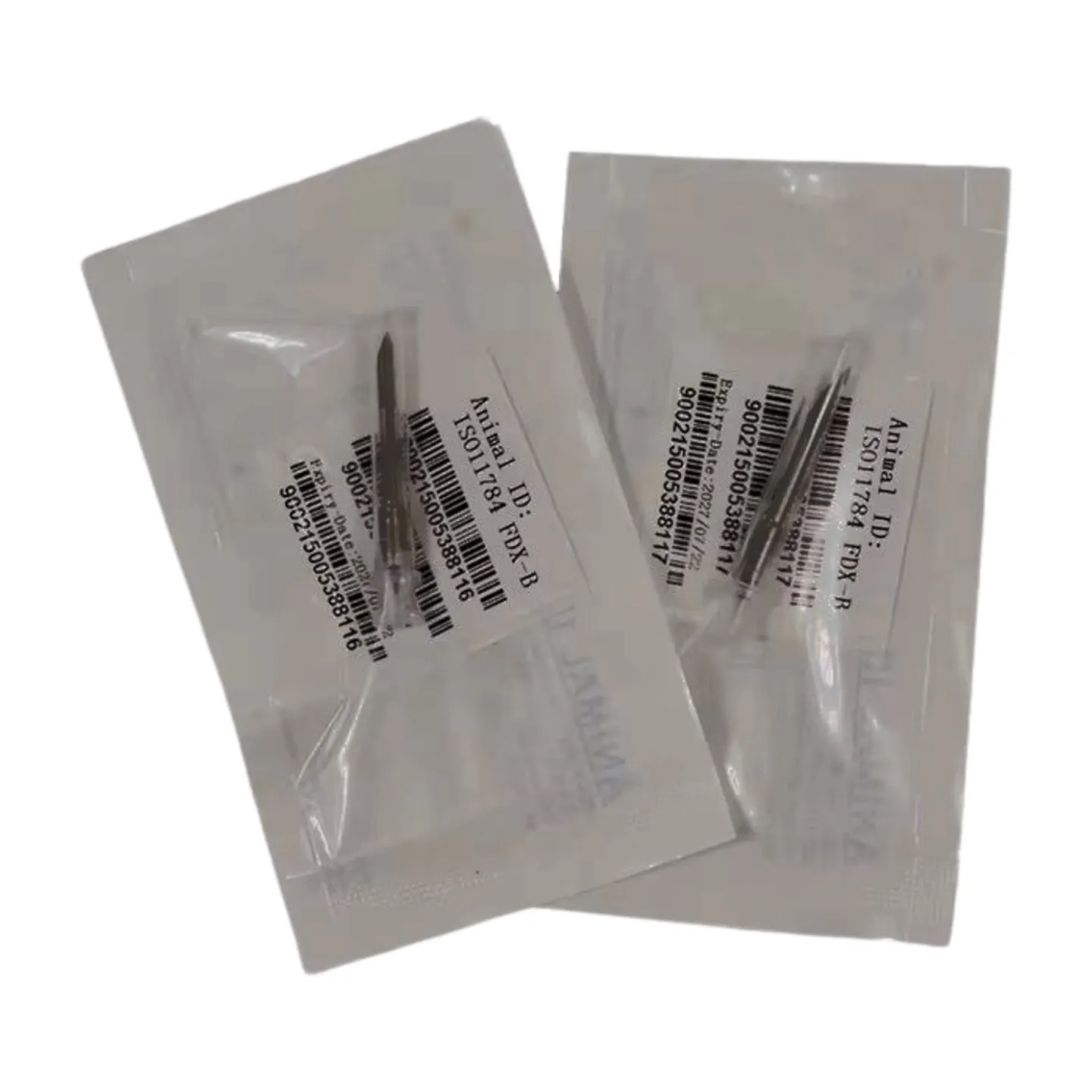
Implantable RFID Sensor Tag: 134.2kHz Animal Microchip for Pet & Livestock Identification (ISO 11784/11785 Compliant)
Product Overview
What Is This Implantable RFID Sensor Tag?
A tiny, biocompatible implantable RFID microchip designed exclusively for animal identification and tracking. Its core purpose is to solve problems of lost pets, unregulated livestock management, and fragmented veterinary patient records. Target users include pet owners, veterinary clinics, livestock farmers, animal shelters, and animal welfare organizations.
Core Value Proposition
Deliver permanent, tamper-proof animal identification with universal reader compatibility. Streamline animal management workflows across pet care, veterinary services, and livestock agriculture. Ensure compliance with global animal identification standards (ISO 11784/11785).
Key Features
Passive RFID Technology
Battery-free operation: Activated only by an RFID reader’s electromagnetic field, eliminating maintenance needs. Long lifespan: Durable enough to last the entire lifetime of the animal.
Unique UID Identification
Factory-programmed, non-alterable unique identification number (UID). Tamper-proof design prevents duplication or modification of animal ID data.
Global Standard Compliance
FDX-B full duplex technology: Aligns with the international standard for animal RFID identification. ISO 11784/11785 compliant: Ensures compatibility with all mainstream animal RFID readers worldwide.
Biocompatible Material
Medical-grade bioglass construction: Hypoallergenic, non-toxic, and fully compatible with animal tissue. Minimal implantation trauma: Tiny 1.4×8.5mm size reduces discomfort during and after implantation.
How the Product Works
FDX-B Full Duplex Identification Principle
Full-duplex communication: Transmits and receives data simultaneously with the reader, ensuring fast, accurate identification. ISO 11784 data structure: Standardized UID format for cross-system compatibility. ISO 11785 communication protocol: Defines the rules for data exchange between the microchip and reader.
Implantation & Reading Process
1. Simple implantation: Administered via a sterile syringe by a trained professional (veterinarian or livestock handler). 2. Reader activation: When an RFID reader is held near the implantation site, it emits an electromagnetic field to power the chip. 3. Data transmission: The chip sends its unique UID to the reader, which can be linked to animal records (medical history, ownership, vaccination status).
Applications
Pet Identification
Permanent ID for dogs, cats, and exotic pets to prevent loss and facilitate quick reunions with owners. Integration with pet registration databases (local animal control, pet recovery services).
Veterinary Clinic Management
Streamline patient check-ins and medical record tracking. Automate vaccination and treatment history updates for accurate, efficient care.
Livestock Tracking
Large-scale herd management for cattle, sheep, pigs, and poultry. Compliance with agricultural regulations for animal traceability and food safety.
Technical Specifications
| Parameter | Details |
|---|---|
| Product Name | Animal RFID Microchip |
| Frequency | 134.2 kHz |
| Material | Medical-Grade Bioglass |
| Size | 1.4×8.5 mm |
| Compliance | ISO 11784/11785, FDX-B |
| Chip Model | EM4305 |
| Power Source | Passive (battery-free, reader-powered) |
Benefits for Users
For Pet Owners
Peace of mind: Permanent, unremovable ID reduces the risk of losing a pet permanently. Easy recovery: Linked to global pet databases for quick identification if the pet is found.
For Veterinary Clinics
Improved efficiency: Automate patient data access, reducing administrative time. Enhanced care accuracy: Ensure correct medical history is retrieved for each animal.
For Livestock Farmers
Efficient herd management: Track individual animals for breeding, health monitoring, and inventory control. Regulatory compliance: Meet national and international animal traceability requirements for agricultural exports.
Industry Use Cases
City Animal Shelter Pet Recovery Program
Use case: Local animal shelter implants microchips in all adopted pets, linking to a city-wide pet registry. 90% of lost pets with chips are reunited with owners within 48 hours.
Large-Scale Cattle Ranch Traceability System
Use case: A 5,000-head cattle ranch uses the microchips to track each animal’s birth date, breeding history, and health records, ensuring compliance with EU food safety regulations for beef exports.
24/7 Emergency Veterinary Clinic Patient Management
Use case: A 24-hour clinic uses the microchips to instantly access a pet’s medical history (allergies, previous treatments) when emergency patients are brought in, enabling faster, safer care.
Frequently Asked Questions (FAQs)
Is the microchip safe for animals?
Yes, it’s made of medical-grade bioglass, hypoallergenic, and approved for use in animals worldwide. Implantation is a quick, low-trauma procedure.
What readers are compatible with this microchip?
All ISO 11784/11785 compliant FDX-B RFID readers work with this product, including most mainstream veterinary and livestock readers.
How long does the microchip last?
The passive design means it has no battery and will last the entire lifetime of the animal.
Get Started with Our Implantable RFID Sensor Tag
Bulk Order Options
Custom pricing for large-volume orders (veterinary clinics, livestock farms, animal shelters).
Contact Our Sales Team
Reach out for product samples, technical support, or tailored solutions for your business needs. Phone: [XXX-XXXX-XXXX] | Email: [sales@yourcompany.com] | Live Chat: Available 9AM-5PM UTC.
===CONTENT===