
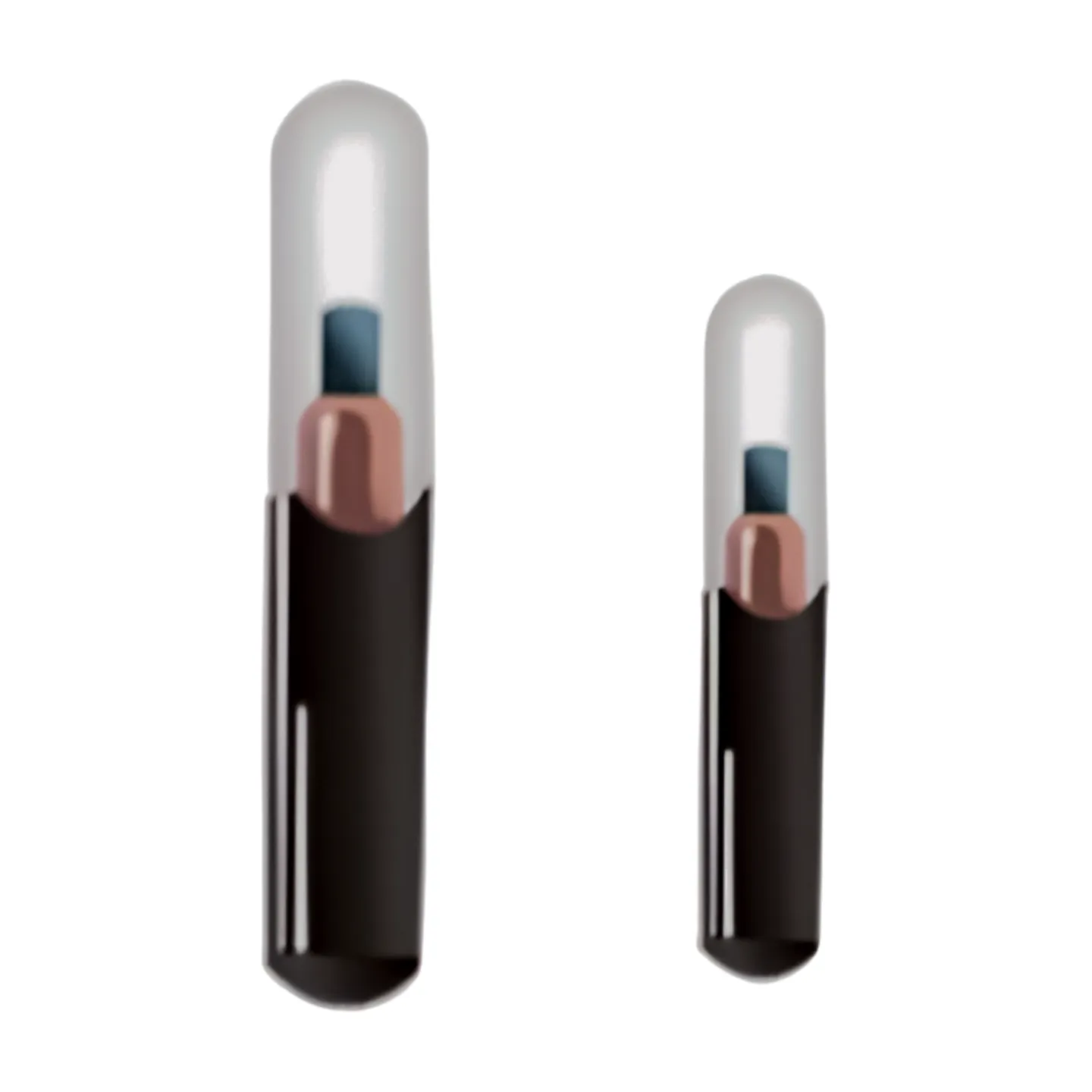
Low Frequency RFID Temperature Sensor Microchip for Animal Health Monitoring
This product is a specialized Low Frequency (134.2 kHz) RFID temperature tag that combines permanent electronic identification with precise body temperature sensing in a single, implantable device. Engineered for animal applications, it transforms standard identification into a proactive health management tool by enabling non-invasive fever detection and monitoring.
Product Overview: Dual-Function ID and Health Monitoring
This microchip serves a dual purpose: providing a tamper-proof unique identifier and acting as a reliable sensor for core body temperature. It is designed for subcutaneous implantation, offering a permanent solution for tracking and safeguarding animal wellness.
What is a Low Frequency RFID Temperature Tag?
A Low Frequency RFID temperature tag is a passive, implantable microchip that operates at 134.2 kHz. When scanned by a compatible reader, it transmits both its unique identification number and a real-time temperature reading, providing two critical data points instantly.
Beyond Identification: Proactive Animal Care
This device moves beyond simple identification to facilitate proactive animal care. Early detection of fever or abnormal temperature is a key indicator of infection, stress, or illness, allowing for timely intervention in pets, livestock, and wildlife.
Key Features and Benefits
- Dual Data Transmission: Streamlines workflow by delivering the animal’s unique ID and current body temperature simultaneously with one scan.
- Global Standard Compliance: Adheres to ISO 11784/11785 FDX-B standards, ensuring reliable performance with readers used globally in animal management.
- Passive and Reliable: Requires no internal battery; powered entirely by the reader’s signal for a maintenance-free operational lifespan.
- Biocompatible Bioglass Encapsulation: The Bioglass material is designed for safety, minimizing tissue reaction for secure, long-term implantation.
- Miniaturized Design: With dimensions of 1.4mm in diameter and 8.5mm in length, it is suitable for use with standard implant injectors across various animal sizes.
How It Works: Technology Explained
The microchip utilizes proven low-frequency RFID technology integrated with a precision temperature sensor. The process is initiated and powered entirely by a compatible reader.
The FDX-B Communication Protocol
Operating on the FDX-B (Full Duplex) protocol, the tag can continuously transmit its data stream, which includes the sensor reading, while simultaneously receiving power from the reader’s electromagnetic field. This allows for real-time data capture.
From Scan to Data
- A compatible 134.2 kHz FDX-B reader is brought near the implanted microchip.
- The reader’s RF field powers the microchip’s circuit.
- The integrated sensor measures the immediate ambient temperature, which correlates to body temperature.
- The chip transmits its pre-programmed Unique Identification (UID) number and the temperature data.
- The reader decodes this signal and displays the ID and temperature reading to the user.
Primary Applications and Use Cases
- Livestock Health Management: Monitor herd health for early signs of illness like bovine respiratory disease, enabling targeted treatment and improving overall welfare.
- Premium Pet Care: Veterinary clinics can perform rapid wellness checks, verifying identity and obtaining a core temperature reading without stress.
- Breeding and Research: Accurately track individual animal vitals and lineage in controlled breeding programs or scientific studies.
- Zoo and Wildlife Conservation: Monitor the health of valuable or endangered species with minimal handling and disruption.
Technical Specifications
| Parameter | Specification |
|---|---|
| Product Name | RFID Temperature Sensor Microchip |
| Frequency | 134.2 kHz (Low Frequency) |
| Communication Standard | ISO 11784 / 11785 FDX-B |
| Chip Function | Unique ID + Temperature Reading |
| Encapsulation Material | Biocompatible Bioglass |
| Dimensions | Ø1.4 mm × 8.5 mm |
| Operating Principle | Passive RFID (Reader-Powered) |
Why Choose Our RFID Temperature Microchip?
- Purpose-Built for Animals: Specifically engineered for biocompatibility and reliable performance in animal tissue, not a repurposed industrial tag.
- Trusted Form Factor: Utilizes the size and standard that veterinarians and livestock producers are already familiar with for easy adoption.
- Seamless Integration: Designed to work with existing infrastructure of ISO-standard FDX-B animal RFID readers and management software.
- Actionable Data Intelligence: Adds a critical layer of health monitoring data to traditional identification, supporting informed care decisions.
Frequently Asked Questions (FAQ)
What is an RFID temperature sensor tag?
An RFID temperature sensor tag is a device that combines RFID technology with a temperature sensor. It can wirelessly transmit both identification data and temperature readings to a compatible reader, enabling remote monitoring of an object’s or animal’s temperature.
How does this RFID temperature microchip work?
This RFID temperature microchip is a passive device containing a small integrated circuit with a temperature sensor and an antenna. When a compatible RFID reader emits a radio frequency signal, the chip receives power from this signal, activates the temperature sensor to take a measurement, and then transmits both its unique ID code and the temperature data back to the reader.
Is implantation safe for the animal?
Yes. The microchip is encapsulated in biocompatible Bioglass, a material specifically chosen for safe, long-term implantation in living tissue. It is designed to minimize the risk of adverse tissue reaction or migration when implanted correctly by a professional.
What reader do I need for this temperature microchip?
You require a Low Frequency (134.2 kHz) RFID reader that supports the ISO 11785 FDX-B communication protocol. The reader must also be capable of decoding the specific data structure that includes the temperature sensor information from this specialized chip.