
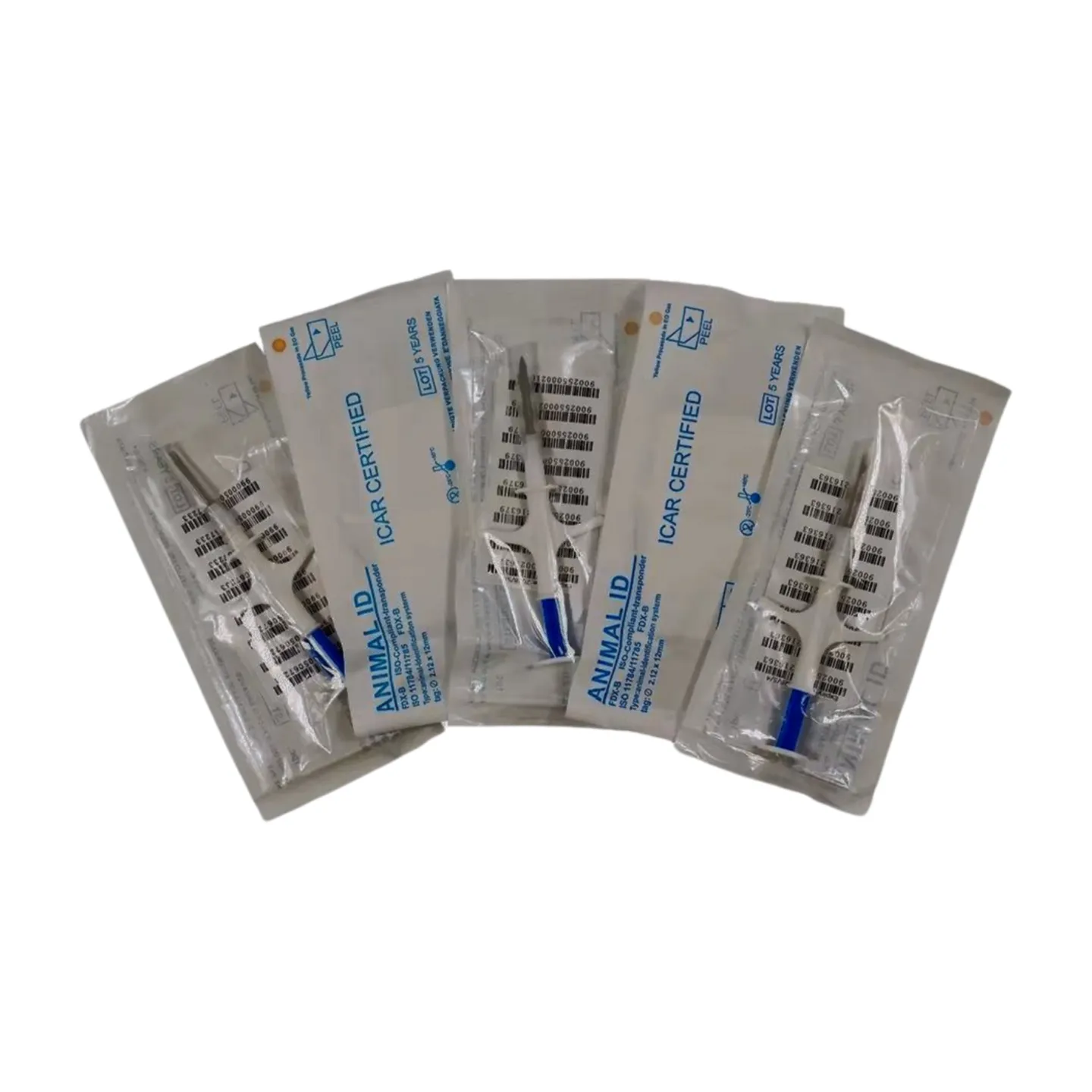
Product Overview
The RFID Temperature Sensor Microchip is a revolutionary passive implantable device that combines permanent animal identification with non-invasive health monitoring. This dual-purpose microchip addresses the critical needs of both pet recovery and proactive wellness management by providing a unique identification number and accurate body temperature data through a simple scan.
What is an RFID Temperature Sensor Microchip?
It is a miniaturized, biocompatible microchip that integrates a passive RFID transponder with a precision temperature sensor. Encased in Bioglass, it is implanted subcutaneously and activated by a compatible reader’s signal. The device simultaneously transmits the animal’s unalterable 15-digit ID and its current core body temperature, offering a seamless solution for identification and health assessment.
Who is This Product For?
This product is engineered for veterinary professionals, breeding facilities, kennel operators, and responsible pet owners. It is particularly valuable for monitoring post-operative recovery, managing breeding cycles, tracking the health of working dogs, and providing a superior standard of care through easy, stress-free temperature checks.
Key Features & Benefits
- Dual-Function Technology: Eliminates the need for separate identification and thermometry procedures, streamlining workflows and reducing animal stress.
- Passive & Long-Lasting Design: Powered entirely by the reader’s electromagnetic field, it contains no battery, ensuring a functional lifespan that matches the animal’s lifetime without maintenance.
- Global Standard Compliance: Adheres to ISO 11784/11785 FDX-B protocols, guaranteeing reliable performance and data readability with standard veterinary equipment worldwide.
- Biocompatible Bioglass Capsule: The inert Bioglass material ensures safe tissue compatibility, minimizing the risk of migration or adverse reaction after implantation.
- Miniaturized Form Factor: With dimensions of 1.4mm in diameter and 8.5mm in length, the microchip allows for quick, minimally invasive implantation using a pre-loaded sterile syringe.
How the RFID Temperature Microchip Works
The Implantation Process
A trained professional implants the microchip subcutaneously, typically between the shoulder blades, using a sterile, single-use applicator. The procedure is swift, comparable to a standard vaccination.
The Reading & Data Transmission Process
- A compatible ISO 11785 FDX-B reader is activated and brought within range of the animal.
- The reader’s low-frequency (134.2 kHz) electromagnetic field powers the passive microchip.
- The chip instantly responds by transmitting its unique identification number (UID) and the current temperature reading from its integrated sensor.
- The reader decodes this data, displaying the ID and temperature on its screen for immediate review and logging.
Understanding FDX-B Technology
FDX-B (Full Duplex-B) is the international ISO standard for animal RFID. This technology enables continuous, two-way communication between the reader and the chip, which is essential for the simultaneous and reliable transmission of both identification and dynamic sensor data like temperature.
Applications & Use Cases for Dogs
- Veterinary Clinical Practice: Enables efficient patient identification and allows for rapid, stress-free temperature monitoring during examinations, surgeries, and recovery periods.
- Breeding and Kennel Management: Provides permanent ID for breeding stock and aids in detecting estrus cycles and monitoring the health of dams and litters.
- Pet Ownership and Security: Offers tamper-proof identification for lost pets while empowering owners to participate in routine health checks with a home reader.
- Working and Service Animal Health: Monitors core temperature in dogs performing demanding roles to prevent overheating and manage stress-related health risks.
- Animal Shelter Operations: Streamlines the intake process and maintains accurate medical records, including temperature history, for housed animals.
Technical Specifications
| Specification | Detail |
|---|---|
| Product Type | Passive Implantable RFID Transponder with Sensor |
| Operating Frequency | 134.2 kHz (Low Frequency) |
| Communication Standard | ISO 11784 / ISO 11785 FDX-B |
| Chip Technology | Custom IC with Integrated Temperature Sensor |
| Dimensions (Diameter x Length) | 1.4 mm x 8.5 mm |
| Encapsulation Material | Biocompatible Bioglass |
| Power Source | Inductive Coupling from Reader (Passive) |
| Data Transmitted | Unique 15-Digit ID + Real-time Temperature |
| Typical Read Range | Varies with reader; standard for LF implantable chips |
Benefits for Veterinarians and Pet Professionals
- Enhanced Diagnostic Efficiency: Acquire a vital sign instantly during examination, improving patient throughput and comfort.
- Streamlined Practice Workflow: Combine patient check-in and temperature recording into a single, automated action.
- Accurate Digital Record Keeping: Automatically associate temperature data with a permanent animal ID in practice management software for precise historical tracking.
- Advanced Service Offering: Differentiate your practice by providing cutting-edge, non-invasive health monitoring technology to clients.
- Universal System Integration: Works seamlessly with existing ISO-standard FDX-B readers and global animal identification databases.
FAQ
What is an RFID temperature sensor tag?
An RFID temperature sensor tag is a passive device that uses radio frequency identification to wirelessly transmit both unique identification data and temperature measurements when activated by a compatible reader’s signal.
How does an RFID temperature microchip work?
The microchip contains a miniature temperature sensor and RFID circuitry. When scanned by an ISO FDX-B reader, the reader’s energy field powers the chip, prompting it to broadcast its stored identification number and the current temperature reading from the sensor.
Is implantation safe for my dog?
Yes. The implantation procedure is quick and minimally invasive. The microchip is encased in Bioglass, a biocompatible material specifically chosen for safe, long-term tissue compatibility in animals.
What reader do I need?
You require an RFID reader that is compliant with the ISO 11785 FDX-B standard and has the capability to decode and display the additional sensor data packet. Many modern veterinary readers support this functionality.
Can the temperature data be logged over time?
Yes. When used with compatible software, each scan’s data—including the animal’s ID, temperature, date, and time—can be automatically saved to a digital patient file, creating a valuable long-term health log.