
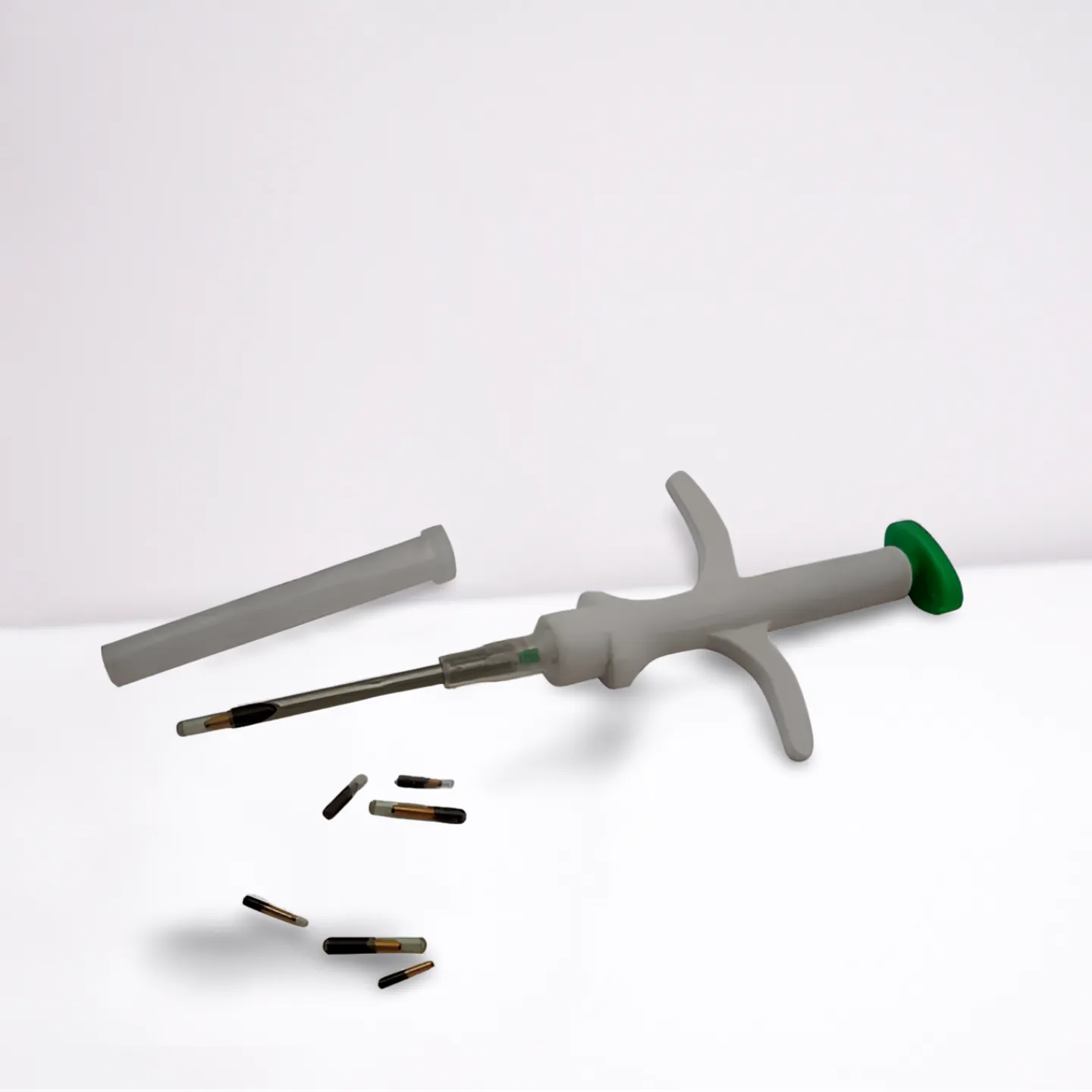
Animal RFID Bio-Temperature Sensor Microchip – Dual-Functional ID & Real-Time Health Monitoring for Pets & Livestock
1. Product Overview: Meet Our RFID Bio-Temperature Sensor Microchip
Dual-Purpose Solution: Identification + Bio-Temperature Sensing
This microchip integrates two critical functions into a single, compact implant: permanent animal identification and real-time bio-temperature monitoring. It eliminates the need for separate ID tags and temperature sensors, streamlining health management for pets and livestock.
Industry-Standard Compliance for Global Veterinary & Livestock Use
Compliant with ISO 11784/11785 standards, this microchip is compatible with veterinary systems, livestock management platforms, and RFID readers used worldwide. It meets strict safety and performance requirements for animal health applications.
2. Key Product Features
Passive RFID Technology for Wire-Free Data Retrieval
Uses radio frequency identification (RFID) technology with no internal battery. It draws power from compatible RFID readers to transmit ID and temperature data wirelessly, enabling contactless data retrieval.
Unique UID for Unmatched Animal Identification
Each microchip has a permanent, non-duplicable Unique Identifier (UID) assigned to the animal. This UID links to owner/veterinary records, supporting lost pet recovery and accurate herd tracking.
Biocompatible Bio-Glass Construction
Encapsulated in medical-grade bio-glass, the microchip is non-reactive, non-toxic, and safe for long-term subcutaneous implantation in all animal species. It resists corrosion and environmental damage.
Accurate Bio-Temperature Sensing Capability
Embedded temperature sensors provide precise, real-time readings of core body temperature. This helps detect early signs of fever or illness, enabling timely veterinary intervention.
ISO 11784/11785 Certified
Certified to ISO 11784/11785 standards, ensuring interoperability with global RFID systems. It works seamlessly with existing veterinary and livestock management tools.
3. Detailed Technical Specifications
Core Chip & Frequency Parameters
- Chip Model: EM4305
- Operating Frequency: 134.2 kHz
- Read Range: Up to 10 cm (varies by reader)
- Data Transmission: Wireless RFID (no battery)
Physical Dimensions & Material
- Diameter: 1.4 mm
- Length: 8.5 mm
- Encapsulation Material: Medical-grade bio-glass
- Weight: < 0.1 g
Temperature Sensing Range & Accuracy
- Measurement Range: 32°C to 43°C (90°F to 110°F)
- Accuracy: ±0.5°C
- Response Time: < 1 second
- Data Update Rate: Real-time (per reader interaction)
4. Practical Application Scenarios
Pet Identification & Proactive Health Monitoring
For dogs, cats, rabbits, and other companion animals: Provides permanent ID for lost pet recovery and continuous temperature tracking to detect fever (a key indicator of infection or illness) early.
Veterinary Clinic Patient Management & Temperature Tracking
Streamlines clinic workflows: Automates patient ID verification and temperature logging during checkups. Reduces manual data entry errors and improves record accuracy for follow-up care.
Livestock Herd Monitoring & Early Disease Prevention
For cattle, sheep, pigs, and other livestock: Enables herd-wide temperature monitoring to detect early signs of contagious diseases (e.g., foot-and-mouth disease, mastitis). Supports data-driven health management and reduces production losses.
5. How the RFID Bio-Temperature Sensor Works
Passive RFID Operation for ID & Temperature Data Retrieval
When a compatible ISO 11784/11785 RFID reader is held near the implanted microchip, the reader emits radio waves. The microchip converts this energy into electrical power to activate its sensors and transmit the animal’s UID and current temperature data to the reader.
Bio-Integrated Sensing for Non-Invasive Health Insights
Implanted subcutaneously, the microchip’s temperature sensor is in direct contact with the animal’s core body tissue. This enables non-invasive, accurate temperature readings without disturbing the animal or requiring external sensors.
6. Advantages Over Traditional Monitoring Tools
Long-Lasting & Maintenance-Free Implant
Once implanted, the microchip requires no batteries, charging, or maintenance. It has a lifespan of over 20 years, making it a cost-effective long-term solution for animal health management.
Seamless Integration with Existing RFID Reader Systems
Compatible with all ISO 11784/11785-compliant RFID readers, so no need to replace existing veterinary or livestock management equipment. It integrates easily with digital health records systems.
Data-Driven Health Alerts for Timely Intervention
Connected to compatible software, the microchip can trigger automated alerts when temperature readings exceed predefined thresholds. This allows owners and veterinarians to address health issues before they escalate.
7. Frequently Asked Questions (FAQs)
Is the microchip safe for long-term animal implantation?
Yes. The microchip is encapsulated in medical-grade bio-glass, which is non-reactive, non-toxic, and approved for long-term use in animals. It complies with global safety standards for veterinary implants.
How often can temperature data be read from the sensor?
Temperature data can be read as often as needed. Each interaction with a compatible RFID reader retrieves the latest real-time temperature reading from the microchip.
Can this sensor be used for both small pets and large livestock?
Yes. The microchip’s small size (1.4 mm diameter ×8.5 mm length) makes it suitable for implantation in all animal sizes, from tiny pets (e.g., hamsters, birds) to large livestock (e.g., cattle, horses).