
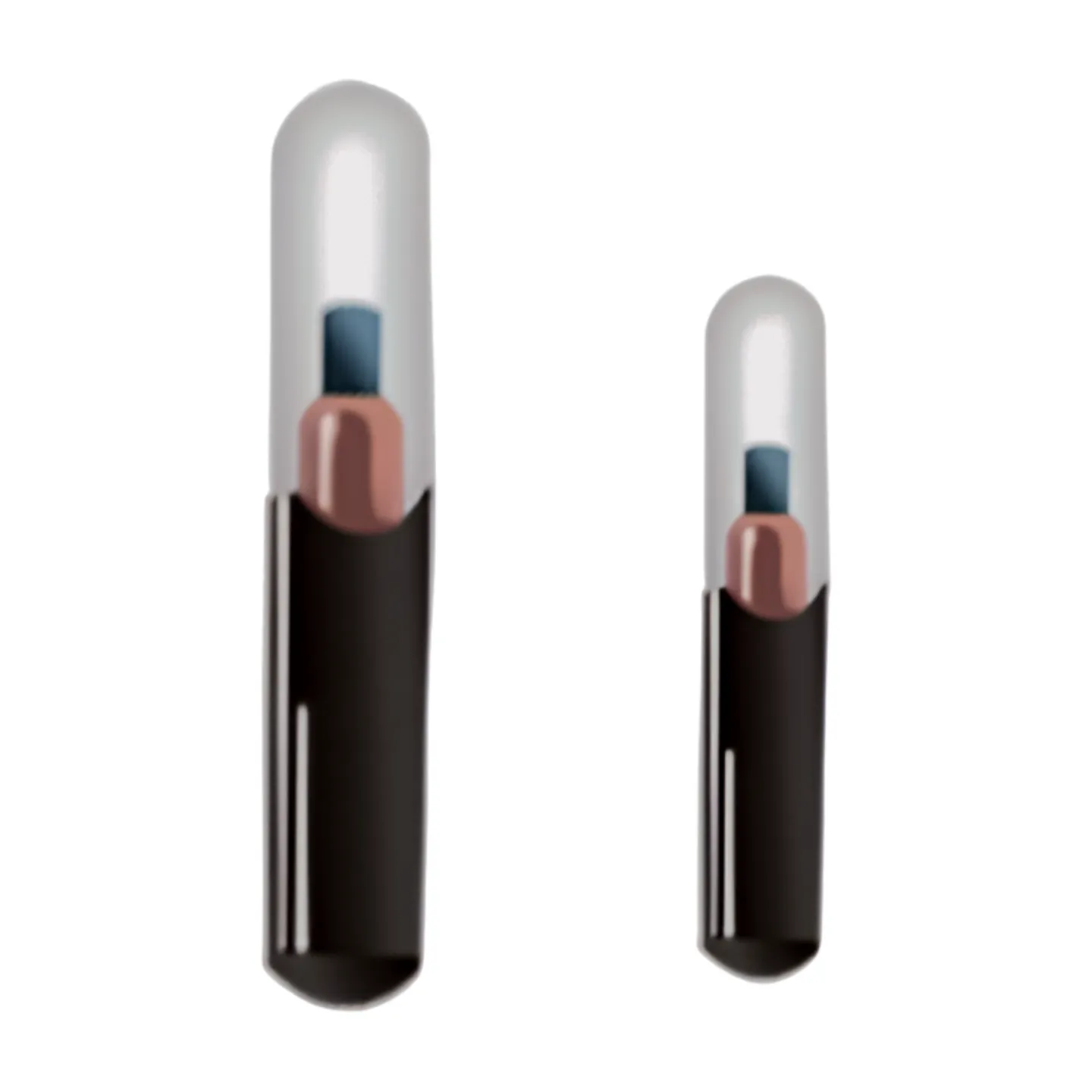
ISO-Compliant RFID Microchip for Animal Identification & Temperature Monitoring
This product line represents the professional standard for reliable, permanent animal identification. Available in standard identification and advanced temperature-sensing variants, these microchips provide foundational traceability and critical health insights through a tiny, biocompatible implant.
Product Overview
The Ultimate Solution for Animal Traceability and Health
Our implantable RFID microchips deliver lifelong, tamper-proof identification for individual animals. The temperature-sensing variant adds a powerful layer of proactive health management by enabling non-invasive core body temperature monitoring. This dual capability supports vital decisions in veterinary care, livestock management, and breeding programs.
Core Technology: FDX-B Passive RFID
Operating at the globally recognized 134.2 kHz frequency, these microchips use the Full Duplex (FDX-B) communication protocol. As passive devices, they require no internal battery, deriving all power from the signal of a compatible reader, which enables a functional lifetime equal to that of the animal.
Key Features and Benefits
- Permanent & Tamper-Proof Identification: Each microchip contains a unique, unalterable identification number (UID) programmed at manufacture, providing a reliable digital identity for the animal’s lifetime.
- Integrated Temperature Sensing (Sensor Variant): The advanced model features a built-in sensor that measures ambient temperature at the implant site, allowing for quick health checks without stress or restraint.
- Global ISO Compliance: Full compliance with ISO 11784 (code structure) and ISO 11785 (air interface) ensures the microchips can be read by any certified FDX-B reader worldwide, facilitating international trade and travel.
- Biocompatible Bioglass Encapsulation: The medical-grade bioglass shell is engineered for excellent tissue compatibility, minimizing the risk of migration or adverse reaction post-implantation.
- Miniaturized Form Factor: Measuring just 1.4mm in diameter and 8.5mm in length, the microchip is designed for rapid, minimally invasive implantation using a pre-loaded sterile syringe.
- Proven 134.2 kHz Frequency: This low-frequency band offers superior penetration through animal tissue and fluids, ensuring consistent and reliable read performance.
How the RFID Temperature Microchip Works
Implantation & Activation
The sterile microchip is implanted subcutaneously, typically in the standard location for the species (e.g., scruff of the neck). It remains inert until activated by the electromagnetic field generated by a compatible 134.2 kHz RFID reader.
Data Transmission
When activated, the chip’s circuitry powers up. The standard variant transmits its unique ID number. The temperature sensor variant activates its integrated thermal sensor, measures the local temperature, and transmits both the UID and the temperature data simultaneously via the FDX-B protocol. The reader decodes this signal and displays the information on its screen or transfers it to herd management software.
Primary Applications and Use Cases
- Pet Identification & Veterinary Care: Provides permanent ID for lost pet recovery. Enables efficient patient identification in clinics and allows for easy temperature monitoring during illness or post-operative care.
- Livestock Health and Herd Management: Facilitates individual animal tracking for breeding, medical records, and ownership verification. The temperature sensor enables early, herd-level detection of fevers, a key indicator of disease outbreaks like mastitis or respiratory infection.
- Wildlife Conservation and Research: Offers a reliable method for identifying and monitoring individuals in studied populations without the need for external tags.
- High-Value Animal Breeding: Secures the provenance and identity of breeding stock such as horses, dogs, and cattle, while also supporting their health management.
Technical Specifications
| Parameter | Specification |
|---|---|
| Product Line | Animal RFID Microchip / Temperature Sensor RFID Microchip |
| Integrated Circuit | EM4305 (ID only) / Custom Sensor Chip (ID + Temperature) |
| Frequency | 134.2 kHz |
| Protocol / Standard | ISO 11784 / 11785 FDX-B |
| Encapsulation Material | Bioglass |
| Dimensions | Diameter 1.4 mm × Length 8.5 mm |
| Primary Function | Unique Identification (UID) / UID + Temperature Measurement |
| Read Range | Dependent on reader power and antenna; typical for implantable form factor. |
| Operating Temperature Range | Suitable for sustained exposure to animal body temperatures. |
Benefits for Veterinarians and Livestock Managers
- Enhance Animal Welfare: Enable early detection of illness through non-invasive temperature monitoring, leading to timely intervention.
- Improve Operational Efficiency: Instantly identify animals and access their medical history with a simple scan. Perform routine temperature checks rapidly during handling.
- Ensure Regulatory Compliance: Meet national and international mandates for animal identification, movement tracing, and food safety programs.
- Reduce Economic Loss: Early detection of febrile animals in a herd can prevent the spread of disease, reducing treatment costs and losses in productivity.
Frequently Asked Questions (FAQ)
What is an RFID temperature sensor microchip?
It is a passive, implantable RFID device that, when scanned by a compatible reader, transmits both a unique identification number and the current temperature measured at the implant site.
How is the temperature measured?
The sensor variant contains a miniaturized thermal sensor integrated into its microchip circuit. It measures the ambient temperature of the tissue surrounding the implant.
Are these microchips safe for animals?
Yes. The microchips are encapsulated in biocompatible bioglass, a material designed specifically for safe, long-term implantation in animal tissue. They are supplied sterile and intended for a one-time implantation procedure performed by a trained professional.
What reader do I need?
You require an ISO 11785 compliant FDX-B reader operating at 134.2 kHz. To utilize the temperature data from the sensor variant, the reader’s software must be capable of decoding and displaying the specific data block containing the temperature information.
Ordering Information and Compliance
This product line is fully compliant with international ISO standards. It is available in standard identification (EM4305) and advanced temperature-sensing versions. For detailed datasheets, reader compatibility information, and volume pricing, please contact our sales team.