
Product Overview
What Is Our Livestock Temperature RFID Tag?
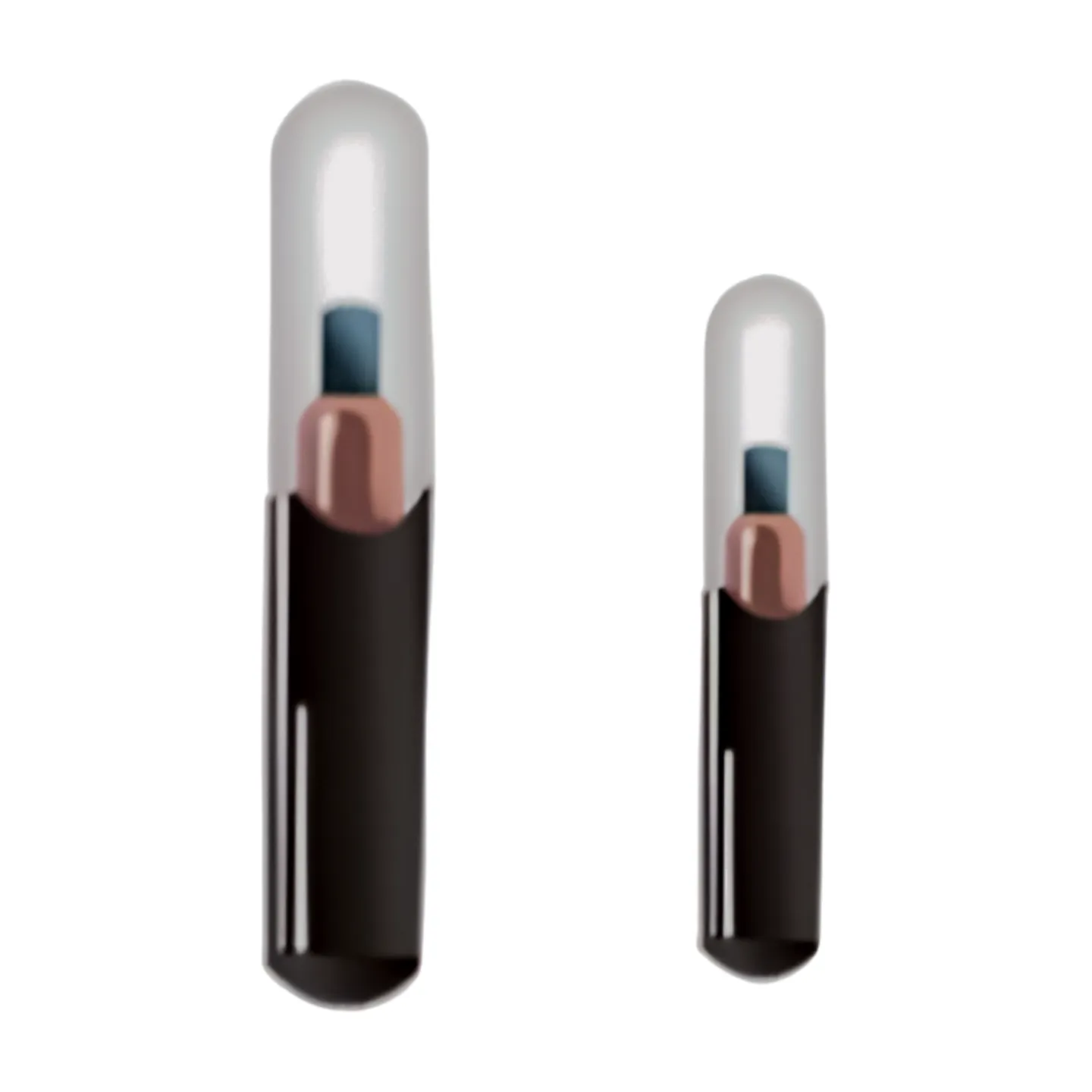
The Livestock Temperature Monitoring RFID Microchip Tag is a biocompatible microchip designed for continuous temperature monitoring and individual identification of cattle, sheep, and other livestock. It implants safely under the skin, captures real time temperature data, and links to each animal’s unique health record for proactive herd management.
Key Product Specifications
- Frequency: 134.2 kHz
- Material: Medical-grade bioglass (food-safe)
- Size: 1.4×8.5 mm (compact, minimally invasive)
- Chip Model: EM4305
- Compliance: ISO 11784/11785 (global livestock system compatibility)
Core Features for Livestock Health Management
Passive RFID Technology with Integrated Temperature Sensing
Operates without batteries, leveraging RFID reader signals to power temperature sensing and data transmission. Captures real time temperature readings at configurable intervals to track livestock health trends.
Unique UID for Individual Livestock Identification
Each tag has a factory-assigned, non-erasable Unique Identifier (UID) that links to the animal’s full health record. Enables precise tracking of temperature changes for every individual in the herd.
ISO 11784/11785 Compliance
Adheres to international standards for livestock RFID tags, ensuring compatibility with global veterinary systems, herd management software, and standard industry RFID readers.
Bioglass Encapsulation
Encased in non-toxic, inert medical-grade bioglass that resists corrosion, physical damage, and adverse tissue reactions. Safe for long-term implantation in livestock.
Real-World Livestock Applications
Early Disease Detection via Temperature Monitoring
Elevated temperature is an early indicator of diseases like fever or infections. Real time data from the tag allows quick identification of affected animals, enabling isolation and outbreak prevention.
Veterinary Clinic Livestock Health Record Integration
Tag data (UID + temperature) syncs seamlessly with veterinary databases, updating health records instantly. Supports remote monitoring and timely intervention for livestock health issues.
Large-Scale Livestock Herd Tracking & Inventory Control
Combines temperature monitoring with individual ID to track herd location, count, and health status. Reduces manual record-keeping errors and streamlines inventory management for large operations.
Technical Details Deep Dive
EM4305 Chip Performance
The EM4305 chip delivers ±0.5°C typical temperature accuracy, stable data storage, and reliable communication with RFID readers. Supports multiple data formats for cross-system compatibility.
134.2 kHz Frequency Advantages
The low-frequency 134.2 kHz band provides up to 1 meter read range (with standard readers) and excellent penetration through animal tissue/organic materials. Minimizes interference in barns or pastures.
Compact Size (1.4×8.5mm)
The small form factor ensures minimally invasive implantation (using standard veterinary tools) with minimal livestock discomfort. Fits easily under the skin without impairing movement.
Installation & Usage Guide
Sterile Implantation Procedure for Livestock
- Clean the implantation site (e.g., neck area) with antiseptic.
- Use a sterile veterinary tool to insert the tag subcutaneously.
- Apply antiseptic to the insertion site post-implantation.
- Monitor the site for irritation in the first 24–48 hours.
How to Retrieve Temperature & ID Data
- Use an ISO 11784/11785-compliant RFID reader (handheld/fixed).
- Hold the reader within 1 meter of the implantation site.
- Capture the tag’s UID and current temperature reading.
- Transfer data to herd management software via USB/wireless (if supported).
Long-Term Maintenance Tips
- Keep the implantation site clean to prevent infection.
- Avoid exposing the tag to extreme physical force that could damage encapsulation.
- Calibrate RFID readers regularly to maintain reading accuracy.
- Replace readers if performance declines over time.
Why Choose Our Livestock Temperature RFID Tag?
Precision Temperature Monitoring for Livestock Health
Delivers accurate real time data to enable proactive health management, reducing mortality rates and improving herd productivity.
Safe, Food-Safe Material for Meat-Producing Animals
Bioglass encapsulation is food-safe and non-toxic, suitable for all meat-producing livestock (cattle, sheep, pigs, etc.). No food chain contamination risk.
Seamless Integration with Existing Livestock Management Software
Compatible with major herd management platforms, allowing easy integration without additional software development.
Frequently Asked Questions (FAQs)
Is this tag safe for consumption if the animal is slaughtered?
Yes. The tag uses food-safe bioglass and inert materials. Its small size ensures easy detection/removal during processing (if needed).
How accurate is the temperature reading?
The tag provides ±0.5°C typical accuracy, with a measurement range of -20°C to +60°C (suitable for all livestock environments).
Can this tag be used across different livestock species?
Yes. Designed for cattle, sheep, pigs, goats, and other common livestock. Compact size and biocompatible material work for all these species.
What is the read range in outdoor herd environments?
Up to 1 meter with a standard handheld reader. Fixed readers may extend this range slightly based on power output and antenna design.