
Product Overview
What Is Our Animal RFID Temperature Sensor Microchip?
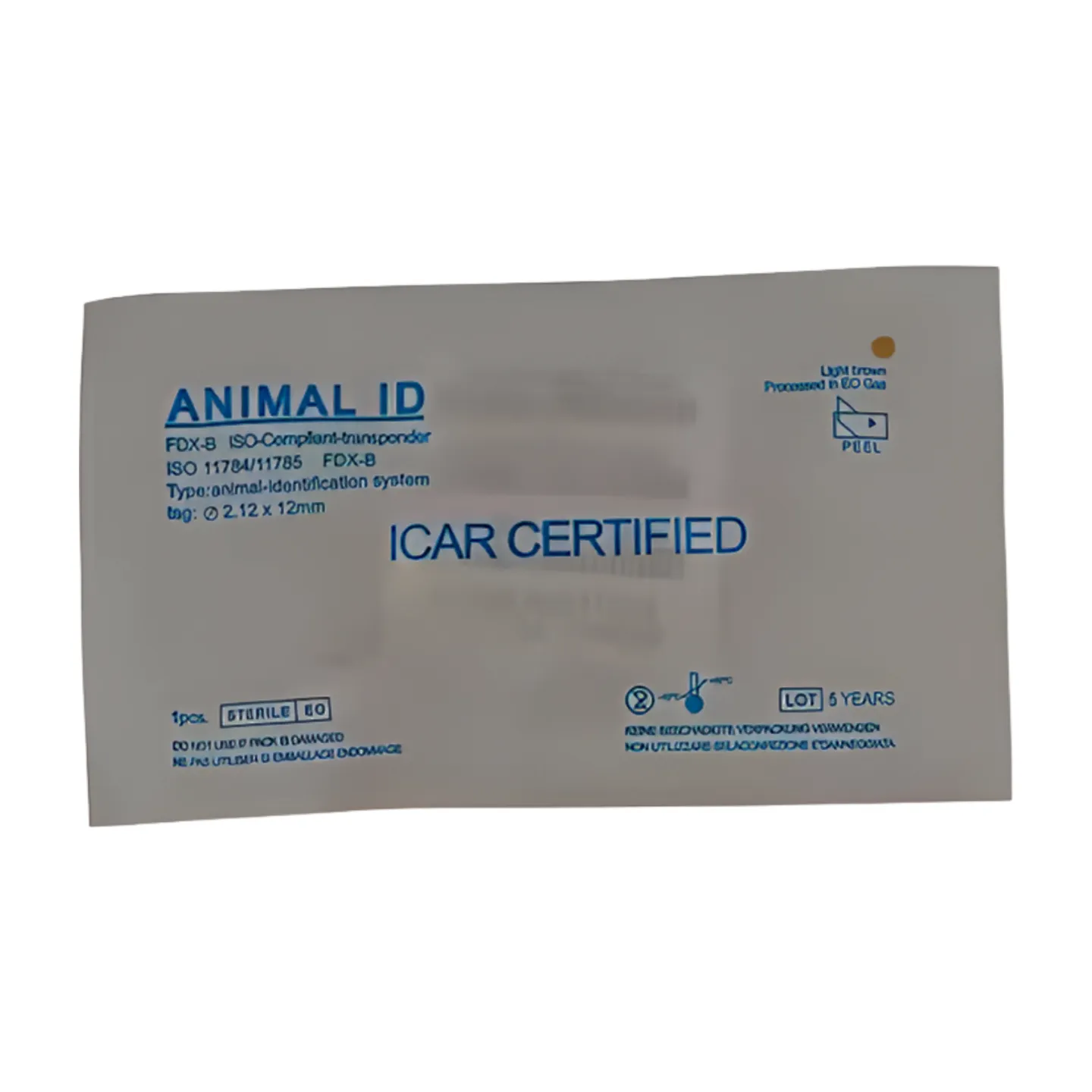
Our RFID temperature sensor microchip is a passive, implantable device integrating radio-frequency identification (RFID) for permanent animal identification with real-time temperature sensing for health monitoring. It is designed for safe, long-term use in pets and livestock.
Core Value: Dual-Function Identification + Real-Time Health Tracking
This microchip delivers two critical capabilities in one compact device:
- Permanent, unique UID for animal identification (no battery required)
- Continuous temperature monitoring to detect early signs of illness or stress
Key Product Features
Integrated Temperature Sensing & RFID Identification
- Unique 64-bit UID for permanent, tamper-proof animal identity
- Passive RFID technology (no battery) with continuous temperature data capture
- On-demand temperature reading via compatible scanners
Biocompatible & Durable Design
- Medical-grade bioglass encapsulation (ISO 10993 compliant) for safe long-term implantation
- Compact size: 1.4×8.5mm (diameter × length) for minimal animal discomfort
- Resistant to corrosion, moisture, and mechanical stress
Industry-Standard Compliance
- ISO 11784/11785 certified for global compatibility with standard RFID scanners
- EM4305 chipset for reliable, low-power data transmission
- Compliant with veterinary implant safety regulations in major markets
Technical Specifications
RFID & Chip Parameters
- RFID standard: ISO 11784/11785
- Chipset: EM4305
- Frequency: 134.2 kHz
- UID: Unique 64-bit (10-digit decimal)
- Reading distance: Up to 15 cm (with compatible scanner)
Temperature Sensing Performance
- Sensing range: -20°C to 50°C
- Accuracy: ±0.5°C (at 25°C to 45°C)
- Response time: <1 second
- Data resolution: 0.1°C
Physical & Material Details
- Dimensions: 1.4 mm (diameter) × 8.5 mm (length)
- Encapsulation material: Medical-grade bioglass (borosilicate glass)
- Weight: ~0.1 g
- Operating life: 10+ years (passive, no battery)
Application Scenarios
Pet Health Monitoring & Identification
- Early fever detection for companion animals (dogs, cats, rabbits)
- Permanent ID for lost pet recovery (linked to owner databases)
- Post-vaccination or post-operative temperature tracking
Veterinary Clinic Management
- Streamlined patient record integration (ID + temperature data)
- Efficient monitoring of hospitalized animals
- Reduced manual temperature recording workload
Livestock Herd Management
- Early disease outbreak detection (e.g., fever in cattle, pigs)
- Traceability for food safety and regulatory compliance
- Inventory management and herd health optimization
Installation & Usage Guide
Professional Implantation Procedure
Implantation must be performed by a licensed veterinarian or trained professional:
- Prepare the implantation site (e.g., between shoulder blades for pets, neck area for livestock)
- Sterilize the site and use a sterile implantation syringe
- Insert the microchip subcutaneously (under the skin) and confirm placement with a scanner
- Record the UID and link to the animal’s health record
How to Read Temperature & ID Data (Compatible Scanners)
- Use an ISO 11784/11785-compliant RFID scanner with temperature reading capability
- Hold the scanner within 15 cm of the microchip implantation site
- The scanner will display the unique UID and current temperature (or last recorded temperature)
- Some scanners support data logging to veterinary or herd management software
Advantages Over Traditional Animal Microchips
Proactive Health Monitoring vs. Passive ID Only
Traditional microchips only provide identification, while our device adds real-time temperature tracking to detect health issues before visible symptoms appear.
Non-Invasive, Long-Term Data Collection
No need for frequent physical exams or external sensors—temperature data is collected passively and read non-invasively with a scanner.
Seamless Integration with Animal Care Systems
Compatible with veterinary practice management software and livestock traceability platforms, enabling automated data logging and analysis.
Frequently Asked Questions (FAQ)
Is the temperature sensor microchip safe for animal implantation?
Yes. It uses medical-grade bioglass encapsulation (ISO 10993 compliant) and has a compact size, ensuring safe long-term use with minimal risk of rejection or discomfort.
How accurate are the temperature readings?
The microchip provides temperature readings with ±0.5°C accuracy within the optimal range (25°C to 45°C), suitable for detecting fever or hypothermia in animals.
Can the chip be read with standard ISO-compliant RFID scanners?
Yes. It is ISO 11784/11785 certified, so it can be read by any standard ISO-compliant RFID scanner (note: temperature reading requires a scanner with temperature support).
What is the lifespan of the microchip?
As a passive device (no battery), it has an operating life of 10+ years, with no degradation in performance or accuracy over time.
Contact & Inquiry
Bulk Order Requests
For bulk orders (minimum order quantity: 100 units), please provide the following details:
- Quantity required
- Target market (region)
- Delivery timeline
Technical Support & Customization Services
Technical support is available for product specifications, scanner compatibility, and implantation guidelines. Customization options include:
- Custom UID ranges for specific regions
- Branded packaging for veterinary clinics/livestock farms
- Integration support with third-party management software