March 20, 2026
In modern logistics, mining, agriculture, and industrial transportation, weighing accuracy and vehicle identification must work together seamlessly. Traditional weighbridge systems often rely on manual input, paper tickets, or barcode scanning—leading to delays, errors, and even fraud.
The TCP/IP Automatic Weighing UHF RFID Reader 12M is designed to solve these problems by combining:
-
Long-range UHF RFID identification (up to 12 meters)
-
Real-time TCP/IP network communication
-
Full integration with weighbridge systems
This creates a fully automated vehicle weighing and tracking solution, eliminating manual processes and improving efficiency.
In this comprehensive guide, we’ll explore everything you need to know—from technology and specifications to real-world applications and competitive comparisons.
What Is a TCP/IP Automatic Weighing UHF RFID Reader 12M?
A TCP/IP Automatic Weighing UHF RFID Reader 12M is a fixed UHF RFID reader designed specifically for vehicle weighing systems (weighbridges).
It performs three critical functions:
-
Identifies vehicles automatically via RFID tags
-
Communicates data via TCP/IP to backend systems
-
Synchronizes with weighing equipment for automated logging
This allows vehicles to be identified, weighed, and recorded automatically without stopping or manual intervention.
Core Technology Overview
UHF RFID (860–960 MHz)
The reader operates in the UHF frequency band, enabling:
-
Long-range reading (0–12 meters)
-
Fast tag detection
-
Multi-vehicle processing
Typical protocol:
-
EPC Gen2 / ISO18000-6C
TCP/IP Communication
TCP/IP enables:
-
Real-time data transmission
-
Easy integration with ERP/WMS systems
-
Remote monitoring and control
Unlike RS232 systems, TCP/IP allows network-based scalability.
Automatic Weighing Integration
The reader connects with:
-
Weighbridge controllers
-
Sensors and barriers
-
Software platforms
This ensures synchronized operation between vehicle ID and weight data.
Description:
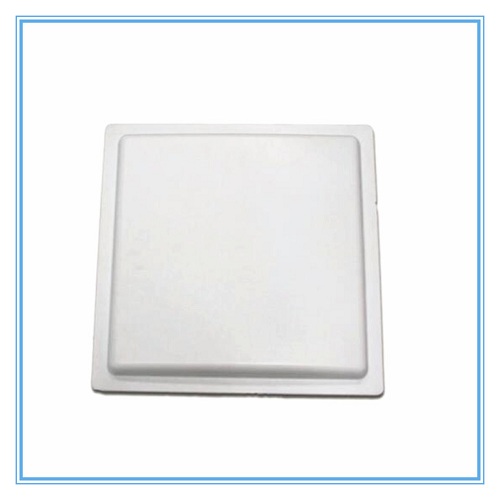
RFID middle range reader could be applied in various harsh working environment for multiple protocol compatible and reading fast. Full support the tag of ISO-18000-6C or ISO-18000-6B. Its stable reading distance is 15m(related to the tag and environment), it has a beautiful shape.
Feature:
◆A shape of linear, the LED will light when read a tag
◆Could used in some very cold area, such as northeast and northwest, because its ability of lighting-resisting and lower temperature protection.
◆The output power is 30dbm,Support multi work modes (auto, command, triggering)
◆ Applied in various application: vehicle and entrance guard, electronic free collection, logistic management and production automatic.
Specification:
| Item No. | |
| DO-8288B | RS232,TCP/IP,Wiegand |
| DO-8288A | RS232,RS485,Wiegand |
| DO-8288W | RS232,WIFI,Wiegand |
| DO-8288G | RS232,GPRS,Wiegand |
| Performance parameters | |
| Working Frequency | 902~928 MHz or 865~868MHz |
| Protocol | ISO18000-6C(EPC C1 GEN2) |
| RF power | 0~30dBm(Adjustable) |
| Software & SDK | DEMO and C#, VC, VB, Java, DELPH, etc., |
| Encryption | Can be directly encrypted, copy prevention. |
| Reading range | stable reading range 12~15M(Depends on tag & environment) |
| Industrial lightning protection | 6000V |
| Low temperature protection | Northeast, Northwest extremely cold region, low temperature protection |
| Frequency modulation | hopping or fixed frequency |
| Input/output port | Two-way relay output(customized), one-way trigger input |
| Antenna gain | 10dBi polarization |
| Working way | Buzzer & LED |
| Power | 12V/3A Adaptor |
| Physical parameters: | |
| Item size | 420x240x50mm |
| Package size | 600x310x110mm |
| Net weight | 4KG |
| Shell material | ABS |
| Working temperature | -20℃~+65℃ |
| Storage temperature | -45℃~+95℃ |
Mainly application as follows:
1. Parking management: Long range intelligent parking management and automatic charge without stop the car
2. Production line management: Goods identification for production flow
3. Auto Access control: Long range access control management for custom, sea port
4. Logistics and warehouse management
5. People auto registry for important meeting or exhibition
6. Automatic weighing and data capture.
How the System Works
Step-by-Step Workflow
- Vehicle approaches weighbridge
- RFID reader scans vehicle tag
- System identifies vehicle automatically
- Vehicle enters weighbridge
- Weight data is captured
- RFID ID and weight are matched
- Data is sent via TCP/IP to server
- Record is stored and processed
This entire process is fully automated, reducing human intervention to zero.
Key Features
1. Automatic Vehicle Identification
- No manual input required
- Eliminates human errors
- Faster processing
2. Long-Range Reading (Up to 12M)
- Detect vehicles before reaching scale
- Improves traffic flow
- Reduces waiting time
3. Real-Time TCP/IP Data Transmission
- Instant data upload
- Cloud integration
- Centralized monitoring
4. High-Speed Multi-Tag Reading
- Handles multiple vehicles
- Anti-collision algorithm ensures accuracy
5. Industrial-Grade Durability
- Waterproof and dustproof design
- Suitable for outdoor environments
- Resistant to vibration and temperature extremes
6. Seamless System Integration
- Works with weighbridge software
- Compatible with ERP systems
- Supports API/SDK development
Applications
1. Weighbridge Automation
- Truck weighing
- Cargo verification
- Billing automation
2. Logistics & Transportation
- Fleet tracking
- Load management
- Dispatch control
3. Mining Industry
- Ore transportation tracking
- Load monitoring
- Theft prevention
4. Agriculture
- Grain transport weighing
- Farm logistics
5. Industrial Plants
- Raw material tracking
- Waste management
- Production monitoring
Advantages Over Traditional Weighing Systems
| Feature | RFID Weighing System | Manual System |
|---|---|---|
| Speed | Fast | Slow |
| Accuracy | High | Error-prone |
| Automation | Full | None |
| Labor Cost | Low | High |
| Fraud Prevention | Strong | Weak |
RFID Weighing vs Barcode Weighing
| Feature | RFID | Barcode |
|---|---|---|
| Reading Distance | Up to 12m | <1m |
| Line of Sight | Not required | Required |
| Speed | Instant | Slower |
| Durability | High | Medium |
RFID Weighing vs ANPR Systems
| Feature | RFID | ANPR |
|---|---|---|
| Accuracy | Very high | Weather dependent |
| Speed | Faster | Slight delay |
| Reliability | Stable | Lighting dependent |
| Cost | Medium | Higher |
TCP/IP RFID Reader vs RS232 RFID Reader
| Feature | TCP/IP | RS232 |
|---|---|---|
| Communication | Network-based | Serial |
| Scalability | High | Limited |
| Distance | Long | Short |
| Integration | Easy | Moderate |
👉 Conclusion:
TCP/IP is ideal for modern, scalable systems.
Competitive Comparison
Integrated Weighing RFID Reader vs Standard RFID Reader
| Feature | Integrated Reader | Standard Reader |
|---|---|---|
| Function | Weighing + RFID | RFID only |
| Efficiency | High | Medium |
| Integration | Built-in | External required |
Fixed Reader vs Handheld Reader
| Feature | Fixed | Handheld |
|---|---|---|
| Automation | High | Manual |
| Use Case | Continuous | Spot checks |
| Efficiency | High | Medium |
Installation Best Practices
Reader Placement
- Install before weighbridge entry
- Ensure clear signal path
Antenna Configuration
- Use directional antennas
- Avoid interference from metal structures
Network Setup
- Configure IP address
- Ensure stable Ethernet connection
System Calibration
- Adjust reading range
- Test with multiple vehicles
Maintenance Tips
- Regularly inspect hardware
- Clean antenna surfaces
- Monitor network performance
- Update firmware
ROI and Business Benefits
Key Benefits
- Reduced labor costs
- Faster processing time
- Improved accuracy
- Enhanced security
ROI Example
Companies implementing RFID weighing systems achieve:
- 30–60% faster processing
- 70% reduction in manual errors
- Payback within 12–18 months
Limitations
1. Initial Investment
Higher than basic systems.
2. Tag Requirement
Vehicles must be equipped with RFID tags.
3. Environmental Interference
Metal and liquids may affect signal performance.
Future Trends
1. Smart Weighbridge Systems
- IoT integration
- Cloud-based analytics
2. AI-Based Monitoring
- Fraud detection
- Predictive logistics
3. 5G Connectivity
- Faster communication
- Real-time control
How to Choose the Right Supplier
Key Factors
- Industry experience
- Customization capability
- Technical support
- Integration expertise
Conclusion
The TCP/IP Automatic Weighing UHF RFID Reader 12M is a powerful solution for modern industrial weighing systems.
It combines:
- Long-range RFID identification
- Real-time TCP/IP communication
- Full automation with weighbridge integration
Compared to traditional and competing technologies, it delivers:
- Faster operations
- Higher accuracy
- Reduced labor costs
- Improved security
For industries seeking efficient, scalable, and intelligent weighing solutions, this reader is not just an upgrade—it’s a transformation of the entire workflow.
Because in today’s data-driven world, weighing is no longer just about kilograms… it’s about information, automation, and control