September 14, 2026
In today’s increasingly digital world, contactless identification technologies have become essential for security, access control, payments, transportation, and asset management. Among RFID technologies, the 13.56 MHz RFID Card has emerged as one of the most widely adopted smart card solutions globally.
From office buildings and hotels to public transportation systems and cashless payment platforms, 13.56MHz RFID cards provide secure, convenient, and efficient identification. Their ability to store data, support encryption, and communicate wirelessly has made them a critical component of modern digital infrastructure.
This comprehensive guide explains what a 13.56MHz RFID card is, how it works, its technical specifications, advantages, applications, and how it compares with other RFID technologies.
What Is a 13.56MHz RFID Card?
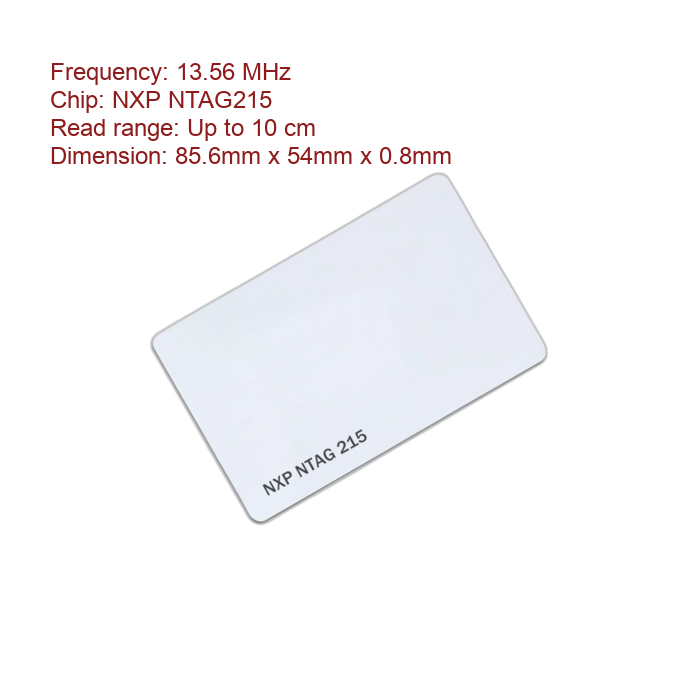
A 13.56 MHz RFID Card is a High-Frequency (HF) contactless smart card that communicates via radio waves at 13.56 MHz.
Unlike traditional magnetic stripe cards, RFID cards do not require physical contact with a reader. Users simply tap the card or place it near a compatible RFID reader to transmit information.
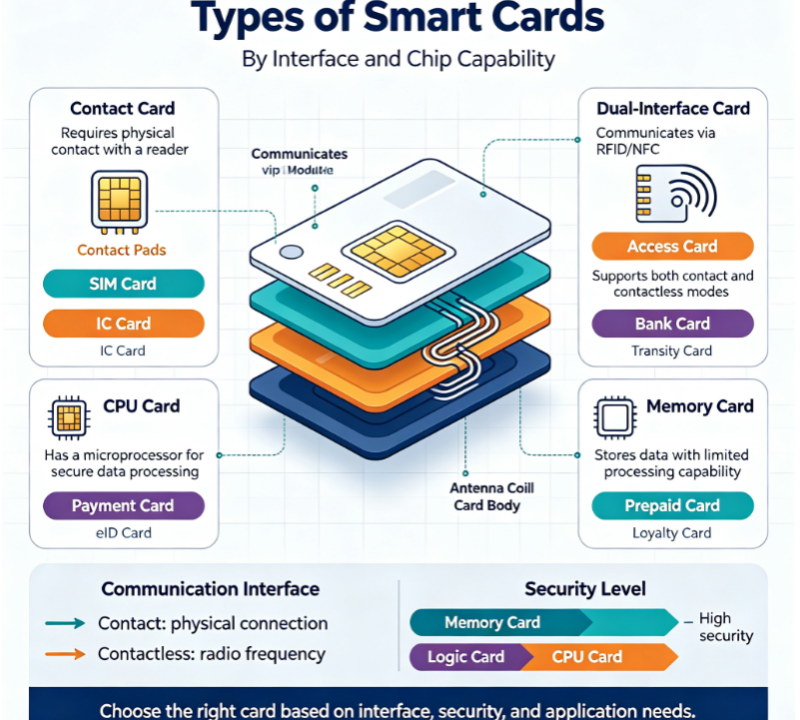
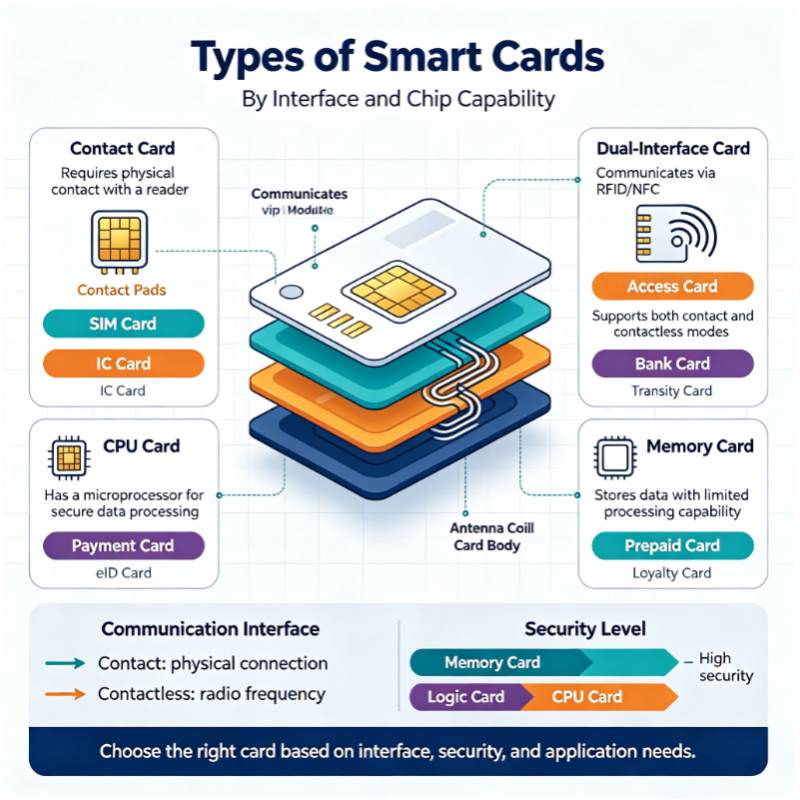
A typical 13.56MHz RFID card consists of:
- RFID microchip
- Copper or aluminum antenna
- PVC card body
- Data storage memory
- Security encryption module
The card can store unique identification information, access credentials, payment data, transportation tickets, loyalty points, and other digital information.
How Does a 13.56MHz RFID Card Work?
The operating principle of a 13.56 MHz RFID card is based on electromagnetic coupling between the card’s antenna and the RFID reader.
Step 1: RFID Reader Generates RF Field
The RFID reader continuously emits a high-frequency electromagnetic field at 13.56MHz.
Step 2: Card Enters Reading Zone
When the RFID card enters the reader’s field, the antenna inside the card receives energy through inductive coupling.
Step 3: Chip Activation
The received energy powers the RFID chip.
Since most RFID cards are passive devices, they do not require batteries.
Step 4: Data Exchange
The chip exchanges information with the reader.
Depending on the card type, the reader may:
- Read card ID
- Authenticate credentials
- Access stored information
- Update data stored on the card
Step 5: System Verification
The reader sends data to the backend system.
The system then:
- Verifies permissions
- Confirms identity
- Records transactions
- Grants or denies access
The entire process typically takes less than one second.
Main Components of a 13.56MHz RFID Card
RFID Chip
The chip serves as the card’s brain.
Common chip models include:
- MIFARE Classic
- MIFARE Ultralight
- MIFARE DESFire
- NTAG Series
- ICODE Series
- F08 Chip
Antenna
The antenna receives energy and transmits data.
Most antennas are manufactured from:
- Copper wire
- Aluminum etching
- Conductive ink printing
Card Body
Card materials include:
- PVC
- PET
- ABS
- Eco-friendly recycled plastics
Security Module
Advanced cards include encryption engines supporting:
- AES Encryption
- DES Encryption
- Triple DES
- Mutual Authentication
Technical Specifications
| Parameter | Specification |
|---|---|
| Frequency | 13.56 MHz |
| Standard | ISO 14443A/B, ISO 15693 |
| Reading Distance | 2-10 cm |
| Data Storage | 64 Bytes – 8 KB |
| Card Size | 85.6 × 54 mm |
| Thickness | 0.76 mm |
| Data Retention | 10 Years+ |
| Read/Write Cycles | 100,000+ |
| Operating Temperature | -25°C to +70°C |
| Power Supply | Passive |
| Communication Type | Contactless |
Why 13.56MHz RFID Cards Are So Popular
The popularity of 13.56MHz RFID cards is driven by their unique combination of security, convenience, and flexibility.
Enhanced Security
Unlike simple low-frequency RFID cards, many HF RFID cards support encryption and authentication.
This significantly reduces:
- Card cloning
- Unauthorized access
- Identity fraud
Fast Transactions
Users only need to tap the card.
Transaction time is typically less than one second.
Multi-Application Capability
A single card can support:
- Access control
- Transportation
- Payments
- Membership systems
- Loyalty programs
Long Service Life
Since there are no batteries or physical contacts, RFID cards can function reliably for years.
Pain Points Solved by 13.56MHz RFID Cards
Eliminating Physical Keys
Traditional key systems create challenges such as:
- Lost keys
- Expensive replacements
- Unauthorized duplication
RFID cards provide centralized digital access management.
Reducing Manual Processes
Organizations can automate:
- Employee attendance
- Visitor management
- Authentication
- Ticket verification
Improving Security Management
RFID systems allow administrators to:
- Disable lost cards instantly
- Modify permissions remotely
- Monitor access records
Enhancing User Experience
Users enjoy:
- Contactless operation
- Faster access
- Reduced waiting times
- Convenient authentication
Supporting Digital Transformation
Modern organizations increasingly require automated identification solutions.
RFID cards integrate seamlessly into digital ecosystems.
Applications of 13.56MHz RFID Cards
Access Control Systems
One of the largest application areas.
Used in:
- Office buildings
- Government facilities
- Factories
- Hospitals
- Data centers
Public Transportation
Widely used in:
- Metro systems
- Buses
- Rail networks
- Toll collection systems
Passengers simply tap the card to travel.
Hotel Key Cards
Hotels use RFID cards for:
- Guest room access
- Elevator control
- Facility access
Cashless Payment Systems
Many campuses and businesses use RFID cards for:
- Cafeterias
- Vending machines
- Retail purchases
Campus Cards
Universities integrate multiple services into one card:
- Student identification
- Library access
- Attendance tracking
- Meal plans
Healthcare Industry
Hospitals use RFID cards for:
- Staff identification
- Secure access
- Patient management
Membership Programs
Fitness centers, clubs, and entertainment venues use RFID membership cards.
Types of 13.56MHz RFID Cards
MIFARE Classic Card
The most common RFID card worldwide.
Features:
- Cost-effective
- Widely supported
- Suitable for access control
MIFARE DESFire Card
Offers advanced encryption and security.
Ideal for:
- Banking
- Transportation
- Government projects
MIFARE Ultralight Card
Low-cost solution primarily used for ticketing applications.
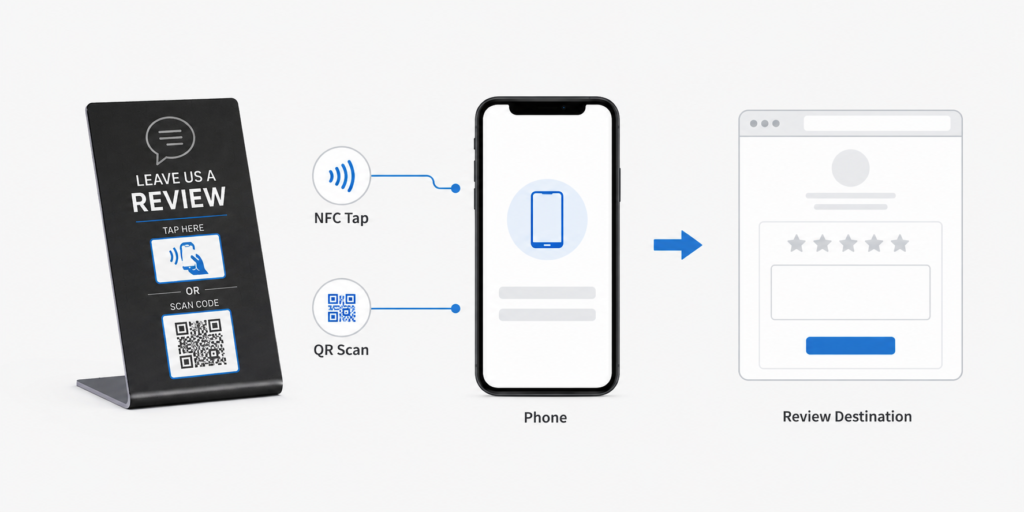
NFC Card
A subset of 13.56MHz technology.
Supports communication with smartphones.
Popular for:
- Marketing campaigns
- Digital business cards
- Mobile interactions
Advantages of 13.56MHz RFID Cards
High Security
Supports sophisticated encryption algorithms.
Read and Write Capability
Unlike many LF cards, HF cards can store and update information.
Smartphone Compatibility
Many NFC-enabled smartphones can interact directly with HF RFID cards.
Flexible Data Storage
Supports applications requiring a larger memory capacity.
International Standards Compliance
Widely compatible with global RFID infrastructure.
Multi-Purpose Usage
A single card can perform multiple functions simultaneously.
Limitations of 13.56MHz RFID Cards
Short Reading Distance
Typical reading range remains under 10 cm.
Higher Cost Than LF Cards
Advanced security chips increase card costs.
Metal Interference
Performance may decrease near metallic surfaces.
System Complexity
Secure RFID implementations often require advanced backend integration.
13.56MHz RFID Cards vs 125kHz RFID Cards
| Feature | 13.56MHz RFID | 125kHz RFID |
| Frequency | 13.56MHz | 125kHz |
| Security | High | Basic |
| Data Capacity | Large | Limited |
| Read/Write | Yes | Mostly Read Only |
| NFC Support | Yes | No |
| Cost | Higher | Lower |
| Applications | Multi-function | Access Control |
For advanced security applications, 13.56MHz RFID cards are generally the preferred choice.
13.56MHz RFID Cards vs UHF RFID Cards
| Feature | 13.56MHz RFID | UHF RFID |
| Frequency | 13.56MHz | 860-960MHz |
| Reading Range | 2-10 cm | Up to 15 meters |
| Security | Higher | Moderate |
| Data Exchange | Excellent | Good |
| Access Control | Excellent | Limited |
| Asset Tracking | Moderate | Excellent |
UHF RFID is better for logistics and inventory tracking, while 13.56 MHz RFID excels at secure user authentication.
Customization Options
Manufacturers can customize RFID cards with:
Printing Options
- Company logos
- Employee photos
- QR codes
- Barcodes
- Full-color graphics
Chip Encoding
Cards can be pre-programmed with:
- User IDs
- Access rights
- Encryption keys
Surface Finishes
- Glossy
- Matte
- Frosted
Special Features
- Signature panels
- Magnetic stripes
- Holograms
- Laser engraving
Industry Trends
The RFID industry continues to evolve rapidly.
Emerging trends include:
NFC Integration
Increasing smartphone compatibility expands RFID applications.
Mobile Credential Systems
Physical cards are increasingly paired with mobile identities.
Cloud-Based Access Control
RFID systems are becoming connected to cloud platforms.
Smart Building Integration
RFID cards are being integrated with:
- IoT systems
- Visitor management
- Building automation
Enhanced Security
Manufacturers continue developing stronger encryption technologies.
How to Choose the Right 13.56MHz RFID Card
When selecting RFID cards, consider:
Security Requirements
For high-security applications, choose:
- MIFARE DESFire
- AES encryption-enabled cards
Memory Capacity
Select memory based on application requirements.
Compatibility
Ensure compatibility with existing readers and software.
Durability
Consider environmental conditions and expected usage frequency.
Supplier Reliability
Choose manufacturers with:
- ISO certifications
- Quality control systems
- Global support capabilities
Conclusion
The 13.56MHz RFID Card has become one of the most important technologies in modern identification and authentication systems. By combining secure contactless communication, flexible data storage, encryption capabilities, and broad compatibility, these cards serve millions of users worldwide across the transportation, hospitality, healthcare, education, government, and commercial sectors.
Compared with traditional identification methods, 13.56MHz RFID cards significantly improve security, efficiency, convenience, and operational control. They eliminate many of the challenges associated with physical keys, paper tickets, and manual verification processes while supporting digital transformation initiatives.
As smart cities, IoT ecosystems, mobile credentials, and cloud-based management systems continue to expand, 13.56MHz RFID cards will remain a core technology for secure and intelligent identification solutions worldwide.

Do RFID is a leading China-based manufacturer with over 15 years of experience. We specialize in customized RFID readers, tags, and cards, delivering high-quality, tailored solutions that meet your unique business needs and drive seamless, efficient identification.