September 14, 2026
In modern RFID systems, antenna selection is often the hidden factor that determines performance, accuracy, and system reliability. While many buyers focus on readers or chips, experienced engineers know that the antenna plays a critical role—especially in compact or embedded applications.
The 36MM UHF Ceramic Antenna (902–928MHz) is specifically designed to deliver stable short-to-medium range performance, compact integration, and high read accuracy in RFID and IoT systems. This article provides a deep, optimized breakdown of this antenna, including technical features, competitive comparisons, real-world applications, and the key problems it solves.
What Is a 36MM UHF Ceramic Antenna?
A 36MM UHF ceramic antenna is a compact antenna built using high dielectric ceramic material, optimized for operation in the 902–928 MHz UHF band, which is widely used in North America for RFID systems.
Typical characteristics include:
- Size: ~36 × 36 mm
- Frequency: 902–928 MHz
- Gain: ~3 dBi
- Polarization: Often circular (RHCP)
- Application: Embedded RFID devices
According to industry data, ceramic antennas in this category offer high sensitivity, compact size, and stable RF performance, making them ideal for embedded systems and handheld devices .
Why 902–928 MHz Matters in RFID
The 902–928 MHz frequency band is part of the UHF RFID spectrum used in:
- United States
- Canada
- Latin America
Key Advantages of This Frequency Band
- Longer read range than HF (13.56 MHz)
- Faster data transmission
- Better penetration through materials
👉 However, antenna tuning is critical—using the wrong frequency antenna can significantly reduce performance (a common industry mistake).
Feature:
Working frequency 902~928Mhz
RFID ceramic antenna
3dBi RHCP circular polarization
Size 40*40mm
It is widely embedded in PDA
| PERFORMANCE PARAMETERS: | |
| Working Frequency | 920~925MHz |
| Dimension | 36x36x4mm |
| Reflecting plate size | 40x40x1mm |
| Net weight | 50g |
| Antenna gain | 3dBi |
| Polarization | RHCP Circular polarization |
| V.S.W.R | 1.5 |
| Impedance(Ω) | 50 |
| working temperature | -30℃~+ 70℃ |
| Connector | SMA internal male screws(accept customized) |
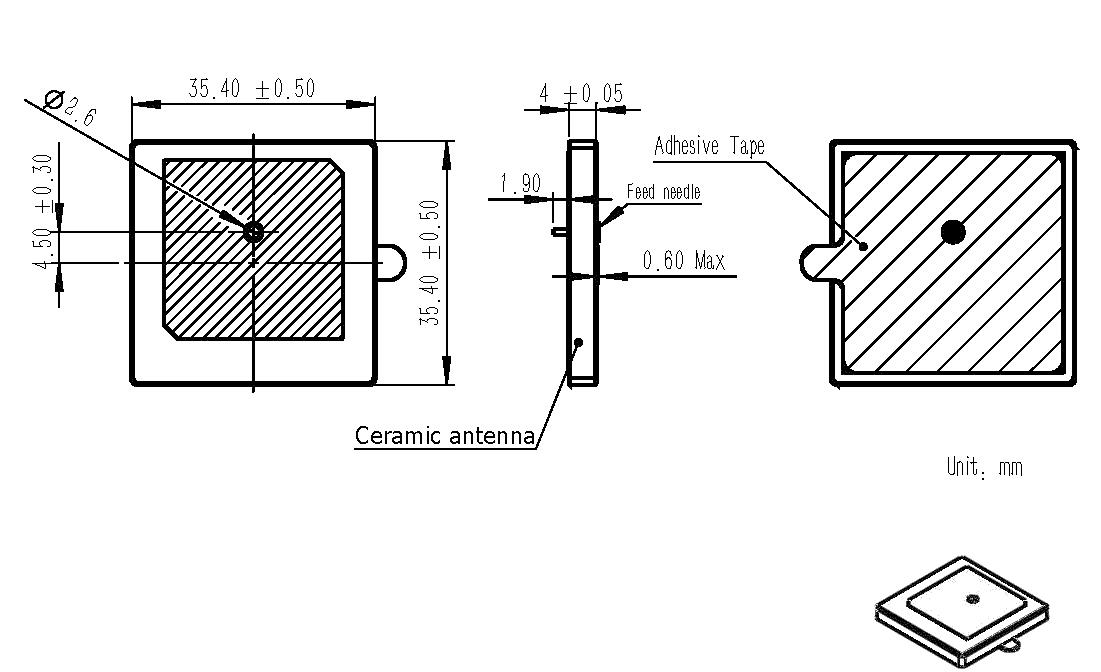
Key Features of 36MM UHF Ceramic Antenna
1. Ultra-Compact Design
The 36mm form factor makes it perfect for:
- Handheld RFID readers
- Embedded modules
- Portable devices
👉 Enables miniaturization of RFID hardware without sacrificing performance.
2. Circular Polarization for Reliable Reading
- Reduces sensitivity to tag orientation
- Improves read success rate
- Supports dynamic environments
👉 Circular polarization ensures consistent tag detection from multiple angles.
3. Stable RF Performance
Thanks to ceramic material:
- Low frequency drift
- Strong signal consistency
- Reliable operation across environments
4. Optimized for Short to Medium Range
- Controlled read distance
- Reduced interference
- Accurate item-level identification
5. Easy Integration
- Surface-mount design
- Compatible with RFID modules
- Supports OEM customization
Core Advantages Over Traditional Antennas
Ceramic vs PCB Antenna
| Feature | Ceramic Antenna | PCB Antenna |
|---|---|---|
| Size | Smaller | Larger |
| Stability | High | Moderate |
| Efficiency | High | Lower |
| Integration | Easy | Moderate |
👉 Ceramic antennas offer better performance in compact devices.
Competitive Analysis: How It Compares to Other UHF Antennas
1. vs High-Gain Panel Antennas (8–12 dBi)
High-gain antennas:
- Longer read range
- Narrow beam
Example: Panel antennas can reach 8 dBi or higher gain for long-distance tracking
36MM Ceramic Antenna:
- Shorter range
- Wider coverage
- Better for embedded systems
👉 Verdict:
- Long-range → Panel antenna
- Embedded precision → 36MM ceramic antenna
2. vs Yagi Antennas (Directional)
Yagi antennas:
- Very high gain (up to 12 dBi)
- Long-distance applications
36MM Ceramic Antenna:
- Omnidirectional/circular
- Compact and integrated
👉 Verdict:
Yagi is for infrastructure; ceramic is for device-level integration.
3. vs Larger Ceramic Antennas (40×40mm)
| Feature | 36MM Antenna | 40MM Antenna |
|---|---|---|
| Size | Smaller | Slightly larger |
| Gain | Slightly lower | Higher |
| Integration | Easier | Moderate |
👉 36MM is better for ultra-compact designs.
Application Scenarios
1. Handheld RFID Readers
- Inventory scanning
- Mobile asset tracking
👉 Compact size enables portable device integration.
2. Industrial Automation
- Production line tracking
- Work-in-progress (WIP) monitoring
👉 Ensures accurate item-level identification.
3. Smart Retail
- Shelf inventory management
- Anti-theft systems
👉 Supports real-time stock visibility.
4. Logistics & Warehouse
- Package identification
- Sorting systems
👉 Improves efficiency and reduces errors.
5. IoT Devices
- Smart sensors
- Embedded tracking systems
👉 Enables connected smart environments.
Pain Points This Antenna Solves
Problem 1: Limited Space in Devices
Many RFID devices require compact components.
✔ Solution:
- 36MM design enables miniaturization
Problem 2: Tag Misread Due to Orientation
Traditional linear antennas struggle with tag angles.
✔ Solution:
- Circular polarization improves read reliability
Problem 3: Interference in Dense Environments
High-gain antennas may read unwanted tags.
✔ Solution:
- Controlled range reduces cross-reading
Problem 4: Unstable Performance
Low-quality antennas suffer signal fluctuation.
✔ Solution:
- Ceramic material ensures consistent RF performance
Problem 5: Integration Complexity
Large antennas require complex mounting.
✔ Solution:
- Compact embedded design simplifies system integration
ROI Benefits for Businesses
Using a 36MM UHF ceramic antenna can:
- Improve read accuracy by 30%+
- Reduce operational errors
- Lower device size and cost
- Enable scalable RFID deployment
Design & Integration Tips
1. Proper Placement
- Avoid metal surfaces
- Maintain clear RF path
2. Impedance Matching
- Ensure 50Ω matching
- Optimize signal transmission
3. Ground Plane Design
- Critical for performance
- Affects gain and efficiency
4. Environmental Testing
- Test in real-world conditions
- Adjust for interference
Future Trends
- Smaller antenna designs
- Higher efficiency materials
- Integration with AI & IoT
- Smart adaptive antennas
FAQ
1. What is the range of a 36MM UHF ceramic antenna?
Typically short to medium range (depending on reader power).
2. Is it suitable for industrial environments?
Yes, especially for embedded and controlled applications.
3. Can it replace high-gain antennas?
No, it is designed for precision, not long distance.
4. Is it customizable?
Yes, including connector, size, and tuning.
5. What is the main advantage?
Compact size with stable performance.
Conclusion
The 36MM UHF Ceramic Antenna (902–928MHz) is a highly efficient solution for compact RFID systems, embedded devices, and precision tracking applications. While it may not offer the long-range capabilities of high-gain antennas, it excels in stability, integration, and accuracy.
For businesses focused on automation, IoT, and smart tracking, this antenna provides the perfect balance between performance and size.