October 21, 2026
In a world driven by automation, real-time tracking, and data accuracy, businesses are increasingly turning to RFID technology to streamline operations. Among the most widely used and cost-effective RFID solutions is the UHF RFID ISO18000-6C Gen2 Wet Inlay.
From retail apparel to large-scale warehouses and libraries, wet inlays play a critical role in enabling fast, scalable, and accurate asset tracking.
In this comprehensive guide, we’ll cover everything you need to know:
- What a UHF RFID wet inlay is
- How it’s manufactured
- Its working principle
- Key applications
- Pain points it solves
- Competitive analysis
- Bulk procurement strategies
What Is a UHF RFID ISO18000-6C Gen2 Wet Inlay?
A UHF RFID wet inlay is a type of RFID label that consists of:
- An RFID chip
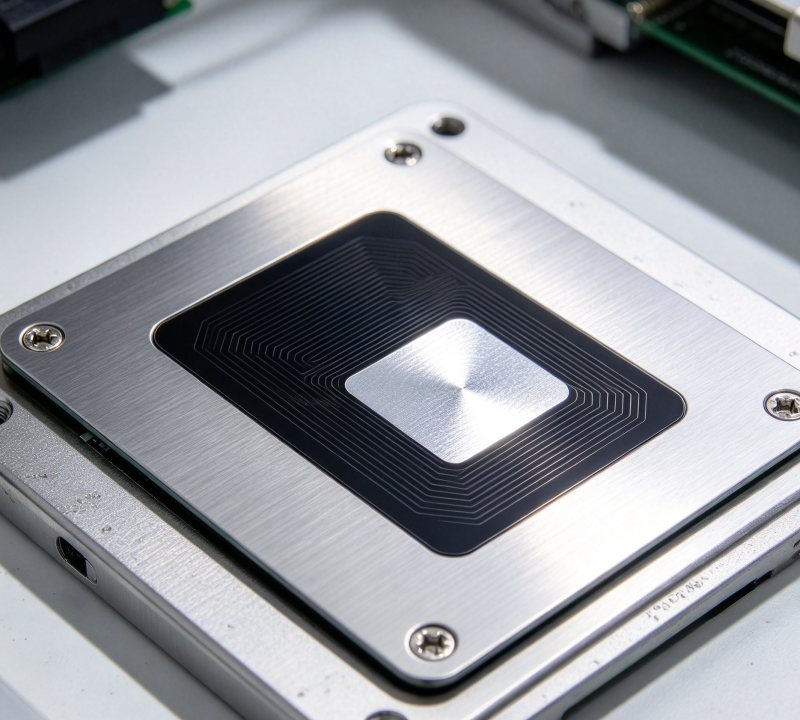
- An antenna
- A substrate with adhesive backing
The term “wet inlay” refers to the fact that the inlay already includes adhesive and a liner, making it ready for direct application to products or packaging.
These inlays comply with the global RFID standard ISO 18000-6C Gen2, ensuring compatibility with most RFID systems worldwide.
Key Features
- Passive RFID (no battery required)
- Long read range (up to 20 meters under optimal conditions)
- Lightweight and flexible
- Cost-effective for mass deployment
- Easy to integrate into labels or stickers
Technical Specifications
| Parameter | Specification |
|---|---|
| Protocol | ISO18000-6C Gen2 |
| Chip | Alien Higgs 3 |
| Frequency Range | 860–960 MHz |
| Operating Mode | Passive |
| EPC Memory | 12 bytes |
| User Memory | 64 bytes |
| Dimensions | 96.5 × 23 mm |
| Reading Range | Up to 20 m (with JT-8290A reader) |
| Working Temperature | -20°C to 80°C |
| Operation Mode | FHSS |
| Lifespan | 100,000 cycles / 10 years |
| Antenna Material | Aluminum etching |
How Is a UHF RFID Wet Inlay Manufactured?
The production of wet inlays involves precision microelectronics and high-speed automation.
1. Antenna Fabrication
The antenna is created using aluminum etching technology, where:
- Thin aluminum layers are etched into specific patterns
- The design is optimized for UHF frequency performance
This ensures:
- Strong signal transmission
- Efficient energy capture
2. Chip Attachment (Flip-Chip Bonding)
The RFID chip—such as Alien Higgs 3 chip—is attached to the antenna using flip-chip bonding.
This process:
- Ensures strong electrical connection
- Enables high-speed production
- Maintains consistent performance
3. Substrate Lamination
The antenna and chip are mounted onto a flexible substrate:
- PET (polyester) is commonly used
- Provides flexibility and durability
4. Adhesive Application (Wet Process)
A layer of adhesive is added to the back:
- Covered with a release liner
- Ready for peel-and-stick application
5. Testing and Encoding
Each inlay is tested for:
- Signal strength
- Read/write capability
- Data integrity
Working Principle of UHF RFID Wet Inlays
The wet inlay operates using passive UHF RFID technology.
Step-by-Step Process
- An RFID reader emits radio waves
- The inlay antenna captures the signal
- The chip is powered by the signal
- The chip sends stored data back to the reader
- The system processes the data
Key Advantages
- No battery required
- Fast bulk scanning
- Long reading distance
- Real-time tracking capability
Main Applications
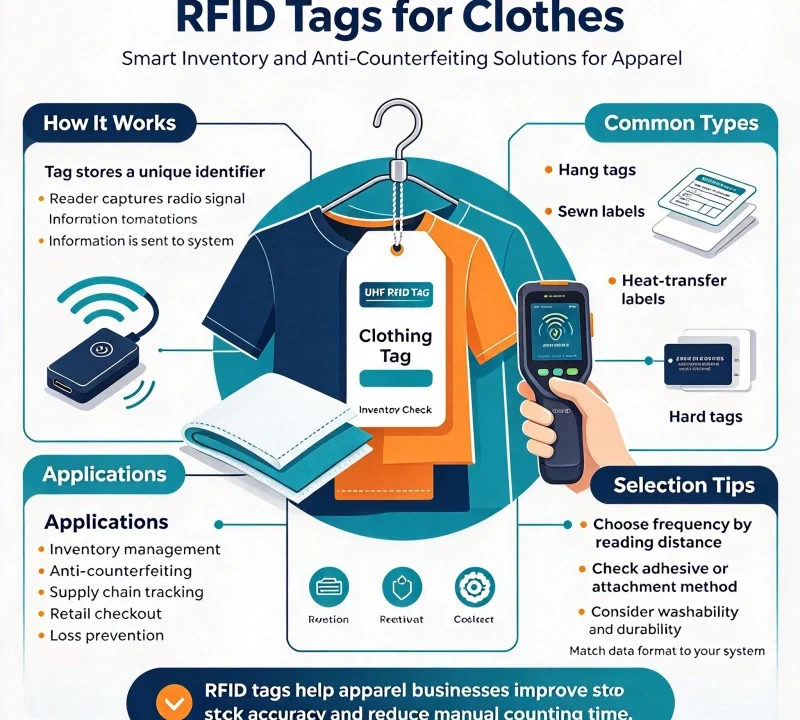
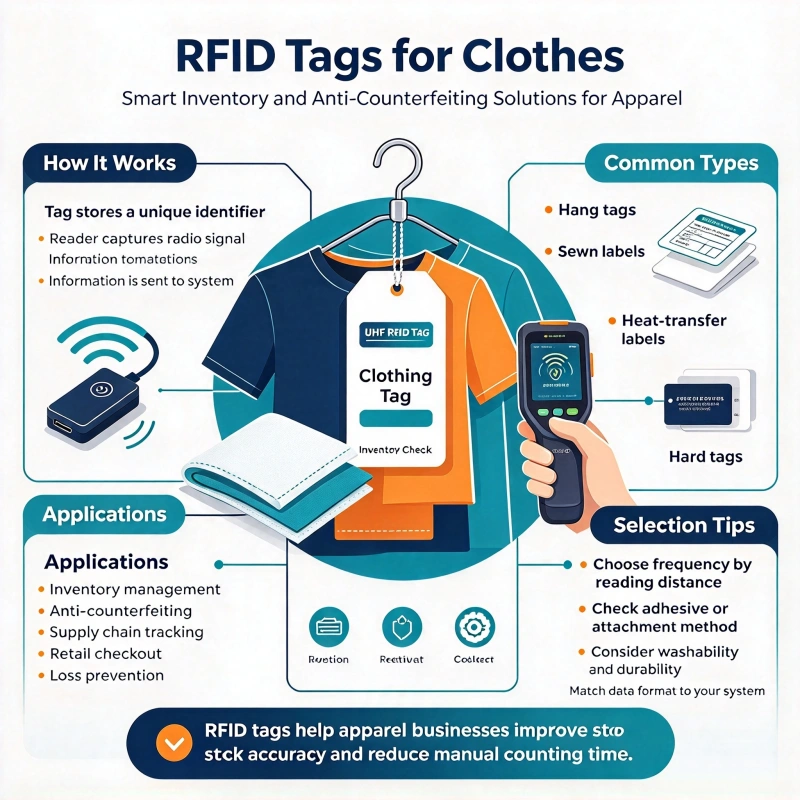
1. Garment Management
Used in:
- Apparel retail
- Inventory tracking
- Anti-theft systems
Benefits:
- Faster stock counting
- Improved inventory accuracy
- Enhanced customer experience
2. Library Management
Tracks:
- Books
- Media assets
Benefits:
- Automated check-in/check-out
- Reduced manual labor
- Improved asset tracking
3. Warehouse Management
Tracks:
- Inventory
- Pallets
- Packages
Benefits:
- Real-time inventory visibility
- Faster logistics operations
- Reduced errors
4. Retail Supply Chain
Used for:
- Product tracking
- Shipment monitoring
5. Logistics and Distribution
Tracks:
- Parcels
- Shipments
- Containers
What Pain Points Does It Solve?
1. Manual Inventory Inefficiency
Problem: Time-consuming stock counting.
Solution: RFID enables instant scanning of multiple items.
2. Inventory Inaccuracy
Problem: Human errors lead to discrepancies.
Solution: Automated tracking improves accuracy.
3. Slow Checkout Processes
Problem: Barcode scanning is slow.
Solution: RFID allows bulk scanning without line-of-sight.
4. Lack of Real-Time Visibility
Problem: Difficult to track assets in real time.
Solution: RFID provides continuous monitoring.
5. High Labor Costs
Problem: Manual processes require more staff.
Solution: Automation reduces labor requirements.
Competitive Analysis
1. Wet Inlay vs Dry Inlay
| Feature | Wet Inlay | Dry Inlay |
|---|---|---|
| Adhesive | Yes | No |
| Ease of Use | Ready to apply | Requires conversion |
| Cost | Slightly higher | Lower |
2. RFID vs Barcode
| Feature | RFID | Barcode |
|---|---|---|
| Line-of-Sight | Not required | Required |
| Speed | Fast | Slower |
| Data Storage | Higher | Limited |
3. UHF vs HF RFID
| Feature | UHF RFID | HF RFID |
|---|---|---|
| Range | Long | Short |
| Speed | Fast | Moderate |
| Application | Bulk tracking | Close-range |
Advantages Over Competitors
- Long read range (up to 20 meters)
- Cost-effective for large-scale deployment
- Flexible and lightweight design
- Global compatibility
- Easy integration into labels
Bulk Procurement Guide
1. MOQ (Minimum Order Quantity)
Typical MOQ:
- 10,000 – 100,000 units
2. Customization Options
- Pre-encoded EPC data
- Custom antenna design
- Branding and printing
3. Pricing Factors
- Chip type
- Order volume
- Customization level
4. Supplier Evaluation
Check:
- Production capacity
- Quality certifications
- Testing procedures
- Export experience
5. Logistics and Packaging
- Anti-static packaging
- Roll or sheet format
- Secure shipping
Installation and Usage Tips
- Apply to clean, dry surfaces
- Avoid metal surfaces unless specially designed
- Test readability before full deployment
Maintenance and Handling
- Store in dry conditions
- Avoid bending or folding
- Protect from extreme temperatures
Future Trends in RFID Wet Inlays
- Smaller and thinner designs
- Improved read range
- Integration with IoT platforms
- Smart analytics and AI integration
Final Thoughts
The UHF RFID ISO18000-6C Gen2 Wet Inlay is a versatile, cost-effective, and scalable solution for modern asset tracking.
With its:
- Long read range
- Fast scanning capability
- Easy application
- Global compatibility
…it plays a crucial role in industries like retail, logistics, and inventory management.
For businesses looking to improve efficiency, reduce errors, and gain real-time visibility, wet inlays are not just an option—they are a necessity.
Because in today’s fast-moving world, knowing exactly where your assets are… isn’t a luxury—it’s a competitive advantage.