October 21, 2026
Managing livestock at scale is not just about feeding and breeding—it’s about tracking, traceability, and data accuracy. Traditional methods like visual tags or manual records break down quickly when herds grow or regulations tighten.
That’s where ISO18000-6C Gen2 UHF RFID Animal Ear Tags come in. These tags give every animal a unique, scannable digital identity, enabling faster operations and better decision-making.
This guide explains how they work, where they’re used, what problems they solve, and how they compare with other identification methods, in clear and practical terms.
What Are UHF RFID Animal Ear Tags?
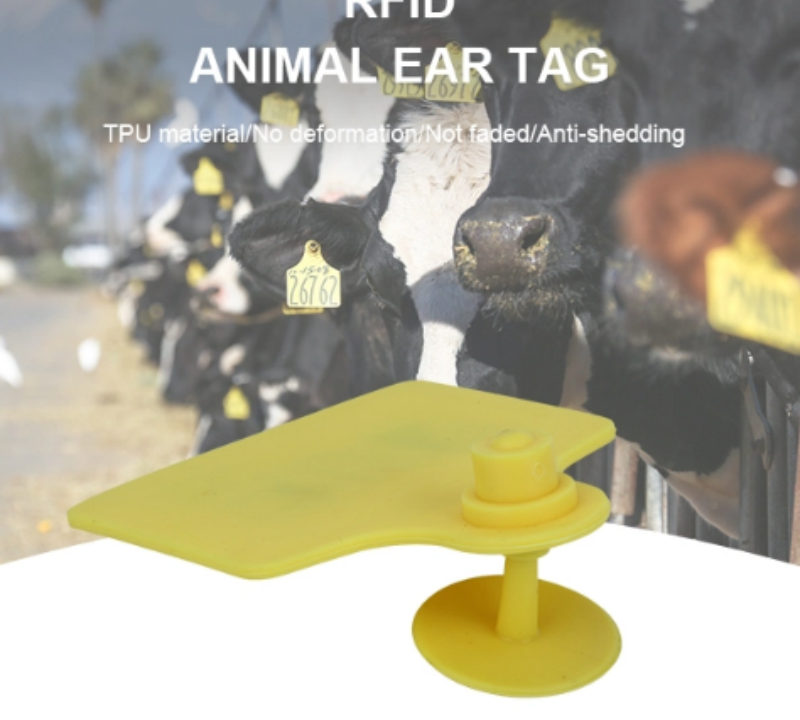
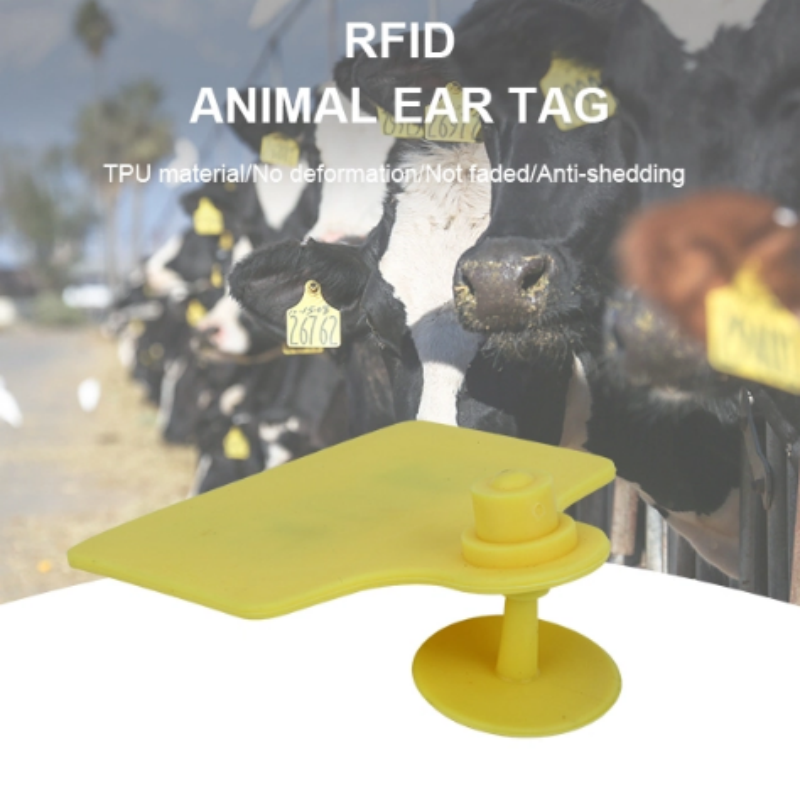
A UHF RFID animal ear tag is a passive electronic tag attached to an animal’s ear, designed to store and transmit identification data using radio frequency technology.
Key Specifications (Model DO-308)
Basic Parameters:
- Type: UHF Passive RFID Tag
- Frequency: 860–960 MHz
- Protocol: EPC Class1 Gen2 / ISO 18000-6C
- Supports Dense Reader Mode
Physical Parameters:
- Size: 87 × 73 × 2.5 mm
- Inlay Material: PET + Aluminum
- Outer Material: TPU (durable, flexible plastic)
Performance Parameters:
- Chip: Monza 4E / 4D / 4QT
- Memory: Up to 512 bits
- Read Range: Up to 5 meters
- Mode: Read/Write
Environmental Parameters:
- Operating Temperature: -20°C to +50°C
- Storage Temperature: -40°C to +100°C
In simple terms:
It’s a smart ear tag that lets you identify and track animals wirelessly—without touching them.
High-quality UHF RFID Animal Ear Tags
>> Product Parameters
Basic Parameters | |
Model | DO-308 |
Type | UHF passive RFID tag |
Frequency | 860~960MHz |
Standards/Protocols | EPC CLASS1 GEN2, ISO 18000-6C |
Physical Parameters | |
Size | 87*73*2.5mm (Customized design) |
Inlay Material | PET+AL |
Outer Material | TPU |
Performance Parameters | |
Memory Size | Up to 512bit |
Chip | Monza 4E,4D,4QT |
Operating Mode | R/W |
Reading Distance | 5M(Related to reader performance and working environment) |
Environmental Parameters | |
Operating Temp | -20℃~+50℃ |
Storage Temp | -40℃~+100℃ |
Specific Applications | |
Applications | The management of pig, cattle, sheep, etc. |
Packaging & Delivery | |
Package | 200 pcs/pack |
>> The Schematic Digram

This tags is environmental protection materials,use for animal management.
Why Traditional Livestock Tracking Falls Short
Conventional methods include:
- Visual ear tags
- Branding
- Paper records
These create problems:
- Human error
- Time-consuming inspections
- No real-time data
- Easy to lose or misread
Working Principle (How It Actually Works)
Let’s simplify the technology.
Step 1: Each Animal Gets a Tag
The RFID ear tag is attached to the animal’s ear:
- Safe and lightweight
- Designed for long-term use
Step 2: RFID Reader Emits Signal
A handheld or fixed reader sends out UHF radio waves (860–960 MHz).
Step 3: Tag Receives Energy
Since it’s passive:
- No battery required
- Powered by the reader’s signal
Step 4: Chip Activates
The chip (Monza 4 series):
- Retrieves stored ID data
- Prepares it for transmission
Step 5: Backscatter Communication
The tag sends data back to the reader:
- Unique EPC code
- Optional user data
Step 6: Data Is Recorded
The system logs:
- Animal ID
- Time
- Location
Key advantage:
No need to physically handle the animal during scanning.
What Is Dense Reader Mode (And Why It Matters)
Dense Reader Mode allows multiple RFID readers to operate in the same area without interference.
Why this matters:
- Large farms
- High animal density
- Multiple scanning points
Result:
- Accurate reads
- No signal conflicts
Core Components
1. RFID Chip (Monza 4 Series)
Stores:
- Unique ID
- User data
2. Antenna (PET + Aluminum)
- Receives and transmits signals
- Optimized for long-range reading
3. TPU Outer Shell
- Flexible and durable
- Resistant to weather and wear
4. Tag Structure
- Designed for secure ear attachment
- Minimizes discomfort
Main Applications
1. Cattle Management
Tracks:
- Individual animals
- Health records
- Movement
2. Pig Farming
Used for:
- Growth tracking
- Feeding optimization
3. Sheep and Goat Farming
Enables:
- Herd management
- Breeding records
4. Disease Control and Traceability
Tracks:
- Animal origin
- Movement history
Critical for:
- Food safety
- Regulatory compliance
5. Livestock Logistics
Used in:
- Transport tracking
- Slaughterhouse management
Pain Points Solved
Problem 1: Manual Identification Is Slow
Solution:
RFID enables instant scanning
Problem 2: Human Error in Records
Solution:
Automated data capture
Problem 3: Difficulty Tracking Large Herds
Solution:
Bulk reading capability
Problem 4: Animal Stress During Handling
Solution:
Contactless identification
Problem 5: Lack of Traceability
Solution:
Each animal has a unique ID
Problem 6: Regulatory Compliance
Solution:
Supports tracking and reporting requirements
Performance Advantages
1. Long Read Range (Up to 5m)
- Scan animals from a distance
- No need for close contact
2. Durable Material (TPU)
- Resistant to:
- Weather
- Dirt
- Physical stress
3. Rewritable Memory
- Update data as needed
4. Long Lifespan
- Suitable for entire animal lifecycle
Competitive Analysis
RFID Ear Tag vs Visual Ear Tag
| Feature | RFID Tag | Visual Tag |
|---|---|---|
| Read method | Wireless | Manual |
| Accuracy | High | Low |
| Data storage | Yes | No |
vs Barcode Tag
| Feature | RFID | Barcode |
|---|---|---|
| Line-of-sight | Not required | Required |
| Speed | Fast | Slow |
| Durability | High | Low |
vs LF/HF RFID Tags
| Feature | UHF RFID | LF/HF RFID |
|---|---|---|
| Read range | Long (5m) | Short (cm-level) |
| Speed | Faster | Slower |
| Use case | Large farms | Close-range tracking |
vs GPS Tracking
| Feature | RFID | GPS |
|---|---|---|
| Cost | Lower | Higher |
| Battery | No | Yes |
| Accuracy (local) | High | Moderate |
When to Use UHF RFID Animal Ear Tags
Best for:
- Large-scale farms
- Automated livestock systems
- Traceability-focused operations
When NOT to Use Them
Not ideal for:
- Very small farms
- Extremely low-budget setups
- Applications needing real-time GPS tracking
Installation and Usage
Step 1: Attach Tag
- Use ear tagging tool
- Ensure proper placement
Step 2: Encode Data
- Write unique ID
Step 3: Integrate with System
- Connect to farm management software
Step 4: Scan and Monitor
- Use handheld or fixed readers
Cost Overview
Typical pricing:
- $0.50 – $2 per tag (bulk)
Factors affecting cost:
- Chip type
- Quantity
- Customization
Future Trends
1. Smart Farming Integration
- IoT-based livestock management
2. Enhanced Data Analytics
- Predictive health monitoring
3. Improved Tag Durability
- Longer lifespan materials
4. Global Standardization
- Unified tracking systems
Final Thoughts
The ISO18000-6C Gen2 UHF RFID Animal Ear Tag is a powerful tool for modern livestock management.
Key strengths:
- Long-range reading
- High durability
- Accurate tracking
Trade-offs:
- Higher cost than visual tags
- Requires RFID infrastructure
Bottom Line
If you want efficient, scalable, and accurate livestock management, RFID ear tags are no longer optional—they’re essential.
They replace:
- Manual tracking
- Error-prone systems
- Limited visibility
With a solution that delivers:
Speed, accuracy, and full traceability—from farm to market.