September 14, 2026
As RFID technology continues to transform industries such as logistics, warehousing, manufacturing, retail, and intelligent transportation, organizations are increasingly seeking reliable RFID readers that provide stable performance, easy network integration, and cost-effective deployment. Among the most popular solutions in medium-distance RFID applications is the TCP/IP Middle Range Reader 6M.
Designed to provide reading distances of up to 6 meters while supporting Ethernet communication, this RFID reader bridges the gap between short-range desktop readers and long-range industrial RFID systems. It delivers accurate tag identification, seamless data transmission, and real-time monitoring capabilities for modern business operations.
This comprehensive guide explores everything you need to know about the TCP/IP Middle Range Reader 6M, including its operating principles, specifications, applications, the pain points it solves, comparisons with previous-generation readers, and a competitive analysis of alternative RFID solutions.
What Is a TCP/IP Middle Range Reader 6M?
A TCP/IP Middle Range Reader 6M is a UHF RFID reader capable of reading RFID tags at distances of approximately 3 to 6 meters while communicating with backend systems through standard TCP/IP Ethernet networks.
The reader is typically designed according to:
- EPC Class 1 Gen2 protocol
- ISO 18000-6C standard
- UHF frequency bands (860–960 MHz)
Unlike USB readers that require direct computer connections, TCP/IP readers can connect to local area networks (LANs), enabling multiple devices and software platforms to access RFID data simultaneously.
This makes the TCP/IP Middle Range Reader 6M ideal for:
- Warehouse inventory tracking
- Production line automation
- Asset management
- Vehicle identification
- Personnel attendance systems
- Smart logistics
- Industrial IoT applications
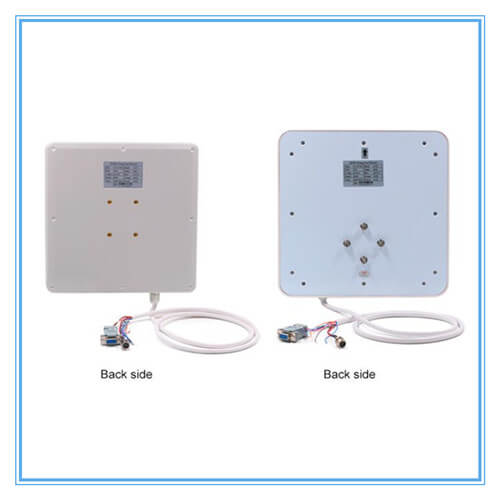
Application:
1.Intelligent traffic such as ETC;
2. Customs border-crossing;
3. Parking lot ;
4. Automatic weighting;
5. Container management,pallet management ;
6. Asset management ;
7. Ticketing& access control;
8. Pharmaceuticals such as medical waste management.
Specification:
Item No | |
DO-8280C | RS232,TCP/IP,Wiegand |
Performance parameters | |
Working Frequency | 902~928 MHz or 865~868MHz |
Protocol | ISO18000-6C(EPC C1 GEN2) |
Radio frequency power | 0dBm~30dBm(Adjustable) |
Software & SDK | DEMO and C#,VC,VB,Java,DELPHI, etc., |
Encryption | Can be directly encrypted, copy prevention. |
Reading range | stable reading range 6M(Depends on tag&environment) |
Industrial lightning protection | 6000V industrial lightning protection |
Low temperature protection | Northeast,Northwest extremely cold region,low temperature protection |
Frequency modulation way | Broad spectrum frequency hopping or fixed frequency |
Input/output port | Two-way relay output(customized), one-way trigger input |
Antenna gain | 8dBi circular polarization |
Working way | Buzzer |
Power | 12V/3A Adaptor |
Physical parameters: | |
Item size | 220x220x50mm |
Package size | 430x320x140mm |
Net weight | 3KG |
Shell material | ABS |
Working temperature | -20℃~+65℃ |
Storage temperature | -45℃~+95℃ |


Typical Specifications
| Parameter | Specification |
|---|---|
| Communication Interface | TCP/IP Ethernet |
| Reading Distance | 3–6 Meters |
| RFID Frequency | 860–960 MHz |
| RFID Protocol | EPC Gen2 / ISO 18000-6C |
| Reading Speed | Up to 300 Tags/Second |
| Antenna Type | Integrated or External |
| Power Supply | DC 12V |
| Operating Temperature | -20°C to +70°C |
| Protection Rating | IP54–IP65 Optional |
| Data Output | Ethernet Network |
| Installation Method | Wall Mount / Pole Mount |
Actual specifications may vary depending on antenna gain, environmental conditions, and RFID tag design.
How a TCP/IP Middle Range Reader 6M Works
The reader operates by transmitting radio frequency signals through its antenna.
The workflow includes:
- Reader emits UHF radio signals.
- RFID tags enter the reading zone.
- Tags harvest energy from the RF field.
- Tag chips respond with stored data.
- The reader captures and decodes the information.
- Data is transmitted through TCP/IP Ethernet to servers or management software.
Because TCP/IP communication is network-based, RFID information can be accessed in real time from multiple workstations, cloud platforms, or enterprise management systems.
Key Features of TCP/IP Middle Range Reader 6M
Stable 6-Meter Reading Range
The reader provides reliable tag detection within medium-distance applications.
Benefits include:
- Wider coverage area
- Reduced hardware requirements
- Lower installation costs
- Increased operational efficiency
Ethernet Network Connectivity
TCP/IP communication offers several advantages:
- Long-distance data transmission
- Easy integration into enterprise networks
- Remote monitoring capabilities
- Centralized management
Multi-Tag Reading Capability
Modern readers can process hundreds of RFID tags simultaneously.
Advantages include:
- Faster inventory counting
- Reduced labor requirements
- Improved throughput
- Enhanced automation
Industrial Reliability
Most industrial-grade readers are designed to withstand:
- Dust
- Moisture
- Vibration
- Temperature fluctuations
This makes them suitable for harsh industrial environments.
Major Pain Points Solved by TCP/IP Middle Range Reader 6M
Pain Point 1: Manual Inventory Management
Traditional inventory methods require employees to scan products individually.
Problems include:
- Labor-intensive processes
- Human errors
- Slow inventory cycles
TCP/IP RFID readers automate inventory collection, significantly improving efficiency.
Pain Point 2: Limited Visibility
Many companies struggle to monitor assets in real time.
The 6M RFID reader enables:
- Continuous tracking
- Real-time updates
- Improved visibility
- Better decision-making
Pain Point 3: Network Integration Challenges
Older RFID readers often require direct computer connections.
TCP/IP readers solve this by allowing:
- Network deployment
- Remote access
- Multi-user operation
- Centralized databases
Pain Point 4: Bottlenecks in Logistics Operations
Distribution centers process thousands of items daily.
The reader enables:
- Automated receiving
- Automated shipping
- Fast pallet verification
- Reduced operational delays
Pain Point 5: High Labor Costs
Automation reduces the need for manual scanning and paperwork, lowering labor expenses while increasing productivity.
Main Applications
Warehouse Management
Warehouses use TCP/IP Middle Range Readers for:
- Inventory monitoring
- Goods receiving
- Shipment verification
- Location tracking
The 6-meter reading distance is ideal for warehouse aisles and loading zones.
Manufacturing Automation
Manufacturers deploy RFID readers for:
- Work-in-progress tracking
- Material flow monitoring
- Production control
- Quality assurance
Real-time visibility improves production efficiency.
Vehicle Access Control
The reader can identify RFID windshield tags from several meters away.
Applications include:
- Parking systems
- Toll collection
- Fleet management
- Industrial vehicle access
Asset Tracking
Organizations use RFID to monitor:
- Computers
- Tools
- Medical equipment
- Laboratory assets
The reader enables accurate asset location and utilization monitoring.
Smart Logistics
Logistics providers rely on RFID readers for:
- Cargo tracking
- Shipment verification
- Distribution management
- Supply chain transparency
Personnel Management
The system can support:
- Employee attendance
- Contractor access
- Visitor management
- Security monitoring
TCP/IP Middle Range Reader 6M vs Older RFID Readers
USB RFID Readers vs TCP/IP Middle Range Readers
| Feature | USB Reader | TCP/IP 6M Reader |
|---|---|---|
| Reading Distance | 0.1–1 Meter | Up to 6 Meters |
| Network Access | Limited | Excellent |
| Remote Monitoring | No | Yes |
| Multi-User Access | No | Yes |
| Scalability | Low | High |
TCP/IP readers are significantly more suitable for enterprise environments.
Serial Port Readers vs TCP/IP Readers
| Feature | RS232 Reader | TCP/IP Reader |
|---|---|---|
| Installation Flexibility | Limited | Excellent |
| Network Connectivity | Poor | Excellent |
| Integration Capability | Basic | Advanced |
| Data Transmission Distance | Limited | Long Distance |
Ethernet technology has largely replaced serial communication in modern RFID deployments.
Short-Range Readers vs 6M Readers
| Feature | Short Range Reader | 6M Reader |
|---|---|---|
| Coverage Area | Small | Large |
| Infrastructure Cost | Higher | Lower |
| Operational Efficiency | Moderate | High |
| Automation Level | Basic | Advanced |
The larger reading zone improves operational productivity.
Competitive Analysis
Several RFID reader manufacturers compete in the medium-range RFID market.
TCP/IP Middle Range Reader 6M vs Impinj Readers
| Feature | TCP/IP 6M Reader | Impinj Reader |
|---|---|---|
| Cost | Lower | Higher |
| Installation Complexity | Simple | Moderate |
| Enterprise Features | Good | Excellent |
| Scalability | Good | Excellent |
Impinj readers are often preferred for large-scale retail deployments, while TCP/IP 6M readers provide better affordability for many industrial applications.
TCP/IP Middle Range Reader 6M vs Zebra RFID Readers
| Feature | TCP/IP 6M Reader | Zebra Reader |
|---|---|---|
| Purchase Cost | Lower | Higher |
| Maintenance Cost | Lower | Moderate |
| Deployment Speed | Fast | Moderate |
| Enterprise Integration | Good | Excellent |
Zebra solutions offer advanced enterprise features but typically require larger budgets.
TCP/IP Middle Range Reader 6M vs Chainway Readers
| Feature | TCP/IP 6M Reader | Chainway Reader |
|---|---|---|
| Read Distance | Similar | Similar |
| Network Connectivity | Excellent | Excellent |
| Cost Efficiency | High | Moderate |
| Industrial Deployment | Strong | Strong |
Both solutions perform well in industrial environments.
TCP/IP Middle Range Reader 6M vs Handheld RFID Readers
| Feature | Fixed TCP/IP Reader | Handheld Reader |
|---|---|---|
| Automation | Excellent | Manual |
| Continuous Monitoring | Yes | No |
| Labor Requirements | Low | High |
| Large Area Coverage | Excellent | Limited |
Fixed readers provide superior automation for permanent installations.
Benefits of Deploying TCP/IP Middle Range Reader 6M
Organizations benefit from:
- Faster inventory counting
- Real-time asset visibility
- Reduced labor costs
- Improved operational efficiency
- Better inventory accuracy
- Enhanced logistics management
- Simplified network integration
- Increased security
- Scalable deployment architecture
- Higher return on investment
These advantages contribute directly to digital transformation initiatives.
Installation Recommendations
For optimal performance:
Antenna Positioning
Install readers where tags naturally pass through the reading zone.
Network Configuration
Assign static IP addresses for easier management.
Environmental Considerations
Avoid excessive metal interference and RF noise whenever possible.
Software Integration
Integrate the reader with:
- ERP systems
- Warehouse Management Systems (WMS)
- Manufacturing Execution Systems (MES)
- Asset Tracking Platforms
Proper integration maximizes the value of RFID-generated data.
Future Trends
The future of TCP/IP RFID readers is closely linked to Industry 4.0 and Industrial IoT development.
Emerging trends include:
- Cloud-based RFID platforms
- AI-driven inventory analytics
- Digital twin integration
- Edge computing
- Smart factories
- Autonomous logistics systems
As businesses continue adopting automation technologies, network-connected RFID readers will become increasingly important infrastructure components.
Conclusion
The TCP/IP Middle Range Reader 6M is an excellent RFID solution for organizations seeking reliable medium-range tag identification and seamless network integration. By combining 6-meter reading capability, Ethernet connectivity, multi-tag processing, and industrial durability, it addresses many challenges associated with inventory management, logistics visibility, asset tracking, and manufacturing automation.
Compared with older USB and serial RFID readers, TCP/IP readers provide superior scalability, remote accessibility, and enterprise integration. When evaluated against premium competitors such as Impinj, Zebra, and Chainway, the TCP/IP Middle Range Reader 6M delivers an attractive balance of performance, affordability, and deployment flexibility.
For warehouses, factories, logistics centers, parking systems, and asset management projects, the TCP/IP Middle Range Reader 6M remains one of the most practical and cost-effective RFID reader solutions available today.

Do RFID is a leading China-based manufacturer with over 15 years of experience. We specialize in customized RFID readers, tags, and cards, delivering high-quality, tailored solutions that meet your unique business needs and drive seamless, efficient identification.