September 14, 2026
A dual-frequency RFID card has two chips. One card can work in 2 different frequencies, such as LF (125 kHz) and HF (13.56 MHz), LF (125 kHz) and UHF(860- 960 MHz), HF (13.56 MHz) and UHF(860- 960 MHz). It is designed to meet a range of customer applications. This card is very cost-effective. Mainly used in banks, schools, governments, and other institutions.
LF+HF:
EM4200/ TK4100/ T5577/ HITAG® + MIFARE Classic® 1K/ 4K
EM4200/ TK4100/ T5577/ HITAG® + MIFARE® DESFire® 2K/ 4K/ 8K
EM4200/ TK4100/ T5577/ HITAG® + MIFARE® Plus 2K/ 4K

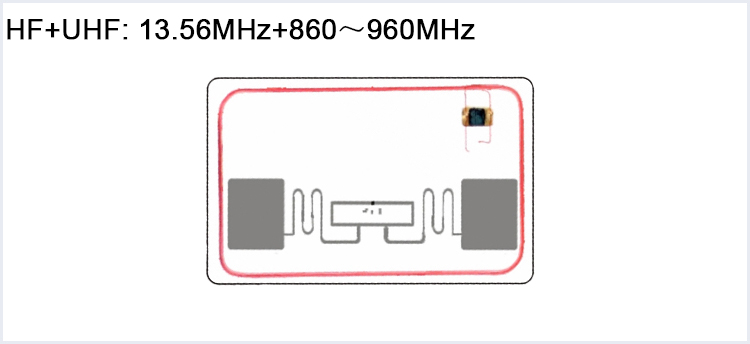
HF+UHF:
MIFARE Classic® 1K/ 4K + Alien Higgs 3/ Monza 4D/ Monza 4QT/ UCODE® 7
MIFARE® DESFire® 2K/ 4K/ 8K + Alien Higgs 3/ Monza 4D/ Monza 4QT/ UCODE® 7
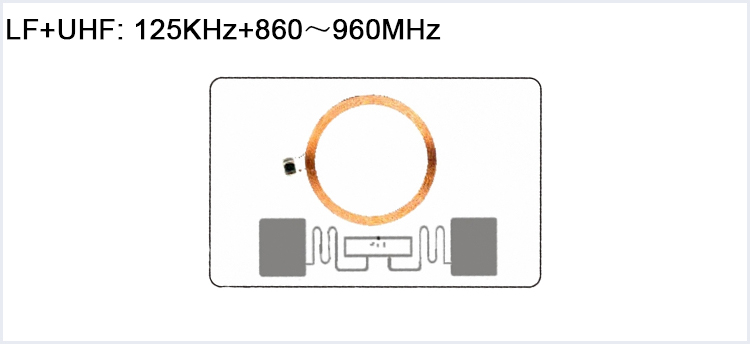
LF+UHF:
TK4100/ EM4200 + Alien Higgs 3
TK4100/ EM4200 + Monza 4QT
T5577 + Alien Higgs 3/ Monza 4QT
Product Name | Dual frequency Chip RFID card |
Material | PVC, PET |
Size | 85.5*54*0.84mm or customized |
Surface | Glossy, Matte, Frosted |
Craft | QR code, DOD barcode, Encoding, UV, Silver/Gold background |
Printing | White or Customized printing |
Chip | Any LF+HF, LF+UHF, HF+UHF chips are all available |
Frequency | LF/125KHz; HF/13.56MHz; UHF/860~960MHz |
Protocol | ISO7815; ISO 14443A; ISO18000-6C |
MOQ | 500pcs |
Sample | Free sample for testing |
Packaging Details | 200 pcs/box, 10 boxes/carton |
Lead Time | Lead Time: 6-10 working days |
TK4100 + Alien H3 Dual Frequency Chip RFID Card: Complete Guide to Features, Working Principle, Manufacturing Process, Competitive Analysis, and B2B Procurement Strategy
In modern access control, logistics tracking, warehouse automation, and smart identity systems, enterprises increasingly require hybrid RFID cards that can support both legacy identification systems and modern long-range tracking systems. One such widely used solution is the TK4100 + Alien H3 Dual Frequency Chip RFID Card.
This card combines:
- TK4100 (125kHz LF chip) for simple ID-based access control
- Alien H3 (UHF EPC Gen2 chip) for long-range tracking and logistics applications
By integrating two different RFID technologies into one card, it enables organizations to use a single credential across multiple systems, significantly reducing operational cost and improving efficiency.
This article provides a complete SEO-optimized explanation of what this card is, how it works, manufacturing steps, application scenarios, competitive analysis, and procurement strategy for global buyers.
What Is a TK4100 + Alien H3 Dual Frequency RFID Card?
A TK4100 + Alien H3 Dual Frequency RFID Card is a dual-technology smart card that integrates:
1. TK4100 (125kHz Low Frequency Chip)
- Read-only EM4100-compatible chip
- Used in basic access control systems
- Common in office doors, parking systems, attendance systems
- Stores a unique ID (UID only)
2. Alien H3 (UHF 860–960MHz Chip)
- EPC Class 1 Gen2 / ISO 18000-6C compliant chip
- Used in logistics, warehouse tracking, supply chain systems
- Supports EPC encoding + user memory
- Long reading distance (up to 10 meters)
👉 Together, they create a dual-function RFID card for access + tracking integration.
Why This Card Is Important in Modern Systems
Many companies still operate two separate systems:
- Old access control system (125kHz TK4100 / EM4100)
- New logistics or inventory system (UHF Alien H3)
Instead of issuing two cards, companies use one dual system card to:
- Reduce card management complexity
- Improve user experience
- Enable system migration
- Integrate legacy + IoT systems
Structure of TK4100 + Alien H3 RFID Card
A professional dual-frequency RFID card includes:
PVC / PET Card Body
- CR80 standard size (85.6 × 54 mm)
- Waterproof and durable
- Printable surface for branding
TK4100 LF Antenna (125kHz)
- Copper coil antenna
- Magnetic induction communication
- Short-range identification
Alien H3 UHF Antenna (860–960MHz)
- Etched aluminum or copper dipole antenna
- EPC Gen2 optimized design
- Long-range RF communication
Dual Chip Integration Layer
- Independent circuits
- No interference between LF and UHF systems
- Separate antenna tuning zones
How Does TK4100 + Alien H3 Dual Frequency Card Work?
The working principle depends on frequency activation.
Step 1: LF Activation (125kHz TK4100)
The TK4100 chip is activated by a low-frequency magnetic field generated by a proximity reader.
✔ Used for:
- Door access control
- Attendance systems
- Parking entry systems
Step 2: UHF Activation (Alien H3 860–960MHz)
The Alien H3 chip is powered by UHF electromagnetic waves and responds using backscatter communication.
✔ Used for:
- Warehouse tracking
- Logistics management
- Inventory automation
Step 3: Dual System Operation
- LF system = identity verification
- UHF system = asset tracking
Both systems operate independently without interference.
Working Workflow Summary
- Reader emits LF or UHF signal
- Corresponding antenna activates
- Chip harvests energy
- Data transmission occurs
- Reader decodes ID/EPC
- Backend system processes data
- Action executed (door unlock or tracking update)
Manufacturing Process of TK4100 + Alien H3 Dual Frequency RFID Card
Producing dual-frequency cards requires precise RF engineering and multi-layer integration.
Step 1: Chip Selection & Testing
- TK4100 LF chips tested for UID stability
- Alien H3 chips tested for EPC performance
- Batch consistency verification
Step 2: Dual Antenna Design
Engineers design:
- 125kHz coil antenna (LF)
- UHF dipole antenna (Alien H3)
Key challenge:
👉 Prevent signal interference while maintaining optimal resonance for both frequencies.
Step 3: Inlay Production
- LF inlay produced separately
- UHF inlay produced separately
- RF tuning optimization performed for both layers
Step 4: Layer Alignment
Precision alignment ensures:
- Correct antenna positioning
- Stable RF performance
- No detuning after lamination
Step 5: Lamination Process
- High temperature pressing
- High pressure bonding
- Multi-layer fusion
Ensures durability and waterproof structure.
Step 6: Die Cutting
Cards are cut into CR80 standard size with precision molds.
Step 7: Encoding Process
TK4100 Programming:
- Pre-set UID number
- Door access ID mapping
Alien H3 Programming:
- EPC encoding
- User memory writing (optional)
- Warehouse system mapping
Step 8: Quality Testing
- LF read range test
- UHF long-range scan test
- Dual frequency interference test
- Drop test
- Temperature resistance test
Applications of TK4100 + Alien H3 RFID Card
1. Enterprise Access Control + Asset Tracking
- Employee ID (LF)
- Equipment tracking (UHF)
2. Smart Warehouse Systems
- Door access via TK4100
- Inventory tracking via Alien H3
3. Industrial Parks
- Security access control
- Logistics vehicle tracking
4. Smart Campus Systems
- Dorm access (LF)
- Asset tracking (UHF)
5. Logistics Companies
- Staff access management
- Parcel tracking system integration
Advantages of Dual Frequency RFID Card
- One card for multiple systems
- Low-frequency + long-range integration
- Cost-saving for enterprises
- High scalability
- Easy system migration
- Stable PVC structure
- Compatible with legacy infrastructure
Competitive Analysis
1. TK4100 Only Card vs Dual Card
| Feature | Dual Card | TK4100 Only |
|---|---|---|
| Tracking capability | Yes | No |
| System integration | High | Low |
| Upgrade support | Yes | No |
✔ Winner: Dual Card
2. Alien H3 Only Card vs Dual Card
| Feature | Dual Card | Alien H3 Only |
|---|---|---|
| Access control | Excellent | Limited |
| Logistics tracking | Excellent | Excellent |
| Security system use | Better | Medium |
✔ Winner: Dual Card for hybrid systems
3. Dual Card vs HF RFID (MIFARE)
| Feature | Dual Card | HF RFID |
|---|---|---|
| Access control security | Medium | High |
| Logistics tracking | High | Low |
| System flexibility | High | Medium |
4. Dual Card vs QR Code System
| Feature | Dual RFID | QR Code |
|---|---|---|
| Automation | High | Low |
| Speed | Fast | Slow |
| Durability | High | Medium |
✔ Winner: RFID Dual System
Procurement Strategy (B2B OEM Guide)
Small Orders (100–1,000 pcs)
- Standard dual RFID cards
- Pre-programmed IDs
- Fast delivery
Medium Orders (1,000–10,000 pcs)
- Custom printing
- EPC encoding service
- System integration support
Large Orders (10,000+ pcs)
- OEM manufacturing
- Custom antenna tuning
- Dedicated frequency calibration
- Long-term supply contract
What Buyers Should Provide
For accurate quotation:
- Chip combination (TK4100 + Alien H3)
- LF system type (EM4100 compatibility)
- UHF frequency requirement (EU/US)
- EPC encoding requirements
- Printing design
- Quantity
- Reader system compatibility
- Delivery destination
Future Trends of Dual RFID Cards
- AI-driven logistics tracking
- IoT integrated smart identity systems
- Cloud-based RFID management
- Hybrid BLE + RFID cards
- Eco-friendly PET materials
- Multi-chip enterprise identity cards
Dual frequency RFID technology will continue to be a key bridge between legacy systems and smart IoT infrastructure.
Conclusion
The TK4100 + Alien H3 Dual-Frequency Chip RFID Card is a powerful hybrid solution that combines low-frequency access control with high-frequency, long-range tracking. It allows enterprises to unify old and new systems into a single credential, reducing cost and improving efficiency.
With robust manufacturing processes, dual antenna engineering, and flexible OEM customization, this card is widely used in logistics, access control, smart campuses, and industrial IoT systems.
For global buyers, it is not just a product—it is a system integration solution for digital transformation and smart asset management.