July 16, 2026
As organizations continue to modernize their security infrastructure, RFID Proximity Key Fobs have become one of the most reliable and convenient contactless identification solutions. From office buildings and residential communities to hospitals, schools, and industrial facilities, proximity key fobs simplify access management while improving security and operational efficiency.
Unlike traditional metal keys, RFID proximity key fobs provide fast, contactless authentication without physical wear or complex maintenance. Their compact size, durable construction, and compatibility with various RFID technologies make them one of the most widely used credentials in modern access control systems.
This guide explains what an RFID proximity key fob is, how it works, its applications, the problems it solves, international standards, customization options, and how it compares with competing RFID technologies.
What Is an RFID Proximity Key Fob?
An RFID Proximity Key Fob is a compact contactless identification device containing an RFID chip and antenna sealed inside a durable plastic, silicone, epoxy, or PVC housing. The key fob communicates wirelessly with RFID readers using radio frequency signals, allowing users to authenticate themselves simply by bringing the fob close to the reader.
Unlike smart cards that are typically carried in wallets, RFID key fobs are designed to attach to keychains, making them easier to carry and less likely to be forgotten.
Depending on the application, RFID proximity key fobs are available with different chip technologies, including:
- EM4200
- EM4305
- T5577
- MIFARE Classic 1K
- MIFARE Classic 4K
- MIFARE Ultralight
- MIFARE DESFire
- NTAG213
- NTAG215
- NTAG216
They generally operate at either 125 kHz Low Frequency (LF) or 13.56 MHz High Frequency (HF/NFC).
Typical specifications include:
| Specification | Value |
|---|---|
| Frequency | 125 kHz or 13.56 MHz |
| Operating Mode | Passive RFID |
| Reading Distance | 2–10 cm |
| Reading Time | Less than 100 ms |
| Material | ABS, PVC, Silicone, Epoxy |
| Waterproof Rating | Optional IP67 |
| Data Retention | Up to 10 Years |
| Rewrite Cycles | Up to 100,000 (chip dependent) |
Since RFID proximity key fobs are passive devices, they require no internal battery, resulting in long service life and minimal maintenance.
An RFID Proximity key fob is a shaped card with chips and a coil packaged inside an ABS shell; it can come in various styles or shapes. Silk screen printing and engraving are available. Wear resistance, fade resistance. There are various RFID chip formats (LF / HF / UHF) with personalization and encoding options. It is a good image for business and status for personal.
Product photo of 5# RFID proximity KEY fob
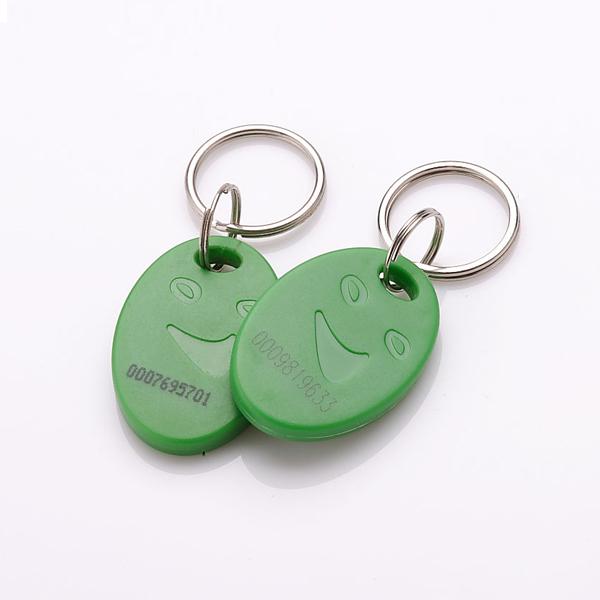
Specifications:
| Item Name: | RFID key fob |
| Size: | 36*25*6.0 mm or customized size |
| Material: | ABS |
| Packaging Details: | 100 pcs/opp, 20 opp/carton |
| Delivery Time: | 7-10 days based on QTY |
| MOQ: | 500 pcs |
| Sample: | Free sample for testing and shipping cost collected by the customer |


Working Principle
RFID proximity key fobs operate using electromagnetic induction between the RFID reader and the embedded antenna.
The authentication process follows these steps:
- The RFID reader continuously emits a radio frequency electromagnetic field.
- When the key fob enters the reading range, its antenna absorbs energy from the reader.
- The RFID chip is temporarily powered by the received energy.
- The chip transmits its identification data or encrypted information back to the reader.
- The controller verifies the credential against its database.
- If authentication is successful, the connected system grants access or performs the programmed operation.
Because communication is contactless, there is no physical wear between the credential and the reader, contributing to excellent durability and long-term reliability.
Typical Applications
Access Control
The most common application is building access control.
RFID proximity key fobs are widely used in:
- Corporate offices
- Apartment buildings
- Factories
- Government facilities
- Hospitals
- Hotels
- Schools
- Data centers
Authorized users can unlock doors within milliseconds by presenting the key fob to the reader.
Employee Attendance
Companies use RFID credentials to automate attendance recording, eliminating manual check-in procedures and reducing payroll errors.
Membership Management
Gyms, fitness centers, clubs, and recreational facilities issue RFID key fobs for member identification, access authorization, and subscription management.
Parking Management
Vehicle owners can use RFID key fobs to activate parking barriers automatically, improving traffic flow while enhancing security.
Smart Lockers
Educational institutions, factories, and sports centers use RFID-enabled lockers that open only for authorized users.
Cashless Payment
Many campuses, amusement parks, cafeterias, and industrial facilities integrate RFID key fobs into prepaid payment systems for fast and convenient transactions.
Visitor Management
Temporary RFID credentials can be issued to visitors, contractors, and suppliers while automatically expiring after the authorized period.
Pain Points Solved by RFID Proximity Key Fobs
Eliminating Traditional Keys
Mechanical keys are easily lost, copied, or damaged. RFID key fobs replace them with centrally managed digital credentials.
Faster Authentication
Users no longer need to insert keys or swipe magnetic cards. Contactless authentication takes less than one second.
Lower Maintenance Costs
Because passive RFID key fobs require no batteries and have no moving parts, maintenance requirements are extremely low.
Improved Security
Administrators can immediately deactivate lost or stolen credentials without replacing door locks, reducing security risks and operational costs.
Centralized Access Management
User permissions can be assigned, modified, or revoked through access management software, allowing organizations to manage thousands of users efficiently.
Multi-Application Integration
One RFID key fob can support multiple functions, such as access control, attendance tracking, parking access, membership management, and electronic payment, reducing the number of credentials users need to carry.
International Standards
High-quality RFID proximity key fobs are manufactured in accordance with internationally recognized standards to ensure compatibility, quality, and safety.
Common standards include:
- ISO/IEC 14443 Type A (HF RFID and NFC)
- ISO/IEC 11784/11785 (Certain LF identification systems)
- ISO/IEC 10373 (Identification card testing methods)
- ISO 9001 (Quality Management System)
- CE Certification (European market compliance)
- RoHS Compliance (Restriction of hazardous substances)
- REACH Compliance (Chemical safety regulation)
Manufacturers also conduct electrical testing, waterproof testing, drop testing, temperature testing, and read/write verification before shipment.
OEM Customization Options
Professional RFID manufacturers offer extensive OEM and ODM customization services.
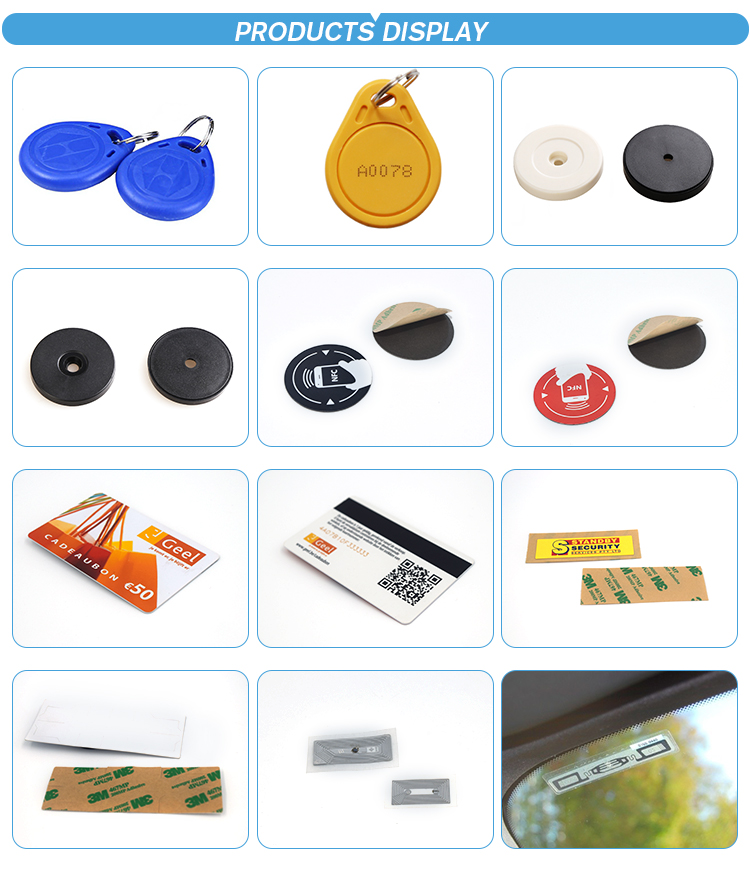
Housing Design
Available shapes include:
- Round
- Oval
- Rectangle
- Teardrop
- House
- Animal
- Custom molded designs
Material Options
Customers can choose from:
- ABS plastic
- PVC
- Silicone
- Epoxy-coated
- Eco-friendly materials
Logo Printing
Brand customization methods include:
- Silk screen printing
- UV printing
- Laser engraving
- Pad printing
- Hot stamping
Color Customization
Manufacturers support:
- Standard colors
- Pantone color matching
- Transparent finishes
- Dual-color molding
Laser Personalization
Each key fob may include:
- UID numbers
- Serial numbers
- QR codes
- Barcodes
- Asset identification numbers
Chip Selection
Depending on project requirements, customers can select LF or HF RFID chips with different memory capacities, security levels, and communication protocols.
Competitive Analysis
Choosing the right RFID technology depends on compatibility, security requirements, application complexity, and budget.
| Feature | RFID Proximity Key Fob | RFID Card | NFC Tag Sticker | Mobile NFC Credential |
| Portability | Excellent | Good | Good | Excellent |
| Durability | Excellent | Good | Moderate | Excellent |
| Reading Speed | Fast | Fast | Fast | Fast |
| Branding Area | Medium | Large | Small | None |
| Battery Required | No | No | No | Smartphone Battery |
| Typical Use | Access Control | Multi-Purpose ID | Marketing | Digital Access |
RFID Proximity Key Fob vs RFID Card
RFID cards provide a larger printable surface for branding and graphics, while key fobs are more portable, durable, and convenient for daily use because they remain attached to keychains.
RFID Proximity Key Fob vs NFC Sticker
NFC stickers are primarily used for marketing, product authentication, and smartphone interaction. RFID key fobs are better suited for daily identification and access control where durability is essential.
RFID Proximity Key Fob vs Mobile Credentials
Mobile credentials eliminate physical devices by using smartphones for authentication. However, RFID key fobs remain popular because they are simple to use, require no battery charging, are compatible with legacy systems, and are suitable for users without smartphones.
Why Choose an OEM RFID Manufacturer?
Working directly with a professional RFID manufacturer offers several advantages:
- Competitive factory pricing
- Stable chip sourcing
- Strict quality inspection
- OEM and ODM services
- Custom logo and packaging
- Chip encoding and programming
- Fast sample production
- Low minimum order quantities
- Global export experience
- Technical support before and after sales
An experienced OEM supplier can also help distributors and system integrators develop private-label RFID products tailored to specific industries and regional markets.
Conclusion
The RFID Proximity Key Fob remains one of the most practical and cost-effective contactless identification solutions available today. Its compact design, passive battery-free operation, rapid authentication, and compatibility with both Low Frequency and High Frequency RFID technologies make it ideal for access control, attendance management, parking systems, membership programs, visitor management, and cashless payment.
Compared with traditional keys, magnetic cards, and even some smartphone-based solutions, RFID proximity key fobs provide a reliable combination of convenience, durability, and affordability. When sourced from an experienced OEM manufacturer, businesses also benefit from international quality standards, flexible customization, and dependable product performance, making RFID proximity key fobs an excellent choice for distributors, security companies, and system integrators worldwide.