November 9, 2026
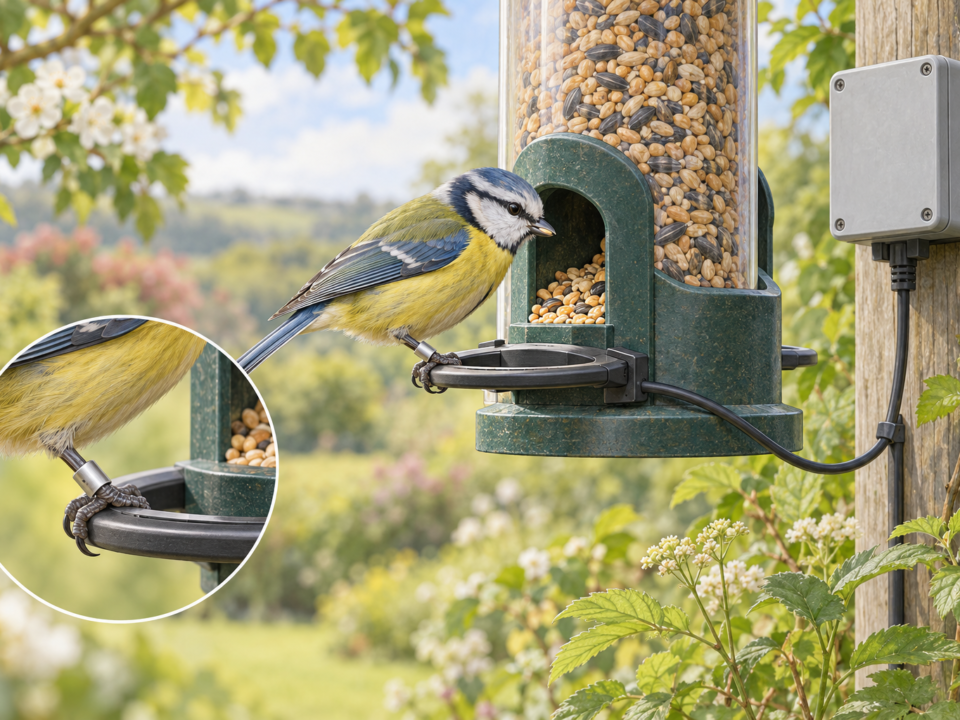
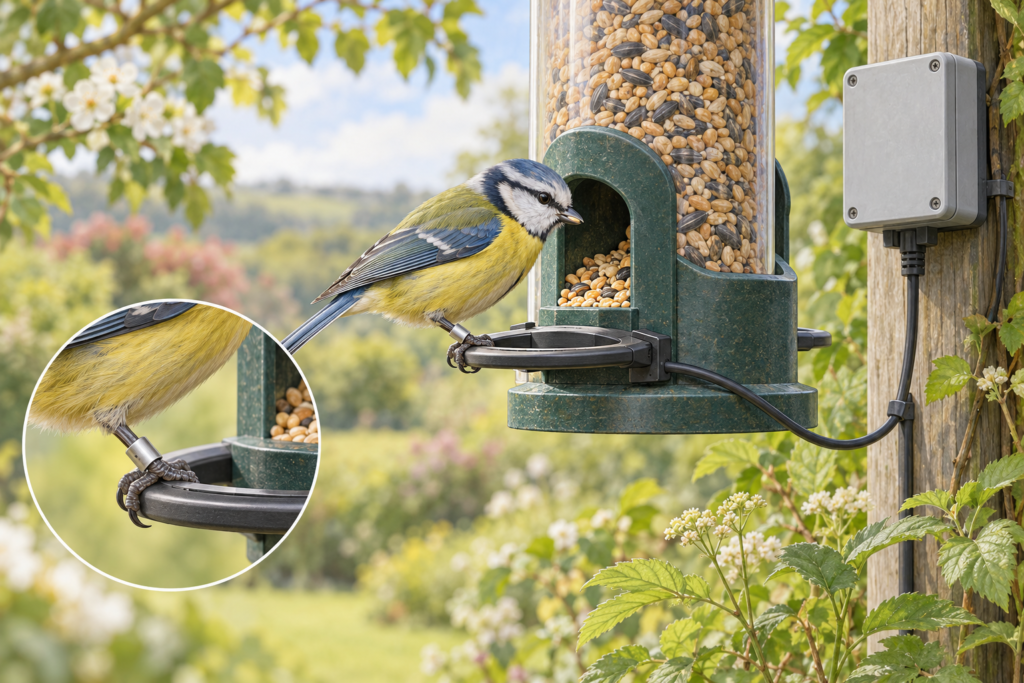
PIT tags can identify individual birds when they are scanned or visit a suitable reading point. A tag carried on a leg band can be detected by an antenna at a feeder or another predictable access point, connecting the bird’s identity with a time and place. This supports observations of repeated visits without requiring an observer to recognize every bird by sight.
The system observes encounters within its detection area. It does not automatically follow a bird’s full flight path. Useful bird applications begin with where an individual can be detected and what that encounter can tell the study.
How a bird PIT identification system works
The passive tag has no internal battery. A compatible reader and antenna provide the field that energizes it, and the tag returns its code. A record can then associate that code with the reading time and location.
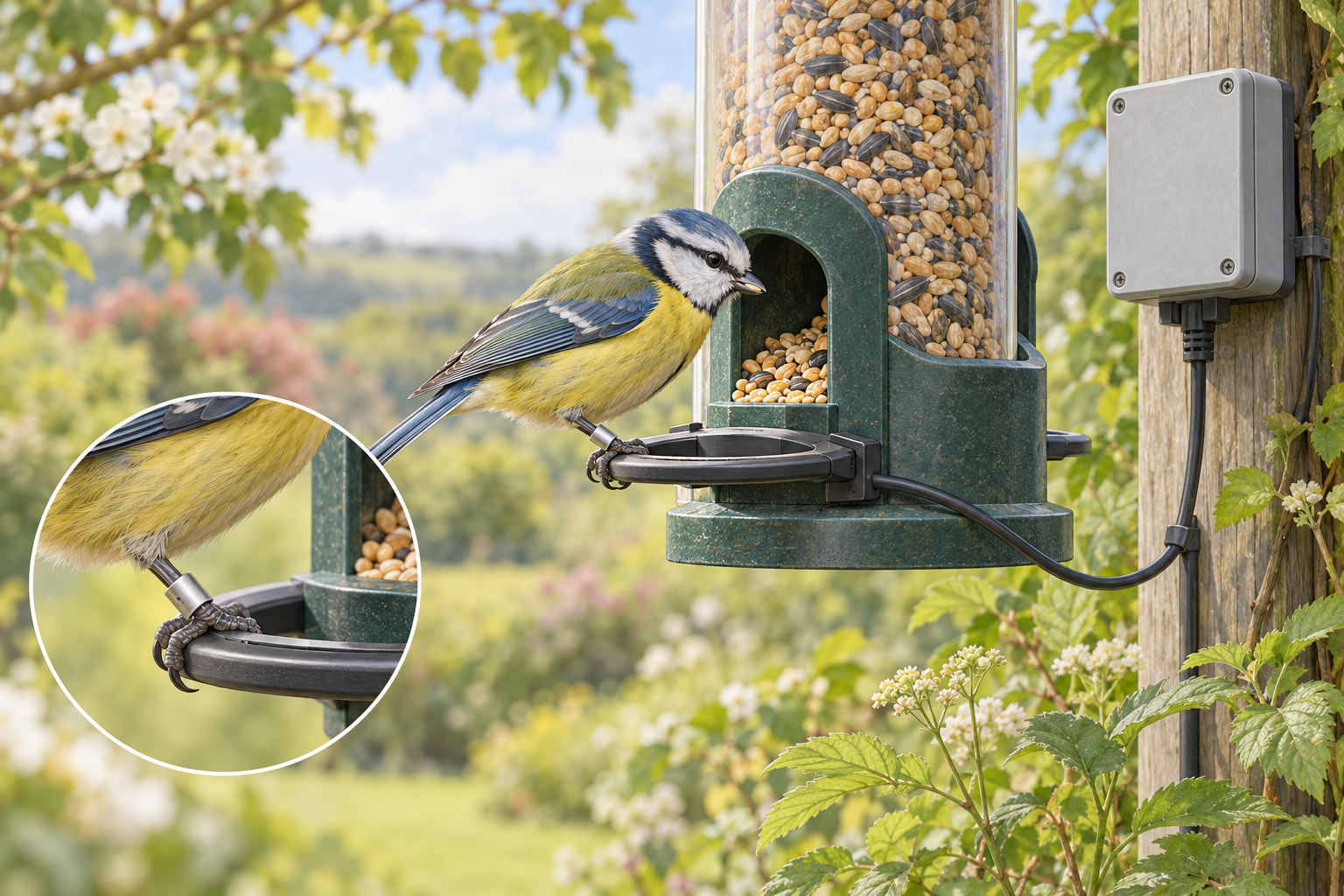
In an externally worn arrangement, the tag, band and antenna need to work together. A tag may be within the general vicinity of a feeder without being in a useful reading position. The geometry of the access point and the bird’s likely position therefore matter alongside the electronic equipment.
The Smithsonian’s PIT overview describes bird tags carried on leg bands as well as other attachment approaches. PIT use should not be described as though every animal must carry an implanted capsule. Attachment is a species- and project-specific decision.
A documented feeder application
Cornell’s FeederWatch project account describes tags attached to leg bands and readers incorporated into feeders. The recorded identities and visit times allowed researchers to investigate feeding patterns and individual differences. This is an external research example, not a DO RFID customer installation or a specification for every bird project.
The important feature is the connection between the question and the observation point: a feeder visit is an event that can be detected at a feeder. The same location would not, by itself, establish what the bird did after leaving.
In its account of a five-month pilot in 2011, Cornell describes tagging 129 birds from four species, including Black-capped Chickadees and House Finches. Its illustrated tags were 2 × 12 mm, below 0.1 g, and carried on leg bands. Those dimensions and mass describe that external project’s tags, not our glass-tag specifications or a universal band recommendation.
Choose an access point that answers the question
| Possible observation point | Question it may help address | Interpretation that needs care |
|---|---|---|
| Feeder access | Which tagged individuals visit, and when? | A recorded visit is not automatically the amount of food consumed |
| Nest entrance or approach | When are tagged individuals detected near the nest? | The layout must support any claim about entering, leaving or a specific behavior |
| Water or another controlled resource | Which individuals use the monitored location? | Use of an unmonitored resource will not appear in this record |
| Manual encounter | Which individual is being examined? | Additional measurements still need to be collected separately |
This table describes possible study questions, not a claim that an antenna alone measures each behavior. The detection should be related to the physical arrangement and, where necessary, checked against another observation method.
Understand a detection before calling it a visit
Consider a hypothetical bird that remains near an antenna for several seconds. The reader may produce several records of the same ID. Counting each record as a separate visit would describe reader output rather than the bird’s behavior.
A project can define how consecutive detections will be grouped, but the rule should match the question. A short break between readings may be part of one continuous encounter or a separate return. Retaining the raw records allows the grouping to be reconsidered later.
Likewise, duration between first and last detection is not always time spent feeding. A bird can move in and out of the effective field while remaining at the resource, or be detected without performing the behavior of interest. The system and the interpretation need to be evaluated together.
A simple example: four records, two grouped visits
Suppose one tag generates the following invented timestamps at feeder F1. For demonstration only, the analysis groups detections separated by less than 60 seconds into one encounter.
| Same illustrative ID | Raw timestamp | Grouped encounter |
|---|---|---|
| Bird A · feeder F1 | 10:00:00 | 1 |
| Bird A · feeder F1 | 10:00:01 | 1 |
| Bird A · feeder F1 | 10:00:03 | 1 |
| Bird A · feeder F1 | 10:10:00 | 2 |
There are four raw detections and two grouped encounters under that chosen rule. The first-to-last span in encounter 1 is three seconds; it is not necessarily feeding time. The 60-second threshold is an illustrative analysis parameter, not a validated rule for every bird or feeder. Keep raw events and the grouping rule so a video check or a different research question can revisit the interpretation.
Equipment choices follow the physical arrangement
The reader must support the tag format used by the study. The antenna then needs an effective reading area where the tag is likely to be carried through it. That can involve positions and orientations different from a handheld scan during a manual examination.
Test the useful area with representative tags and the installed surroundings. Materials, nearby electronics and the final mounting arrangement can change the result. The PIT read-range guide explains these system-level factors.
For an unattended location, also define power, recording and checks on operation. A day with no recorded visits can reflect bird activity, but it can also reflect equipment downtime. Keep information that allows those possibilities to be distinguished.
Species, tag dimensions and attachment need their own assessment
A small electronic tag can still be unsuitable for a particular bird, band or method. The complete carried arrangement matters: not just the transponder, but any band, fixing and associated material. Its dimensions, mass, placement and effect on behavior belong within the qualified project assessment.
A configuration used successfully with one species is not a universal recommendation for smaller birds or a different life stage. Product descriptions and examples are useful inputs, while the project’s permits, procedures and qualified personnel determine the appropriate handling and attachment approach.
Long electronic life is only one part of the requirement. The attachment must remain suitable over the intended period, and the project must still be able to recognize and interpret later detections. Our lifespan and retention guide separates those questions.
Connect identities, site records and observations
For a repeated-visit study, a useful record can preserve the full tag code, detection time and reader or site identity. Any biological or observational information is associated through the project’s records, rather than assumed to be stored inside the tag.
If several locations are used, maintain their identities and relevant changes over time. If an antenna is moved or a feeder is replaced, the location label alone may conceal a meaningful change in observation conditions.
As a simple hypothetical comparison, fewer records at one feeder might reflect fewer visits, an alternative food source or a change in reading performance. The data become more useful when the study can examine those alternatives rather than immediately assigning a biological cause.
When PIT detection is a useful fit
PIT identification can be a useful fit when the study concerns repeated encounters at places where compatible tags can be read. The battery-free identity is valuable, but it does not remove the need for suitable receiving locations.
A project about movements across a much wider area may need another observation method or complementary evidence. The relevant distinction is what each system records and where it can observe, not whether the tag is described generally as a “tracking chip.”
Discuss the tag as part of the project configuration
For a project evaluating a glass transponder as one part of an approved attachment, our PIT transponder range includes G-001 Ø1.25 × 7 mm, G-002 Ø1.4 × 8 mm and G-003 Ø2.12 × 12 mm FDX-B configurations. Shortlist by the complete carried assembly—tag, band and fixing—not capsule length alone. The project’s band design, final assembly mass and animal suitability need their own assessment; these model names do not describe a ready-made wild-bird band kit.
W90A and W91A are handheld FDX-B reader candidates for manual identity checks. Automated feeder work instead needs an appropriate installed antenna, reader, power and event logger. Quote the tag component, attachment components and reading installation separately so the proposal is clear about what each supplies.
If you are comparing reading equipment as well, the reader-selection guide explains handheld and fixed observation requirements.
Frequently asked questions
Must a bird PIT tag be implanted?
No. Some projects use externally carried tags, such as tags associated with leg bands. The attachment method must suit the species and approved project procedure.
Can PIT tags show a bird’s complete migration route?
A conventional PIT system records detections at compatible reading locations. It does not automatically record the route between them.
Does each reader record equal one feeding visit?
No. One encounter can produce repeated detections. Visit definitions require a stated interpretation of the records and physical setup.
Can the tag identify birds without a power supply at the feeder?
The tag itself has no battery, but the reader and recording equipment still need power.

Do RFID is a leading China-based manufacturer with over 15 years of experience. We specialize in customized RFID readers, tags, and cards, delivering high-quality, tailored solutions that meet your unique business needs and drive seamless, efficient identification.