September 14, 2026
Our RFID animal microchip is a miniature passive RFID transponder enclosed in biocompatible glass for permanent animal identification and tracking. Also known as an RFID glass tag, RFID capsule tag, pet microchip, or injectable animal transponder, this compact device is designed for dogs, cats, fish, livestock, laboratory animals, breeding animals, and other applications where reliable individual identification is required.
Available in 125 kHz and 134.2 kHz configurations, the RFID glass tag can support different chip types and identification protocols, including ISO 11784/11785, FDX-A, FDX-B, and HDX, depending on the selected model. Bio-glass encapsulation provides a durable housing for implantation, while optional Parylene coating is available for selected configurations.
Whether you need RFID microchips for pet identification, livestock traceability, veterinary management, breeding programs, or animal research, we provide multiple chip, size, frequency, and packaging options for different applications.
What Is an RFID Animal Microchip?
An RFID animal microchip is a small electronic identification device designed to provide an individual digital identity for an animal.
The microchip contains an RFID integrated circuit and antenna coil, which are sealed inside a small glass capsule. Because the transponder is passive, it does not require an internal battery. A compatible RFID reader supplies the electromagnetic energy required to activate the chip and read its identification information.
Unlike collars, printed labels, or external tags, an injectable RFID microchip is placed under the animal’s skin and remains associated with the animal. The unique identification number can then be connected to veterinary records, ownership information, breeding data, farm records, or other information in an external database.
The RFID microchip itself is primarily an identification device. It does not replace a database or tracking platform. Instead, the unique ID provides the link between the physical animal and its digital record.
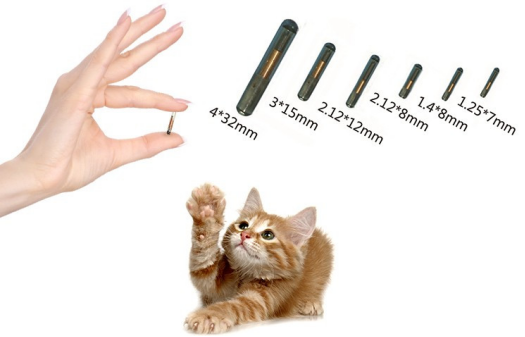
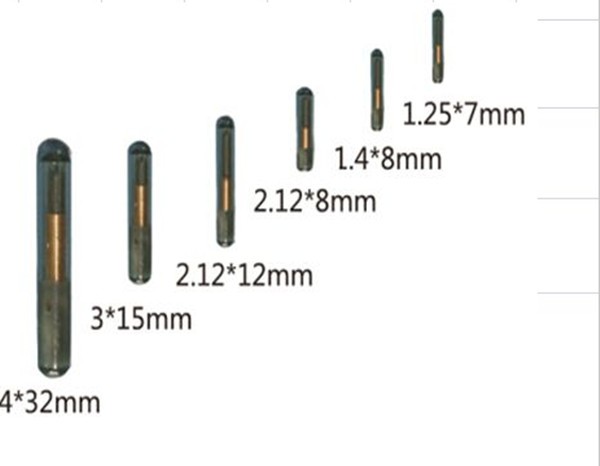
RFID glass tag is passive RFID glass transponder tags. Some people also call it RFID capsule tag. It is special designed for pets or human identification. They are injected in animals’ skin by special syringe or via surgery.
| Frequency | Available Size | Available Chip Type | Standards | Material |
| 134.2KHz | 1.25×7/8mm 1.4×8/10mm 2.12×12/10mm | EM4305 tag S256 tag S2048 | ISO11784/5FDX-BHDX | Bio-GlassParylene Coating |
| 125KHz | 1.25×7/8mm 1.4×8/10mm 2.12×12/10mm | EM4100/4102/4200T5577 | Unique IDManchester 64 bitFDX-A | Bio-GlassParylene Coating (Optional ) |
Here are the size for different format:
FDX-A: 1.4×8, 1.5×8, 2×6, 2×8, 2×10, 2×12, 3×13, 3.85×23, 3.85×32, 4x34mm
FDX-B: 1.4×8, 1.5×8, 2×6, 2×8, 2×10, 2×12, 3×13, 3.85×23, 3.85×32, 4x34mm
HDX: 2×12, 3×13, 3.85×23, 3.85×32, 4x34mm
Features:
1). Unique identity for every livestock and pet.
2). Import and export control.
3). Lost pet can be easily traced back to it’s owner.
4). Veterinarians are able to keep the animal’s heath record.
5). Easily implanted and no impact on the animal.
6). Suitable for use in extreme conditions.
7). Coupled with software, the RFID tag is a must inmanagement of animals, either livestock or household pet.
Specifications
| Chip | EM4305,4102,HITAG-S256,etc |
| Frequency | 125KHz / 134.2KHz,etc |
| Standard | Compliance with ISO11784,11785 standard |
| Size | 1.4x8mm, 2x8mm, 12x8mm, 3x15mm |
| Material | Bio-coating,bioglass,antibacterial,antiallergic |
| working temperature | Minus20 ℃~50℃; storage temperature:-40 ℃~70℃ |
| Working durability | More than 20 years; rewritable times: more than 1000000 times |
| Reading distance | 1-10CM |
| Sample | Free available for testing |
| Application | Animal identification/tracking |



How Does an Injectable RFID Microchip Work?
The RFID animal identification process is simple and contactless.
- A compatible RFID reader generates a low-frequency electromagnetic field.
- The implanted glass transponder enters the reader’s operating field.
- The antenna coil inside the microchip receives energy from the reader.
- The RFID IC is activated without an internal battery.
- The transponder sends its programmed identification code to the reader.
- The reader displays or transfers the ID to an animal management system.
This passive operating principle eliminates battery replacement and helps support long-term use.
The actual reading distance depends on the RFID reader, antenna design, chip model, implantation depth, tag orientation, and surrounding conditions. The product page specifies a typical reading distance of 1–10 cm for the available configurations, rather than a guaranteed distance for every combination of chip and reader.
Key Features of Our RFID Glass Tag
Permanent Individual Identification
Each RFID transponder provides an identification code that can be associated with a specific animal. This makes it suitable for pet registration, livestock management, breeding records, and animal research.
Biocompatible Glass Housing
The RFID electronics are enclosed in Bio-Glass designed for implantation applications. The cylindrical capsule provides a compact protective structure around the chip and antenna.
Passive RFID Technology
The microchip operates without an internal battery. It is energized by a compatible RFID scanner during the reading process, helping minimize maintenance requirements.
Multiple RFID Frequencies
Depending on the application, RFID glass tags are available in 125 kHz and 134.2 kHz configurations. The frequency and chip should be selected according to the required reader and identification protocol.
Multiple Protocol Options
Different animal identification projects may require different communication standards. Available options include FDX-A, FDX-B, HDX, and ISO 11784/11785-compatible configurations.
Small Cylindrical Design
Multiple capsule sizes are available for different animal species and implantation requirements, from miniature formats for small pets to larger formats for livestock and other animals.
Optional Parylene Coating
Parylene coating is available as an option for selected RFID glass tag configurations. It can be specified according to the intended implantation and product requirements.
Long Service Life
The product specifications indicate a working durability of more than 20 years under the stated operating conditions. Actual service life depends on the selected chip, environment, reader system, and application.
125 kHz vs. 134.2 kHz RFID Animal Microchips
Frequency selection is one of the most important considerations when choosing an animal RFID transponder. A reader designed for one protocol or frequency should not automatically be assumed to support another.
| Feature | 125 kHz | 134.2 kHz |
|---|---|---|
| Frequency Class | LF RFID | LF RFID |
| Common Chip Options | EM4100, EM4102, EM4200, T5577 | EM4305, S256, S2048 |
| Protocol Options | Unique ID, Manchester, FDX-A | ISO 11784/11785, FDX-B, HDX |
| Typical Use | General LF identification | Standardized animal identification |
| Suitable For | Selected animal and custom RFID systems | Pet and livestock identification systems |
| Reader Requirement | Compatible 125 kHz reader | Compatible 134.2 kHz animal RFID reader |
For projects requiring ISO 11784/11785 animal identification, the 134.2 kHz configuration with the appropriate FDX-B or HDX implementation is generally the relevant option. Always confirm compatibility between the microchip and the reader before ordering.
FDX-A vs. FDX-B vs. HDX
The communication protocol is just as important as frequency. Different animal RFID systems use different protocols depending on the application and reader infrastructure.
| Protocol | Typical Frequency | Typical Application | Available Sizes |
|---|---|---|---|
| FDX-A | 125 kHz | Animal identification and selected legacy systems | 1.4×8 mm to 4×34 mm |
| FDX-B | 134.2 kHz | Pet and livestock identification | 1.4×8 mm to 4×34 mm |
| HDX | 134.2 kHz | Livestock and animal identification | 2×12 mm to 4×34 mm |
FDX-B is particularly relevant to standardized animal identification applications because it is associated with the ISO 11784/11785 framework. FDX-A and HDX may be preferable where existing equipment or application requirements call for those protocols.
If you already have an RFID animal reader, provide its frequency and supported protocol before selecting a microchip. This prevents compatibility problems after implantation.
Available RFID Microchip Sizes
Animal size, implantation requirements, antenna performance, and application conditions can influence the appropriate capsule size.
Our available configurations include miniature glass tags as well as larger transponders.
| RFID Tag Size | Example Application |
|---|---|
| 1.25×7 mm | Small pets and compact animal identification applications |
| 1.4×8 mm | Dogs, cats and other small animals |
| 1.5×8 mm | Small animal identification |
| 2×8 mm | General pet and animal identification |
| 2×10 mm | Medium animal applications |
| 2×12 mm | Medium and larger animals |
| 3×13 mm | Livestock and larger animal applications |
| 3.85×23 mm | Larger animal identification |
| 3.85×32 mm | Large livestock applications |
| 4×34 mm | Larger animal and specialized applications |
The exact dimensions available depend on the selected RFID protocol and chip configuration. We can also discuss custom sizes for OEM projects.
RFID Microchip for Dogs and Cats
For companion animals, size, reader compatibility, and identification protocol are key selection factors.
A miniature RFID glass tag can be used for dogs, cats, ferrets, and other small pets where an injectable identification method is preferred. The unique RFID number can be connected to the animal’s registration and owner information in an appropriate database.
For pet identification projects, we recommend confirming:
- Required RFID frequency
- Reader model and supported protocols
- Required capsule size
- Identification number format
- Sterile packaging requirements
- Local veterinary and regulatory requirements
The microchip does not function as a GPS tracker. It must be scanned by a compatible RFID reader to retrieve its identification number.
RFID Microchip for Livestock
RFID glass tags can also be used in livestock identification and management systems.
Individual RFID identification allows farms, breeders, and animal management organizations to associate each animal with digital records. Depending on the system, records may include breeding history, vaccination information, health records, movement information, and production data.
For livestock applications, larger capsule sizes and protocols such as FDX-B or HDX may be selected according to the reader system and operating environment.
RFID identification can help reduce manual data entry and improve the accuracy of animal records, particularly when large numbers of animals must be individually identified.
RFID Glass Tag for Fish and Aquatic Animals
Small RFID transponders can be considered for fish identification, breeding research, aquaculture studies, and other aquatic animal applications where individual identification is required.
The correct capsule size and RFID system should be selected based on species, animal size, implantation method, water conditions, and the required reading performance.
For research and aquaculture projects, we recommend testing the complete system—including the tag, reader, antenna, implantation method, and animal size—before large-scale deployment.
RFID Microchip vs. External Animal Tags
Different identification methods have different advantages. An implanted RFID microchip is not intended to replace every type of animal tag, but it offers a useful alternative when permanent identification is important.
| Identification Method | Permanent | Electronic Reading | Can Be Lost Easily | Digital Database Integration | Best Use |
|---|---|---|---|---|---|
| RFID Glass Microchip | Yes | Yes | Very Low | Excellent | Pets, livestock, research |
| RFID Ear Tag | No | Yes | Medium | Excellent | Livestock management |
| Collar Tag | No | Usually No | High | Limited | Visible pet identification |
| Tattoo | Long-term | No | Low | Limited | Manual identification |
For many animal management systems, combining an implanted RFID microchip with an external visual tag provides both electronic and visible identification.
RFID Microchip vs. RFID Ear Tag
RFID ear tags are highly visible and convenient for livestock. They are especially useful when animals need to be scanned quickly during farm operations.
An RFID glass microchip, in contrast, is implanted beneath the skin and does not depend on an external attachment point.
| Comparison | RFID Glass Microchip | RFID Ear Tag |
|---|---|---|
| Visibility | Hidden | Visible |
| Risk of Loss | Very Low | Higher |
| Installation | Implantation | Ear application |
| Pet Applications | Excellent | Limited |
| Livestock Applications | Excellent | Excellent |
| Maintenance | Minimal | May require replacement |
| Tamper Resistance | High | Moderate |
The right choice depends on the animal, management environment, local regulations, and required identification workflow.
RFID Animal Microchip with Syringe
For veterinary and animal identification applications, the microchip can be supplied as a preloaded syringe configuration.
A typical package can contain one RFID microchip preloaded into an implantation syringe, with the assembly packed in a medical-grade sterilization pouch according to the selected product configuration.
Microchip-only and microchip-with-syringe options are available.
For implantation, the appropriate procedure should be determined and performed by a qualified veterinary or animal-care professional according to applicable local requirements.
OEM and Custom RFID Microchip Options
Different markets may require different chip types, dimensions, packaging formats, and identification protocols.
We support customization options such as:
- RFID frequency selection
- Chip selection
- FDX-A, FDX-B or HDX configuration
- Capsule dimensions
- Parylene coating
- Pre-programmed identification numbers
- Syringe packaging
- Sterile pouch packaging
- OEM packaging
- Custom quantity and production requirements
For OEM projects, it is important to specify the target reader and protocol before production. Our technical team can help match the RFID transponder with the intended reader system.
How to Choose the Right RFID Animal Microchip
Choosing the correct microchip starts with compatibility rather than simply selecting the smallest available size.
1. Check the RFID Reader
Identify the frequency and protocols supported by your current reader.
2. Select the Identification Standard
If your project requires ISO 11784/11785 compatibility, specify the appropriate animal identification configuration.
3. Choose the Capsule Size
Select the size according to animal species, body size, implantation requirements, and project specifications.
4. Confirm the Application
Pet identification, livestock traceability, research, breeding, and aquaculture may require different RFID configurations.
5. Confirm Packaging
Choose between a standalone microchip and a preloaded syringe package based on your implantation workflow.
6. Test Before Mass Production
For large projects, sample testing with the actual RFID reader and application environment is recommended before placing a production order.
Why Use RFID for Animal Identification?
RFID provides several advantages over manual identification methods.
Fast identification: A compatible reader can retrieve an animal’s identification number without visually inspecting a printed label.
Permanent association: An implanted glass transponder stays with the animal and is not dependent on an external collar or ear attachment.
Digital records: The unique RFID number can be connected to a database containing animal, owner, veterinary, breeding, or farm information.
Reduced manual errors: Electronic identification can reduce the need for handwritten records and repeated manual number entry.
Scalable management: RFID systems can support individual identification across veterinary clinics, farms, breeding facilities, research organizations, and animal management programs.
Frequently Asked Questions
Is an RFID animal microchip the same as a GPS tracker?
No. An RFID microchip is an identification transponder, not a GPS tracking device. It normally does not contain a battery or GPS module. A compatible RFID reader must be brought near the animal to read the chip.
Does the RFID microchip need a battery?
No. The available animal RFID glass tags are passive transponders. The RFID reader provides the energy required for the chip to respond.
What frequency does an animal RFID microchip use?
The available configurations include 125 kHz and 134.2 kHz. The correct frequency depends on the selected chip and reader system.
Which RFID protocol is used for pet microchips?
FDX-B is widely associated with standardized animal identification systems using ISO 11784/11785. However, the required protocol depends on the target reader and application.
How far can the RFID glass tag be read?
The product specification lists approximately 1–10 cm. Actual performance depends on the chip, RFID reader, antenna, implantation depth, orientation, and surrounding conditions.
Can the RFID microchip be rewritten?
Write capability depends on the selected chip. Some configurable RFID chips support repeated writing, while identification systems may use fixed or controlled identification data. Confirm the required memory and write functionality before selecting the chip.
What animals can use RFID glass tags?
Depending on the size and application, RFID glass tags can be used for dogs, cats, fish, livestock, laboratory animals, breeding animals, and other animal identification applications.
How long does an RFID animal microchip last?
The listed working durability is more than 20 years under the stated specifications. Because the transponder is passive and has no battery, there is no battery replacement requirement.
Can I order samples before bulk production?
Yes. Samples are available for testing. We recommend testing the selected microchip with your actual RFID reader before confirming a large production order.
Choose the Right RFID Glass Tag for Your Project
A reliable animal RFID system starts with the right combination of frequency, protocol, chip, capsule size, reader, and application requirements.
Our RFID animal microchips provide multiple configurations for pet identification, livestock management, animal research, breeding programs, and other identification projects. With Bio-Glass encapsulation, optional Parylene coating, multiple RFID protocols, and a range of capsule sizes, the product line can be adapted to different OEM and commercial requirements.
If you are sourcing RFID animal microchips, ISO 11784/11785 FDX-B transponders, injectable pet microchips, or RFID glass tags, contact us with your required animal type, RFID reader model, frequency, protocol, size, and estimated quantity.
We can recommend a compatible configuration and provide samples for testing before mass production. Please feel free to contact us anytime.