September 14, 2026
Create durable, fully customized NFC keyfob epoxy tags for digital business cards, product identification, membership programs, access control, marketing campaigns, and other RFID applications. These custom keyfobs combine full-color printing, embedded RFID/NFC technology, protective epoxy coating, QR codes, serial numbers, and programmable chip data in a compact and portable format.
Available in multiple sizes, shapes, materials, chip technologies, and personalization options, our NFC keyfob tags can be manufactured according to your application and branding requirements.

What Is an NFC Keyfob Epoxy Tag?
An NFC keyfob epoxy tag is a compact RFID device designed to be attached to a keyring, bag, lanyard, equipment, or other personal item. It typically consists of a printed surface, RFID/NFC inlay or chip, protective substrate, and an epoxy coating.
The epoxy layer protects the printed artwork and gives the tag a smooth, glossy, and durable finish. A punched hole can be added for use with a keyring or other attachment hardware.
Depending on the selected chip, the keyfob can operate at LF, HF/NFC, or UHF frequencies. For smartphone applications such as opening a website or sharing contact information, HF 13.56 MHz NFC chips such as NTAG213, NTAG215, and NTAG216 are commonly used.
Product Details
| Material | Coated paper,pvc,epoxy,ABS etc |
| Printing | Double side CMYK offset printing |
| Crafts | Number printing (Serial No & Chip UID etc), QR, Barcode etcChip program/encode/lock/encrption will be available as well (URL ,TEXT ,Number and Vcard)Epoxy, Hole punch etc |
| Size | Diameter 25mm,30mm,35mm,40mm,50mm stocke mould size ,0.5-0.9mm thicknessOEM size ,shape and crafts according to you required |
Available Chips
| LF: 125KHz | EM4200 ,EM4305,T5577,HID,HITAG® S256; |
| HF: 13.56MHz | NTAG® 203, NTAG® 213, NTAG® 215, NTAG® 216; MIFARE Classic® 1K, MIFARE Classic® 4K; MIFARE Plus® 1K, MIFARE Plus® 2K, MIFARE Plus® 4K; MIFARE Ultralight® EV1, MIFARE Ultralight® C; MIFARE® DESFire® 2K, MIFARE® DESFire® 4K, MIFARE® DESFire® 8K;ICODE® SLIX, ICODE® SLIX-S, ICODE® SLIX-L, ICODE® SLIX 2 |
| UHF: 860-960MHz | UCODE® etc |
Remark:
NTAG are registered trademarks of NXP B.V. and are used under license.
ICODE are registered trademarks of NXP B.V. and are used under license.
MIFARE and MIFARE Classic are trademarks of NXP B.V.
MIFARE and MIFARE Ultralight are registered trademarks of NXP B.V. and are used under license.
MIFARE and MIFARE Plus are registered trademarks of NXP B.V. and are used under license.
MIFARE DESFire are registered trademarks of NXP B.V. and are used under license
HITAG is a registered trademark of NXP B.V.
Custom NFC Keyfob Design
Your keyfob can be customized beyond the standard round format. We can manufacture OEM sizes, shapes, printed artwork, holes, and finishing options according to your requirements.
Common designs include round, square, rectangular, logo-shaped, and other custom die-cut formats.
For branding projects, the front and back surfaces can be printed independently. This allows you to combine your logo or artwork on one side with instructions, contact information, a QR code, serial number, or other information on the reverse side.
Full-Color Double-Sided Printing
Double-sided CMYK offset printing allows detailed artwork, logos, text, gradients, and brand graphics to be reproduced on both sides of the keyfob.
Typical artwork layouts include:
Front:
Brand logo + NFC symbol + short call-to-action
Back:
QR code + serial number + website or contact information
For large production orders, unique numbering and variable data can also be incorporated into the printing process.
Epoxy Coating for Added Protection
The epoxy coating creates a smooth protective surface over the printed artwork. It also gives the keyfob a glossy, slightly raised appearance that can make logos and graphics more visually distinctive.
Epoxy finishing is suitable for products that are handled frequently, such as key accessories, membership tags, promotional items, and identification tags.
The final construction and durability depend on the selected substrate, epoxy formulation, thickness, chip inlay, and production process.
NFC Programming and Encoding
We can provide chip programming and encoding services before shipment. Depending on the selected chip, data may include:
- Website URLs
- Plain text
- Identification numbers
- Contact information
- vCard data
- Product or customer IDs
- Other compatible NFC records
For projects requiring individual identification, each tag can be associated with a unique serial number, QR code, chip UID, or programmed URL.
For example, a batch of 1,000 tags can use 1,000 different URLs or identification numbers instead of storing identical information on every tag.
NFC Chip Options Compared
Different NFC chips provide different memory capacities and features. The appropriate chip depends on how much data you need to store and how the tags will be used.
| Chip | Frequency | Typical Use | Data Capacity / Features |
|---|---|---|---|
| NTAG213 | 13.56 MHz | URLs, marketing, smart tags | Compact NFC data storage |
| NTAG215 | 13.56 MHz | URLs, digital content, applications | More memory than NTAG213 |
| NTAG216 | 13.56 MHz | Larger URLs and NFC data | More memory than NTAG215 |
| MIFARE Classic 1K | 13.56 MHz | Access and identification systems | 1 KB-class memory |
| MIFARE Classic 4K | 13.56 MHz | More complex RFID applications | 4 KB-class memory |
| MIFARE Ultralight | 13.56 MHz | Lightweight NFC/RFID applications | Compact memory and low-cost applications |
| MIFARE DESFire | 13.56 MHz | Security-focused applications | Advanced security features |
| ICODE | 13.56 MHz | Item identification and tracking | HF RFID applications |
| EM / T5577 | 125 kHz | LF RFID applications | Access and identification applications |
| UCODE | 860–960 MHz | UHF RFID | Longer-range RFID applications |
The table is a general application guide. Actual memory, security functions, compatibility, and performance depend on the exact chip version selected.
Which NFC Chip Should You Choose?
For a simple smartphone-triggered experience, NTAG213 is often sufficient for short URLs and basic NFC content.
Choose NTAG215 when your application requires more memory than a basic URL tag can provide.
NTAG216 provides additional memory for applications that need longer URLs or larger NFC records.
For specialized access-control or secure identification systems, MIFARE, DESFire, or other RFID technologies may be more appropriate.
| Your Application | Common Chip Direction |
|---|---|
| Website / landing page | NTAG213 |
| Digital business card | NTAG213 / NTAG215 |
| Larger NFC records | NTAG215 / NTAG216 |
| Marketing campaign | NTAG213 / NTAG215 |
| Product identification | NTAG213 / NTAG216 or suitable RFID chip |
| Access control | MIFARE / DESFire or compatible system |
| HF RFID tracking | ICODE or compatible chip |
| 125 kHz RFID system | EM / T5577 / compatible chip |
| UHF inventory tracking | UCODE or compatible UHF chip |
The final chip should always be selected based on the reader, software, operating environment, memory requirements, and security requirements of the project.
NFC vs LF RFID vs UHF RFID
Not every RFID keyfob works with a smartphone. Frequency is one of the most important specifications to check before production.
| Technology | Frequency | Typical Reading Environment | Common Applications |
|---|---|---|---|
| LF RFID | 125 kHz | Dedicated LF readers | Access control, identification |
| HF / NFC | 13.56 MHz | NFC phones and HF readers | Digital content, NFC marketing, smart tags |
| UHF RFID | 860–960 MHz | UHF RFID readers | Inventory, logistics, asset tracking |
If your customers need to tap the keyfob with an iPhone or NFC-enabled Android phone, an appropriate 13.56 MHz NFC chip should normally be selected.
QR Code + NFC in One Keyfob
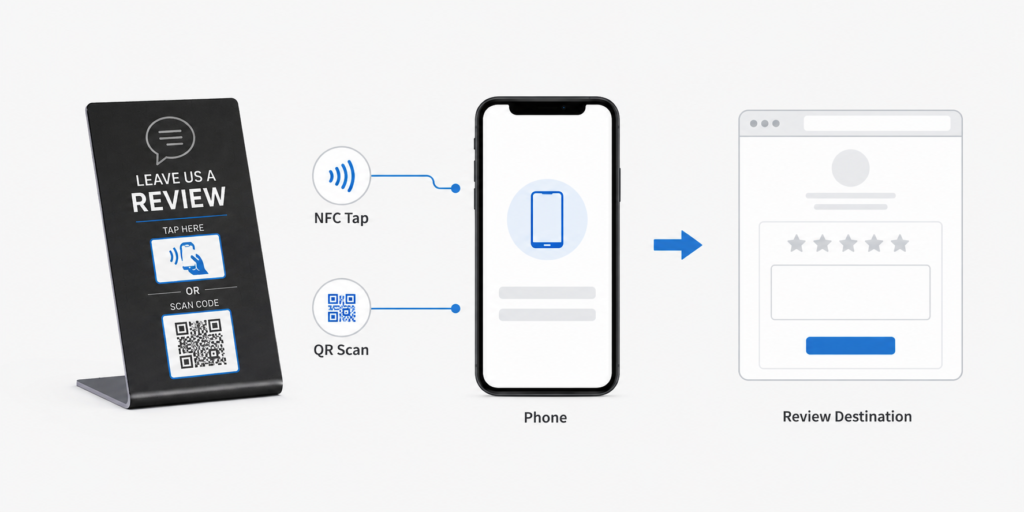
Combining NFC and a QR code provides two ways to access the same digital information.
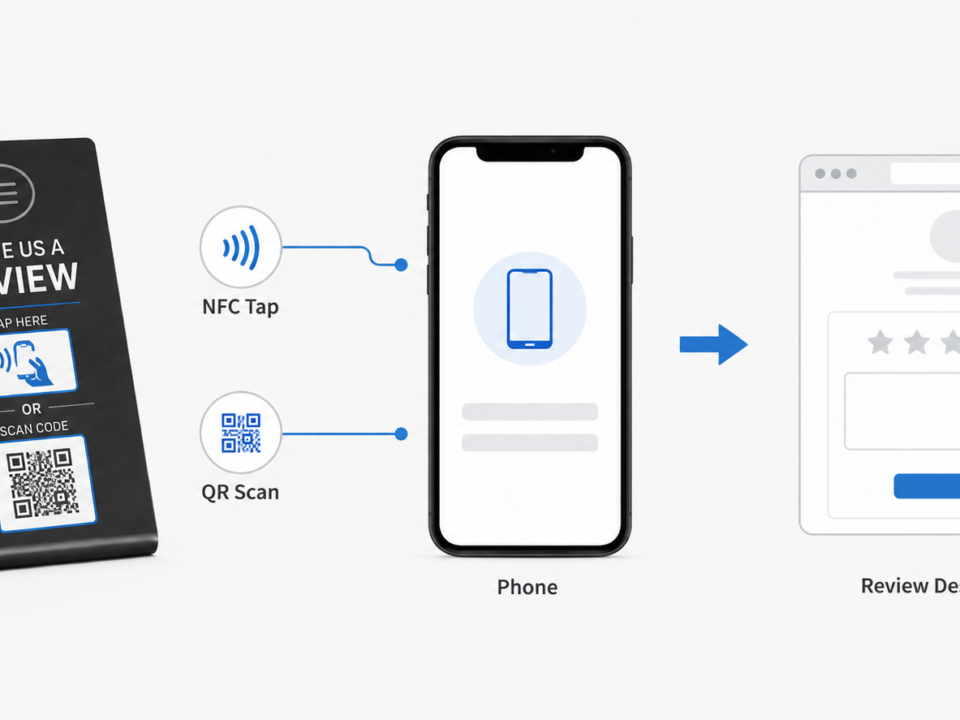
A customer can tap the NFC keyfob with a compatible smartphone or scan the printed QR code with a camera.
This dual-access design is useful for:
- Digital business cards
- Customer loyalty programs
- Product registration
- Warranty pages
- Marketing campaigns
- Event registration
- Contact sharing
- Product information
- Smart promotional merchandise
For example, the NFC chip and QR code can both point to a unique landing page:
NFC tap → Personalized URL
QR scan → Same personalized URL
This provides a convenient backup when NFC is not being used.
Unique Serial Numbers and Chip UID
For projects requiring individual identification, we can support variable data such as serial numbers, barcodes, QR codes, and chip-related identifiers.
A typical structure could be:
Keyfob 000001 → URL A
Keyfob 000002 → URL B
Keyfob 000003 → URL C
This approach is useful when every physical keyfob needs to correspond to a specific product, customer, account, campaign record, or database entry.
The exact information that can be printed or programmed depends on the selected chip and the customer’s system requirements.
Custom Shapes and Sizes
Standard stock mould diameters include:
- 25 mm
- 30 mm
- 35 mm
- 40 mm
- 50 mm
OEM dimensions and custom shapes are also available.
A custom-shaped keyfob can be designed around your logo, product identity, mascot, campaign artwork, or functional requirements.
When selecting a custom shape, the antenna layout and available space should be considered together with the final artwork.
Typical NFC Keyfob Applications
Digital Business Cards
Create a physical keyfob that links to a digital profile. Users can tap the tag to open a contact page, portfolio, social profile, or company website.
Membership and Loyalty Programs
Custom NFC keyfobs can be used as physical membership accessories connected to a digital membership platform.
Promotional Campaigns
Brands can distribute NFC keyfobs at exhibitions, events, retail locations, and promotional campaigns to provide direct access to digital content.
Product Registration
A unique NFC keyfob can direct customers to product registration, warranty information, instructions, or support pages.
Identification
Serial numbers, QR codes, and RFID chips can be combined to create physical identification tags for equipment, products, or other assets.
Access Control
Depending on the required reader and security system, compatible RFID chips can be embedded into the keyfob for access-control applications.
The chip must be matched to the existing access-control system; an NFC-compatible smartphone tag is not automatically compatible with every access-control reader.
Custom NFC Keyfob Manufacturing Process
A typical custom project follows these steps:
1. Requirement Confirmation
Confirm dimensions, shape, material, chip, printing, hole position, and quantity.
2. Artwork Preparation
Provide your logo and artwork. Variable information such as serial numbers or QR codes can also be prepared.
3. Chip Selection
Select the appropriate LF, HF/NFC, or UHF RFID chip based on the application.
4. Sample Production
A prototype or pre-production sample can be produced for physical and functional testing.
5. NFC Encoding
For programmed products, the required URL, text, vCard, number, or other supported information is written to the chips.
6. Mass Production
After artwork and chip specifications are approved, production proceeds according to the confirmed specifications.
7. Quality Inspection
Printing, dimensions, appearance, chip functionality, and variable data can be checked according to the project requirements.
What Information Do We Need for a Custom Order?
To quote and manufacture the correct NFC keyfob, provide as much of the following information as possible:
- Quantity
- Finished size
- Shape
- Material
- Chip model
- Printing requirements
- Artwork or logo
- Epoxy finish
- Hole size and position
- QR code or barcode requirements
- Serial-number requirements
- NFC programming requirements
- Packaging requirements
- Delivery destination
If you are unsure which chip to choose, provide the reader or smartphone application you plan to use. The chip can then be selected according to the technical requirements.
NFC Keyfob Specification Overview
| Specification | Standard / Available Option |
|---|---|
| Product | Custom NFC / RFID Epoxy Keyfob |
| Frequency | 125 kHz / 13.56 MHz / 860–960 MHz |
| Standard HF chips | NTAG203, NTAG213, NTAG215, NTAG216 |
| Other HF chips | MIFARE, Ultralight, DESFire, ICODE |
| LF chips | EM, T5577, HITAG and compatible options |
| UHF | UCODE and compatible options |
| Printing | Double-sided CMYK |
| Variable printing | Serial number, barcode, QR code |
| Programming | URL, text, number, vCard and compatible data |
| Surface | Epoxy finish |
| Standard diameters | 25 / 30 / 35 / 40 / 50 mm |
| Custom shape | Available |
| OEM size | Available |
| Hole punch | Available |
| Thickness | Approximately 0.5–0.9 mm depending on construction |
Frequently Asked Questions
Can the NFC keyfob be customized with our logo?
Yes. The keyfob can be customized with your artwork, logo, colors, text, QR codes, barcodes, and other variable information.
Can you program the NFC chip before shipment?
Yes. Programming services are available for supported chips. URL, text, number, vCard, and other compatible NFC records can be encoded according to the project requirements.
Can every keyfob have a different URL?
Yes, customized variable data can be used for individual NFC tags. The exact production process should be confirmed based on the quantity and data format.
Can the NFC keyfob work with iPhone and Android phones?
Suitable 13.56 MHz NFC chips can be read by compatible NFC-enabled smartphones. Smartphone compatibility depends on the device, operating system, chip, and intended NFC function.
Is an NFC keyfob the same as a 125 kHz RFID keyfob?
No. NFC normally refers to 13.56 MHz technology, while many traditional access-control keyfobs use 125 kHz RFID. They use different frequencies and are not automatically interchangeable.
Can I add a QR code?
Yes. QR codes can be printed on the keyfob and can be used together with NFC to provide an alternative way to access digital content.
Can you print serial numbers?
Yes. Serial numbers, barcodes, QR codes, and other variable information can be included according to the project requirements.
What is the smallest standard size?
Standard stock mould diameters include 25 mm, 30 mm, 35 mm, 40 mm, and 50 mm. Custom dimensions may also be available.
Can you make a custom shape?
Yes. OEM shapes can be developed according to the required design, provided that the selected chip antenna and production structure can fit the requested shape.
Which chip should I choose?
The answer depends on the reader and application. For simple smartphone NFC functions, NTAG213, NTAG215, or NTAG216 are common choices. Access-control, secure identification, HF RFID, and UHF applications may require different chip technologies.
Request a Custom NFC Keyfob Quote
Tell us your required quantity, dimensions, artwork, chip type, printing requirements, and NFC programming needs. If you are not sure which chip is suitable, provide details about your application and reader.
We can help configure the appropriate NFC keyfob epoxy tag with the required chip, printing, variable data, QR code, epoxy finish, and custom shape.
For a faster quotation, please provide:
Quantity + Size + Chip + Artwork + Programming Requirement + Delivery Destination
A sample can also be considered before mass production so the physical appearance and NFC performance can be evaluated with your intended devices and system.