
In the world of access control and identification, small devices often carry enormous responsibility. A keyfob that fits in your pocket might control doors, elevators, parking gates, time attendance systems, payment terminals, or even industrial equipment.
Custom RFID keyfobs are one of the most practical and widely adopted identification tools today. They combine radio frequency identification (RFID) technology with durable housing, compact design, and flexible chip options across LF, HF, and UHF frequencies.
This comprehensive guide explores:
- What RFID keyfobs are
- How they work
- Technical specifications
- The real-world problems they solve
- Applications across industries
- Customization possibilities
- Comparison with RFID cards
- ROI and cost efficiency
- How to choose the right supplier
Let’s unpack why something so small continues to dominate global access control systems.
What Is an RFID Keyfob?
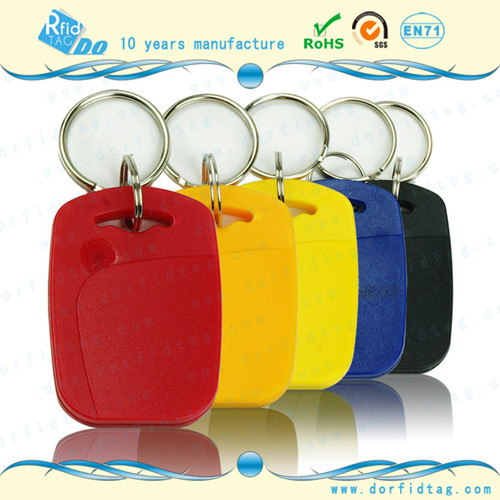
An RFID keyfob is a compact contactless identification device that communicates with a reader using radio waves. Unlike traditional metal keys, it does not require physical insertion or mechanical rotation. Unlike barcode systems, it does not require line-of-sight.
Instead, the user simply brings the keyfob near a reader. Within milliseconds, authentication is complete.
RFID keyfobs are typically attached to keychains, making them easy to carry daily. They are designed for long-term, repeated handling and harsh environments.
Technical Specifications Overview
Modern custom RFID keyfobs support multiple frequency ranges and chip types, making them compatible with global access and identification systems.
Chip Options
UHF Chips:
- H3 / H4
- Monza 4 / Monza 5
- U Code 7
HF Chips (13.56 MHz):
- N213
- N216
- IC SLI
- F08
LF Chips (125 kHz / 134.2 kHz):
- TK4100
- EM4305
- Or customized solutions
Protocol Support
- UHF: ISO18000-6C
- HF: ISO14443A / ISO15693
- LF: ISO18000-2
This multi-protocol capability ensures compatibility with most global access systems.
Frequency Options
- 860–960 MHz (UHF)
- 13.56 MHz (HF/NFC)
- 125 kHz / 134.2 kHz (LF)
Memory Options
- 144 bit
- 96 bit
- 128 bit
- 128 byte
- 1K
- Or customized memory structures
Read Range
- UHF: 1–5 meters
- HF/LF: 0–5 cm (depends on reader and antenna)
Write Endurance
≥ 100,000 cycles
Materials
- ABS
- Silicone
- Plastic
- PPS
- PC
- PA
- Or customized materials
Printing Options
- Offset printing
- Silk-screen printing
- Laser engraving
Temperature Resistance
- -25°C to +50°C
Weight
- 0.8 kg / 100 pieces
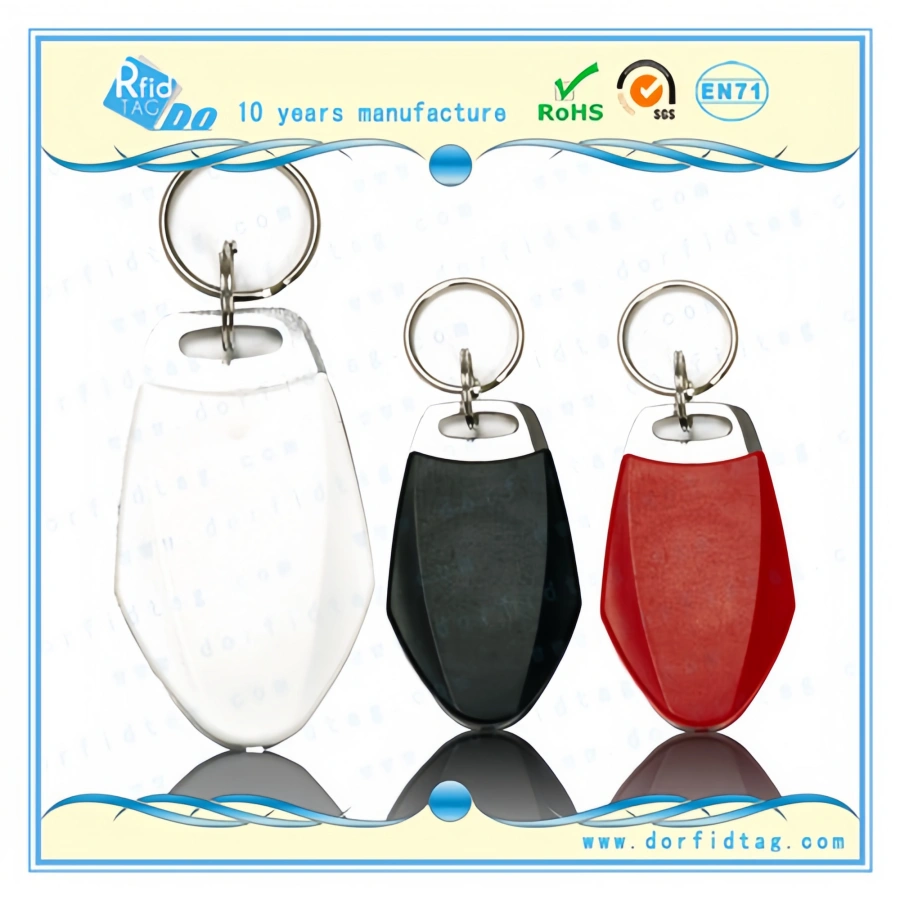
With over 30 available shapes and sizes, customization possibilities are extensive.
The Core Problems RFID Keyfobs Solve
Technology is valuable only if it solves real problems. RFID keyfobs address persistent operational pain points that mechanical keys and basic cards simply cannot handle.
1. Lost Keys and Unauthorized Duplication
The Pain Point
Traditional metal keys are simple but flawed. They can be:
- Lost easily
- Copied without authorization
- Shared freely
- Impossible to track
When a key disappears, the solution is often expensive: replacing locks, reissuing keys, and risking security breaches.
The RFID Solution
Each RFID keyfob carries a unique, digitally encoded ID.
- Lost keyfobs can be instantly deactivated in software
- No need to replace physical locks
- Duplication is significantly more difficult
- Encrypted chip options increase security
The result: higher security with lower long-term replacement costs.
2. Inefficient Access Management
The Pain Point
Mechanical key systems become chaotic in larger environments:
- Who has which key?
- Which doors are accessible?
- Who should access what at what time?
Manual tracking fails quickly.
The RFID Solution
Access permissions are digitally managed.
- Assign rights by user
- Define location-based access
- Restrict access by time window
- Update permissions remotely
- One keyfob controls multiple access points
For offices, residential complexes, hotels, and factories, this transforms access management from chaos into structure.
3. Wear and Damage of Traditional Access Media
The Pain Point
Access cards crack. Paper credentials tear. Stickers peel. Printed surfaces fade.
Daily use destroys weak materials.
The RFID Solution
RFID keyfobs are built for physical handling:
- Water-resistant housing
- Impact-resistant casing
- No printed surface required for functionality
- Designed for pockets and keychains
With lifespans often reaching 5–10 years, they outlast many other identification media.
4. Slow or Inconvenient User Experience
The Pain Point
Swiping magnetic cards, inserting keys, typing PIN codes — all of it creates friction. Lines form. Users get frustrated.
The RFID Solution
RFID keyfobs enable:
- Tap-and-go access
- No line-of-sight requirement
- Fast response time
- Reliable performance in rain, dust, or darkness
Speed matters at scale. Even saving two seconds per user compounds into massive efficiency improvements.
5. Lack of Traceability and Accountability
The Pain Point
Mechanical keys leave no audit trail. When something goes wrong, there is no data.
The RFID Solution
Every access event can be logged:
- User ID
- Time stamp
- Location
- Access granted or denied
This supports compliance, audits, and security investigations. It is especially critical in:
- Healthcare facilities
- Data centers
- Manufacturing plants
- Government buildings
Traceability turns access control into an intelligent system.
How RFID Keyfobs Work in Practice
Here’s what actually happens in milliseconds:
- The user brings the keyfob close to a reader.
- The reader emits a radio frequency signal.
- The keyfob’s embedded antenna harvests energy from that signal.
- The chip responds with its unique ID.
- The system verifies permissions in its database.
- Access is granted or denied instantly.
No batteries. No moving parts. No physical wear from insertion.
It’s elegant engineering: passive, wireless, and efficient.
Common Types of RFID Keyfobs
Different environments require different frequencies.
LF RFID Keyfobs (125 kHz)
- Mature, stable technology
- Cost-effective
- Widely used in basic access systems
- Short read range
Ideal for simple access control scenarios.
HF RFID / NFC Keyfobs (13.56 MHz)
- Higher security potential
- Supports encryption
- Compatible with NFC-enabled systems
- Common in modern access and payment systems
Well suited for smart buildings and integrated management platforms.
UHF RFID Keyfobs (860–960 MHz)
- Long read range (1–5 meters)
- Used in vehicle access
- Suitable for asset tracking
- Higher read speed in bulk scanning
Often used in parking and industrial applications.
Key Applications of RFID Keyfobs
RFID keyfobs are not limited to door access. Their versatility enables use across multiple industries.
1. Access Control Systems
Offices, schools, apartments, factories, and gated communities use keyfobs for secure entry.
2. Hotel and Hospitality
Guests use keyfobs for:
- Room access
- Gym facilities
- Pool areas
- Service zones
Durable design ensures they survive travel and daily handling.
3. Residential Communities
Residents may use one keyfob for:
- Building entrance
- Elevator access
- Parking gates
- Shared amenities
One device replaces multiple physical keys.
4. Employee Identification
Combines:
- Access control
- Time attendance
- Departmental permissions
- Cafeteria payment integration
One keyfob becomes a multifunctional credential.
5. Parking and Vehicle Access
UHF versions allow hands-free vehicle identification. Drivers can enter gated areas without stopping to swipe.
Customization: Making RFID Keyfobs Fit Your Brand
RFID keyfobs are highly customizable.
Shape and Design
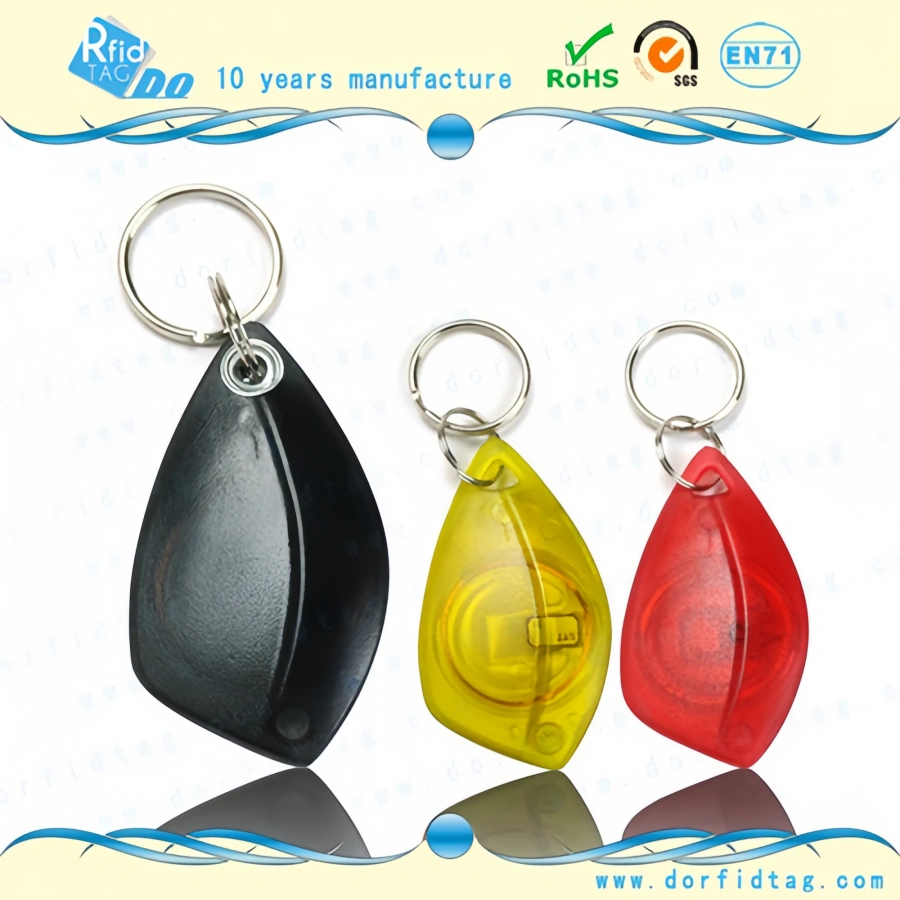
Over 30 mold options:
- Round
- Teardrop
- Square
- Rectangular
- Custom shapes
Color Matching
Brand-specific color customization available.
Logo and Marking
- Silk-screen printing
- Offset printing
- Laser engraving
- Serial numbers
- QR codes
Chip Selection
Choose chip type based on:
- System compatibility
- Memory requirement
- Encryption needs
- Read range
Customization transforms a technical tool into a branded identity device.
RFID Keyfob vs RFID Card
| Feature | RFID Keyfob | RFID Card |
|---|---|---|
| Durability | High | Medium |
| Portability | Excellent | Moderate |
| Loss Risk | Lower | Higher |
| Daily Handling | Ideal | Less Ideal |
| Lifespan | Long | Medium |
For long-term, high-frequency usage, keyfobs often provide superior value.
Cards are suitable for temporary credentials. Keyfobs excel in permanent user environments.
Cost Efficiency and ROI
At first glance, RFID keyfobs may cost more than basic cards.
However, consider:
- Longer lifespan
- Lower replacement frequency
- Reduced lock replacement costs
- Lower administrative overhead
- Improved security
Over several years, the total cost of ownership is often lower.
Security failures are expensive. Prevention is economical.
Why RFID Keyfobs Still Matter in a Smartphone Era
Mobile credentials are growing, but RFID keyfobs remain relevant because they:
- Do not require batteries
- Do not depend on apps
- Work without updates
- Operate in harsh environments
- Are universally understood
Sometimes simple technology wins because it is stable and predictable.
In security, reliability beats novelty.
Choosing a Quality RFID Keyfob Supplier
Not all keyfobs are equal. Low-cost options often cut corners in:
- Antenna quality
- Chip authenticity
- Housing durability
- Consistency in read performance
When sourcing RFID keyfobs, prioritize:
- Factory-based manufacturing
- Stable chip supply chain
- Material quality
- Protocol compliance
- Customization capability
- Bulk production stability
Testing samples before mass production is essential.
Long-term partnerships reduce operational risk.
Final Thoughts
RFID keyfobs solve some of the most persistent problems in access control:
- Lost keys
- Unauthorized duplication
- Poor traceability
- Slow access
- Administrative chaos
Through contactless communication, encrypted identification, and durable construction, they bring order to physical spaces.
They are small but strategic.
In a world obsessed with complexity, RFID keyfobs succeed by being efficient, reliable, and scalable.
They do one job extremely well:
Grant the right access, to the right person, at the right time — without friction.
And sometimes, that is exactly what modern infrastructure needs most.