
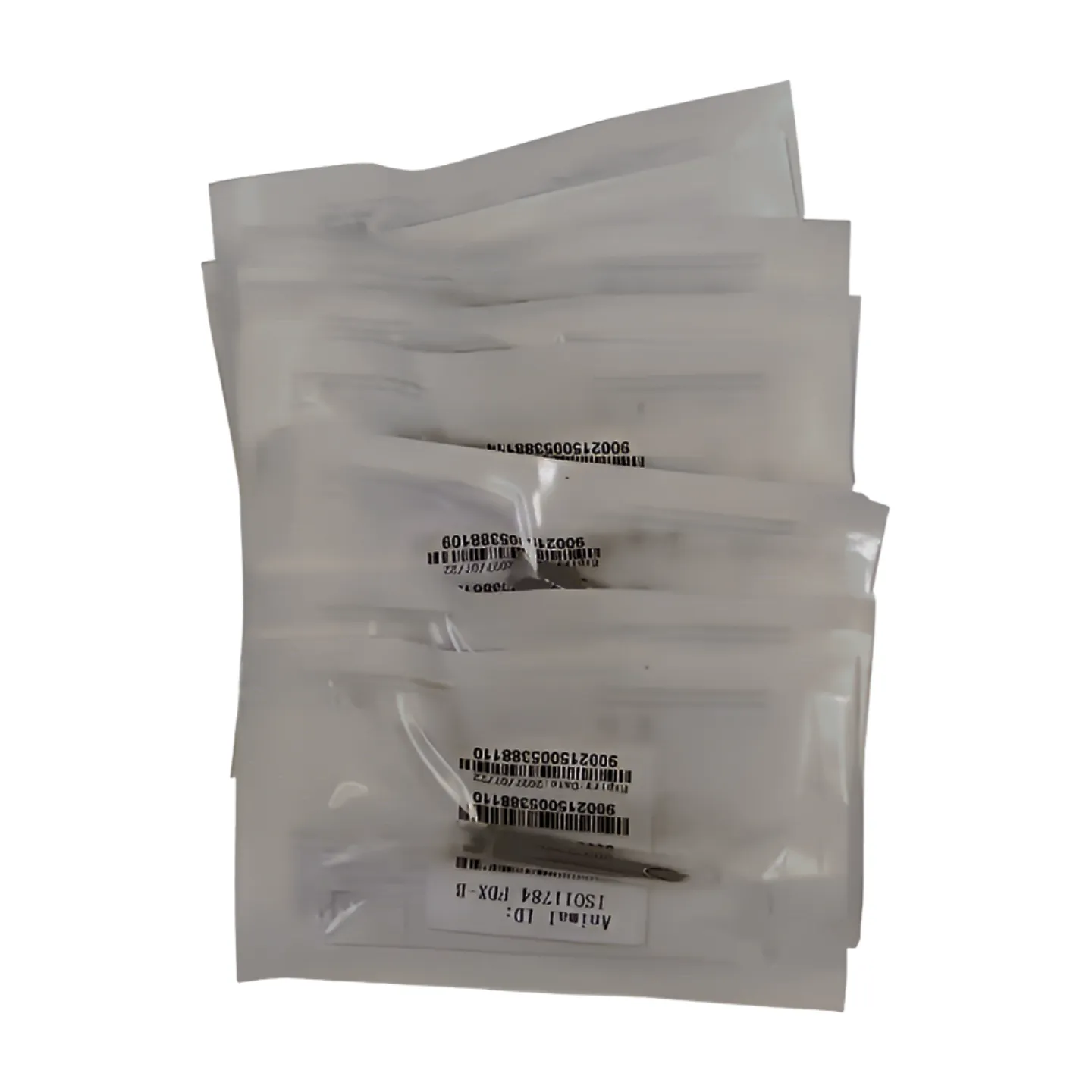
Product Overview
What Is Our Animal RFID Temperature Sensor Tag?
This integrated solution combines passive RFID identification and precision temperature sensing to address critical needs in pet and livestock health management. It provides permanent animal identification while enabling proactive monitoring of core body temperature—key to early disease detection and effective care.
Core Value Proposition
The tag delivers dual benefits: reliable, global animal ID for traceability and lost pet recovery, plus real-time temperature data to identify fever signs before clinical symptoms appear. This reduces health risks, streamlines management, and supports data-driven decision-making for veterinarians, livestock owners, and pet caregivers.
Key Product Features
RFID Identification Capabilities
- Passive RFID Technology: Battery-free operation with no maintenance required, ensuring a long operational lifespan.
- Unique UID: A globally unique identifier for permanent, tamper-proof animal identification across regions.
- ISO 11784/11785 Compliance: Aligns with international standards for animal RFID, ensuring compatibility with standard systems worldwide.
Precision Temperature Sensing Features
- Real-Time & Logged Data: Captures and stores temperature readings for immediate access or historical trend analysis.
- High Accuracy: ±0.5°C typical measurement accuracy for reliable health insights and early fever detection.
- Biocompatible Component: Medical-grade materials safe for long-term implantation in animals, with no risk of adverse reactions.
Detailed Technical Specifications
- Operating Frequency: 134.2 kHz
- Chip Model: EM4305 (integrated temperature sensing module)
- Housing Material: Medical-grade bioglass
- Dimensions: 1.4 mm (diameter) × 8.5 mm (length)
- Temperature Range: -20°C to 60°C
- Temperature Accuracy: ±0.5°C (typical)
- Compliance Standards: ISO 11784, ISO 11785
- Power Source: Passive (energy harvested from RFID reader signal)
Application Scenarios
Pet Health Monitoring & Identification
- Tracks core body temperature during routine checks or illness to detect early fever signs (e.g., infections, post-surgery complications).
- Provides permanent unique ID linked to owner databases, enabling fast recovery of lost pets.
Veterinary Clinic Patient Management
- Streamlines post-surgery temperature monitoring and chronic condition tracking (e.g., diabetes, thyroid issues).
- Automatically links temperature data to patient electronic health records (EHRs) for efficient care coordination.
Livestock Herd Thermal Health Tracking
- Detects early fever in livestock herds to prevent disease outbreaks (e.g., foot-and-mouth disease, influenza).
- Supports individual animal ID for herd management, breeding tracking, and supply chain traceability.
Compatibility & Integration
RFID Reader Compatibility
Works with all ISO 11784/11785 compliant handheld and fixed RFID readers. No additional hardware or software modifications are required for standard setups.
Software Integration
Seamlessly connects to veterinary EHR systems, livestock management platforms, and pet ID databases. Enables data analysis, trend tracking, and automated alerts for abnormal temperature readings.
Frequently Asked Questions
Is the temperature sensor tag safe for implantation in animals?
Yes. The tag uses medical-grade bioglass and biocompatible materials, approved for long-term implantation in pets (cats, dogs) and livestock (cattle, sheep, pigs) with no risk of tissue irritation or rejection.
How do I retrieve temperature data from the tag?
Use an ISO 11784/11785 compliant RFID reader to scan the tag. The tag harvests energy from the reader’s signal to transmit ID and temperature data to the reader, which displays or stores the information.
What is the lifespan of the tag?
As a passive RFID device, the tag has no battery. It can last up to 10+ years with normal use, as it relies on the RFID reader’s signal for power and operation.
Can the tag be used for both small pets and large livestock?
Yes. The compact size (1.4×8.5 mm) and flexible biocompatible design make it suitable for implantation in both small pets (e.g., cats, dogs) and large livestock (e.g., cattle, sheep).