
Core Technology Fundamentals of VetTrack RFID Temperature Monitoring System
Defining RFID Temperature Monitoring for Animal Applications
VetTrack integrates passive RFID with calibrated temperature sensing to deliver non-invasive, individual animal temperature tracking—critical for early disease detection, breeding management, and livestock welfare monitoring.
Synergy Between Passive RFID UID Microchips and Integrated Temperature Sensors
Each tag combines a unique 64-bit UID (per ISO 11785) with a high-precision temperature sensor, enabling simultaneous identification and temperature data capture for every animal.
Alignment with ISO 11784/11785 Standards for Interoperable Data Collection
Compliance with global ISO 11784/11785 standards ensures compatibility with existing veterinary practice management and livestock tracking systems, eliminating data silos.
Key Technical Specifications of VetTrack RFID Temperature Monitoring Tags
Frequency Band: 134.2 kHz for Optimal In-Vivo Signal Penetration
The 134.2 kHz low-frequency band minimizes signal attenuation through animal tissue, ensuring reliable tag detection even in dense livestock environments (e.g., feedlots, barns).
Chip Architecture: EM4305 UID Chip Integration with Temperature Sensing Modules
Powered by the EM4305 chip, the system supports stable UID transmission and ±0.5°C temperature accuracy, meeting clinical-grade monitoring requirements for veterinary use cases.
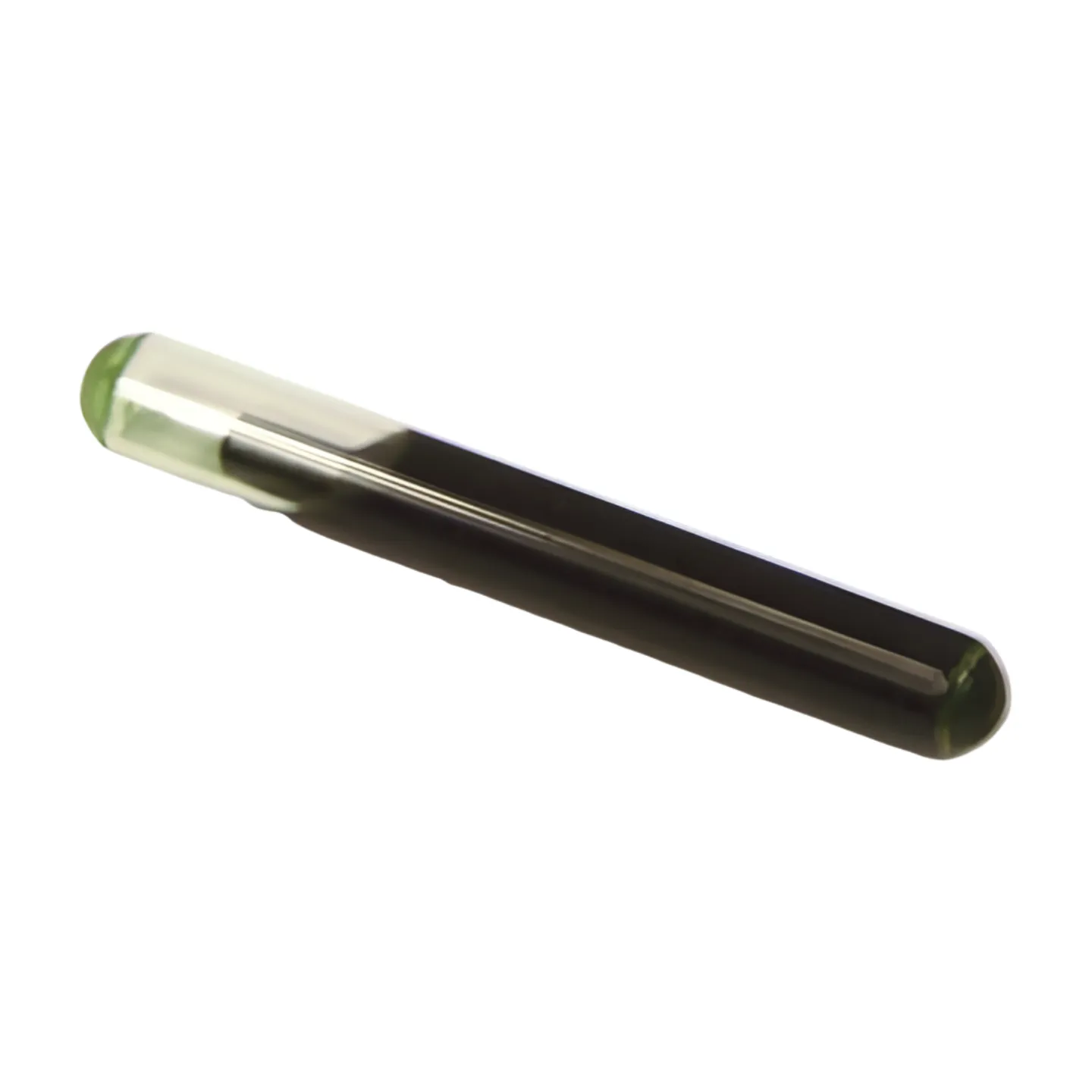
Form Factor & Material: Bioglass Encapsulation (1.4×8.5mm) for Biocompatibility and Durability
The 1.4×8.5mm tag uses medical-grade bioglass encapsulation, ensuring long-term biocompatibility (no tissue rejection) and resistance to environmental factors (humidity, temperature extremes).
Passive RFID Technology: Energy Harvesting and Low-Power Operation Principles
Passive design eliminates battery needs—tags harvest energy from RFID reader signals, enabling maintenance-free operation for the lifetime of the animal.
Working Mechanisms of VetTrack Passive RFID Temperature Monitoring System
Energy Transfer: Powering Temperature Sensors via RFID Reader Signals
When a compatible RFID reader emits a 134.2 kHz signal, the tag’s antenna harvests energy to activate the temperature sensor and UID chip.
Data Encoding & Transmission: Merging Unique UID and Temperature Data
The sensor captures temperature data (within ±0.5°C accuracy), which is encoded with the animal’s unique UID and transmitted back to the reader via radio waves.
Reader-Side Processing: Capturing, Decoding, and Storing Temperature Logs
The reader decodes the combined UID-temperature data, stores it in local memory, and syncs with cloud or on-premise management platforms for real-time analytics.
Technical Advantages Over Traditional Animal Temperature Monitoring Methods
Non-Invasive, Continuous Monitoring Without Animal Restraint
Unlike manual thermometers or wearable devices, VetTrack tags require no handling or restraint—enabling 24/7 temperature tracking with minimal animal stress.
Unique UID Identification for Individual Animal Temperature Trend Tracking
Each animal’s unique UID links temperature data to its profile, allowing veterinary teams to identify abnormal trends (e.g., fever spikes) for early intervention.
Maintenance-Free Operation for Long-Term Veterinary and Livestock Use
Passive design eliminates battery replacement or charging, reducing operational costs and ensuring reliable performance for the animal’s entire lifespan.
Technical Deployment Considerations for Real-World Scenarios
Signal Optimization for Different Animal Species and Tissue Types
Deployment guidelines include adjusting reader placement based on animal size (e.g., closer spacing for small livestock like poultry) to optimize signal penetration through varying tissue densities.
Temperature Sensor Calibration for Clinical-Grade Accuracy
Each tag undergoes factory calibration against NIST-traceable standards, with optional field calibration tools to maintain ±0.5°C accuracy over time.
Integration with Veterinary Clinic Management and Livestock Tracking Platforms
VetTrack supports API integration with leading veterinary practice management software (e.g., VetEdge) and livestock ERP systems, enabling seamless data flow and automated alerts.
Future Technical Innovations in VetTrack RFID Temperature Monitoring
Miniaturization of Sensing Modules for Smaller Form Factors
Ongoing R&D focuses on reducing tag size to 1.2×7mm, expanding applicability to small animals (e.g., rodents, birds) and neonatal livestock.
Enhanced Data Storage for Historical Temperature Logging
Next-gen tags will include 128-bit memory to store up to 1000 historical temperature readings, enabling trend analysis without continuous reader connectivity.
IoT Integration for Remote Temperature Alerting and Cloud-Based Analytics
Future iterations will support IoT connectivity, allowing real-time temperature alerts via SMS/email and cloud-based AI analytics to predict disease outbreaks.