
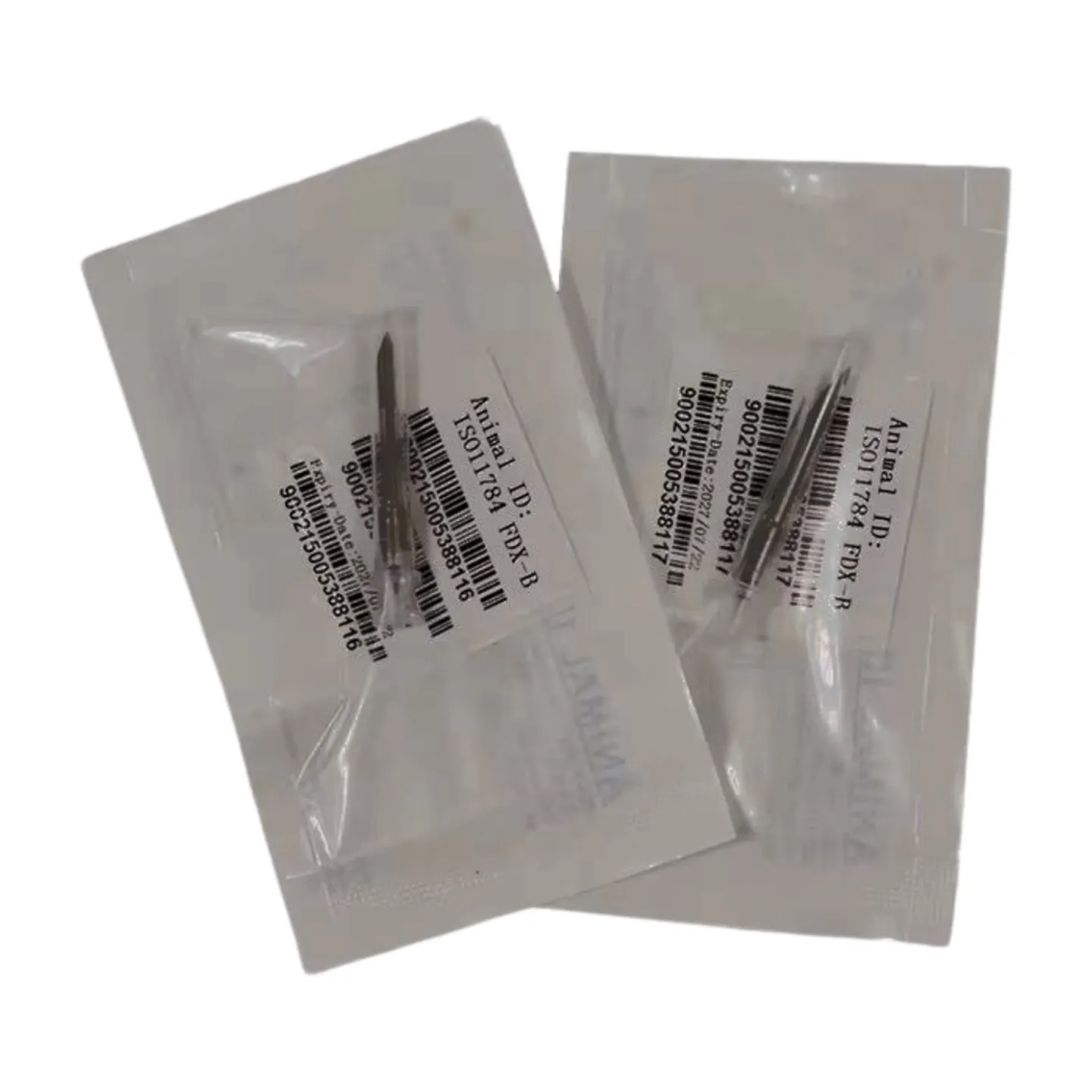
Product Overview
Key Value Proposition
The Temperature Sensing Animal RFID Microchip delivers a dual-function solution for permanent animal identification and real-time health monitoring. It enables early detection of health anomalies via continuous temperature tracking while ensuring reliable, long-term animal tracking through a unique UID.
Quick Specs Summary
Key specifications include: passive RFID technology (battery-free), ISO 11784/11785 compliance, biocompatible bioglass enclosure, temperature sensing range of 32°C to 43°C (±0.1°C accuracy), and a unique 64-bit UID for permanent identification.
Core Features
Accurate Real-Time Temperature Sensing
The microchip integrates a high-precision temperature sensor that captures real-time body temperature data with ±0.1°C accuracy, supporting immediate detection of fever or hypothermia for proactive health management.
Passive RFID Technology (Battery-Free, Long Lifespan)
Utilizing passive RFID, the microchip operates without an internal battery—powered by the electromagnetic field of compatible readers—ensuring a 20+ year lifespan and zero maintenance needs.
Unique UID for Permanent Animal Identification
Each microchip is pre-programmed with an unalterable 64-bit UID, providing permanent, tamper-proof identification to aid lost pet recovery and livestock traceability.
ISO 11784/11785 Compliance (Interoperable with Standard Readers)
The microchip adheres to ISO 11784 and ISO 11785 standards, ensuring compatibility with most commercial animal RFID readers for seamless system integration.
Biocompatible Bioglass Enclosure
Encased in medical-grade bioglass, the microchip is non-toxic, non-allergenic, and tissue-compatible, preventing rejection and enabling safe long-term implantation.
Application Scenarios
Pet Health Monitoring & Identification
For domestic pets (dogs, cats), the microchip provides permanent identification for recovery and real-time temperature tracking to detect early illness signs like infection-induced fever.
Veterinary Clinic Patient Care Management
Veterinary clinics use the microchip to monitor post-surgery temperature changes and simplify patient record management via the unique UID, reducing administrative errors.
Livestock Wellness Tracking & Disease Prevention
In livestock farming (cattle, pigs, sheep), the microchip enables early detection of contagious disease outbreaks (e.g., foot-and-mouth) and supports food safety traceability via the UID.
Detailed Technical Specifications
RFID Basic Parameters
RFID type: Passive (HF, 13.56 MHz); UID: 64-bit unique identifier; Protocol: ISO 14443 Type B; Read range: Up to 5 cm (standard reader); Operating frequency: 13.56 MHz.
Physical Dimensions & Material
Dimensions: 2.12 mm diameter × 12 mm length; Enclosure: Medical-grade bioglass; Implantation: Sterile hypodermic needle (included).
Temperature Sensing Performance Metrics
Temperature range: 32°C–43°C (90°F–110°F); Accuracy: ±0.1°C; Response time: <1 second; Sampling rate: Adjustable (1/sec to 1/min).
How It Works
Temperature Data Capture & Transmission
When a compatible reader emits an electromagnetic field, the microchip’s antenna captures energy to power the temperature sensor. The sensor measures body temperature, converts it to digital data, and transmits it back to the reader via radio waves.
Integration with Animal Health Monitoring Systems
Temperature and UID data export to veterinary practice or livestock traceability software, enabling automated alerts for abnormal temperatures and centralized record-keeping.
FAQs
Is the microchip safe for long-term animal implantation?
Yes. The medical-grade bioglass enclosure is non-toxic and biocompatible, with no reported tissue rejection or adverse reactions in long-term animal trials.
Can temperature data be read without direct contact?
Yes. Passive RFID allows data reading from up to 5 cm without direct contact—simply hold the reader near the implantation site.
Are these microchips compatible with existing readers?
Yes. ISO 11784/11785 compliance ensures compatibility with most commercial animal RFID readers used by veterinarians and farms.
What is the lifespan of the temperature sensing function?
The temperature sensing function lasts up to 20 years. Passive RFID eliminates battery dependency, so components are designed to match the animal’s typical lifespan.