
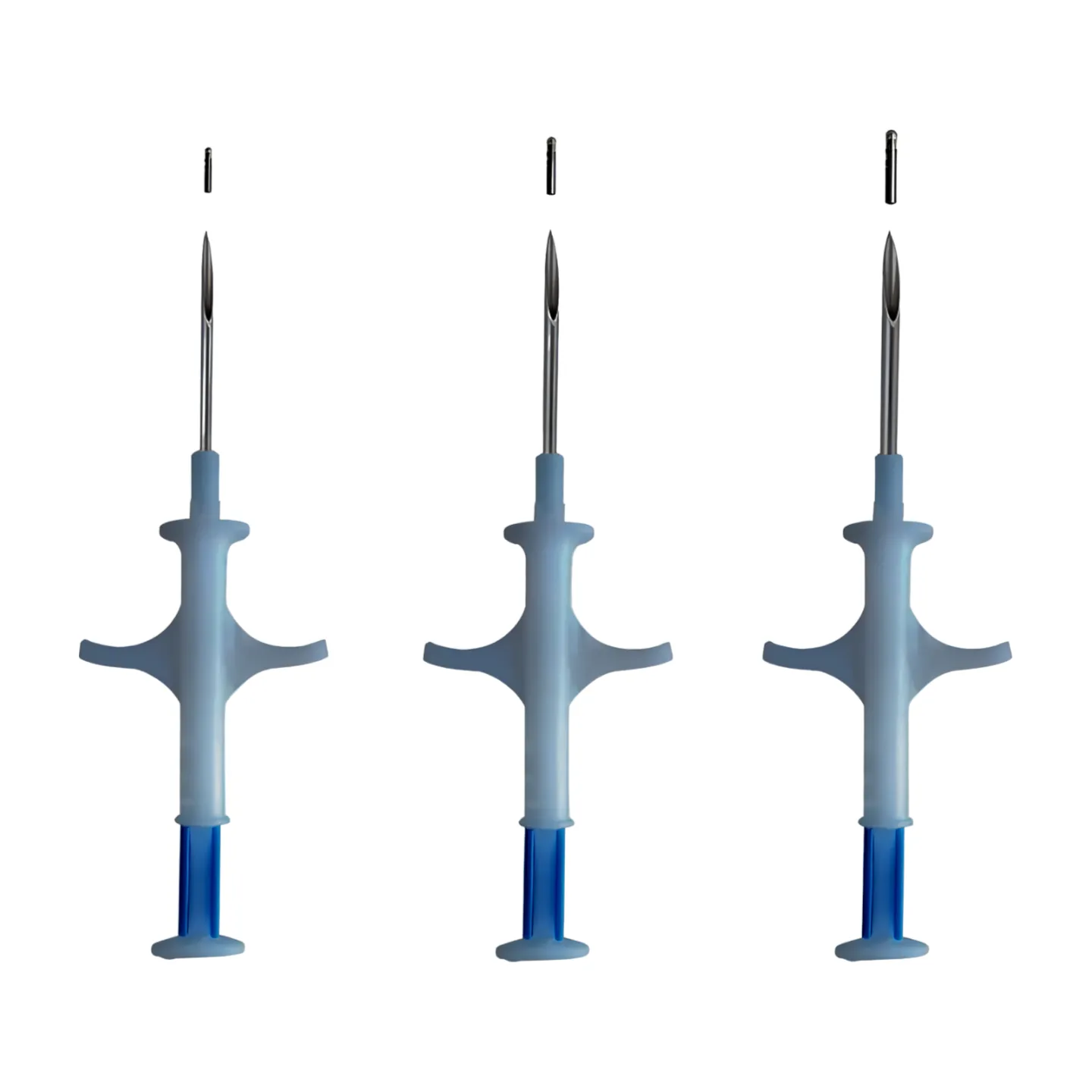
Animal RFID Temperature Tag
Product Overview
What Is an Animal RFID Temperature Tag?
The Animal RFID Temperature Tag is an implantable device that integrates passive RFID identification with real-time temperature monitoring. It provides a single solution for tracking animal identity and health status, eliminating the need for separate tags or devices.
Core Benefits for Animal Care Providers & Owners
- Enables proactive health monitoring by detecting abnormal temperatures early
- Simplifies traceability with a unique, unmodifiable UID for individual animals
- Reduces manual data collection efforts for veterinary clinics and livestock farms
- Supports lost pet recovery via global RFID reader compatibility
Key Product Features
Dual-Functionality: Unique UID Identification + Continuous Temperature Tracking
Each tag is pre-programmed with a permanent unique UID for individual animal identification. It simultaneously monitors core body temperature, allowing real-time or on-demand data retrieval.
Passive RFID Technology: Battery-Free & Long-Lasting Operation
Using passive RFID, the tag draws power from compatible readers during scanning—no batteries required. This delivers a lifespan of up to 20 years under normal conditions.
ISO 11784/11785 Compliance: Global Compatibility with RFID Readers
Adheres to ISO 11784 and ISO 11785 standards, ensuring compatibility with most commercial RFID readers worldwide. Seamlessly integrates into existing animal tracking systems.
Biocompatible Bioglass Construction: Safe for Implantation in Pets & Livestock
Made from medical-grade bioglass, the tag minimizes tissue rejection or adverse reactions. Suitable for implantation in dogs, cats, cattle, sheep, pigs, and other common species.
Detailed Technical Specifications
Chip & Frequency Parameters
- Chip Model: EM4305
- Operating Frequency: 134.2 kHz
- Memory: 256 bits (UID + temperature data storage)
Physical Attributes
- Size: 1.4 mm (diameter) × 8.5 mm (length)
- Material: Medical-grade bioglass
- Weight: ~0.1 grams
Temperature Monitoring Performance
- Temperature Range: -20°C to 50°C
- Accuracy: ±0.5°C
- Response Time: <1 second
- Data Transmission: Real-time (scanned) or on-demand reading
Application Scenarios
Pet Health Management & Lost Recovery
Monitors pet core temperature to detect early illness signs (e.g., fever). Unique UID links to registration databases for quick lost pet reunification.
Veterinary Clinic Patient Tracking & Vital Sign Monitoring
Reduces patient ID errors and enables continuous temperature monitoring during treatment. Supports efficient data collection for veterinary records.
Livestock Herd Health Surveillance & Traceability
Identifies animals with abnormal temperatures (disease indicators) for proactive herd management. Meets regulatory traceability requirements for food safety.
Installation & Usage Guidelines
Professional Implantation Procedure
Implantation requires a licensed veterinarian or trained professional: 1) Clean the subcutaneous site (neck/ear); 2) Insert the tag with a sterile tool; 3) Disinfect post-implantation. No anesthesia is typically needed.
How to Retrieve Temperature & ID Data
Use an ISO 11784/11785 reader: Hold near the implantation site to display UID and current temperature. Some readers store/export data for analysis.
Post-Implantation Care & Maintenance Tips
- Monitor the site for 2-3 days for infection signs (redness, swelling)
- Avoid touching the site with unwashed hands
- No special maintenance for the tag (battery-free, biocompatible)
- Schedule vet check-ups to confirm tag placement/function
Frequently Asked Questions
Is the RFID Temperature Tag Safe for All Animal Species?
Safe for most domestic/livestock species (dogs, cats, cattle, etc.). Not recommended for very small animals (hamsters, mice) due to size constraints. Consult a vet before implantation.
What Is the Lifespan of the Tag?
Up to 20 years or more. Passive RFID (no batteries) and bioglass material resist degradation in animal tissue.
Can the Tag Be Used with Existing RFID Reader Systems?
Yes. ISO 11784/11785 compliance ensures compatibility with most standard readers in clinics, farms, and registration services.
How Often Can Temperature Data Be Updated?
Temperature data updates continuously. Retrieval frequency depends on user needs (hourly, daily, or as needed) via compatible readers.