
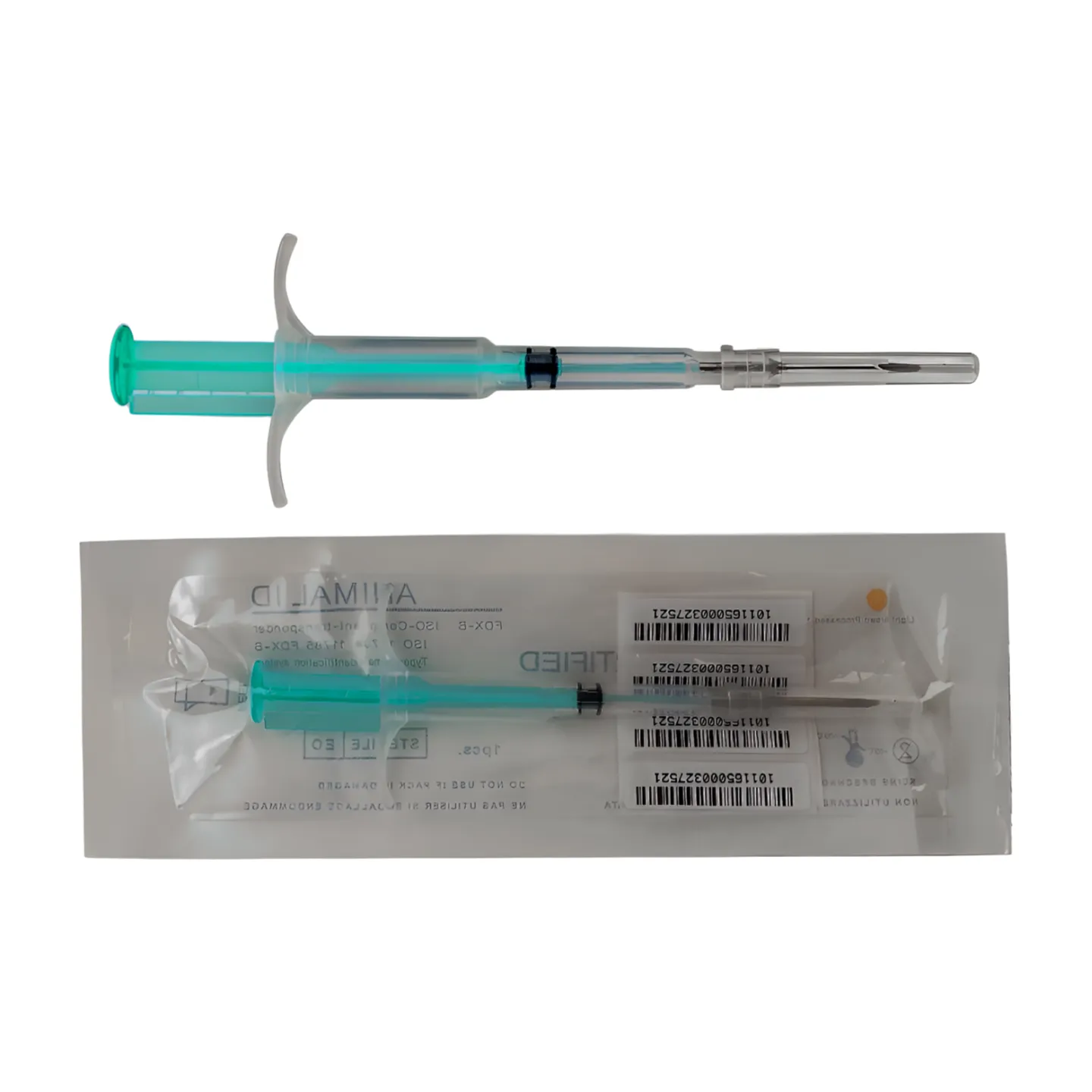
Product Overview
What Is Our Animal RFID Sensor Microchip?
The RFID Sensor Microchip for Animal Identification is a passive, implantable RFID device engineered for permanent animal identification. It links to a unique, tamper-proof identifier that enables reliable tracking across various animal species.
Core Value Proposition
This microchip solves critical pain points including lost pet reunification, unmanaged livestock herds, and non-compliant animal ID systems by providing a permanent, standardized identification solution.
Target Users
Key stakeholders include livestock producers, veterinary clinics, animal shelters, pet owners, and government animal control agencies seeking efficient, compliant animal identification.
Key Features of Our RFID Sensor Microchip
Passive RFID Technology with Unique UID Identification
Utilizes passive RFID technology with no battery required, featuring a 100% unique, tamper-proof UID for lifelong animal tracking and identification.
Bioglass Encapsulation for Biocompatibility
Encapsulated in non-toxic, hypoallergenic bioglass, ensuring safe long-term implantation in all animal species without adverse reactions.
Global ISO 11784/11785 (FDX-B) Compliance
Compliant with ISO 11784/11785 (FDX-B) standards, enabling cross-compatibility with universal RFID readers and adherence to global animal identification regulations.
Ultra-Compact Implantable Design
Measures 1.4×8.5mm, designed for minimal discomfort during implantation and unnoticeable presence post-procedure.
How the RFID Sensor Microchip Works
FDX-B Full Duplex Identification Principle
Operates on 134.2 kHz frequency, where the RFID reader activates the passive chip via electromagnetic induction, enabling bidirectional data transmission for reliable identification.
ISO 11784/11785 Standard Alignment
ISO 11784 defines the data structure (unique UID format) while ISO 11785 specifies the communication protocol, ensuring consistent, standardized identification across systems.
Step-by-Step Reader-Chip Interaction Process
- Implantation: The microchip is inserted under the animal’s skin by a trained professional.
- Activation: A compatible RFID reader emits a 134.2 kHz signal to power the passive chip.
- Transmission: The chip sends its unique UID back to the reader.
- Lookup: The UID is cross-referenced with a database to retrieve animal information.
Applications of the RFID Sensor Microchip
Pet Identification & Lost Pet Reunification
Enables permanent pet identification, allowing shelters and veterinarians to quickly reunite lost pets with their owners using the unique UID.
Veterinary Clinic Patient Management
Streamlines patient check-ins, vaccination tracking, and medical history access by linking each animal to its digital records via the microchip’s UID.
Livestock Tracking & Herd Management
Facilitates inventory control, disease outbreak monitoring, and regulatory compliance for livestock producers, improving herd health and market access.
Technical Specifications
- Frequency: 134.2 kHz
- Material: Bioglass
- Size: 1.4×8.5mm
- Compliance: ISO 11784/11785 (FDX-B)
- Chip Model: EM4305
- Technology: Passive RFID
- Storage: Unique UID (permanent, non-editable)
User-Centric Benefits
For Livestock Producers
Efficient herd tracking, reduced mortality risks from disease, and compliance with regulatory requirements for domestic and international market access.
For Veterinary Clinics
Faster patient check-ins, accurate medical record linkage, and reduced administrative errors by eliminating manual data entry.
For Animal Shelters & Control Agencies
Rapid lost pet reunification, improved adoption process transparency, and efficient stray animal management.
For Pet Owners
Permanent peace of mind, lifelong pet ID that cannot be lost or removed, and quick access to medical records in emergencies.
Industry Use Cases
Case Study: Large-Scale Cattle Ranch Herd Compliance & Tracking
A 5,000-head cattle ranch implemented the microchips to meet USDA traceability requirements, reducing disease monitoring time by 40% and improving export compliance.
Case Study: Urban Animal Shelter Lost Pet Reunification Program
An urban shelter saw a 35% increase in lost pet reunification rates after adopting the microchips, as staff could quickly identify owners via the UID database.
Case Study: 24/7 Emergency Veterinary Clinic Patient ID System
A 24/7 emergency clinic used the microchips to streamline after-hours patient intake, reducing wait times by 25% and ensuring accurate medical record access for unknown animals.
Frequently Asked Questions (FAQs)
Is the RFID sensor microchip safe for all animal species?
Yes, the bioglass encapsulation is non-toxic and hypoallergenic, making it safe for implantation in pets (dogs, cats, birds) and livestock (cattle, sheep, pigs).
How long does the microchip remain functional?
The passive RFID technology has no battery, so the microchip remains functional for the animal’s lifetime, with no degradation of the unique UID.
Can the microchip be read by any universal RFID reader?
Yes, as it complies with ISO 11784/11785 (FDX-B) standards, it is compatible with all universal RFID readers designed for animal identification.
What information is stored on the microchip?
Only a unique, permanent UID is stored on the microchip. Additional animal information (owner details, medical history) is linked to the UID in a separate database.
What is the implantation process like?
The microchip is implanted under the animal’s skin (typically between the shoulder blades for pets) using a sterile syringe, a quick procedure with minimal discomfort.
Get Started with Our RFID Sensor Microchip
Request a Custom Quote for Bulk Orders
Contact our sales team to receive a tailored quote for bulk microchip orders, including discounts for large quantities.
Order a Sample for Testing
Request a sample microchip to test compatibility with your existing RFID readers and systems before placing a full order.
Contact Our Technical Support Team for Integration Guidance
Our technical experts can assist with integrating the microchips into your animal management software or database systems.
Download the Product Datasheet
Access detailed technical specifications, compliance information, and use case examples in our comprehensive product datasheet.
===CONTENT===