
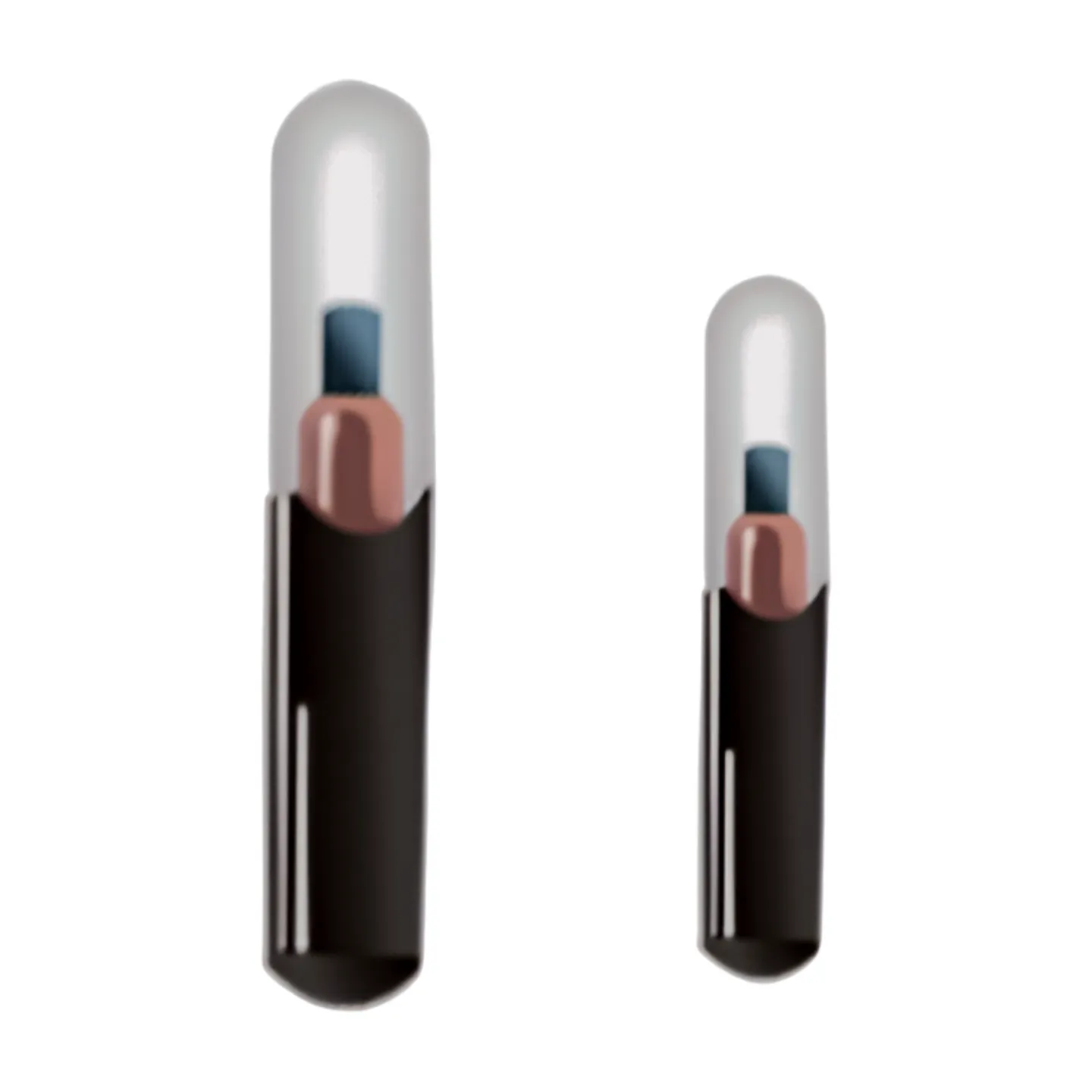
Implantable Animal RFID Microchips for Identification & Health Monitoring
Our implantable animal microchip line represents the forefront of RFID technology for animal management. Engineered for reliability and animal safety, these passive RFID transponders provide a permanent, tamper-proof method for identifying pets and livestock. Advanced models integrate precise temperature sensing, transforming simple identification into a powerful tool for proactive health and herd management.
Product Overview
This product family offers a scalable solution, from basic pet identification to sophisticated livestock monitoring. All chips are passive, requiring no internal battery, and are encased in biocompatible bioglass for safe, lifelong implantation. Adherence to the global ISO 11784/11785 FDX-B standard ensures universal compatibility with readers worldwide, making them ideal for travel, trade, and everyday management.
Your Complete Solution for Animal Management
Whether ensuring a lost pet finds its way home or detecting early signs of illness in a breeding herd, our microchips deliver critical data. They enhance animal welfare, secure ownership, and enable data-driven decisions for veterinarians, farmers, and shelter operators.
Key Features & Product Variants
Core Features of All Microchips
- Passive RFID Technology: Operates entirely on power from the reader signal, ensuring a 25+ year lifespan with zero maintenance.
- Unique Identification Number (UID): Each microchip is programmed with an unalterable, globally unique ID for definitive animal tracking.
- ISO 11784/11785 FDX-B Compliant: The international standard for animal RFID, guaranteeing interoperability with any compliant reader system.
- Bioglass Encapsulation (1.4×8.5mm): The bio-inert glass material minimizes tissue reaction, ensuring safety and stability post-implantation.
Choose the Right Microchip for Your Needs
We offer specialized variants to match specific application requirements.
Variant 1: Animal RFID Microchip (EM4305 Chip)
- Primary Function: Permanent animal identification.
- Core Benefit: Provides a reliable, lifetime ID for proof of ownership and recovery services.
- Ideal For: Companion animals like dogs, cats, and horses, as well as animals in shelters.
Variant 2: Temperature Sensing Microchip (Custom Sensor Chip)
- Primary Function: Combined animal identification and real-time body temperature monitoring.
- Core Benefit: Enables early detection of fever or health events, critical for livestock biosecurity, breeding programs, and veterinary research.
- Ideal For: Dairy and beef cattle, swine, sheep, and other production livestock where health monitoring is vital.
How Our Implantable Microchips Work
The FDX-B Technology Advantage
Our microchips utilize FDX-B (Full Duplex) communication, the ISO-standard protocol for animal RFID. This allows the chip to receive power and transmit its data packet back to the reader simultaneously, enabling fast and reliable reads.
The Implantation and Reading Process
- A veterinarian or trained professional implants the sterile microchip subcutaneously, typically between the animal’s shoulder blades, using a pre-loaded sterile applicator.
- The microchip lies dormant until activated by the low-frequency (134.2 kHz) electromagnetic field emitted by a compatible ISO reader.
- Once activated, the chip transmits its unique ID number. In temperature-sensing models, it also measures and transmits the current local body temperature.
- The reader decodes this signal, displaying the animal’s ID and temperature data, which can be recorded in management software for tracking and analysis.
Applications & Benefits for Users
For Pet Owners & Veterinarians
- Application: Permanent pet identification, linking animals to owner records in national databases, facilitating international travel.
- Benefit: Ensures lost pets can be identified and returned, simplifies medical recordkeeping, and helps meet regulatory requirements.
For Livestock Farmers & Producers
- Application: Individual animal tracking from birth to market, health monitoring via temperature trends, breeding management, and supply chain traceability.
- Benefit: Allows for early disease intervention, improves herd health and productivity, optimizes breeding schedules, and supports food safety certification.
For Animal Shelters & Research Facilities
- Application: Managing intake and adoption records, tracking medical treatments, and collecting physiological data for research studies.
- Benefit: Increases operational efficiency, ensures accurate data association with each animal, and supports ethical research practices.
Technical Specifications
| Parameter | Specification |
|---|---|
| Operating Frequency | 134.2 kHz |
| Communication Protocol | ISO 11784 / 11785 FDX-B |
| Chip Type | EM4305 (ID) / Custom Chip (ID + Temperature) |
| Encapsulation Material | Biocompatible Bioglass |
| Dimensions (Diameter × Length) | 1.4 mm × 8.5 mm |
| Typical Read Range | 5 cm to 15 cm (dependent on reader power and antenna) |
| Data Capacity | 64-bit or 128-bit Unique ID. Additional temperature data on sensor models. |
| Expected Operational Life | 25+ years (passive design) |
| Temperature Sensing Range | Model dependent; typically suitable for biological monitoring (e.g., 32°C to 45°C). |
Frequently Asked Questions (FAQ)
What is an RFID temperature sensor microchip?
It is a passive, implantable RFID device that combines a unique identification transponder with an integrated temperature sensor. When scanned by a compatible reader, it transmits both the animal’s ID and its current body temperature.
How does the temperature sensing microchip work?
The microchip contains specialized sensor circuitry. When activated by the reader’s signal, this circuitry measures the immediate ambient temperature at the implant site, which correlates to subcutaneous body temperature, and encodes this value into the data packet sent back to the reader.
Are your microchips globally readable?
Yes. Compliance with the ISO 11784/11785 FDX-B standard is the global benchmark for animal RFID. This ensures our microchips can be read by any ISO-compliant scanner worldwide, which is essential for international pet travel and livestock export/import protocols.
Is implantation safe for the animal?
Yes. The procedure is minimally invasive, similar to a standard vaccination. The bioglass encapsulation material is specifically chosen for its biocompatibility, meaning it is non-toxic, non-allergenic, and designed to be accepted by animal tissue with minimal reaction, allowing for safe, permanent residence.
Why Choose Our Implantable Microchips?
- Uncompromising Standards Compliance: Full adherence to ISO 11784/11785 FDX-B ensures reliability and future-proof compatibility.
- Innovation in Function: A product line that evolves from basic identification to integrated health sensing, meeting diverse market needs.
- Proven Passive Reliability: The battery-free design guarantees a long, maintenance-free service life under the animal’s skin.
- Animal Welfare Priority: Bioglass housing and a sterile implantation process prioritize the safety and comfort of the animal.
- Scalable Management Tool: Provides a foundational technology that can scale from individual pet care to comprehensive livestock enterprise management.