
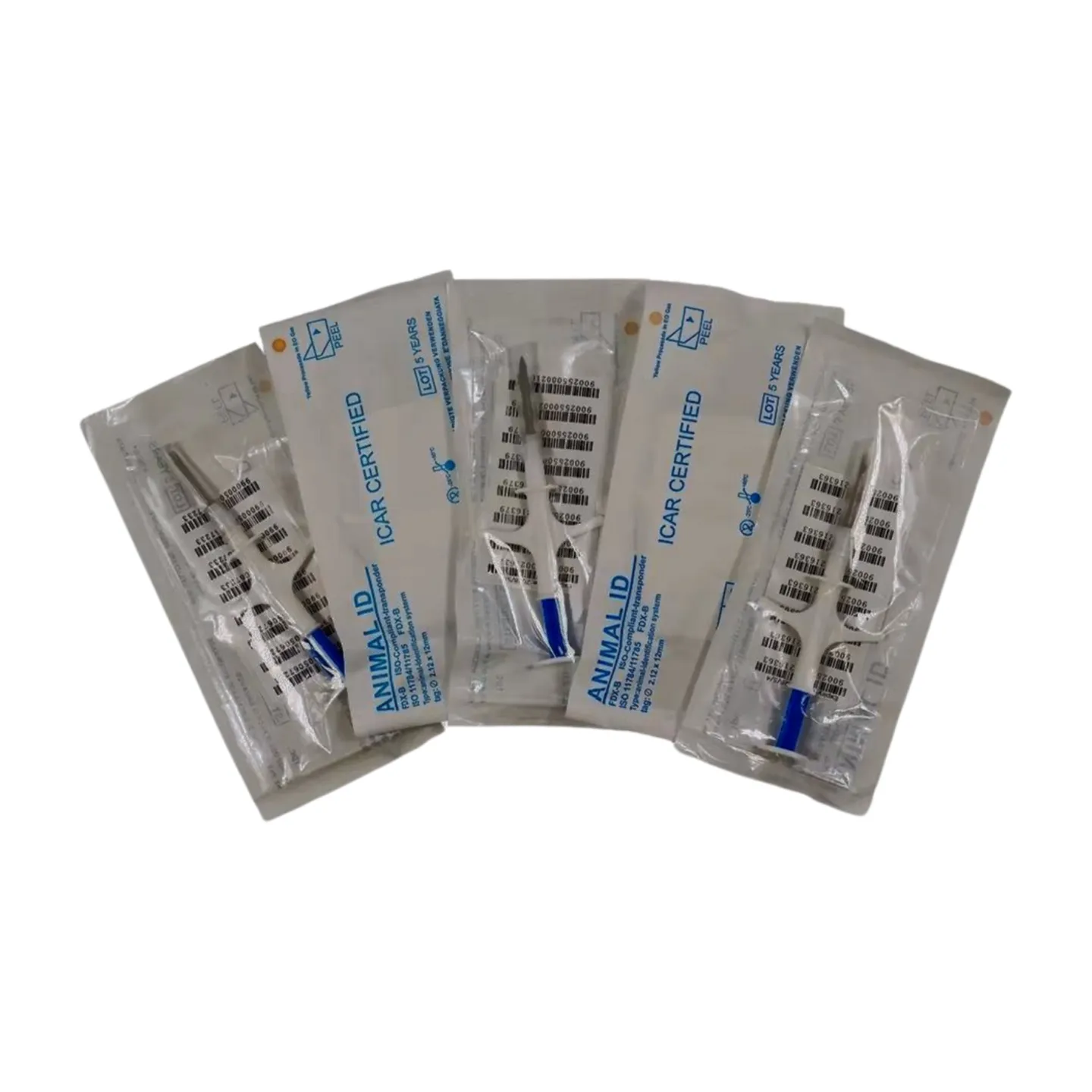
Implantable RFID Temperature Sensor Microchips
This product line represents a specialized category of implantable RFID transponders that integrate a microchip for unique identification with a precise temperature sensor. Designed for subcutaneous implantation in animals, these devices provide a permanent, tamper-proof solution for tracking identity and monitoring core body temperature, which is a critical vital sign for health and management.
Core Technology and Operation
The microchip operates on the passive RFID principle at the Low Frequency (LF) band of 134.2 kHz. When activated by the electromagnetic field from a compatible ISO 11785 FDX-B reader, the implant draws power, reads the current temperature via its integrated sensor, and transmits both its unique identification number (UID) and the temperature data back to the reader. This full-duplex (FDX-B) communication allows for continuous, real-time data retrieval.
Key Features and Specifications
Dual-Functionality
The primary advantage is the combination of two essential functions. Each implant provides a globally unique, unalterable ID number for positive animal identification alongside accurate body temperature readings, eliminating the need for separate identification and thermometry procedures.
Technical Specifications
- Frequency: 134.2 kHz
- Protocol/Standard: ISO 11784 / ISO 11785 FDX-B
- Chip Type: Custom ASIC or EM4305-based sensor chip
- Primary Function: Unique Identification (UID) + Temperature Measurement
- Dimensions: Approximately 1.4 mm in diameter x 8.5 mm in length
- Encapsulation Material: Biocompatible Bioglass 8625
- Read Range: Typically 5-15 cm, dependent on reader power and antenna alignment
- Data Structure: 64-bit unique ID compliant with ISO 11784, plus transmitted sensor data stream.
Passive and Durable Design
As a passive device, it contains no battery. Its operational lifespan exceeds 20 years, as it is solely limited by the integrity of its biocompatible Bioglass capsule and micro-assembly. This design ensures a lifetime of maintenance-free operation once implanted.
Primary Applications
Livestock Health and Management
In commercial farming, early detection of fever is crucial for preventing disease outbreaks. Implanted sensor chips enable routine, non-invasive temperature checks of individual animals within a herd, allowing for timely intervention, optimized breeding management, and enhanced welfare monitoring.
Advanced Veterinary and Pet Care
Beyond providing permanent pet recovery identification, these implants allow veterinarians to instantly obtain an animal’s core temperature during any examination with a simple scan. This is particularly valuable for stress-free monitoring of post-operative recovery, illness, or in exotic pets where conventional temperature-taking is difficult.
Research and Conservation
Researchers utilize these implants for non-invasive physiological monitoring in wildlife studies or controlled laboratory settings. The ability to remotely identify and log temperature data from individual animals supports detailed studies on behavior, health, and environmental adaptation.
Frequently Asked Questions (FAQ)
How does the implant measure temperature without a battery?
The integrated temperature sensor is a solid-state component within the RFID chip. When the reader’s RF field powers the chip, the circuit takes an instantaneous reading from this sensor and modulates the data onto the return signal transmitted back to the reader.
Is the implantation procedure safe for the animal?
Yes. The implant is supplied pre-loaded in a sterile, single-use applicator syringe. The procedure is minimally invasive, similar to a standard subcutaneous vaccination, and is performed by a trained professional. The Bioglass material is bio-inert and designed for long-term biocompatibility.
What equipment is needed to read the data?
You require an RFID reader that supports the ISO 11785 FDX-B protocol at 134.2 kHz. Most veterinary and agricultural handheld or panel readers are compatible with this global standard. The reader will display the animal’s unique ID and the current temperature reading.
Can the temperature data be logged or integrated into software?
Yes. Readers with data logging capabilities or Bluetooth/USB connectivity can transfer the scanned ID and temperature data to herd management software, veterinary practice management systems, or custom databases for record-keeping and analysis.
Compliance and Quality
This product is manufactured to comply with the international standards ISO 11784 and ISO 11785 (FDX-B). This ensures that the identification code structure is globally unique and that the device will function with any certified FDX-B reader worldwide, guaranteeing interoperability and protecting your investment in animal identification.