
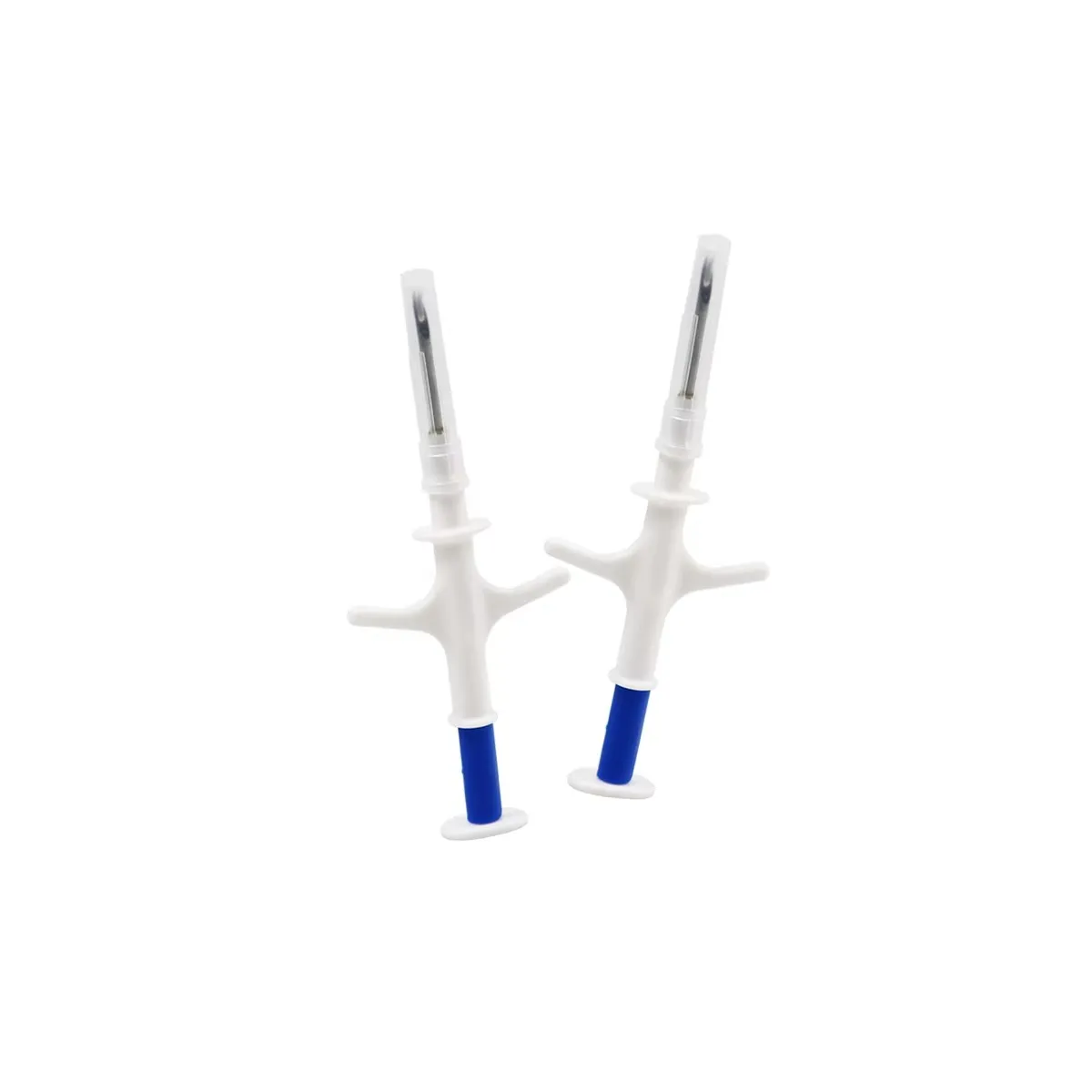
ISO 11785 FDX-B Animal RFID Microchip for Identification & Temperature Monitoring
Product Overview: Global Standard for Animal ID
This product line represents the industry-standard solution for secure, permanent animal identification. Designed for both companion pets and commercial livestock, these implantable microchips provide tamper-proof traceability. Full compliance with ISO 11784/11785 FDX-B standards guarantees uniform data structure and communication protocol for global interoperability. The range includes a Standard Identification Chip and an advanced Temperature Sensor Microchip.
Key Features & Benefits
Universal Compatibility & Compliance
Engineered to the ISO 11784/11785 FDX-B specifications, this microchip is readable by any compliant scanner worldwide. This eliminates issues with proprietary systems and ensures reliable identification across borders, veterinary clinics, and registration databases.
Advanced, Passive RFID Technology
The microchip operates on passive RFID technology at 134.2 kHz, requiring no internal battery as it is powered entirely by the reader’s signal. Each chip contains a unique, factory-locked identification number (UID) that cannot be altered, providing absolute and permanent traceability for the animal’s lifetime.
Biocompatible & Safe for Implantation
Encapsulated in a smooth, hypoallergenic Bioglass shell, the microchip is designed for safe subcutaneous implantation. Its miniature dimensions (1.4mm diameter, 8.5mm length) facilitate a quick and minimally invasive injection procedure with long-term tissue compatibility.
Integrated Health Monitoring (Sensor Model)
The advanced Temperature Sensor Microchip model adds a critical health monitoring dimension. Beyond identification, it enables the non-invasive measurement of the animal’s core body temperature, allowing for early detection of fever, infection, or stress, which is vital for herd health management and preventive veterinary care.
How Our ISO 11785 Compliant Microchip Works
The FDX-B Communication Protocol
The microchip operates using the Full Duplex B (FDX-B) communication method as defined by ISO 11785. This allows the tag to transmit its data continuously back to the reader while simultaneously receiving power, enabling fast and reliable reading.
The Identification Data Structure (ISO 11784)
ISO 11784 defines the structure of the identification code stored on the microchip. This includes a country code and a unique animal ID number, ensuring that the data is consistently formatted and interpreted correctly by any ISO-compliant system globally.
The Scanning Process
A compatible 134.2 kHz RFID reader is brought near the implanted animal. The reader’s electromagnetic field energizes the passive microchip. The chip instantly responds by transmitting its unique ID code (and current temperature data, if equipped) back to the reader via the FDX-B protocol. The reader decodes this standardized signal and displays the information.
Applications & Industry Use Cases
Pet Identification & Recovery: Provides permanent, unalterable identification for dogs, cats, and other companion animals, linking them to owner contact information in national pet recovery databases.
Livestock Management & Traceability: Enables individual animal tracking for herd health management, breeding programs, and compliance with food safety and origin traceability regulations.
Animal Health Monitoring: The temperature-sensing model allows for proactive health management in breeding facilities, zoos, laboratories, and equine care through routine physiological monitoring.
Research & Conservation: Offers a reliable and permanent method for identifying individual animals in wildlife studies, population monitoring, and conservation breeding programs for endangered species.
Technical Specifications
| Parameter | Specification |
|---|---|
| Product Name | Animal RFID Microchip / Temperature RFID Microchip |
| Standard | ISO 11784 / 11785 FDX-B |
| Frequency | 134.2 kHz |
| Chip | EM4305 (Standard) / Custom Sensor Chip (Advanced) |
| Material | Bioglass |
| Size | 1.4 mm diameter × 8.5 mm length |
| Key Features | Unique UID, Passive RFID, (Integrated Temperature Sensing on Advanced Model) |
| Data Transmission | Full Duplex (FDX-B) |
Why Choose Our ISO-Compliant Microchip?
Future-Proof Investment: Adherence to the global ISO standard ensures your identification system remains compatible with current and future scanner technology.
Enhanced Animal Welfare: The optional temperature-sensing capability transforms the microchip from a simple ID tool into an instrument for proactive healthcare and well-being monitoring.
Operational Efficiency: Streamlines animal record-keeping, inventory management, and health tracking, saving time and reducing errors in large-scale operations.
Unmatched Reliability: The passive, battery-free design and robust bioglass encapsulation ensure a maintenance-free, lifelong solution that functions reliably in diverse environmental conditions.
Frequently Asked Questions (FAQ)
What is an RFID temperature sensor tag?
It is a passive RFID device, like our advanced microchip model, that transmits both a unique identification number and real-time temperature data when activated by a compatible 134.2 kHz reader.
Can RFID tags measure temperature?
Yes. Specialized RFID tags, such as our Temperature RFID Microchip, integrate a microscopic sensor that measures the ambient temperature at the tag’s location (the implantation site).
How does an RFID temperature microchip work?
The custom chip contains integrated RFID circuitry and a temperature sensor. When energized by a reader’s signal, it uses a portion of the harvested energy to power the sensor, take a measurement, and then transmits both the UID and the temperature value back to the reader using the standardized FDX-B protocol.