
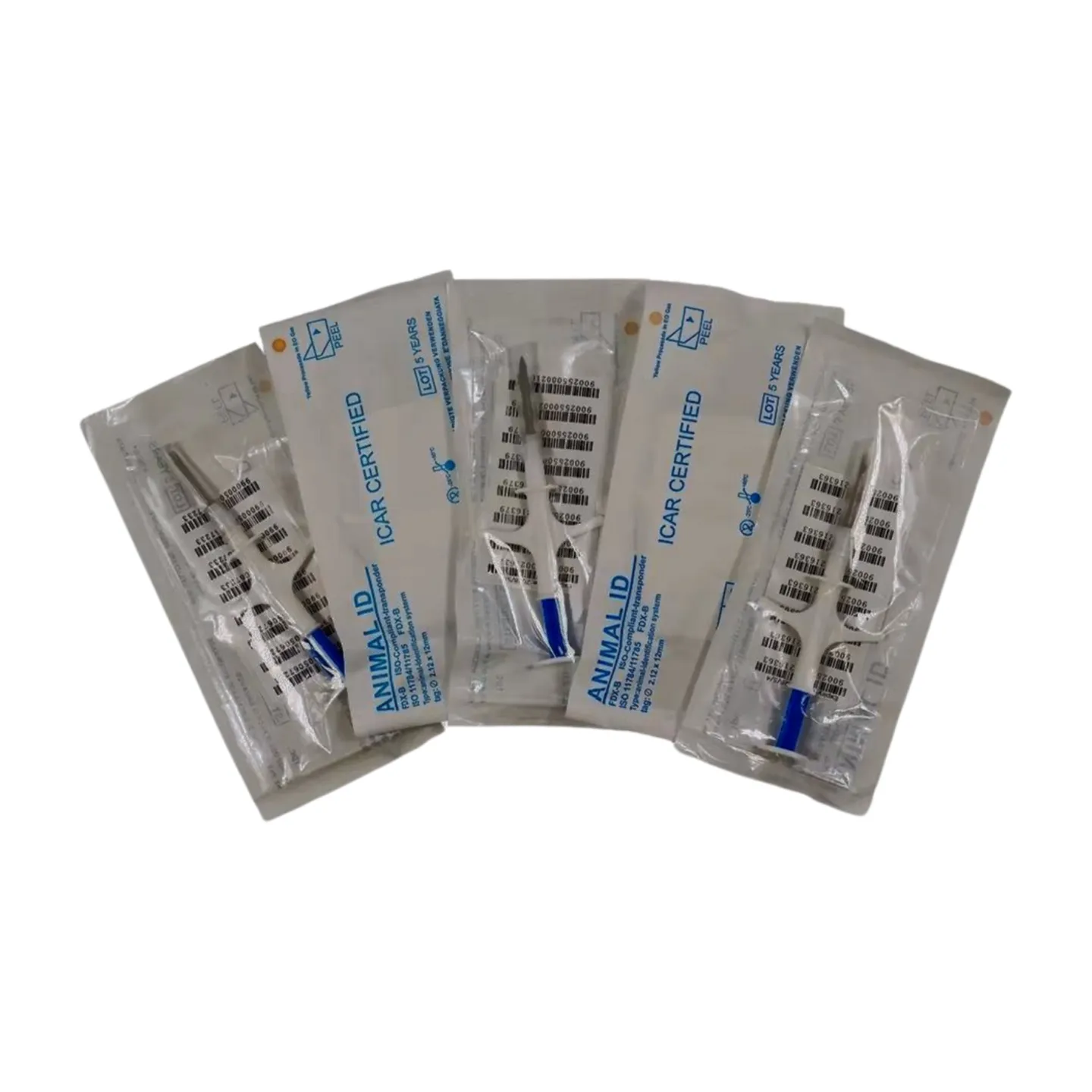
Pet Identification Microchips: The Ultimate Guide to Permanent Pet ID Solutions
Statistics show that pets with registered microchips are up to 2.5 times more likely to be successfully reunited with their owners if lost. This guide outlines core technical specifications, certifications, implantation procedures and selection criteria for pet owners, veterinarians, animal shelters and pet registration authorities.
What Are Pet Identification Microchips?
Core Technology & How They Work
Pet identification microchips are passive 134.2 kHz low-frequency RFID implants that store a unique, unalterable identification number linked to a pet owner’s contact details. The chips require no internal power source, and are activated only when scanned by a compatible RFID reader. They support FDX-A, FDX-B and HDX protocols, and are compatible with EM4305, EM4100, ID and UHF chip models.
The Key Benefit: Permanent Pet ID
Unlike collars, tags and QR codes that can fall off, be removed or become damaged, pet microchips provide lifelong, tamper-proof identification that remains functional for the entire duration of a pet’s life. This permanent ID eliminates gaps in pet traceability caused by temporary identification solutions.
Technical Specifications of Certified Pet Microchips
Frequency & Protocol Compatibility
All certified pet identification microchips operate on the global standard 134.2 kHz frequency, with support for three core protocols: FDX-A, FDX-B and HDX. This broad protocol compatibility ensures the chips can be read by nearly all veterinary, animal shelter and border control scanners worldwide.
Chip Models & Material Safety
The microchips are compatible with common chip models including EM4305, EM4100, ID and UHF to align with existing system requirements. All chips are fully encased in medical-grade bioglass, which is non-toxic, biocompatible, and resistant to migration inside a pet’s body after implantation.
Size Options for Different Pet Types
Size options vary by protocol to suit all pet species and sizes: FDX-A models range from 1.4x8mm to 4x34mm, FDX-B models range from 1.25x7mm to 4x34mm, and HDX models range from 2x12mm to 4x34mm. Smaller sizes are designed for kittens, small cats and exotic pets, while larger sizes are suitable for medium to large dog breeds.
Lifespan & Reliability
All pet identification microchips have a minimum rated lifespan of 10 years, with most units remaining functional for the full lifetime of a pet. They require no battery replacements, software updates or regular maintenance after successful implantation.
Industry Certifications & Standards
ICAR Certification: Global Recognition for Pet ID
ICAR certification confirms that the microchip meets international animal identification standards, enabling cross-border recognition of the pet’s unique ID during travel, relocation or international pet transport.
ISO 11784/11785: Ensuring Scanner Compatibility
Full compliance with ISO 11784 and 11785 standards guarantees uniform ID data formatting and universal compatibility with all compliant RFID scanners across every region, eliminating risk of unreadable chips during scanning procedures.
Implantation Process & Post-Care
Syringe-Injectable Implantation: Safe & Minimally Invasive
All microchips are preloaded in sterile, single-use syringes for fast, minimally invasive administration by a licensed veterinarian. The standard implantation site is the loose skin between the pet’s shoulder blades, and the procedure takes less than 10 seconds to complete with minimal discomfort for the animal.
Post-Implantation Care Tips for Pet Owners
Pet owners should monitor the implantation site for mild swelling for 24 to 48 hours after the procedure, restrict rough play for 3 days to allow the chip to settle in place, and register the unique microchip ID with the relevant national or global pet registration database immediately after implantation.
How to Choose the Right Pet Identification Microchip
Matching Protocol to Local Scanner Standards
Users should confirm the dominant scanner protocols used by local veterinarians, animal shelters and registration authorities before purchase, to ensure the selected microchip can be read by all relevant local scanning devices. FDX-B is the most widely adopted protocol globally, while FDX-A is common in select North American regions.
Size Considerations for Small vs. Large Pets
Select the smallest appropriate size for your pet’s weight and species to minimize discomfort during and after implantation. 1.25x7mm FDX-B models are recommended for small exotic pets, kittens and toy dog breeds, while larger sizes are suitable for adult medium and large breed dogs.
Technical Specifications Comparison Table
| Protocol Type | Size Range | Recommended Pet Types |
|---|---|---|
| FDX-A | 1.4x8mm to 4x34mm | Adult cats, small to large dog breeds |
| FDX-B | 1.25x7mm to 4x34mm | Kittens, small exotic pets, all dog and cat breeds |
| HDX | 2x12mm to 4x34mm | Medium to large dog breeds |
Frequently Asked Questions (FAQ)
Are pet identification microchips safe for all pets?
Yes, all microchips are encased in medical-grade bioglass and tested for biocompatibility, making them safe for use in dogs, cats and small exotic pets of all ages.
Can I update my contact information linked to my pet’s microchip?
Yes, you can update your contact details at any time directly through the pet registration database where the microchip ID was originally registered.
Will my pet’s microchip work if I travel abroad?
Yes, ICAR and ISO compliant microchips are recognized globally, and can be read by all compliant scanners in most countries worldwide.
Do microchips track my pet’s location?
No, pet identification microchips do not include GPS tracking functionality. They store only a unique ID number that links to your registered contact details when scanned.