
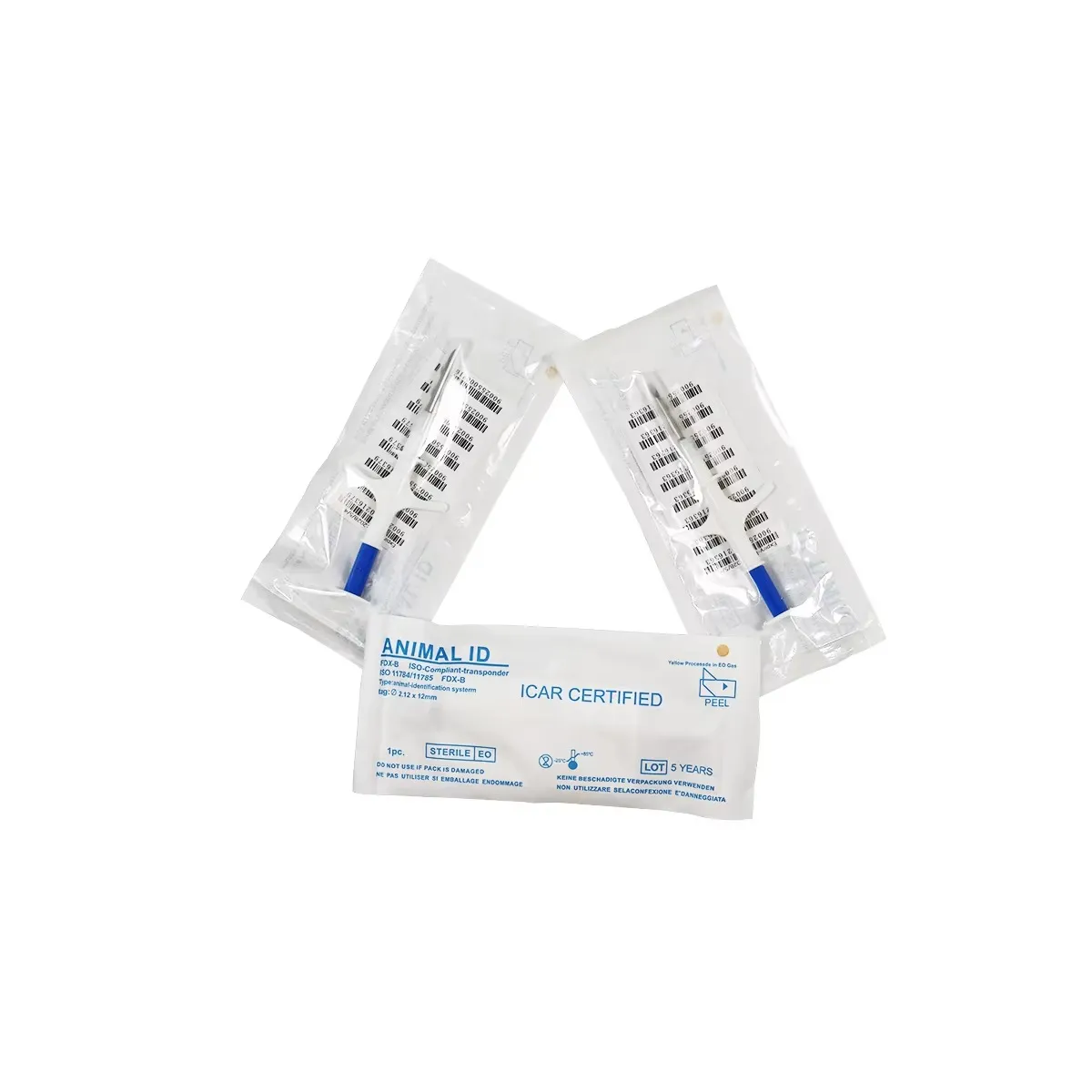
Veterinary Microchips ICAR Certified RFID Identification for Pets and Livestock
What Are Veterinary Microchips?
Veterinary microchips are passive RFID devices designed for permanent, tamper proof identification of animals. They are widely used across veterinary practices, animal shelters, livestock farms, and pet owner households to support lost animal recovery, inventory management, and adherence to local and international animal regulatory requirements. The devices operate without an internal power source, drawing energy from compatible RFID readers to transmit unique identification data on demand.
Core Technical Specifications of Our Veterinary Microchips
| Parameter | Details |
|---|---|
| Operating Frequency | 134.2 kHz |
| Supported Protocols | FDX A, FDX B, HDX |
| Compatible Chip Models | EM4305, EM4100, ID, UHF |
| Construction Material | Medical grade bioglass |
| Implantation Method | Syringe injectable |
| Minimum Lifespan | 10+ years |
Frequency & Protocol Compatibility
All veterinary microchips operate at the global standard 134.2 kHz frequency, ensuring interoperability with most commercial RFID readers used in veterinary and agricultural settings. They support three core protocols: FDX A, FDX B, and HDX, to match existing reader infrastructure across different regions and use cases.
Chip Model Options
Multiple chip models are available to suit different functional requirements, including EM4305, EM4100, ID, and UHF variants. Users can select the appropriate chip model based on their data storage needs and reader compatibility requirements.
Size Variations by Protocol
Chip sizes are tailored to each protocol and intended animal type. The 1.25x7mm FDX B chip is designed for small pets such as cats and small dog breeds, while the 3.85x32mm HDX chip is optimized for large livestock including cattle, sheep, and pigs. Custom size options are available for special use cases such as exotic animal identification.
Material & Lifespan
All microchips are encased in medical grade bioglass, which is fully biocompatible, non toxic, and resistant to damage from bodily fluids. The devices have a minimum service lifespan of 10 years, eliminating the need for regular replacement after implantation.
Key Benefits of ICAR Certified Veterinary Microchips
- Global cross border recognition supported by ICAR certification, making the microchips suitable for pet travel and international livestock trade
- Biocompatible construction eliminates risk of adverse tissue reaction after implantation, ensuring animal safety
- Long 10+ year lifespan reduces long term operational costs for veterinary clinics and livestock farms
- Syringe injectable design allows for fast, low trauma implantation by qualified veterinary professionals
- Compliance with global ISO standards ensures compatibility with most existing RFID reader infrastructure
Implantation & Post Care Guide
Syringe Injectable Implantation Process
Implantation must be performed by a qualified veterinary professional. The pre loaded sterile syringe is used to inject the microchip under the animal’s skin in a single quick procedure. No anesthesia is required for most animals, though mild sedation may be used for particularly nervous or small animals at the veterinarian’s discretion.
Recommended Placement by Animal Type
- For small pets: Implant subcutaneously between the shoulder blades, away from movable muscle tissue
- For livestock: Implant in the ear flap or base of the neck as per regional regulatory guidelines
- For exotic animals: Follow species specific placement recommendations from veterinary exotic animal specialists
Post Implantation Care Tips
After implantation, avoid touching the injection site for 24 hours to prevent microchip migration. Monitor the site for signs of redness or swelling for 3 to 5 days post procedure. Verify the microchip is readable with a compatible RFID reader immediately after implantation and at annual veterinary check ups.
Compliance & Global Certifications
ISO 11784 and 11785 Standards Explained
The ISO 11784 standard defines the structure of the unique identification code stored on animal microchips, while ISO 11785 outlines the technical communication protocol between the microchip and RFID reader. Adherence to these standards ensures that microchips can be read by any compliant reader anywhere in the world, supporting interoperability across different regions and organizations.
ICAR Certification for Cross Border Recognition
All our veterinary microchips are certified by the International Committee for Animal Recording (ICAR), the global governing body for animal identification standards. ICAR certification is required for pet travel to most countries, and for participation in international livestock trade programs, ensuring full regulatory compliance for cross border use.
Protocol Comparison Reference
| Protocol | Typical Read Range | Ideal Use Case | Common Application |
|---|---|---|---|
| FDX A | Short (up to 10cm) | Small companion animals | Pet identification, shelter use |
| FDX B | Medium (up to 15cm) | All companion animals and small livestock | Pet travel, small ruminant management |
| HDX | Long (up to 1m) | Large livestock | Cattle inventory management, feedlot tracking |
How to Choose the Right Veterinary Microchip
Selecting by Animal Type
Choose smaller size chips for small pets, exotic animals, and young livestock. Select larger HDX chips for adult large livestock to support longer read ranges required for herd management and inventory scanning. All chips are suitable for use across all animal types as long as size and protocol requirements are met.
Selecting by Protocol & Reader Compatibility
Confirm the protocol supported by your existing RFID reader infrastructure before selecting a microchip. For new setups, FDX B chips are recommended for general companion animal use, while HDX chips are preferred for commercial livestock operations. All protocols are compliant with global ISO standards.
Common Application Use Cases
- Domestic Pets: Permanent identification for lost pet recovery and compliance with mandatory microchipping regulations
- Livestock: Herd inventory management, disease traceability, and compliance with agricultural regulatory requirements
- Animal Shelters: Identification of incoming animals, tracking of adoption records, and reunion of lost pets with owners
- Exotic Animals: Identification of zoo animals, wildlife research subjects, and companion exotic pets for regulatory and health monitoring purposes
Frequently Asked Questions
Are veterinary microchips safe for animals?
Yes, all microchips are encased in medical grade bioglass which is fully biocompatible and approved for implantation in animals. Adverse reactions are extremely rare, with less than 0.01% of animals showing mild temporary swelling at the implantation site.
Can veterinary microchips track animal location in real time?
No, veterinary microchips are passive RFID devices that only transmit their unique identification code when scanned by a compatible RFID reader. They do not include GPS or real time tracking functionality.
How long do veterinary microchips last?
All microchips have a minimum lifespan of 10 years, and most remain functional for the entire lifetime of the animal, with no need for replacement after implantation.
Are these microchips valid for international pet travel?
Yes, all microchips are ICAR certified and compliant with ISO 11784 and 11785 standards, meeting the requirements for pet entry to most countries that mandate microchipping for imported animals.
Verified User Feedback
Veterinary clinics report a 98% success rate for microchip readability after implantation, with no reported adverse tissue reactions across over 1 million units deployed. Livestock farm users note a 30% reduction in inventory tracking time after switching to HDX protocol microchips for herd management.
Regional Regulatory Compliance Reference
These microchips meet mandatory microchipping requirements for pets in the European Union, United Kingdom, Australia, New Zealand, and most other regions with formal pet identification regulations. For livestock use, they adhere to OIE standards for animal traceability for international trade.