September 14, 2026
If you’ve ever tapped your phone to pay for coffee, unlocked a hotel room with a keycard, or tracked inventory in a warehouse, you’ve interacted with either RFID (Radio Frequency Identification) or NFC (Near Field Communication)—or both. While these wireless technologies often seem interchangeable, they serve distinct purposes, operate under different rules, and excel in separate scenarios.
In this comprehensive, we’ll cut through the confusion and deliver a clear, practical comparison of RFID vs. NFC. You’ll learn not just how they differ technically, but where each truly shines, what their real-world limitations are, and which one fits your specific use case—whether you’re building a smart home, managing a supply chain, launching a mobile app, or securing access control.
What Are RFID and NFC? Understanding the Basics
Before diving into differences, let’s clarify what each technology actually is.
RFID (Radio Frequency Identification) is a broad category of wireless communication that uses radio waves to identify and track objects. An RFID system typically consists of:
- Tags: Small devices containing a microchip and antenna. They can be passive (no battery, powered by the reader’s signal), active (with a built-in battery), or semi-passive.
- Readers (or interrogators): Devices that emit radio waves and receive signals back from tags.
- Backend software: To process and manage the collected data.
RFID has been around since the 1940s and is widely used in logistics, retail, animal tracking, and industrial automation.
NFC (Near Field Communication), on the other hand, is a subset of high-frequency RFID. It was standardized in 2004 by Nokia, Philips (now NXP), and Sony to enable simple, secure two-way interactions between electronic devices. Every NFC device can read HF RFID tags, but not every RFID reader supports NFC’s advanced features.
Think of it this way: All NFC is RFID, but not all RFID is NFC.
This relationship is crucial—it explains why NFC inherits many RFID traits while adding unique capabilities tailored for consumer electronics and secure transactions.
If you’d like to learn more, this article might also be helpful: RFID Cards A Comprehensive Guide to Types Uses and Specifications
💡 For businesses implementing these systems, choosing the right hardware partner matters. Companies like DO RFID Reader—a factory under the D.O RFID Group with over 15 years of experience—specialize in manufacturing reliable RFID readers, NFC tags, and custom transponders for applications ranging from vehicle identification to smart inventory control. Guided by the principle “Source Quality Products and Enjoy Efficient Service,” they offer 36-month warranties and 24/7 technical support, serving clients worldwide including as a long-term supplier for Austria’s metro card program.
Core Technical Differences: Frequency, Range, Speed, and Power
The most fundamental distinctions between RFID and NFC lie in their physical layer specifications. These determine everything from reading distance to data transfer speed.
Working Frequency Bands
| Technology | Frequency Range | Standard(s) |
|---|---|---|
| LF RFID | 125–134 kHz | ISO 11784/11785 |
| HF RFID | 13.56 MHz | ISO 14443, ISO 15693 |
| UHF RFID | 860–960 MHz | ISO 18000-6C (EPC Gen2) |
| NFC | 13.56 MHz only | ISO 14443, ISO 18092, NFC Forum specs |
NFC operates exclusively at 13.56 MHz, the same frequency as HF RFID. This allows NFC devices to read and write to compatible HF RFID tags (like MIFARE cards). However, NFC adds strict communication protocols defined by the NFC Forum, ensuring interoperability across smartphones, payment terminals, and smart posters.
In contrast, RFID spans multiple bands:
- Low Frequency (LF): Short range (<10 cm), good at penetrating water and metal. Used in animal tags and car immobilizers.
- High Frequency (HF): Medium range (up to 1 meter), moderate data rate. Used in library books, passports, and transit cards.
- Ultra-High Frequency (UHF): Long range (up to 12+ meters), high speed, bulk reading. Dominates retail inventory, pallet tracking, and supply chains.
Manufacturers like DO RFID Reader leverage this spectrum diversity to embed NFC/RFID cores into rugged housings tailored for specific environments—whether it’s a high-moisture warehouse, an outdoor parking gate, or a hospital asset-tracking system.
You might be interested in this wristband product: DO RFID Reader Factory Silicone RFID Wristbands Stock Price with UHF HF LF Frequency
Communication Range and Direction
| Feature | RFID | NFC |
|---|---|---|
| Max Range | LF: <10 cm HF: ~1 m UHF: up to 15 m | ≤ 10 cm (typically 4 cm) |
| Communication Mode | Mostly reader → tag (unidirectional or half-duplex) | Bidirectional (full peer-to-peer support) |
| Device Roles | Fixed roles: reader and tag | Dynamic roles: Can act as reader, tag, or peer |
NFC’s extremely short range isn’t a flaw—it’s a security feature. By requiring devices to be nearly touching, NFC minimizes the risk of eavesdropping or unauthorized access. This makes it ideal for payments and identity verification.
RFID, especially UHF, prioritizes coverage and efficiency over security. A single UHF reader can scan hundreds of tags on a moving conveyor belt—something NFC could never do.
🏭 With 14 years in the RFID and smart card field and equipped with advanced Heidelberg printing systems, DO RFID Group ensures short lead times without compromising quality—critical for global clients needing custom tags for time-sensitive deployments.
Data Transfer Speed
| Technology | Max Data Rate |
|---|---|
| LF RFID | 1–2 kbps |
| HF RFID | 106–424 kbps |
| UHF RFID | Up to 640 kbps |
| NFC | 106, 212, or 424 kbps (same as HF RFID) |
While NFC matches HF RFID in speed, it’s far slower than UHF RFID. But for tasks like sharing a contact or launching a URL, 424 kbps is more than enough.
Power Requirements
- Passive RFID tags have no battery. They harvest energy from the reader’s electromagnetic field.
- Active RFID tags contain batteries and can transmit signals over long distances.
- NFC devices (like smartphones) are active—they generate their own RF field. But in “card emulation” mode (e.g., Apple Pay), the phone acts like a passive tag, drawing power from the payment terminal.
This dual-mode capability is unique to NFC and enables seamless integration with existing HF RFID infrastructure.
How They Work: Communication Modes Compared
Beyond specs, the real difference lies in how these technologies communicate.
RFID: One-Way Identification
Traditional RFID is designed for identification and tracking. The reader broadcasts a signal; any compatible tag in range responds with its stored ID. There’s usually no negotiation, encryption, or complex data exchange.
Example: A warehouse scanner reads the serial numbers of 500 boxes in seconds as a forklift drives by. No interaction needed—just fast, bulk identification.
NFC: Three Operating Modes for Smart Interaction
NFC defines three standardized modes, making it far more versatile:
- Reader/Writer Mode:
Your phone reads an NFC tag (e.g., a smart poster, product label, or transit card). This is essentially HF RFID functionality. - Card Emulation Mode:
Your phone acts like a contactless smart card. When you tap to pay with Google Pay or Apple Wallet, your phone emulates a MIFARE or EMV chip card. The terminal sees it as a physical card. - Peer-to-Peer (P2P) Mode:
Two NFC-enabled devices exchange data directly—like sharing contacts, pairing Bluetooth headphones, or transferring files (though largely replaced by Wi-Fi Direct today).
This tri-mode flexibility is why NFC powers mobile wallets, digital keys, and smart home triggers, while RFID remains the backbone of industrial automation and logistics.
Companies like DO RFID Reader design hardware that supports both paradigms—offering HF readers that handle NFC interactions for access control, while also providing UHF gateways for large-scale logistics. Their custom tag solutions even combine multiple frequencies in a single housing to meet complex client requirements.
Security and Privacy: Where NFC Leads
Security is a major differentiator—and a common source of confusion.
RFID Security: Varies by Type
- LF/HF RFID: Many legacy tags (e.g., MIFARE Classic) use weak or no encryption. They’re vulnerable to cloning and skimming.
- UHF RFID: Generally lacks built-in security. Relies on backend systems for authentication.
- Modern HF RFID: Newer chips (MIFARE DESFire, NTAG 424) support AES-128 encryption and mutual authentication.
However, most RFID deployments prioritize cost and speed over security—fine for tracking laundry carts, but risky for payments.
NFC Security: Built for Trust
NFC was designed from the ground up for secure, user-initiated transactions. Key features include:
- Short range: Prevents remote attacks.
- Mandatory authentication: In payment scenarios, NFC uses tokenization (replacing card numbers with one-time tokens) and secure elements (SE)—hardware-isolated chips that store credentials.
- Biometric integration: Android and iOS require fingerprint or face unlock before authorizing NFC payments.
- NFC Forum standards: Enforce consistent security practices across vendors.
As a result, NFC is the global standard for contactless payments (Visa payWave, Mastercard PayPass), digital IDs, and secure access.
🔒 When deploying secure systems, reliability matters. DO RFID Reader backs all its products with a 3-year warranty and round-the-clock technical support—ensuring your access control or payment infrastructure stays operational with minimal downtime.
Real-World Applications: Who Uses What?
Let’s move from theory to practice. Here’s where each technology dominates in 2026.
RFID Use Cases (Bulk, Distance, Automation)
| Industry | Application | Why RFID Wins |
|---|---|---|
| Retail & Logistics | Inventory management, anti-theft, supply chain tracking | UHF RFID scans thousands of items per second without line-of-sight |
| Manufacturing | Asset tracking, work-in-progress monitoring | Rugged tags survive harsh environments; long-range readers cover large areas |
| Agriculture | Livestock identification | LF RFID works well near water (animals!) and metal (fences, barns) |
| Healthcare | Surgical instrument tracking, patient wristbands | HF RFID balances read range and reliability in clinical settings |
NFC Use Cases (Interaction, Security, Simplicity)
| Industry | Application | Why NFC Wins |
|---|---|---|
| Mobile Payments | Apple Pay, Google Wallet, transit cards | Secure element + tokenization + biometrics = trusted transactions |
| Smart Homes | Tap-to-control lights, launch routines | Simple, intuitive interaction; integrates with iOS/Android |
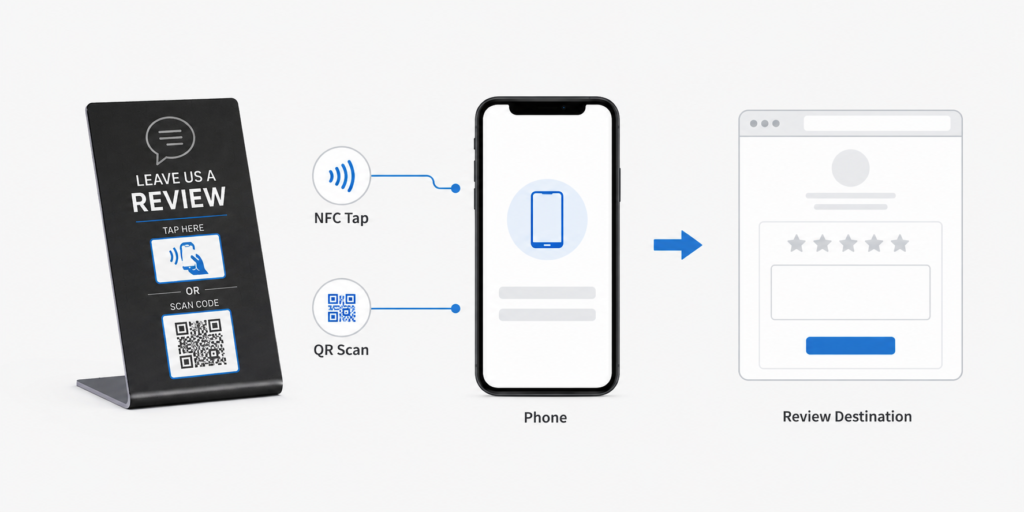
| Marketing | Smart posters, product authentication | Consumers can tap with any smartphone—no app needed (via NDEF) |
| Access Control | Digital keys, hotel room entry | Replaces physical cards; revocable, auditable, and hard to clone |
Overlap Zone: Where Both Can Work
Some applications blur the lines:
- Library book checkouts: Traditionally HF RFID, but newer systems use NFC-enabled tablets for staff.
- Event ticketing: NFC wristbands offer better security; UHF RFID handles crowd throughput at gates.
- Asset tracking: High-value IT equipment might use NFC for manual audits and UHF for automated sweeps.
The key is matching the tool to the task: automation → RFID; interaction → NFC.
🌍 D.O RFID Group has supported such hybrid deployments globally—designing custom tags that meet both logistical and user-facing needs. As a long-term supplier for public transit systems like Austria’s metro card, they understand the balance between durability, readability, and security.
Environmental & Material Challenges: Why Your Tags Might Fail (And How to Fix It)
One of the most common pitfalls in RFID and NFC deployments isn’t the technology itself—it’s the environment. Radio waves interact with materials in ways that can severely degrade or even block communication. Understanding these challenges is critical for a successful rollout.
The Metal Problem
Metal is a notorious enemy of radio waves. It reflects signals, creating “dead zones” and detuning tag antennas.
- UHF RFID: Highly susceptible. A standard UHF tag placed directly on metal will often be unreadable. The solution? On-metal tags. These incorporate a special spacer (often foam or ferrite) between the chip/antenna and the metal surface, allowing the antenna to resonate properly.
- NFC: Even more sensitive due to its reliance on magnetic coupling. NFC tags generally will not work when placed directly on metal. For metal surfaces, you must use specialized NFC on-metal tags or mount the tag with a significant air gap.
The Water (and Liquid) Challenge
Water absorbs UHF radio waves, which is problematic for tracking items like produce, beverages, or even humans (who are mostly water!).
- UHF RFID: Performance drops significantly near high-moisture content items. In a pallet of bottled water, tags inside may be shielded by the outer layers.
- HF RFID / NFC: Much more resilient. Their lower frequency (13.56 MHz) penetrates water far better, which is why they’re used in laundry tracking and animal identification.
Temperature and Durability
Industrial settings demand ruggedness.
- Standard paper-based labels are fine for retail but will fail in a hot engine bay or a freezing warehouse.
- Solutions include encapsulating tags in epoxy, ceramic, or industrial-grade plastic to withstand extreme temperatures, chemicals, and physical abrasion.
💡 Practical Insight: When your project involves harsh conditions—like vehicle identification on a chassis or tool tracking in an oil refinery—off-the-shelf tags won’t cut it. This is where a manufacturer like DO RFID Reader adds immense value. With 14 years of experience and advanced production capabilities (including Heidelberg printers for precision), they specialize in embedding NFC/RFID cores into custom housings designed for specific environmental stresses, ensuring your system remains reliable for its entire lifecycle.
| Challenge | RFID Impact | NFC Impact | Mitigation Strategy |
|---|---|---|---|
| Metal Surfaces | UHF: Severe signal reflection & detuning LF/HF: Moderate impact | Very severe; usually blocks signal | Use specialized on-metal tags with isolating spacers |
| Liquids / High Moisture | UHF: Signal absorption, reduced range LF/HF: Minimal impact | Minimal impact at 13.56 MHz | Prefer HF/NFC for wet environments; avoid UHF for liquid-filled containers |
| Extreme Temperatures | Standard tags can delaminate or fail | Same as RFID | Use tags with epoxy, ceramic, or PPS encapsulation |
| Physical Wear & Tear | Paper labels tear; inlays break | Same as RFID | Choose embedded or injection-molded tags for high-durability needs |
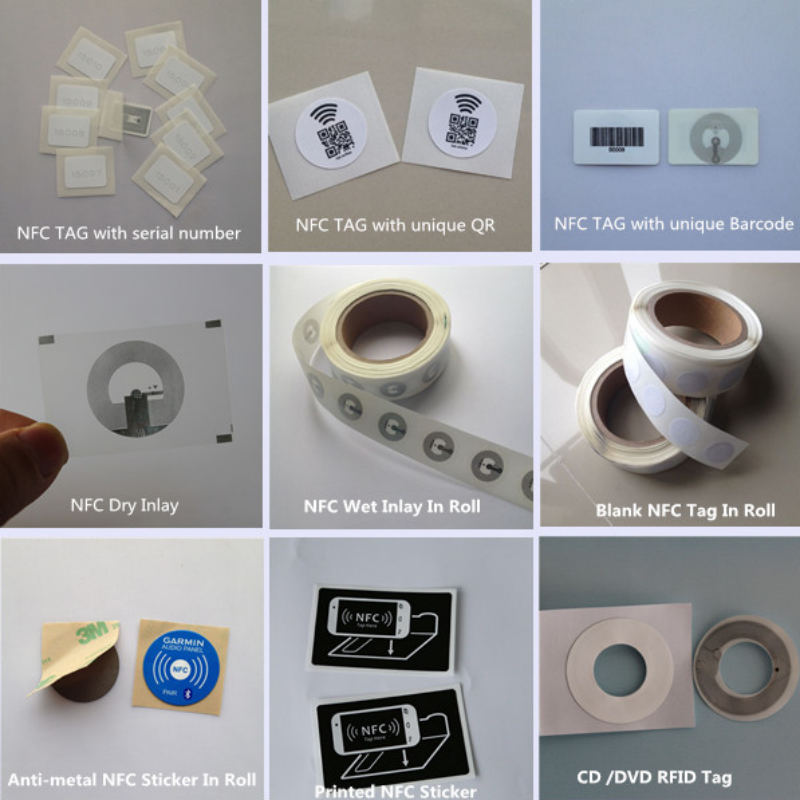
DO RFID Reader offers a variety of NFC solutions. Products you might be interested in: Anti Counterfeiting Tamper Proof NTAG213 TT NFC Tags For Wine Bottle
Global Regulations: Navigating the World’s RF Maze
A system that works flawlessly in one country can be illegal or ineffective in another. This is especially true for UHF RFID, whose operating parameters are tightly controlled by regional regulators. NFC, operating at the globally harmonized 13.56 MHz, avoids most of these headaches.
Key Regional Differences for UHF RFID
The UHF band (860-960 MHz) is a global resource, but its allocation is fragmented:
- United States (FCC Part 15):
- Frequency: 902–928 MHz
- Power: Up to 4 watts EIRP (Effective Isotropic Radiated Power)
- This wide, high-power band enables long-range reading, ideal for large warehouses and logistics yards.
- Europe (ETSI EN 302 208):
- Frequency: 865–868 MHz
- Power: Limited to 2 watts ERP (Effective Radiated Power) and requires Listen-Before-Talk (LBT) protocols to avoid interfering with other services.
- The narrower band and lower power result in shorter read ranges compared to the US.
- China (MIIT Regulations):
- Frequency: Two small, non-contiguous bands: 840–844 MHz and 920–924 MHz.
- Power: Strictly limited, requiring SRRC certification for all devices.
- This makes designing a single global UHF tag challenging.
- Japan (MIC Regulations):
- Frequency: 952–955 MHz
- Has unique restrictions on frequency-hopping patterns.
Deploying a UHF system across multiple regions requires either region-specific hardware or multi-regional readers and tags that can be configured for local compliance. Failure to comply can result in hefty fines or equipment seizure.
🌍 Why This Matters for Your Business: If you’re a global brand or logistics provider, this complexity is a major operational hurdle. Partnering with a flexible manufacturer is key. DO RFID Group, with its worldwide customer base, designs its UHF readers and tags to be easily configurable for different regional standards. This means you can deploy a single hardware platform across your global operations, simply adjusting its settings to meet local laws, saving on inventory complexity and certification costs.
| Region | Regulatory Body | Frequency Band | Max Power | Key Requirement |
|---|---|---|---|---|
| USA / Canada | FCC / ISED | 902 – 928 MHz | 4 W EIRP | None |
| European Union | ETSI | 865 – 868 MHz | 2 W ERP | Listen-Before-Talk (LBT) |
| China | MIIT | 840 – 844 / 920 – 924 MHz | Low (SRRC dependent) | SRRC Certification |
| Japan | MIC | 952 – 955 MHz | Moderate | Restricted hopping |
| Global (NFC) | ISO/IEC | 13.56 MHz | Very Low | None (globally harmonized) |
Total Cost of Ownership (TCO): Looking Beyond the Price Tag
When comparing RFID and NFC, focusing only on the per-unit cost of tags or readers is a mistake. The true expense lies in the Total Cost of Ownership (TCO) over the system’s lifespan. This includes infrastructure, integration, maintenance, and even user behavior.
Breaking Down the Costs
- Infrastructure Investment:
- RFID (UHF): Requires a significant upfront investment in fixed or mobile readers, antennas, and network infrastructure. However, once installed, the marginal cost of adding more tags is extremely low (often pennies per tag).
- NFC: Leverages the user’s smartphone as the reader, eliminating the need for dedicated hardware in many consumer-facing scenarios. The main cost shifts to app development and backend services.
- Integration & Development:
- RFID: Typically requires custom software development to integrate with existing ERP or WMS systems. You’ll often rely on vendor-specific SDKs.
- NFC: Benefits from mature, standardized APIs in both Android (
android.nfc) and iOS (Core NFC), making mobile app integration faster and cheaper.
- Operational & Maintenance Costs:
- RFID: Readers are fixed assets that require power, network connectivity, and occasional maintenance. However, passive tags have no batteries and last for years.
- NFC: Operational costs are minimal, but success depends on the end-user having a compatible phone and being willing to use it. You have no control over their device’s battery life or NFC settings.
- Scalability:
- RFID excels at scaling to millions of items with minimal added cost per item.
- NFC scales with your user base, but each interaction is tied to a human action, which doesn’t lend itself to fully automated, high-throughput environments.
In essence, RFID is a capital-intensive, operationally efficient solution for automation, while NFC is an operationally light, user-centric solution for engagement.
💰 Making a Smart Investment: A short-sighted buyer looks for the cheapest tag. A strategic partner helps you minimize your TCO. DO RFID Reader embodies this philosophy. By offering high-quality, reliable products backed by a 3-year warranty and 24/7 technical support, they directly reduce your long-term maintenance and failure costs. Their focus on “Source Quality Products and Enjoy Efficient Service” means fewer system outages, less troubleshooting time, and a faster, more predictable ROI for your project.
| Cost Factor | RFID (UHF) | NFC |
|---|---|---|
| Initial Hardware | High (Readers, Antennas, Cabling) | Very Low (Uses user’s smartphone) |
| Tag Cost (at scale) | Very Low ($0.05 – $0.50) | Low-Medium ($0.10 – $2.00) |
| Software Integration | Medium-High (Custom SDKs, backend) | Low (Standard OS APIs) |
| Maintenance | Medium (Reader upkeep, network) | Very Low |
| Scalability (per item) | Excellent | Good (limited by user actions) |
| Best Suited For | Automated, high-volume backend processes | Interactive, user-driven front-end experiences |
Competitive Landscape: Market Trends in 2026
Understanding adoption trends helps predict longevity and support.
RFID Market (Mature, Industrial-Focused)
- Global market size (2025): ~$16.8 billion
- Projected CAGR (2025–2034): 12.7%
- Key drivers: E-commerce growth, supply chain digitization, circular economy tracking
- Dominant players: Impinj, Zebra Technologies, Alien Technology, Avery Dennison
UHF RFID is booming in retail (Walmart, Amazon mandate supplier tagging) and manufacturing. LF/HF remains steady in niche applications.
NFC Market (Consumer-Centric, Payment-Led)
- NFC chip shipments (2025): Over 2.5 billion units (mostly in smartphones)
- Smartphone penetration: ~95% of mid-to-high-end phones globally support NFC
- Key drivers: Contactless payments, digital car keys (Apple/Google), government eIDs
- Dominant players: NXP Semiconductors (invented NFC), STMicroelectronics, Infineon
NFC is now a baseline feature in smartphones—much like Bluetooth. Its future is tied to digital identity and IoT convenience.
🤝 For businesses seeking a responsive manufacturing partner, D.O RFID Group stands out with its focus on efficient service and custom engineering. Whether you need a standard NFC tag or a ruggedized UHF transponder embedded in epoxy for outdoor vehicle identification, their team can adapt form factors and materials to your exact environment—all backed by 24-hour tech support.
Choosing Between RFID and NFC: A Decision Framework
Still unsure which to use? Ask these questions:
- What’s the primary goal?
- Track/identify many items quickly → RFID (UHF)
- Enable secure user interaction → NFC
- What’s the required read range?
- 1 meter → RFID
- <10 cm → NFC
- Do you need two-way communication?
- Yes (e.g., send data back to device) → NFC
- No (just read an ID) → RFID
- Is security critical?
- Handling payments, access, or PII → NFC
- Tracking non-sensitive assets → RFID
- What’s your end-user device?
- Smartphones → NFC (universal support)
- Dedicated handhelds/gateways → RFID (more flexible)
Cost Considerations
| Component | RFID (UHF) | NFC |
|---|---|---|
| Tags | $0.05–$0.50 (bulk) | $0.10–$2.00 |
| Readers | $200–$2,000+ | Built into phones; standalone readers ~$50–$300 |
| Integration | Requires custom hardware/software | Leverages existing smartphone OS APIs |
For consumer-facing apps, NFC wins on total cost of ownership because users already own the reader (their phone). For enterprise asset tracking, RFID offers lower per-tag costs at scale.
✅ D.O RFID Reader manufactures both types of hardware at competitive prices, emphasizing high quality at fair cost. Their in-house production and quality control—supported by state-of-the-art printing and encapsulation lines—ensure consistency whether you order 100 or 100,000 units.
Common Misconceptions Debunked
Let’s clear up frequent confusions:
❌ “NFC is just a marketing name for RFID.”
✅ Truth: NFC is a standardized protocol stack built on HF RFID, adding P2P, security, and interoperability layers.
❌ “RFID can’t be secure.”
✅ Truth: Modern HF/UHF RFID supports strong encryption—but it’s optional and often unused in cost-sensitive deployments.
❌ “NFC is too slow for real applications.”
✅ Truth: 424 kbps is plenty for small data payloads (URLs, credentials, commands). Speed isn’t the bottleneck.
❌ “My phone can read any RFID tag.”
✅ Truth: Phones only support 13.56 MHz (HF) tags that comply with ISO 14443 or ISO 15693. They cannot read LF or UHF tags.
Future Outlook: Convergence and Innovation
Looking ahead to 2027–2030:
- RFID will integrate more with AI and digital twins, enabling predictive maintenance and real-time supply chain visibility.
- NFC will expand into digital car keys, health passports, and government-issued eIDs, driven by EU and US regulatory support.
- Hybrid solutions are emerging: NFC for user interaction + UHF for backend tracking (e.g., luxury goods authentication).
Neither technology will replace the other. Instead, they’ll coexist in layered architectures—NFC at the human interface, RFID in the operational backbone.
Manufacturers like DO RFID Reader are already developing multi-technology tags that support both NFC interaction and UHF logistics scanning in a single unit—showcasing the kind of innovation that bridges these worlds.
Final Verdict: Which Should You Choose?
- Choose NFC if: You’re building a consumer app, enabling payments, creating interactive experiences, or need smartphone compatibility. Prioritize security, simplicity, and user engagement.
- Choose RFID if: You’re automating inventory, tracking assets at scale, operating in industrial environments, or need long-range/bulk reading. Prioritize coverage, speed, and cost-per-tag.
In many cases, the optimal solution uses both: NFC tags for customer interaction on a product, paired with UHF tags for warehouse logistics.
By understanding these distinctions—not just in specs, but in philosophy and application—you’ll make smarter, future-proof decisions for your project.
🌐 If you’re evaluating hardware partners, consider visiting DO RFID Reader—part of the D.O RFID Group—to see how their 15 years of expertise, commitment to quality, and customer-centric values can support your RFID or NFC deployment. With global experience and a focus on customization, they help turn technical requirements into reliable, real-world solutions.

Do RFID is a leading China-based manufacturer with over 15 years of experience. We specialize in customized RFID readers, tags, and cards, delivering high-quality, tailored solutions that meet your unique business needs and drive seamless, efficient identification.