September 14, 2026
In the ever-evolving landscape of Radio-Frequency Identification (RFID) technology, the choice of wristband material is far more than a mere aesthetic decision—it is a strategic one that profoundly influences user experience, system reliability, security, cost-efficiency, and even environmental impact. As a leading manufacturer with over 14 years of dedicated experience in the RFID and smart card field, DO RFID Reader, a key factory of D.O RFID Group, recognizes that a one-size-fits-all approach simply does not exist. The two dominant materials in the market—fabric and silicone—each present a unique constellation of advantages and limitations. This comprehensive guide is designed to provide you with the detailed, practical insights necessary to make an informed and confident selection for your specific project requirements.
Understanding the Core Construction and Technology
Before diving into a feature-by-feature comparison, it’s essential to understand how these wristbands are built and how the core RFID technology functions within them.
The RFID Inlay: The Heart of the System
At the core of both fabric and silicone wristbands lies the RFID inlay. This critical component consists of a microchip (which stores a unique identifier or other data) connected to an antenna (which communicates with an RFID reader via radio waves). The inlay can be engineered for different frequency bands:
- Low Frequency (LF): ~125 kHz. Offers very short read ranges (a few centimeters) but excellent performance near metal and water. Commonly used for animal tracking and some access control.
- High Frequency (HF): 13.56 MHz. The most common standard for NFC (Near Field Communication), which is a subset of HF RFID. It provides a reliable read range of up to 10 cm, making it ideal for contactless payments, access control, and data exchange.
- Ultra-High Frequency (UHF): 860-960 MHz. Delivers long read ranges (up to several meters) and the ability to read multiple tags simultaneously (bulk reading). It is the standard for logistics, inventory management, and large-scale event access.
The performance of the inlay is paramount, but its longevity and reliability are entirely dependent on the protective qualities of the material that encases it.
Fabric RFID Wristbands: The Textile Approach
Fabric wristbands are typically constructed from woven polyester or nylon webbing, chosen for their strength, flexibility, and printability. The RFID inlay is integrated into the band through one of two primary methods:
- Stitched Pocket: The inlay is placed inside a small, sealed pocket that is then stitched onto or between layers of the fabric. This method is robust but can create a slightly bulkier profile.
- Heat-Sealed Encapsulation: The inlay is sandwiched between two layers of fabric and bonded together using heat and pressure. This creates a flatter, more seamless feel but requires precise manufacturing control to ensure the inlay isn’t damaged by the heat.
Closures for fabric bands are usually plastic buckles (which can be tamper-evident) or simple tie-offs, offering adjustability for a perfect fit.
View related products: Custom woven fabric elastic nfc wristband
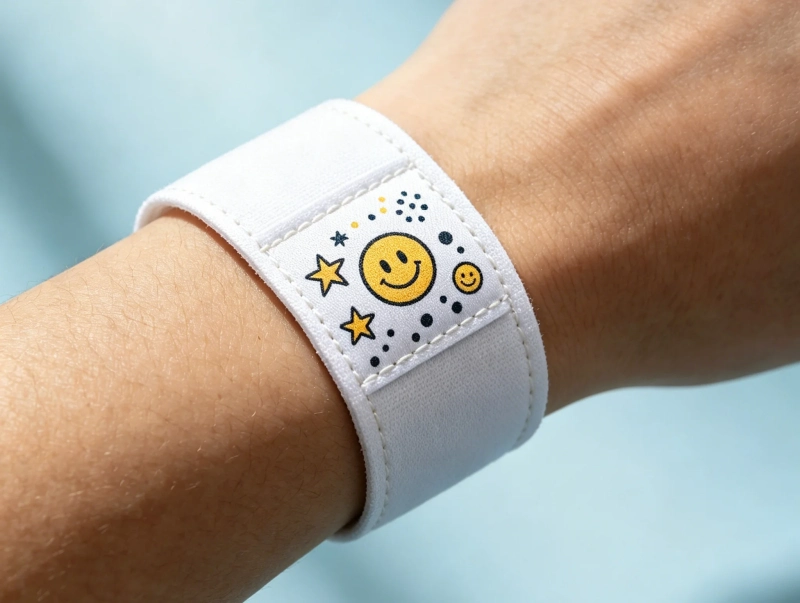
Soft, breathable fabric wristband with customizable printing, ideal for festivals, concerts, and access control. Reusable, skin-friendly design with full-color smiley & star pattern.
Silicone RFID Wristbands: The Monolithic Mold
Silicone wristbands are created through an injection molding process. A pre-formed RFID inlay is placed into a custom mold cavity. Liquid silicone rubber (LSR) is then injected under high pressure and heat-cured around the inlay. This process results in a single, seamless, and completely waterproof unit where the chip and antenna are hermetically sealed. The closure is typically an integrated snap-lock mechanism or a solid, stretchable loop that is pulled over the hand. This monolithic construction is the source of silicone’s legendary durability and security.
View related products: 860-960Mhz UHF RFID Silicone wristband
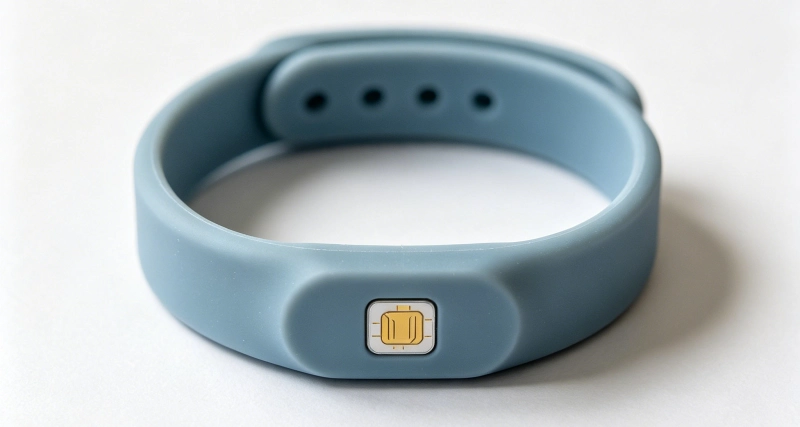
Waterproof, flexible silicone wristband with adjustable holes, built-in RFID chip for secure access control. Perfect for gyms, hospitals, and daily wear.
An Exhaustive Feature-by-Feature Comparison
To move beyond generalities, let’s conduct a meticulous side-by-side analysis of every critical factor.
| Feature | Fabric RFID Wristband | Silicone RFID Wristband |
|---|---|---|
| Comfort & Wearability | Pros: Exceptionally soft, breathable, and lightweight. Feels like a natural textile against the skin, making it ideal for multi-day wear in dry, temperate environments. Cons: Can absorb sweat and odors over time, potentially becoming uncomfortable during high-energy activities. May feel rough if the stitching is poorly finished. | Pros: Smooth, flexible, and conforms perfectly to the wrist’s shape. Its non-porous surface doesn’t absorb sweat, keeping it feeling clean. Cons: Can feel slightly “sticky” or warm in hot, humid conditions due to its lack of breathability. Some users find the constant snug fit restrictive over very long periods. |
| Durability & Lifespan | Pros: Highly resistant to abrasion from clothing and general friction. Strong tensile strength prevents easy tearing. Cons: The stitching is a potential failure point; it can fray or break with excessive stress or snagging. The fabric itself can degrade from prolonged UV exposure. Not suitable for reuse across multiple events without significant quality loss. | Pros: Extremely resilient to tearing, stretching, crushing, and impact. The seamless, molded construction has no weak points. Highly resistant to UV degradation, making it perfect for outdoor use. Designed for long-term or repeated use. Cons: While rare, the snap-lock mechanism can fail if subjected to extreme, repeated force. |
| Water, Chemical & Environmental Resistance | Pros: Some fabrics can be treated for basic water resistance. Cons: Fundamentally not waterproof. Prolonged exposure to water, heavy sweat, chlorine, saltwater, sunscreen, or cleaning chemicals can cause the fabric to swell, weaken, and ultimately compromise the integrity of the RFID inlay, leading to failure. Avoid aquatic environments at all costs. | Pros: Fully waterproof and chemically inert. Impervious to water, sweat, chlorine, saltwater, oils, lotions, and most common solvents. This makes it the undisputed champion for pools, water parks, beaches, medical sanitation protocols, and industrial settings. The sealed inlay is protected in the harshest conditions. |
| Security & Tamper-Evidence | Pros: Can be equipped with high-security, single-use plastic buckles that visibly break if someone attempts to remove and transfer the band. Cons: A determined individual could potentially cut the fabric, remove the inlay, and re-embed it into a new band, though this is time-consuming and requires skill. | Pros: Offers the highest level of inherent security. Once a snap-lock is closed, it cannot be opened without breaking the band. A solid, one-piece design is physically impossible to remove and re-wear without leaving obvious, irreparable damage. This is the gold standard for preventing credential sharing and fraud. |
| Aesthetics, Branding & Customization | Pros: Provides a premium, sophisticated, and textile-like appearance. Supports full-color, photo-realistic sublimation printing that is embedded into the fabric fibers, resulting in vibrant, permanent designs that won’t crack, peel, or fade easily. Ideal for complex logos, gradients, and detailed artwork. Can be easily combined with other materials (e.g., leather patches) for a luxury feel. | Pros: Offers a modern, sporty, and bold aesthetic. Available in a vast array of solid, vibrant colors. Cons: Printing is typically limited to pad printing or laser engraving. While durable, these methods are less suited for highly complex, multi-color designs compared to fabric sublimation. Fine details may not reproduce as sharply. |
| Cost Structure | Pros: Generally has a lower unit cost, especially for large-volume orders. The materials and manufacturing process (weaving, sewing) are well-established and cost-efficient. This makes it the economical choice for massive, single-use events. Cons: Its shorter lifespan means it’s not cost-effective for applications requiring reuse. | Pros: Its exceptional durability makes it highly cost-effective for reusable applications (e.g., gym memberships, employee ID, seasonal passes). The cost per use over its lifetime can be significantly lower than fabric. Cons: Higher initial unit cost due to the complexity of the injection molding process and tooling (mold creation). |
| Ideal Use Cases | Multi-day music festivals, corporate conferences, hotel guest identification, hospital patient ID (in non-aquatic wards), office access control, brand-centric promotional events. | Water parks, swimming pools, beach resorts, single-day high-energy festivals (EDM, sports), hospitals (for patients who bathe), summer camps, gyms/spas, and any environment with exposure to water, harsh chemicals, or a need for maximum security. |
Deep Dive: Application-Specific Scenarios and Decision Frameworks
Understanding the features is one thing; knowing how to apply them is another. Let’s explore some nuanced scenarios.
Scenario 1: A 3-Day Music & Arts Festival
- Challenge: Attendees will wear their wristbands continuously for 72+ hours, sleeping, dancing, and socializing. Comfort is paramount, and branding is a major revenue stream from sponsors.
- Analysis: While there might be some rain or spilled drinks, the primary environment is dry land. The need for multi-day comfort and high-impact, full-color sponsor branding outweighs the need for absolute waterproofing.
- Recommendation: Fabric RFID wristband. Its breathability ensures attendee comfort, and its superior printing capabilities maximize the value of sponsorship deals.
View related products: Custom Printed RFID Fabric Wristband DO RFID reader Factory
Scenario 2: A Luxury Resort with a Spa and Multiple Pools
- Challenge: Guests need a single credential for room access, cashless payment at bars and restaurants, and entry to the spa and pools. The wristband must survive constant exposure to chlorine, saltwater, and massage oils.
- Analysis: The aquatic and chemical environment is the defining factor. A fabric band would quickly degrade and fail in the pool area, leading to guest frustration and operational headaches.
- Recommendation: Silicone RFID wristband. Its complete waterproofing and chemical resistance guarantee reliable performance throughout the guest’s stay, regardless of their activities.
View related products: Waterproof RFID Silicone Wristband Adjustable For Outdoor Sports
Scenario 3: A Hospital’s Newborn Nursery
- Challenge: Matching mother and baby with 100% accuracy is a matter of life and safety. The wristbands must be secure, comfortable for delicate newborn skin, and able to withstand frequent handling and potential exposure to bodily fluids.
- Analysis: Security is non-negotiable. The wristband must be impossible to swap. While comfort is important, the risk of tampering or accidental removal is the primary concern. Hospitals also have strict sanitation protocols involving various cleaning agents.
- Recommendation: Silicone RFID wristband. Its tamper-proof, single-use design provides the highest level of security, and its chemical resistance ensures it remains intact and functional through all hospital hygiene procedures.
Technical Specifications & Chip Compatibility
When selecting an RFID wristband, compatibility with your existing infrastructure is just as critical as material choice. At DO RFID Reader, we ensure every product is engineered for seamless integration across global systems.
- Material Impact on Signal Performance:
Water significantly attenuates UHF signals. Fabric wristbands—especially when damp from sweat or rain—can reduce UHF read range by up to 30–50%. In contrast, silicone’s non-porous, hydrophobic structure has minimal impact on RF performance, making it ideal for UHF applications in humid or wet environments. - Recommended Chip Types:
- NFC / HF Applications (13.56 MHz): NXP NTAG213 (144 bytes), NTAG215 (504 bytes), or NTAG216 (888 bytes) for event access, loyalty programs, and smart posters.
- UHF Applications (860–960 MHz): Impinj Monza R6 or Alien Higgs series for long-range inventory tracking, high-speed entry gates, and logistics.
- LF Options (125 kHz): Suitable for animal tracking or legacy access systems; less common in modern wristbands.
- Frequency Support by Material:
| Material | LF | HF/NFC | UHF |
|---|---|---|---|
| Fabric | ✅ | ✅ | ⚠️ (Performance reduced when wet) |
| Silicone | ✅ | ✅ | ✅ (Optimal signal integrity) |
- Dual-Frequency Support:
Yes! We offer custom dual-frequency inlays (e.g., HF + UHF) embedded in both fabric and silicone wristbands—perfect for hybrid systems requiring short-range authentication and long-range bulk scanning.
At DO RFID Reader, our engineers validate every design against real-world reader environments to prevent costly compatibility issues.
Customization Options Explained
Your wristband should reflect your brand identity and functional needs. DO RFID Reader offers end-to-end customization to meet even the most demanding specifications.
- Dimensions & Fit:
- Width: Standard options include 15mm, 20mm, and 25mm.
- Length: Adjustable from 180mm to 280mm (fabric with buckle); silicone bands are stretch-fit (one-size-fits-most, ~170–220mm wrist circumference).
- Closure Mechanisms:
- Fabric: Tamper-evident plastic buckles (single-use), Velcro® straps (reusable), or tie-off ends.
- Silicone: Integrated snap-lock (irreversible), or seamless pull-on loop (no closure point).
- Printing & Branding Technologies:
- Fabric: Full-color dye-sublimation printing—ideal for gradients, photos, and complex logos. Colors are infused into fibers, resisting fading.
- Silicone: Pad printing for sharp logos, laser engraving for permanent monochrome marks, or pre-colored compound (pigment mixed into raw silicone for fade-proof solid colors).
- Advanced Features:
- Embedded QR codes for dual-factor verification (RFID + visual scan).
- Optional integration of LED indicators (for access granted/denied feedback) or temperature-sensitive inks (for healthcare monitoring).
- Anti-static or flame-retardant additives for industrial use.
With 15 years of experience and Heidelberg-grade printing systems, we turn your vision into wearable reality—on time and on spec.
Real-World Application Case Studies
Seeing is believing. Here’s how clients around the world leverage DO RFID Reader wristbands to solve real challenges.
- Case Study 1: European Music & Arts Festival (Fabric Wristband)
A major 3-day festival in Germany deployed 80,000 custom fabric RFID wristbands from DO RFID Reader for cashless payments, VIP zone access, and social media check-ins. The full-color sublimated design featured sponsor branding and a unique attendee ID. Result: 40% increase in on-site spending and near-zero credential fraud due to secure locking buckles. - Case Study 2: Southeast Asian Water Park (Silicone Wristband)
A top-tier water park in Thailand replaced disposable paper tickets with reusable silicone RFID wristbands. The waterproof, tamper-proof design allowed guests to enjoy pools, slides, and food kiosks without carrying wallets. After one season, the park reported a reduction in wristband loss from 15% to under 2% and eliminated ticket counter queues during peak hours.
These successes aren’t accidental—they’re engineered with DO RFID Reader’s commitment to quality and service.
RFID Wristband Selection Guide: Quick Decision FAQ
Not sure which material is right for you? Answer these key questions:
- Q: Will users be near water, pools, or sweat heavily?
→ A: Choose Silicone. It’s fully waterproof and chemically resistant. - Q: Do you need vibrant, photo-quality branding or complex sponsor logos?
→ A: Choose Fabric. Sublimation printing delivers unmatched visual fidelity. - Q: Is this a one-time event with tight budget constraints?
→ A: Choose Fabric. Lower unit cost makes it ideal for large-scale, single-use deployments. - Q: Is preventing credential sharing or theft a top priority?
→ A: Choose Silicone. Its irreversible snap-lock or seamless design is inherently tamper-evident. - Q: Do you need long-range scanning (e.g., crowd analytics or fast entry)?
→ A: Choose Silicone with UHF. Superior signal integrity ensures reliable performance.
Still unsure? Our 24/7 technical team can help you select the perfect solution.
Environmental Responsibility & End-of-Life Guidance
As a responsible manufacturer, D.O RFID Group acknowledges the environmental impact of wearable tech and offers practical guidance for sustainable use.
- Silicone Wristbands:
While not biodegradable, silicone is highly durable and designed for reuse. At end-of-life, it can be ground into filler material for industrial products like playground surfaces or construction sealants. We encourage clients to implement take-back programs for recycling. - Fabric Wristbands:
Made primarily from polyester, they should be disposed of with general textile waste. They are not compostable but have a lower carbon footprint per unit due to lighter weight and simpler production. - Eco-Innovation:
We are actively developing bio-based alternatives, including PLA (polylactic acid)-reinforced composites for limited-run eco-friendly events. Contact us to explore pilot programs.
“Source Quality Products and Enjoy Efficient Service” includes a commitment to a greener future.
Sustainability and Environmental Considerations
In today’s world, the environmental footprint of a product is a crucial consideration. Both materials have distinct sustainability profiles:
- Fabric Wristbands: Often made from polyester, a petroleum-based plastic, they are not biodegradable. However, they are generally lighter in weight, which can reduce shipping emissions. Their primary environmental impact comes from their typical use as a single-use item, contributing to landfill waste after a short lifecycle.
- Silicone Wristbands: Silicone is a synthetic polymer derived from silica (sand). It is not biodegradable but is highly durable and designed for long-term use or reuse, which can significantly reduce waste over time. At the end of its life, silicone can sometimes be downcycled into other products, though recycling infrastructure is not yet widespread.
For organizations with strong corporate social responsibility (CSR) goals, the reusable nature of silicone often presents a more sustainable long-term option, despite its higher initial resource cost.
Why Partner with DO RFID Reader for Your RFID Wristband Solutions?
Choosing the right wristband is only half the battle; partnering with a reliable, experienced manufacturer is the other half. DO RFID Reader, a cornerstone of the D.O RFID Group, brings over 15 years of specialized expertise to the table. We are not just a supplier; we are a solutions partner dedicated to your success.
Our philosophy is built on our core values: Source Quality Products and Enjoy Efficient Service. We translate this promise into tangible benefits for our clients:
- Unwavering Quality Assurance: Our factory is equipped with the best Heidelberg printers, ensuring short lead times and consistently high quality. Our track record as a long-term supplier for demanding projects like the Austria metro card is a testament to our precision and reliability.
- Comprehensive Support & Warranty: We back every product with a robust 3-year (36-month) warranty. Our team of expert technicians provides 24/7 technical support, ensuring you have the help you need, whenever you need it.
- End-to-End Customization: From selecting the optimal RFID chip (LF, HF, UHF) and frequency to choosing the perfect material, closure, and printing method, we offer complete customization to meet your exact specifications. Our main business is designing and manufacturing high-quality NFC and RFID products at a fair price for a vast array of global applications.
Whether your project calls for the elegant, brand-friendly canvas of a fabric wristband or the rugged, secure fortress of a silicone wristband, DO RFID Reader has the technology, the experience, and the commitment to deliver a solution that exceeds your expectations. We invite you to reach out to us to discuss your unique requirements and discover how our innovative RFID technology can power your next initiative.
Frequently Asked Questions (FAQ)
Q: Can RFID wristbands go through airport security or X-ray machines?
A: Absolutely. RFID chips are unaffected by standard airport X-rays, metal detectors, or body scanners.
Q: What happens if a fabric wristband gets wet?
A: Brief exposure (e.g., light rain) is usually fine, but prolonged soaking may damage the chip or antenna. We do not recommend washing fabric wristbands.
Q: What is the minimum order quantity (MOQ)?
A:
- Fabric RFID wristbands: 500 pieces
- Silicone RFID wristbands: 1,000 pieces
Lower MOQs may be available for samples or urgent projects—just ask!
Q: How long does production take?
A: Standard lead time is 7–12 days after artwork approval, thanks to our in-house Heidelberg printing and molding lines.
Q: Do you offer samples?
A: Yes! We provide free samples of standard designs so you can test comfort, print quality, and RFID performance before placing a full order.
Have more questions? Our experts are available 24/7 to support your project.

Do RFID is a leading China-based manufacturer with over 15 years of experience. We specialize in customized RFID readers, tags, and cards, delivering high-quality, tailored solutions that meet your unique business needs and drive seamless, efficient identification.