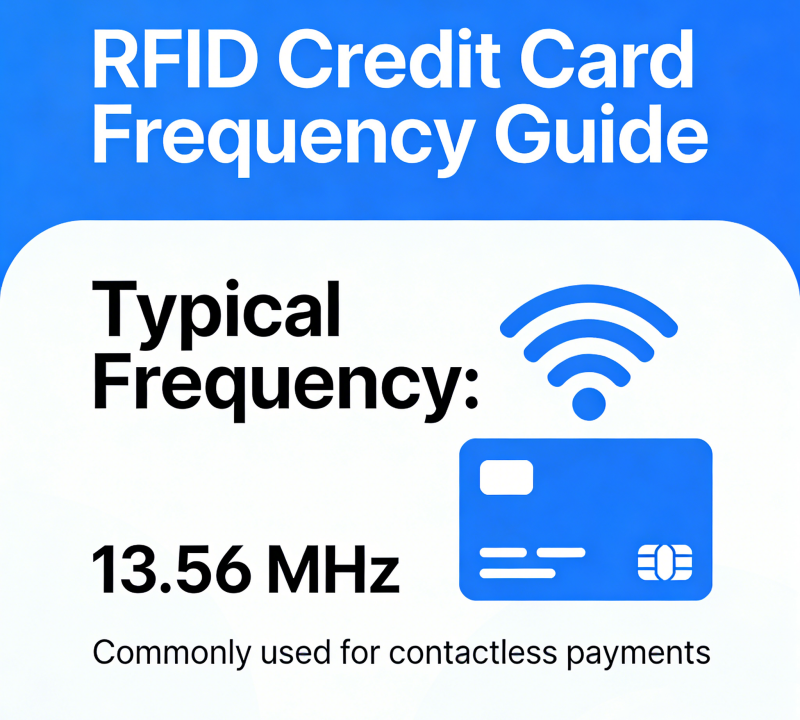
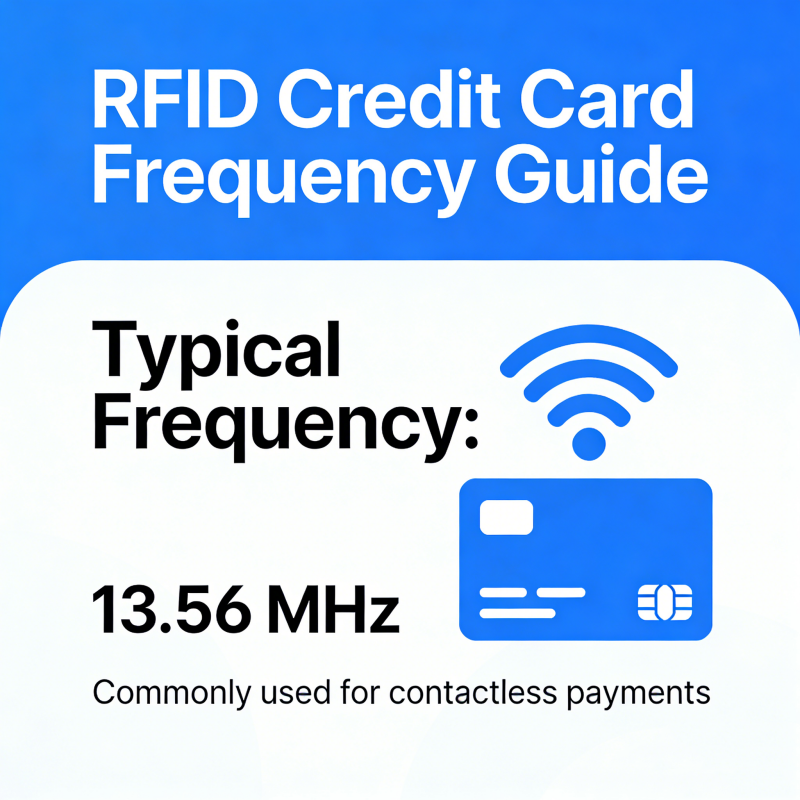
Contactless smart card technology has evolved rapidly over the past two decades, driven by rising security demands, increasing transaction volumes, and the need for multi-application platforms. Among all contactless IC families operating at 13.56 MHz, the NXP MIFARE DESFire series has become the gold standard for secure, scalable, and future-proof RFID systems.
This article provides a comprehensive comparison of MIFARE DESFire EV1 vs MIFARE DESFire EV2, explaining their technical foundations, security architecture, performance differences, compatibility considerations, and real-world use cases. It is written specifically for B2B buyers, transit authorities, access control providers, and system integrators evaluating long-term RFID infrastructure decisions.
The Evolution of MIFARE Contactless Smart Cards
From MIFARE Classic to DESFire
The MIFARE Classic 1K chip was introduced in the mid-1990s and quickly became the most widely deployed RFID smart card IC in the world. It was inexpensive, simple to integrate, and suitable for basic identification and access control.
However, MIFARE Classic was designed in an era when cryptographic attacks were far less advanced. In 2007, publicly documented security vulnerabilities exposed its proprietary encryption, making it unsuitable for applications requiring strong data protection.
This event marked a turning point.
To address these weaknesses, NXP introduced the MIFARE DESFire family, which replaced proprietary cryptography with open, internationally recognized AES encryption and introduced a secure, flexible file system suitable for multi-application environments.
What Is MIFARE DESFire?
MIFARE DESFire is a contactless smart card IC platform compliant with ISO/IEC 14443 Type A, operating at 13.56 MHz. Unlike simpler UID-based cards, DESFire functions more like a miniature secure computer, featuring:
-
A hierarchical application structure
-
Multiple files per application
-
Strong cryptographic authentication
-
Secure messaging and access control
-
Fast transaction speeds
DESFire is designed for high-security, high-volume, and multi-service systems, including transit, access control, identity, loyalty, and micro-payments.
Introduction to DESFire EV1 and DESFire EV2
MIFARE DESFire EV1
DESFire EV1 was NXP’s first widely adopted truly secure contactless smart card IC. It introduced:
-
AES-128 encryption
-
3-pass mutual authentication
-
Flexible memory organization
-
Multi-application support
-
Common Criteria certification
DESFire EV1 became the foundation for secure RFID deployments worldwide and remains heavily used today.
Available memory sizes include:
-
2K
-
4K
-
8K
-
16K
MIFARE DESFire EV2
DESFire EV2 is the next evolutionary step, introduced to enhance performance, security management, privacy, and user experience while maintaining compatibility with existing DESFire infrastructures.
DESFire EV2 builds on EV1 by adding:
-
Enhanced transaction speed
-
Improved read range optimization
-
Advanced key management features
-
Privacy enhancements
-
Stronger protection against modern attack vectors
Like EV1, it is available in:
-
2K
-
4K
-
8K
-
16K memory options
DESFire EV1 vs EV2: Core Technical Comparison
Security Architecture (Shared Strengths)
Both DESFire EV1 and EV2 use the same core security foundation, which is why EV1 remains secure even today.
Key shared features include:
-
AES-128 encryption for data and communication
-
3-pass mutual authentication
-
CMAC and encrypted secure messaging
-
Application-specific key sets
-
File-level access rights
-
Rolling key support
-
Transaction MAC (TMAC)
-
ECC-based originality signature
In practical terms, EV1 is not “less secure” than EV2 when properly configured.
What EV2 Improves Over EV1
While security algorithms remain the same, EV2 enhances how security is managed and deployed.
1. Improved Performance and User Experience
DESFire EV2 offers:
-
Faster transaction handling
-
Improved anti-collision behavior
-
Optimized RF performance (especially with 70 pF antenna option)
This is especially important in high-throughput environments such as metro gates or busy office entrances.
2. Longer and More Stable Read Range
EV2 provides better RF field handling, allowing:
-
More consistent reads
-
Slightly longer operating distance (reader-dependent)
-
Better performance with compact or embedded antennas
This improves usability in motion-based scenarios.
3. Advanced Key Management
DESFire EV2 introduces enhancements that simplify large-scale system security management, including:
-
More flexible key version handling
-
Improved support for rolling key updates
-
Better separation between applications
This allows issuers to update encryption keys without recalling cards, a critical feature for enterprise and transit operators.
4. Enhanced Privacy Features
EV2 supports:
-
Optional Random ID (RID) for enhanced user privacy
-
Better protection against unauthorized card tracking
This is increasingly important for privacy-sensitive deployments.
5. Stronger Protection Against Modern Attacks
EV2 includes optional:
-
Enhanced side-channel attack protection
-
LRP-wrapped AES authentication
-
Improved resistance to relay and emulation attacks
It also introduces proximity checking, allowing the card to prove it is physically close to the reader rather than responding via a remote relay attack.
Backward Compatibility: A Practical Reality Check
In theory, DESFire EV2 is backward-compatible with EV1. In practice, the situation is more nuanced.
What Usually Works
-
EV2 cards can often be programmed with EV1-style data structures
-
Many EV1 readers can physically detect EV2 cards
-
Existing systems can continue operating if EV2 features are not used
What Can Cause Problems
-
Some legacy readers do not recognize EV2 cards
-
Some encoding software supports EV2 cards but only in EV1 mode
-
Advanced EV2 features require updated reader firmware and middleware
This means that system compatibility depends heavily on the reader manufacturer and software stack.
When to Choose DESFire EV1
DESFire EV1 remains a safe, proven choice in many scenarios:
-
Existing systems already deployed with EV1
-
Readers and software not yet upgraded
-
Long project lifecycles with stable requirements
-
Budget-sensitive projects where EV2 features are not required
Because EV1 and EV2 use the same AES-128 encryption, EV1 is still considered highly secure.
When to Choose DESFire EV2
DESFire EV2 is the better option when:
-
Deploying a new system from scratch
-
Planning for future upgrades
-
Operating large-scale or multi-tenant platforms
-
Requiring advanced privacy and key management
-
Supporting multi-application card business models
Importantly, EV2 is only slightly more expensive than EV1, making it a logical long-term investment.
Multi-Application Capability: A Key Advantage
Both EV1 and EV2 support:
-
Up to 28 applications per card
-
Up to 32 files per application
-
Independent keys per application
This allows:
-
Access control
-
Transit
-
Payment
-
Loyalty
-
Identification
to coexist securely on a single card, each managed by different stakeholders.
Security Features in Detail
Both EV1 and EV2 support:
-
Common Criteria certification (EAL4+ / EAL5+ depending on version)
-
AES-128 secure messaging compliant with NIST SP 800-38A/B
-
Plain, CMAC-protected, or fully encrypted communication modes
-
File-level access control (Read / Write / Read-Write / Configuration)
-
Transaction counters
-
Individual TMAC keys
-
ECC-based originality verification
These features make DESFire suitable for financial-grade security applications.
Typical Applications of DESFire EV1 and EV2
-
Public transportation ticketing
-
Corporate and government access control
-
University campus cards
-
Membership and loyalty programs
-
Cashless vending and micro-payments
-
Secure identification badges
DESFire vs MIFARE Plus
NXP introduced MIFARE Plus as a security upgrade path from MIFARE Classic. While technically strong, MIFARE Plus never achieved the same market adoption as DESFire due to:
-
Migration complexity
-
Less flexible application structure
-
Lower ecosystem momentum
DESFire remains the preferred platform for high-security deployments.
Manufacturing and Product Availability
Leading RFID manufacturers produce a full range of DESFire products, including:
-
Blank white cards
-
Pre-printed cards
-
Key fobs
-
Tags
-
Wristbands
Available memory options:
-
DESFire EV1: 2K / 4K / 8K / 16K
-
DESFire EV2: 2K / 4K / 8K / 16K
Practical Buying Advice for B2B Customers
Before choosing EV1 or EV2, confirm:
-
Reader firmware compatibility
-
Middleware and encoding software support
-
Future system expansion plans
-
Security policy requirements
-
Total cost of ownership, not just card price
Testing with real hardware is strongly recommended.
Conclusion: EV1 vs EV2—Which Is Better?
There is no universal “winner.” Instead:
-
DESFire EV1 is mature, stable, and secure
-
DESFire EV2 is more flexible, future-ready, and privacy-enhanced
If your system already supports EV1, continuing with EV1 is safe and reasonable. If you are building or upgrading a system with long-term vision, DESFire EV2 is the smarter strategic choice.
In a world where RFID security threats continue to evolve, the DESFire platform—EV1 and EV2 alike—remains one of the most trusted foundations for secure contactless systems worldwide.