
In a world that increasingly runs on data rather than paper, identification technology has quietly become a critical infrastructure. From access control to inventory tracking, RFID has moved from “nice to have” to “absolutely essential.” Among the many RFID solutions available today, the 13.56MHz RFID clear PVC tag stands out as one of the most practical, versatile, and cost-effective options for modern identification systems.
This article provides a comprehensive, SEO-optimized overview of the 13.56MHz RFID clear PVC tag, covering its working principles, core functions, technical specifications, real-world applications, and the specific industry pain points it helps eliminate. If you are evaluating RFID tags for access control, asset management, ticketing, or brand authentication, this guide is designed to give you clarity—not marketing fog.
What Is a 13.56MHz RFID Clear PVC Tag?
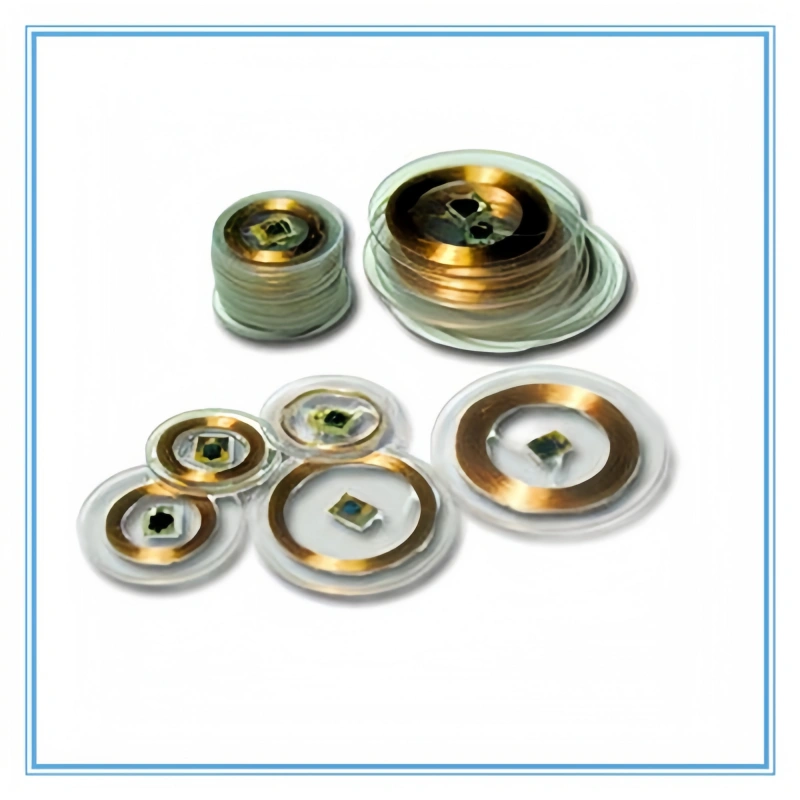
A 13.56MHz RFID clear PVC tag is a high-frequency (HF) RFID tag operating at 13.56 megahertz, manufactured using transparent PVC material. It typically contains:
-
An embedded RFID chip compliant with ISO standards
-
A copper or aluminum antenna
-
A clear or semi-transparent PVC substrate
The tag communicates wirelessly with an RFID reader using near-field electromagnetic coupling, meaning it works reliably at short distances with high stability and security.
The “clear PVC” aspect is not cosmetic trivia. Transparency allows the tag to integrate seamlessly into cards, labels, wristbands, product packaging, or branded designs without visual disruption—something that matters far more than it sounds in real commercial environments.
Why 13.56MHz? Understanding the Frequency Advantage
RFID systems are generally divided into low frequency (LF), high frequency (HF), and ultra-high frequency (UHF). The 13.56MHz band belongs to HF RFID, and that choice is deliberate.
13.56MHz offers a sweet spot between performance, cost, and reliability:
-
Stable performance around metal-free environments
-
Strong resistance to electromagnetic interference
-
Excellent compatibility with smartphones (NFC)
-
Mature global standards and wide reader availability
This frequency is governed by international standards such as ISO/IEC 14443 and ISO/IEC 15693, making 13.56MHz RFID tags globally deployable without regional compliance headaches.
Core Functions of 13.56MHz RFID Clear PVC Tags
Contactless Identification
The primary function is contactless identification. The tag transmits its unique ID or stored data to a reader without physical contact, reducing wear, contamination, and human error.
This is especially valuable in high-traffic environments where speed and hygiene matter.
Secure Data Storage and Access
Depending on the chip type, 13.56MHz RFID clear PVC tags can store:
-
Unique serial numbers (UID)
-
User data (text, numbers, encryption keys)
-
Access credentials
Many chips support password protection and encryption, making them suitable for secure systems like access control and e-ticketing.
Read/Write Capability
Unlike basic barcode systems, most HF RFID tags are rewritable. Data can be updated throughout the product or asset lifecycle, reducing replacement costs and improving traceability.
Integration with NFC Devices
A key advantage of 13.56MHz RFID is its compatibility with NFC. Many smartphones can read these tags directly, enabling mobile authentication, digital interaction, and consumer engagement without special hardware.
Typical Technical Specifications
While exact specifications vary by chip and manufacturer, a standard 13.56MHz RFID clear PVC tag typically includes the following parameters:
Frequency
-
Operating frequency: 13.56MHz (HF)
Standards
-
ISO/IEC 14443 Type A / Type B
-
ISO/IEC 15693
-
NFC Forum compliant (for selected chips)
Material
-
Transparent or semi-transparent PVC
-
Optional PET or eco-PVC alternatives
Size and Thickness
-
Common sizes: credit card size (85.6 × 54 mm), custom shapes
-
Thickness: 0.3 mm – 0.84 mm
Memory Options
-
UID only (read-only)
-
144 bytes to several kilobytes of EEPROM
-
User memory with sectorized access control
Read Range
-
Typical range: 2–10 cm, depending on antenna design and reader power
Durability
-
Water-resistant
-
Flexible and crack-resistant
-
Suitable for daily handling
Printing & Customization
-
Offset printing, silk printing, digital printing
-
QR codes, barcodes, serial numbers
-
Laser engraving or UV printing
Why Clear PVC? Practical Benefits Beyond Appearance
Clear PVC is often misunderstood as a purely aesthetic choice. In reality, it solves several practical problems.
Transparency allows:
-
Brand integration without blocking logos or designs
-
Visual inspection of embedded components
-
Easier authentication against counterfeit cards
-
Cleaner appearance for premium applications
In industries like hospitality, luxury retail, and events, visual harmony is not optional. A visible white card slapped onto a premium product often looks like a design afterthought. Clear PVC avoids that problem entirely.
Key Application Areas
Access Control Systems
13.56MHz RFID clear PVC tags are widely used in:
-
Office buildings
-
Residential communities
-
Hotels and resorts
-
Gyms and clubs
Their short read range enhances security by reducing accidental or unauthorized reads, while encryption features protect credentials.
Smart Cards and ID Badges
Transparent RFID PVC cards are ideal for:
-
Employee ID cards
-
Student cards
-
Visitor badges
They support photo printing, layered graphics, and anti-counterfeiting elements while remaining durable and professional.
Event Ticketing and Cashless Systems
In concerts, exhibitions, and sports events, RFID tags eliminate:
-
Fake tickets
-
Long queues
-
Manual ticket checks
Clear PVC wristbands or cards combine RFID functionality with attractive branding, improving both security and attendee experience.
Product Authentication and Anti-Counterfeiting
Luxury goods, cosmetics, and electronics increasingly use 13.56MHz RFID clear PVC tags to:
-
Verify product authenticity
-
Track distribution channels
-
Enable consumer verification via NFC smartphones
The clear design helps conceal the technology while maintaining packaging aesthetics.
Library and Media Management
HF RFID tags are widely adopted in libraries for:
-
Book identification
-
Self-service borrowing and returns
-
Inventory audits
Clear PVC tags can be discreetly embedded without altering book design.
Healthcare and Laboratory Management
In hospitals and labs, RFID tags help track:
-
Medical equipment
-
Samples and reagents
-
Staff access rights
Contactless operation reduces contamination risks—something barcodes simply cannot do.
Industry Pain Points Solved by 13.56MHz RFID Clear PVC Tags
Pain Point 1: Manual Identification Errors
Industries relying on visual checks, paper logs, or barcodes often suffer from misreads, lost records, and human mistakes. RFID automates identification, reducing errors dramatically.
Pain Point 2: Slow Throughput in High-Traffic Areas
Queues at entrances, ticket counters, or checkpoints cost time and money. RFID enables instant authentication, keeping people and processes moving smoothly.
Pain Point 3: Counterfeiting and Fraud
Printed cards and QR codes are easy to copy. Encrypted RFID chips are not. This makes 13.56MHz RFID clear PVC tags a strong defense against fraud.
Pain Point 4: Short Product Lifecycle Visibility
Once products leave the factory, visibility often disappears. RFID tags allow tracking across logistics, retail, and post-sale phases.
Pain Point 5: Poor User Experience
Swiping, scanning, or typing credentials frustrates users. Contactless RFID offers a smoother, more modern interaction—tap and go.
RFID vs Barcodes: A Practical Comparison
Barcodes are cheap, familiar, and limited. RFID is an upgrade, not a replacement, but the difference matters.
RFID does not require line-of-sight, can store more data, supports encryption, and works even when dirty or scratched. In environments where efficiency, security, and durability matter, RFID simply outperforms barcodes.
Customization Options for OEM and Branding
One of the biggest strengths of 13.56MHz RFID clear PVC tags is flexibility. Manufacturers can customize:
-
Tag shape and size
-
Chip type and memory
-
Printing and branding
-
UID encoding and data structure
-
Adhesive or non-adhesive formats
This makes them suitable for OEM projects, system integrators, and brand owners with specific requirements.
Future Trends: Where This Technology Is Headed
As NFC adoption continues to grow, the line between RFID and consumer electronics keeps shrinking. Clear PVC RFID tags are increasingly used in:
-
Smart packaging
-
Interactive marketing
-
Digital product passports
-
Sustainability tracking
What began as an access control tool is evolving into a bridge between physical products and digital systems.
Conclusion: Why 13.56MHz RFID Clear PVC Tags Matter
The 13.56MHz RFID clear PVC tag is not just another RFID option—it is a mature, reliable, and adaptable identification solution that solves real problems across multiple industries. Its balance of security, usability, visual integration, and global compatibility makes it a practical choice for businesses that care about efficiency and credibility.
In a marketplace full of buzzwords, this technology earns its place quietly—by working, day after day, tap after tap.