
Product Overview
The 134.2 kHz RFID Temperature Sensor Microchip is a specialized, bioglass-encapsulated micro-transponder that combines passive RFID identification with an integrated temperature sensor. Operating at the global standard low frequency, it provides a reliable, implantable solution for simultaneous animal identification and core body temperature measurement. This dual functionality enables proactive health management, secure lifelong traceability, and reduces the stress associated with manual monitoring procedures for veterinarians, livestock farmers, and pet owners.
Key Features & Benefits
Dual-Functionality Core
This microchip’s primary advantage is its combined capability. It stores a permanent, unalterable unique identification number (UID) for lifetime traceability. Concurrently, its integrated sensor enables accurate, non-invasive body temperature readings directly from the animal, providing critical health data.
Standards & Compatibility
The device is fully compliant with ISO 11784 and ISO 11785 FDX-B standards. This global compliance ensures the chip can be read by compatible scanners worldwide, and the FDX-B protocol allows for the reliable, simultaneous transmission of both ID and sensor data.
Design & Reliability
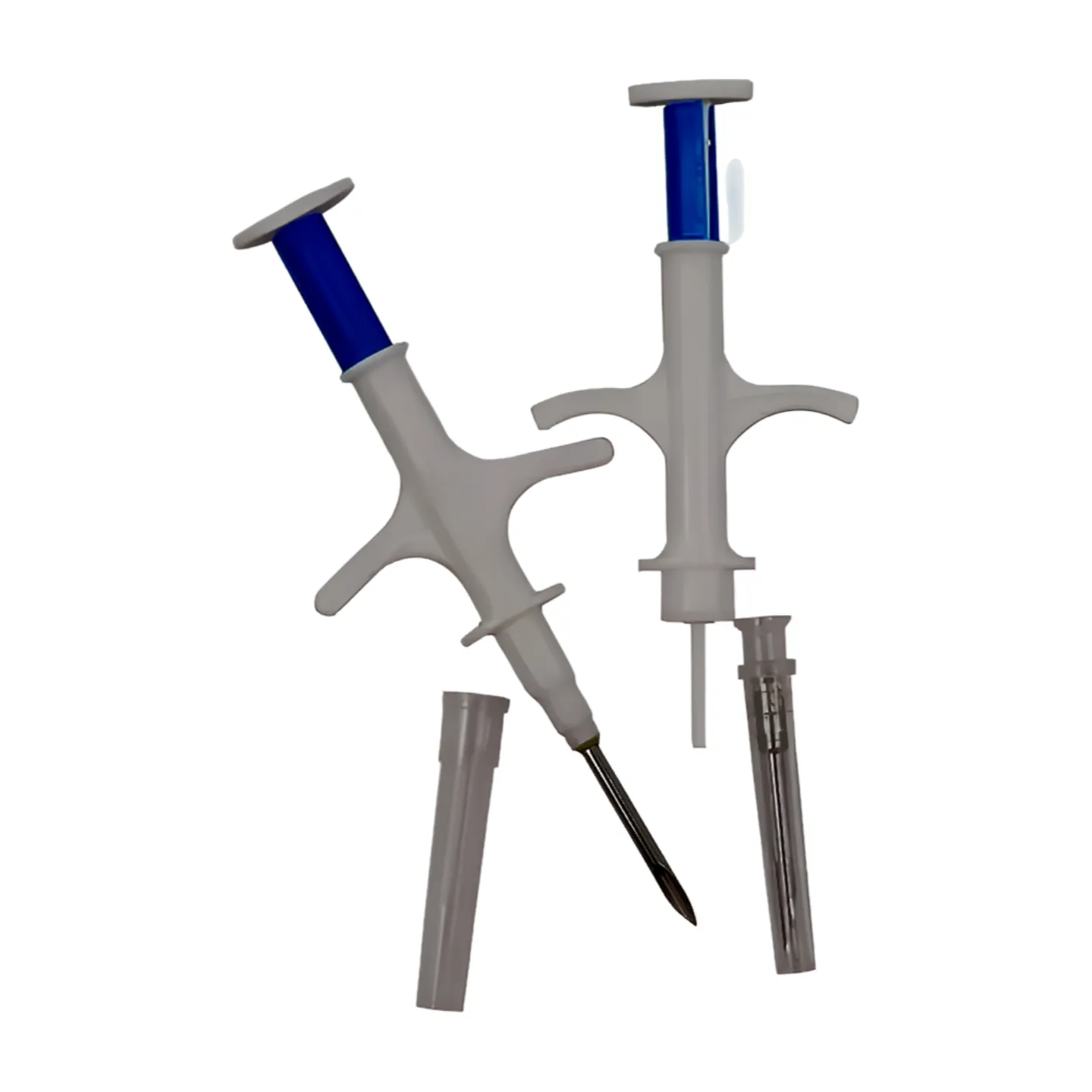
Encapsulated in hypoallergenic, medical-grade bioglass, the microchip is designed for biocompatibility and safety during long-term implantation. As a passive RFID device, it requires no internal battery, deriving all power from the reader’s signal, which guarantees a lifelong operational lifespan. Its miniaturized dimensions (1.4×8.5mm) facilitate quick and minimally invasive implantation using a standard pre-sterilized syringe.
How the 134.2 kHz RFID Temperature Microchip Works
The system operates through a simple, efficient process. First, the microchip is implanted subcutaneously in the animal using a specialized syringe. For reading, a compatible 134.2 kHz RFID reader emits a low-frequency radio wave field. The passive microchip within the animal receives energy from this field, which powers its circuitry. The chip’s integrated sensor then measures the local ambient (body) temperature. Immediately, the chip transmits its unique ID number and the current temperature data stream back to the reader using the FDX-B protocol. The reader decodes this information, displaying or forwarding the ID and temperature value to connected management software for record-keeping, analysis, or health alerts.
Primary Applications & Use Cases
This technology serves critical roles across animal management sectors. In livestock health and management, it enables early fever detection in herds (e.g., dairy cows, swine), supporting precision farming, breeding programs, and automated health logs. For companion animal care, it provides permanent identification for lost pets and allows veterinarians to efficiently track a pet’s baseline temperature during clinical visits. Research and laboratory facilities benefit from stress-free, accurate identification and physiological monitoring for study subjects. In zoo and wildlife conservation, it allows for the identification and health monitoring of valuable or endangered species without the need for repeated physical capture and handling.
Technical Specifications
- Product Name: RFID Temperature Sensor Microchip
- Operating Frequency: 134.2 kHz (Low Frequency – LF)
- Communication Protocol: ISO 11784/11785 FDX-B
- Chip Type: Custom Sensor Integrated Circuit
- Dimensions: 1.4 mm diameter × 8.5 mm length
- Encapsulation Material: Medical Grade Bioglass
- Power Source: Passive (Inductively Powered by Reader)
- Key Function: Unique Identification (UID) + Temperature Sensing
- Data Standards: Compliant with ISO 11784 (Data Structure) and ISO 11785 (Air Interface)
Benefits for Veterinarians, Farmers, and Owners
The implementation of this microchip delivers significant advantages. It facilitates proactive animal health management by enabling the early detection of fever or illness, leading to faster treatment and better outcomes. It enhances traceability and safety through a permanent, tamper-proof ID that supports disease control, pedigree verification, and pet recovery services. The technology drastically improves operational efficiency by reducing the time and stress associated with manual identification and temperature measurement. It improves data accuracy by automating collection, minimizing human error in medical and herd records. Ultimately, it advances animal welfare by enabling continuous monitoring with minimal handling and disruption.
FAQ: 134.2 kHz RFID Temperature Microchips
Q: What is an RFID temperature sensor microchip?
A: It is a passive, implantable RFID device that transmits both a unique identification code and real-time temperature data when scanned by a compatible 134.2 kHz reader.
Q: How does the microchip measure temperature?
A: The microchip contains an integrated sensor circuit that measures the local temperature. This data is encoded and transmitted alongside the chip’s ID when it is activated and powered by a reader’s signal.
Q: Is it safe for my animal?
A: Yes. The chip is encapsulated in biocompatible bioglass, is pre-sterilized, and is implanted via a quick, minimally invasive procedure. It is passive, contains no batteries, and is designed for long-term safety.
Q: What readers are compatible with this microchip?
A: Any RFID reader that supports the ISO 11785 FDX-B protocol at 134.2 kHz can read the identification data. To successfully decode and display the temperature data, a reader must be specifically programmed or configured to interpret the sensor data stream from this chip’s transmission.