
In modern operations, physical assets move faster than spreadsheets can keep up with. Pallets circulate between warehouses, cartons pass through multiple logistics nodes, machines change locations on factory floors, and valuable equipment quietly disappears into operational blind spots. Traditional labels fall off, barcodes fade, and manual tracking becomes a game of educated guessing.
This is exactly where the RFID disc token tag, also known as an RFID coin tag, proves its value.
Compact, rugged, waterproof, and cost-effective, RFID disc token tags are designed for warehouse management, asset tracking, logistics control, and industrial automation. Their round, coin-like form factor allows easy installation on pallets, cartons, containers, machines, and even metal surfaces when combined with anti-metal layers.
This article offers a comprehensive, SEO-friendly deep dive into RFID disc token tags, covering features, specifications, working principles, applications, and the operational pain points they solve across industries.
What Is an RFID Disc Token Tag?
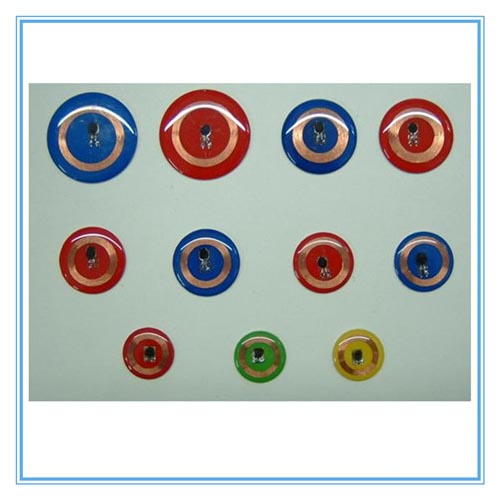
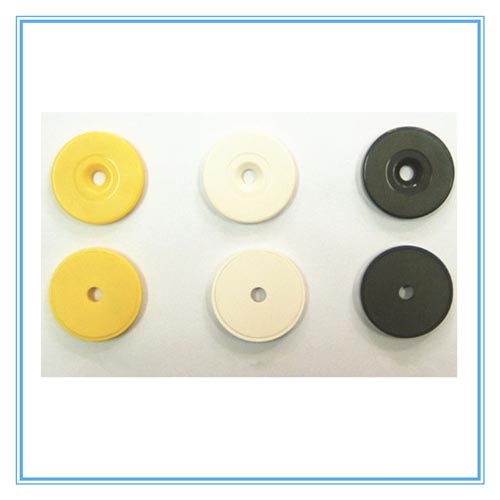
An RFID disc token tag is a compact RFID transponder housed in a round ABS or PVC enclosure. Because of its shape, it is often called an RFID coin tag, RFID token, or RFID disc tag.
Unlike flexible RFID labels, RFID disc token tags are designed for durability and reuse. They resist water, shock, and environmental stress, making them suitable for both indoor and outdoor applications.
Each RFID disc token tag contains:
An RFID chip
An embedded antenna
A protective hard shell (ABS or PVC)
Once attached to an object, the tag provides a unique digital identity that can be read wirelessly by RFID readers, without line of sight.
Why RFID Disc Token Tags Matter in Modern Management Systems
Warehouse and asset management increasingly demand accuracy, automation, and durability. RFID disc token tags address several long-standing problems:
Paper labels deteriorate in harsh environments
Barcodes require manual, line-of-sight scanning
Adhesive labels peel off pallets and containers
Manual asset tracking leads to data gaps and losses
RFID disc token tags replace fragile identifiers with robust, machine-readable markers that work consistently over time.
Think of them as digital nameplates for physical objects—small, silent, and extremely reliable.
Key Features of RFID Disc Token Tags
1. Compact and Versatile Design
The disc shape allows installation on:
Wooden or plastic pallets
Cartons and reusable containers
Industrial machines and tools
Public infrastructure assets
Their low profile minimizes interference with handling and stacking.
2. Multiple Size Options
RFID disc token tags are available in various diameters, allowing optimization for read range, available space, and cost control.
Common sizes include:
20 mm
27 mm
30 mm
50 mm
Custom sizes upon request
This flexibility makes them suitable for both small items and large assets.
3. Durable ABS or PVC Materials
The housing material plays a critical role in tag longevity:
ABS offers excellent impact resistance
PVC provides smooth surfaces and cost efficiency
Both materials protect the internal RFID components from mechanical stress and environmental exposure.
4. Waterproof and Shock-Proof Performance
RFID disc token tags are designed for real-world conditions:
Waterproof construction
Shock-proof housing
Resistant to dust and moisture
This makes them suitable for warehouses, outdoor yards, factory floors, and logistics hubs where conditions are far from gentle.
5. Wide Frequency Support
One of the major advantages of RFID disc token tags is multi-frequency compatibility:
LF (125 kHz) – short range, stable in metal or liquid environments
HF (13.56 MHz) – NFC compatibility, medium range
UHF (860–960 MHz) – long range, bulk reading capability
This allows system designers to choose the optimal frequency for each application.
6. Economical Cost for Large-Scale Deployment
RFID disc token tags strike a balance between durability and affordability. Compared with active RFID tags, they:
Require no battery
Have long service life
Offer low cost per unit at scale
This makes them ideal for large-volume deployments in logistics and warehouse environments.
RFID Disc Token Tag Technical Specifications
Below is a structured overview of the core specifications:
Material
ABS
PVC
Dimensions
Diameter: 20 mm / 27 mm / 30 mm / 50 mm
Custom sizes available
Thickness
2 mm to 8 mm
Color
Default: White or Black
Custom colors available
Operating Temperature
-20°C to +50°C
Operating Frequency
LF (125 kHz)
HF (13.56 MHz)
UHF (860–960 MHz)
Features
Waterproof
Shock-proof
Craft and Customization
Silk-screen printed logo
Laser engraved logo or serial number
Sticker printing
Optional anti-metal layer
Humidity Resistance
Suitable for indoor and outdoor use
Operating Humidity
40% to 80% RH
How RFID Disc Token Tags Work
RFID disc token tags are typically passive RFID devices, meaning they do not contain a battery.
Here’s the simplified process:
An RFID reader emits radio frequency signals
The RFID disc token tag receives energy from the signal
The chip activates and transmits its stored ID data
The reader captures and processes the information
This interaction happens in milliseconds, even when multiple tags are present.
In UHF systems, hundreds of RFID disc token tags can be read simultaneously, making them ideal for bulk operations.
Installation Methods for RFID Disc Token Tags
RFID disc token tags can be installed using several methods, depending on the asset and environment:
Adhesive bonding
Screws or rivets
Embedding into pallets or plastic parts
Mounting with anti-metal backing for metal surfaces
Their rigid structure ensures they remain firmly attached over long service cycles.
Core Applications of RFID Disc Token Tags
1. Warehouse Management
In warehouse environments, RFID disc token tags are commonly installed on:
Pallets
Reusable bins
Storage racks
They enable:
Automated inventory counts
Real-time pallet tracking
Faster inbound and outbound verification
Reduced manual scanning labor
Warehouse managers gain visibility without interrupting operations.
2. Logistics Management
RFID disc token tags streamline logistics by:
Tracking cartons across distribution centers
Verifying shipments automatically
Reducing misplacement and loss
Improving traceability across transport stages
With UHF RFID, entire truckloads can be scanned at dock doors in seconds.
3. Inventory Management
Inventory accuracy improves dramatically when each asset carries a unique RFID identity.
RFID disc token tags support:
Item-level tracking
Location monitoring
Cycle counting automation
Audit accuracy above 95%
This is especially valuable for high-turnover or reusable assets.
4. Industrial Automation
In automated production lines, RFID disc token tags are used to:
Identify workpieces
Control process routing
Trigger machine operations
Track production history
Their shock-proof design ensures reliability even in high-vibration environments.
5. Patrolling Management
In security and facility management, RFID disc token tags are installed at fixed checkpoints.
They enable:
Digital patrol verification
Time-stamped records
Reduced paperwork
Improved accountability
LF and HF RFID disc token tags are particularly common in patrol systems.
6. Casino Tokens
RFID disc token tags are widely used in casino chips and tokens.
Benefits include:
Anti-counterfeiting
Real-time tracking
Automated counting
Enhanced security
The coin-shaped form factor is naturally suited for this application.
7. Public Transportation
In public transport systems, RFID disc token tags are used for:
Access control
Ticketing systems
Asset identification
HF (13.56 MHz) RFID disc token tags integrate smoothly with NFC-based infrastructure.
Solving Industry Pain Points with RFID Disc Token Tags
Loss and Misplacement of Assets
Without tracking, pallets and tools quietly disappear. RFID disc token tags provide continuous visibility and accountability.
Manual Data Entry Errors
Automated RFID reading eliminates human error and reduces administrative workload.
Harsh Environmental Conditions
Paper labels fail in moisture and impact environments. RFID disc token tags are built to survive them.
Inefficient Inventory Audits
RFID enables fast cycle counts without halting operations.
Limited Traceability
RFID disc token tags provide historical movement data, supporting audits and optimization.
LF vs HF vs UHF RFID Disc Token Tags
Each frequency serves different needs:
LF (125 kHz)
Best for short-range, stable reading near metal or liquidsHF (13.56 MHz)
Ideal for NFC, access control, and token systemsUHF (860–960 MHz)
Best for long-range, bulk reading in warehouses and logistics
Choosing the right frequency is key to system performance.
Customization Options
RFID disc token tags can be customized to match operational and branding needs:
Logo printing or engraving
Unique serial numbers
Anti-metal layers
Custom colors and sizes
Encoding and data initialization
Customization transforms a generic tag into a branded, system-ready component.
Future Outlook for RFID Disc Token Tags
As automation expands, RFID disc token tags will continue to replace manual identifiers. Their low cost, durability, and compatibility with modern systems position them as a foundational technology in:
Smart warehouses
Industry 4.0 factories
Intelligent logistics networks
Urban infrastructure systems
Small in size, large in impact.
Conclusion
The RFID disc token tag is a practical, rugged, and economical solution for asset identification in demanding environments. With waterproof ABS or PVC housing, multiple frequency options, and flexible customization, it meets the needs of warehouse management, logistics, industrial automation, and beyond.
In a world where physical assets must speak digitally, RFID disc token tags give them a clear, reliable voice—round, silent, and remarkably efficient.