
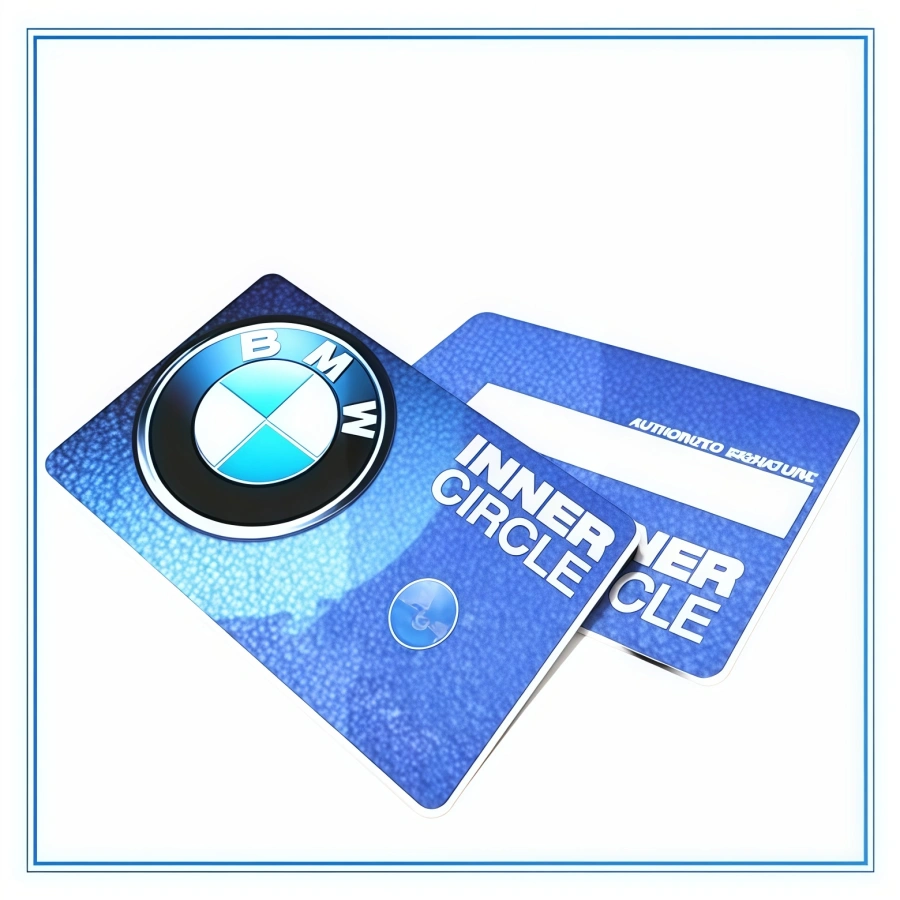
Radio waves are invisible, but supply chains depend on them. Warehouses, gated communities, aviation logistics, retail inventory systems—these ecosystems quietly rely on UHF RFID technology to identify, track, and authenticate objects at scale.
The UHF 860–960MHz RFID Card built with Alien Higgs 3, Alien H4, or Impinj M5 chips represents a high-performance, long-range identification solution designed for industrial and commercial environments. It conforms to EPC Global Class 1 Gen 2 and ISO/IEC 18000-6C standards, enabling worldwide operation across the global UHF frequency spectrum.
This article provides a comprehensive overview of the product, including technical specifications, chip architecture, application scenarios, performance advantages, and how it solves real industry challenges.
Product Overview
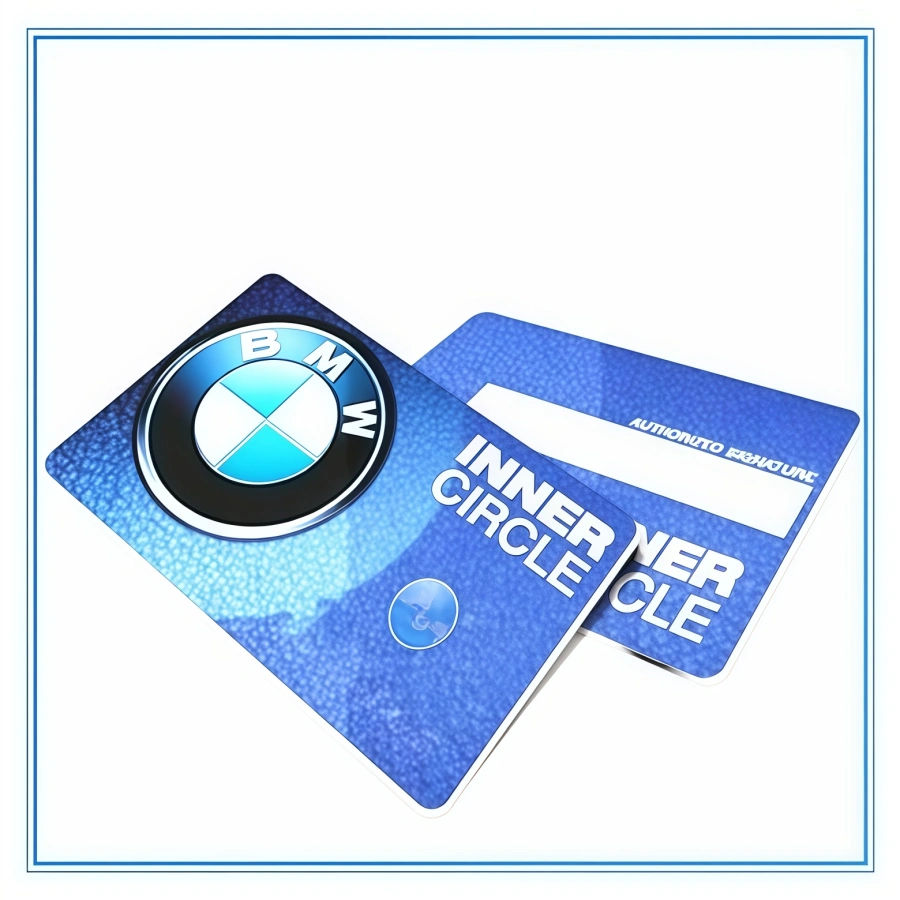
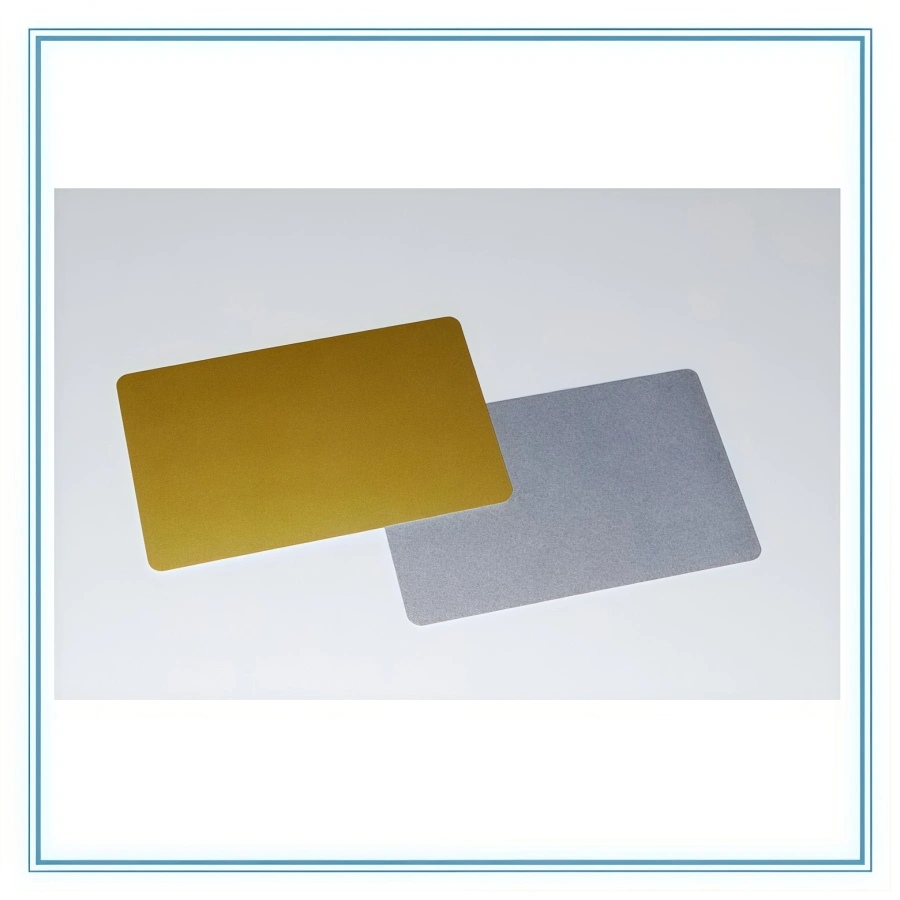
This UHF ISO RFID card integrates an advanced UHF chip—commonly Alien Higgs 3 (H3), Alien H4, or Impinj M5—with a pre-encoded 64-bit unique identifier. Designed in standard ISO card size (85 × 54 mm), it combines long-range identification capabilities with the physical durability of a PVC card body.
Unlike HF (13.56 MHz) RFID cards used for short-range access control, UHF RFID cards operate in the 860–960 MHz band, enabling significantly longer read distances and faster bulk data processing.
If HF cards are like whispering at close range, UHF cards are like broadcasting across a room.
Technical Specifications
General Specifications
| Parameter | Specification |
|---|---|
| Frequency | 860–960 MHz |
| Standards/Protocols | EPC Class 1 Gen2, ISO 18000-6C |
| Chip Options | Alien H3 / Alien H4 / Impinj M5 |
| Memory Size | Up to 512 bits |
| UID | 64-bit unique identity (pre-encoded) |
| Operating Mode | Read/Write (R/W) |
| Reading Distance | Up to 1 meter (depends on reader & environment) |
Physical Parameters
| Parameter | Specification |
|---|---|
| Size | 85 × 54 mm (Customizable design) |
| Antenna Material | PET + Aluminum (AL) |
| Outer Material | PVC |
| Card Thickness | Standard ISO (approx. 0.8 mm) |
| Printing | Offset, Digital, Screen Printing |
The PET + Aluminum antenna ensures stable RF performance while maintaining flexibility within the PVC card structure.
Environmental Parameters
| Parameter | Specification |
|---|---|
| Operating Temperature | -30°C to +50°C |
| Storage Temperature | -40°C to +100°C |
These temperature ranges make the card suitable for industrial warehouses, outdoor parking systems, and logistics environments.
Understanding UHF RFID Technology (860–960 MHz)
UHF RFID operates at ultra-high frequencies between 860 MHz and 960 MHz, depending on regional regulations:
- 902–928 MHz (North America)
- 865–868 MHz (Europe)
- 920–925 MHz (Asia)
The EPC Gen2 protocol enables:
- Fast anti-collision processing
- Multiple tag reading
- Global interoperability
- High-speed data transfer
Unlike low-frequency (LF) or high-frequency (HF) cards, UHF cards support longer read ranges and bulk scanning, which is essential in logistics and asset tracking environments.
Chip Architecture: Alien H3, H4, and Impinj M5
Alien Higgs 3 (H3)
- 512-bit memory
- 64-bit unique ID
- Strong EPC memory structure
- High reliability in supply chain use
Alien Higgs 4 (H4)
- Improved sensitivity
- Better read performance
- Lower power consumption
- Enhanced encoding speed
Impinj M5
- Stable RF performance
- Good read accuracy
- Reliable anti-collision capabilities
These chips support read/write functionality, allowing users to encode EPC data or custom information.
The 64-bit UID is factory-programmed and cannot be altered, ensuring unique identity integrity.
In identification systems, uniqueness is everything. Two identical objects with identical IDs create chaos.
Primary Applications
1. Access Control (Vehicle & Long-Range Entry)
UHF RFID cards are ideal for vehicle access control systems. Drivers can hold the card near the windshield, and readers installed at gates detect the card automatically.
Applications include:
- Parking garages
- Residential compounds
- Industrial facilities
- Campus vehicle management
Compared to HF cards, UHF enables greater convenience and faster throughput.
2. Attendance Control
UHF RFID cards streamline attendance management in:
- Factories
- Large enterprises
- Schools
- Construction sites
Multiple employees can be identified quickly without direct card-to-reader contact.
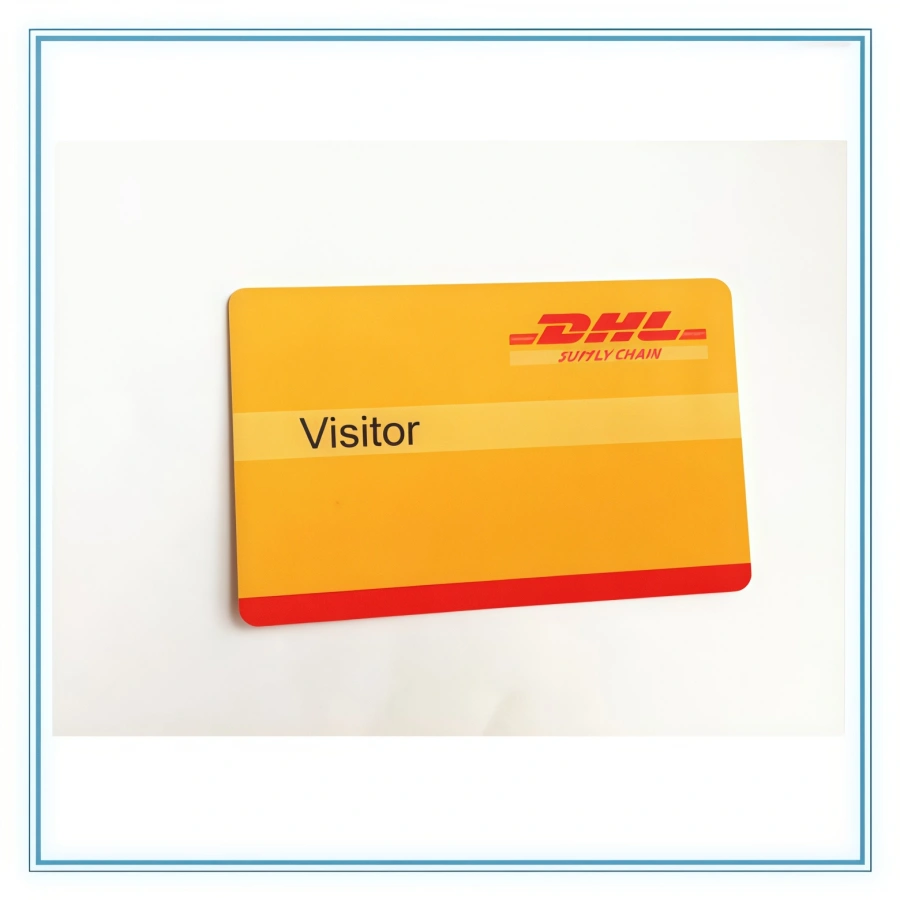
3. Identification Systems
UHF cards serve as:
- Staff ID badges
- Contractor access passes
- Temporary visitor credentials
Longer read distance reduces bottlenecks in high-traffic environments.
4. Ticketing Systems
Used for:
- Large-scale events
- Exhibitions
- Stadium access
- Theme parks
Bulk scanning capability speeds up entry during peak times.
5. Container Identification
UHF RFID is widely used in logistics for:
- Shipping container tracking
- Pallet identification
- Warehouse inventory control
Cards can be attached to containers or logistics assets for tracking within supply chains.
6. Warehousing and Asset Management
UHF RFID allows:
- Rapid inventory audits
- Real-time asset visibility
- Reduced manual scanning
- Improved stock accuracy
The anti-collision protocol allows dozens of cards to be read simultaneously.
In warehousing, speed equals money.
7. Aviation & Retail
Airports and retailers use UHF RFID for:
- Baggage tracking
- Cargo management
- Retail stock control
- Anti-theft tracking
RFID automation reduces human error and improves operational efficiency.
Performance Advantages
Long Read Distance
Up to 1 meter read range (depending on reader power and environment).
This is significantly longer than HF cards (2–10 cm).
Anti-Collision Capability
EPC Gen2 allows simultaneous reading of multiple cards.
Ideal for batch scanning.
Global Compatibility
Operates across worldwide UHF bands (860–960 MHz).
Suitable for international projects.
Fast Data Transfer
Supports high-speed inventory management.
Durable Construction
PVC outer material ensures:
- Flex resistance
- Waterproofing
- Long service life
Industry Pain Points and Solutions
Pain Point 1: Slow Manual Tracking
Manual barcode scanning is labor-intensive.
Solution: UHF RFID allows automated bulk scanning.
Pain Point 2: Limited Read Distance
Short-range cards require precise positioning.
Solution: UHF cards provide extended detection range.
Pain Point 3: Inventory Errors
Manual entry leads to data mistakes.
Solution: Automated RFID systems improve accuracy.
Pain Point 4: Scalability Challenges
Traditional systems struggle with growth.
Solution: EPC Gen2 supports large-scale deployments.
Comparison: UHF RFID vs HF RFID Cards
| Feature | UHF RFID | HF RFID |
|---|---|---|
| Frequency | 860–960 MHz | 13.56 MHz |
| Read Distance | Up to 1m+ | 2–10 cm |
| Bulk Reading | Yes | Limited |
| Typical Use | Logistics, vehicle access | Access control, payments |
| Anti-Collision | Strong | Moderate |
Each serves different ecosystems. UHF is built for scale and distance.
Packaging and Delivery
Standard packaging:
- 200 cards per pack
- Customized packaging available
- Carton export packaging supported
Bulk orders can be encoded before shipment if required.
Customization Options
The UHF ISO card supports:
- Full-color CMYK printing
- Barcode printing
- QR code printing
- UID printing
- Serial numbering
- Logo branding
- Variable data personalization
Cards can be customized for corporate branding or industrial labeling.
Environmental Reliability
With operating temperatures from -30°C to +50°C, and storage capability up to 100°C, these cards perform reliably in:
- Outdoor vehicle systems
- Industrial warehouses
- Cold storage facilities
Extreme environments demand stable RF performance. PET + Aluminum antenna construction ensures consistent conductivity.
Why Choose UHF 860–960MHz RFID Card?
This product is ideal if your system requires:
- Long-range identification
- Multi-tag reading
- Industrial durability
- Global frequency compliance
- EPC Gen2 compatibility
- Vehicle access automation
- Warehouse tracking optimization
It bridges the gap between physical identity and digital data at scale.
Conclusion
The UHF 860–960MHz RFID Card with Alien H3, H4, or Impinj M5 chip is a powerful identification tool designed for long-range, high-efficiency RFID systems.
Its EPC Class 1 Gen2 and ISO 18000-6C compliance ensures worldwide compatibility. Its PET + Aluminum antenna design delivers stable RF performance. Its PVC structure ensures durability. And its 64-bit unique ID guarantees reliable identity management.
From vehicle access control to warehouse automation, from asset management to aviation logistics, this card supports industries that require speed, accuracy, and scalability.
In modern infrastructure, data moves invisibly through radio waves.
The UHF RFID card is the quiet carrier of that movement.
Small piece of plastic.
Global standard protocol.
High-speed electromagnetic conversation.
And behind that conversation lies efficiency.