September 14, 2026
Warehousing has traditionally been a labor-intensive, error-prone sector. Manual inventory checks, misplaced items, and slow stock audits result in operational inefficiency and increased costs. Modern supply chains require real-time visibility, accurate stock management, and automated operations.
RFID (Radio Frequency Identification) technology has emerged as a game-changer for warehouse management. By enabling automatic identification, tracking, and data collection, RFID systems allow warehouses to optimize inventory control, reduce errors, and improve efficiency.
This article provides a comprehensive SEO guide on RFID applications in warehouse inventory tracking, covering system components, working principles, types of RFID, practical applications, benefits, challenges, and future trends.
1. What Is RFID in Warehouse Inventory Management?
RFID is a wireless identification technology that uses radio frequency signals to automatically identify and track tags attached to objects. In warehouses, RFID systems are used to:
Monitor stock movement
Track inventory levels
Reduce manual labor
Enhance accuracy and traceability
Unlike barcodes, RFID does not require line-of-sight scanning, allowing rapid and simultaneous reading of multiple items, even when stacked or stored in bins.
1.1 Components of an RFID Warehouse System
A typical RFID warehouse inventory system consists of:
| Component | Function |
|---|---|
| RFID Tags | Attached to items, pallets, or containers; store unique identifiers and optionally item data |
| RFID Readers | Devices that communicate with tags to capture data |
| Antennas | Facilitate wireless communication between tags and readers |
| Middleware / Software | Processes and manages data, integrates with WMS (Warehouse Management System) |
| Network Infrastructure | Connects readers and software for real-time data access |
| Database | Stores inventory records, logs, and historical data |
Advanced systems may also integrate mobile RFID readers, handheld devices, and IoT platforms for enhanced flexibility.
1.2 Types of RFID Used in Warehousing
RFID tags vary by frequency, read range, and power source. Warehouse systems commonly use:
1.2.1 Low-Frequency (LF) RFID
125–134 kHz
Short read range (<0.5 m)
Rarely used in large warehouses due to limited distance
1.2.2 High-Frequency (HF) RFID / NFC
13.56 MHz
Read range: 10–30 cm
Used for asset-level tracking or pallet-level verification
1.2.3 Ultra High-Frequency (UHF) RFID
860–960 MHz
Long read range: 3–10 meters or more
Ideal for item, carton, and pallet tracking in high-volume warehouses
1.2.4 Active RFID
Battery-powered tags
Read range: 30–100 meters
Suitable for large warehouses, cold storage, and heavy equipment tracking
1.2.5 Semi-Passive RFID
Battery-assisted but reader-activated
Longer range than passive tags
Used for temperature-sensitive or high-value goods
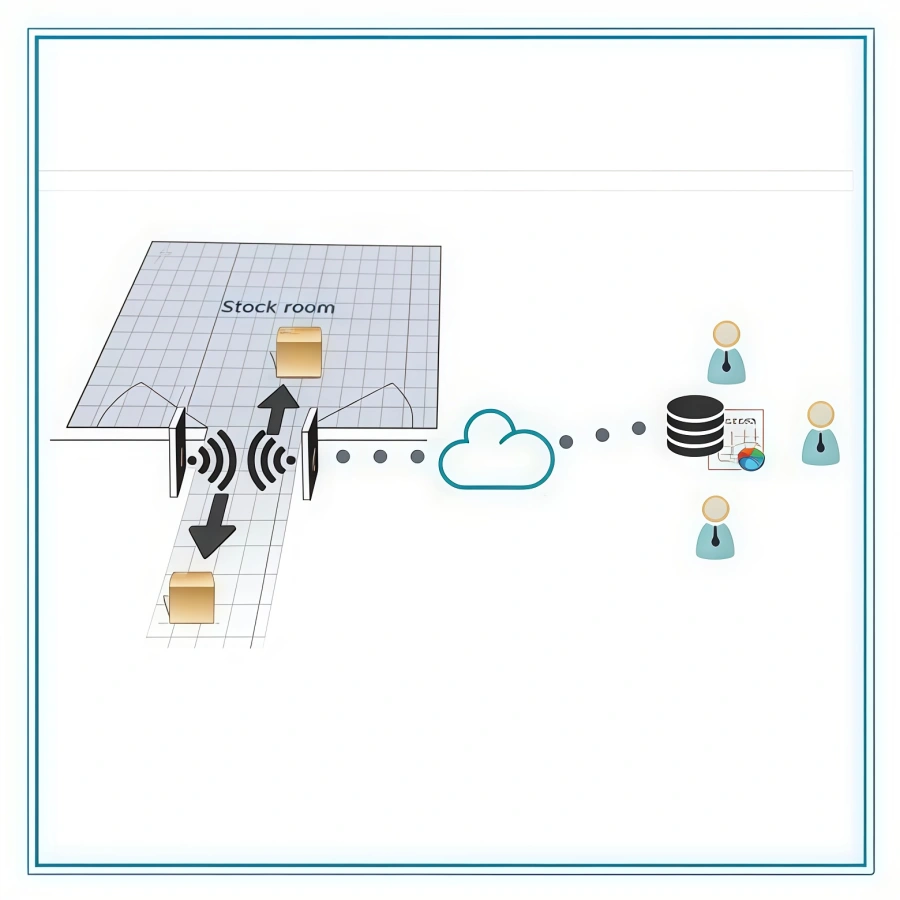
2. How RFID Warehouse Inventory Tracking Works
RFID warehouse systems typically follow this workflow:
Tagging: Each item, carton, or pallet is labeled with an RFID tag.
Reading: RFID readers scan tags automatically as items enter or leave storage areas.
Data Processing: Middleware records item ID, quantity, location, and timestamp.
Inventory Update: WMS updates inventory levels in real-time.
Alerts and Reporting: Systems generate alerts for low stock, misplaced items, or discrepancies.
With multiple readers, warehouses can achieve continuous real-time visibility of inventory throughout the facility.
3. Applications of RFID in Warehouse Inventory Management
3.1 Item-Level Inventory Tracking
Tags on individual products allow precise stock monitoring
Enables automated stocktaking and reduces human error
Ideal for high-value or serialized items, electronics, or pharmaceuticals
3.2 Pallet and Carton Tracking
RFID tags on pallets or cartons simplify bulk inventory management
Improves efficiency in receiving, storage, and shipping
Supports FIFO (First In, First Out) and FEFO (First Expiry, First Out) inventory rotation
3.3 Asset Management
Tracks equipment, tools, and reusable containers
Reduces loss or misplacement
Integrates with maintenance schedules for industrial assets
3.4 Cold Storage and Temperature-Controlled Warehouses
RFID tags with temperature sensors monitor perishable items
Alerts for temperature deviations prevent spoilage
Ensures regulatory compliance for pharmaceuticals and food
3.5 Real-Time Inventory Visibility
Provides managers with live dashboards of stock levels
Enables dynamic allocation of resources and faster order fulfillment
Reduces stockouts and overstocking
3.6 Warehouse Automation
Integrates with automated guided vehicles (AGVs) and robotic systems
Facilitates pick-and-place automation using RFID-guided navigation
Reduces labor costs and operational errors
3.7 Loss Prevention and Security
Monitors item movement within restricted zones
Alerts when items are removed without authorization
Reduces theft and shrinkage
3.8 Shipping and Receiving Optimization
Automatically logs inbound and outbound shipments
Reduces manual scanning and paperwork
Enhances supply chain visibility for vendors and customers

4. Advantages of RFID Warehouse Inventory Management
4.1 Accuracy
RFID reduces errors caused by manual counting or barcode misreads. Inventory accuracy can increase from 60–70% to over 99%.
4.2 Speed and Efficiency
Rapid scanning of multiple items simultaneously
Reduces stocktaking time from days to hours
Enables real-time inventory updates
4.3 Cost Savings
Less manual labor required
Reduced stock discrepancies and write-offs
Improved warehouse space utilization
4.4 Enhanced Visibility
Track item location, quantity, and movement in real-time
Supports data-driven decision-making
Integrates with supply chain management for end-to-end transparency
4.5 Scalability
Systems can scale from small warehouses to large distribution centers
Additional readers and tags can be deployed as operations grow
4.6 Integration With Enterprise Systems
Integrates seamlessly with WMS, ERP, and IoT platforms
Supports predictive analytics and inventory optimization
4.7 Security and Compliance
Reduces risk of misplaced or lost items
Provides traceability for audit and regulatory compliance
Ensures proper handling of sensitive or controlled goods
5. Technical Components of RFID Warehouse Systems
5.1 RFID Tags
Passive, active, or semi-passive depending on application
Encoded with unique item IDs and optional data fields
5.2 RFID Readers
Fixed readers: Installed at entry/exit points, racks, or dock doors
Handheld readers: For spot checks, audits, and inventory reconciliation
5.3 Antennas
Directs RF signals to maximize read coverage
Configured for specific zones or tunnels for accurate detection
5.4 Middleware and Software
Collects data from readers
Filters duplicates and validates readings
Updates WMS or ERP in real-time
Provides analytics, dashboards, and alerts
5.5 Network Infrastructure
Wired or wireless connectivity
Ensures reliable data transmission and integration with cloud platforms
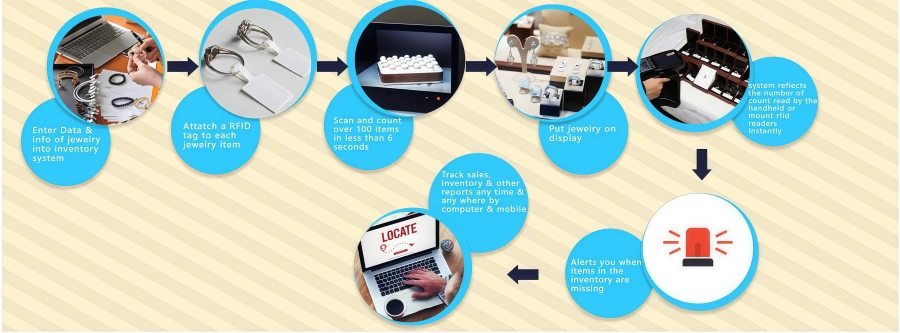
6. Implementation Considerations
6.1 Tag Selection
Match tag type to environment (metal, liquid, temperature)
Consider tag durability, adhesive strength, and read range
6.2 Reader Placement
Optimize coverage to avoid blind spots
Use zone mapping for racks, doors, and storage areas
6.3 Software Integration
Ensure compatibility with existing WMS, ERP, or IoT platforms
Configure alerts, reporting, and dashboards
6.4 Environmental Factors
Account for metal interference, liquids, and temperature extremes
Use specialized tags or shielding when necessary
6.5 Training and Change Management
Train warehouse staff on system use
Update standard operating procedures (SOPs)
Monitor adoption and resolve issues proactively
7. Challenges in RFID Warehouse Deployment
Initial cost: Hardware, software, and installation
Interference: Metals and liquids can reduce read accuracy
Tag collision: Multiple tags may cause data overlap if improperly configured
Maintenance: Reader calibration and tag replacement
Staff adaptation: Training and change management required
Despite these challenges, ROI is typically realized within months due to labor savings, accuracy gains, and operational efficiency.
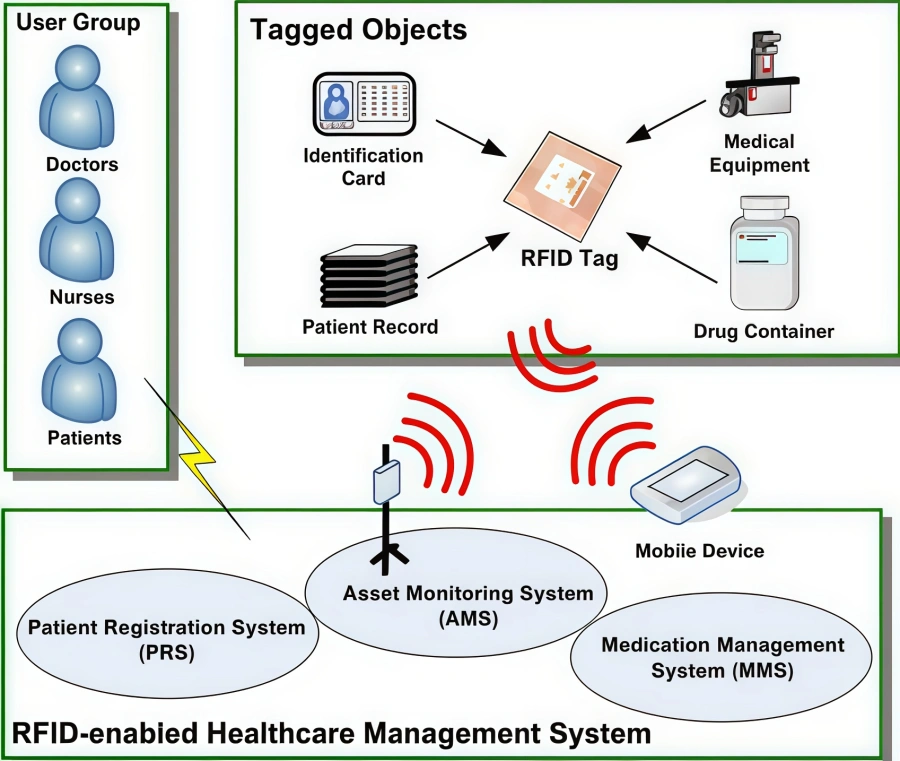
8. Best Practices for RFID Warehouse Management
Pilot Testing: Start with a small section before full deployment
Optimize Tag Placement: Ensure visibility to readers
Regular Calibration: Maintain reader accuracy
Inventory Audits: Periodically verify RFID readings with manual counts
Integrate with ERP/WMS: Ensure smooth data flow and reporting
Leverage Analytics: Use real-time data for predictive stock replenishment
9. Case Studies
9.1 Retail Warehouse
A retail distribution center implemented UHF RFID tags on pallets and cartons, integrated with fixed readers and WMS. Results:
Inventory accuracy increased from 75% to 99%
Stocktaking time reduced by 80%
Reduced lost stock and order fulfillment errors
9.2 Pharmaceutical Storage
A pharmaceutical warehouse used temperature-sensitive RFID tags for cold chain management:
Monitored vaccine storage in real-time
Automated alerts for temperature deviations
Ensured regulatory compliance and reduced spoilage
9.3 E-commerce Fulfillment Center
Tagged all inventory with UHF RFID labels
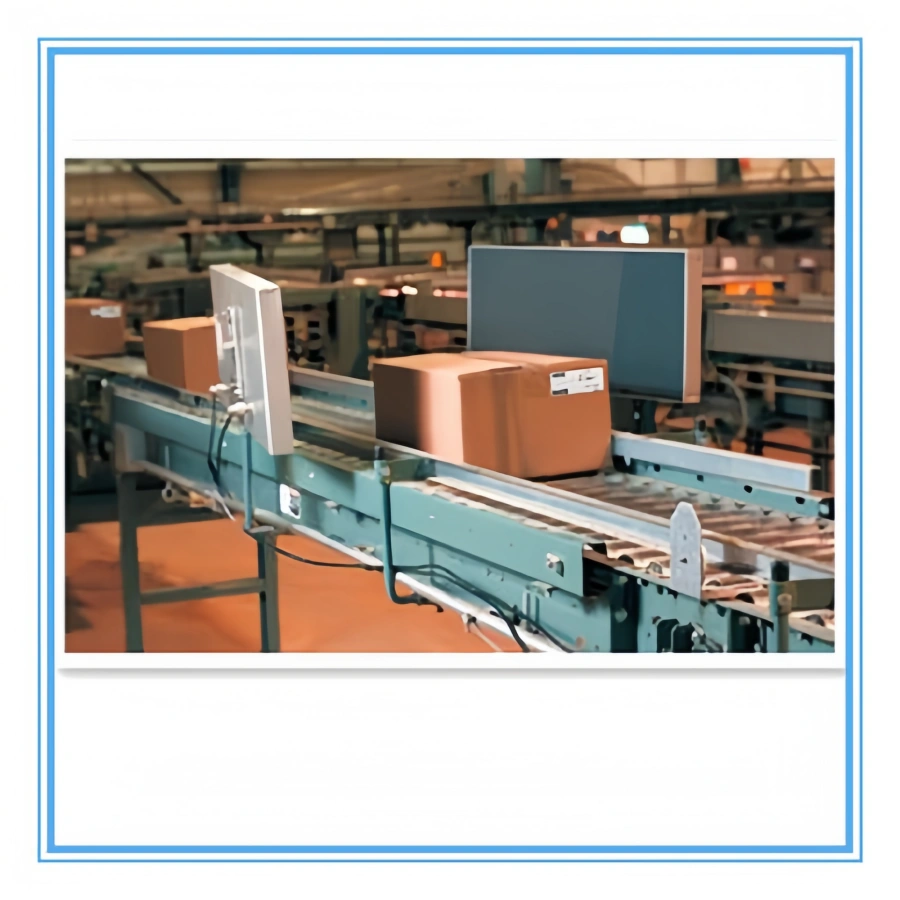
Integrated with conveyor-based readers
Increased order picking speed by 50%
Minimized human errors and enhanced shipping accuracy
10. Future Trends in RFID Warehouse Inventory Tracking
IoT Integration: Real-time data sharing across supply chains
AI and Machine Learning: Predictive analytics for stock optimization
Blockchain Integration: Secure and transparent supply chain verification
Smart Sensors: Temperature, humidity, or shock monitoring integrated with RFID tags
Robotic Automation: RFID-guided picking, packing, and transport
Eco-Friendly Tags: Recyclable and sustainable RFID labels
The warehouse of the future will be highly automated, connected, and data-driven, powered by RFID technology.
11. ROI of RFID in Warehousing
Benefits include:
Reduced manual labor costs by up to 50%
Decreased inventory errors and losses
Faster order processing and fulfillment
Optimized storage space and warehouse layout
Enhanced supply chain visibility for better decision-making
Even with initial investment, RFID provides measurable operational and financial benefits within months.
12. Conclusion
RFID warehouse inventory tracking is transforming modern warehousing by enabling real-time visibility, automation, and accurate stock management. From item-level tracking to pallet and carton monitoring, RFID systems deliver efficiency, accuracy, and cost savings.
By leveraging advanced RFID tags, readers, middleware, and IoT integration, warehouses can:
Minimize errors
Improve throughput
Enhance operational efficiency
Ensure compliance and asset security
RFID is not just a technology—it is a strategic solution for smart warehousing. Businesses adopting RFID for inventory tracking gain a competitive advantage, streamline supply chains, and prepare for a future of fully automated and intelligent logistics.
The shift from manual inventory checks to RFID-enabled warehouse automation is no longer optional—it is essential for enterprises seeking accuracy, speed, and operational excellence.

Do RFID is a leading China-based manufacturer with over 15 years of experience. We specialize in customized RFID readers, tags, and cards, delivering high-quality, tailored solutions that meet your unique business needs and drive seamless, efficient identification.