September 14, 2026
What Are Microchips Used for in Animals? The Ultimate 2026 Guide to RFID Identification and Tracking
If you are a pet owner, a livestock farmer, or involved in the veterinary industry, you have likely heard the term “microchip” thrown around. But what exactly are these tiny devices, and how do they revolutionize the way we care for and manage animals?
At DO RFID Reader, with over 15 years of experience in the RFID industry, we have witnessed the evolution of animal identification firsthand. This comprehensive guide will break down everything you need to know about animal microchips—from the science behind them to their critical role in modern agriculture and pet safety.
What Is an Animal Microchip? (The “Digital ID Card”)
Simply put, an animal microchip is a permanent electronic ID card for an animal. It is a passive RFID (Radio-Frequency Identification) transponder, usually about the size of a grain of rice (roughly 12mm long).
Unlike the GPS trackers you might put on a dog’s collar, a microchip does not have a battery and cannot track an animal’s location in real-time. Instead, it sits dormant under the animal’s skin until it is “woken up” by a specific radio signal from a scanner.
How Does It Work? The Science of Passive RFID
The technology relies on electromagnetic induction. Here is the step-by-step process:
- Implantation: A veterinarian or trained professional injects the microchip under the animal’s skin (usually between the shoulder blades for pets, or in the ear for livestock).
- Scanning: When a lost animal is found, a shelter worker or farmer waves a handheld scanner (like the ones manufactured by DO RFID Reader) over the animal.
- Activation: The scanner emits a low-frequency radio wave. This wave provides enough energy to power the microchip momentarily.
- Transmission: The chip sends back a unique identification number (UID) to the scanner.
- Identification: This number is looked up in a database to reveal the owner’s contact information or the animal’s medical history.
The Two Main Types of Animal Microchips
Not all microchips are the same. Depending on whether the animal is a beloved family pet or part of a large agricultural herd, different technologies are used.
1. FDX-B Microchips (For Pets and Companion Animals)
This is the global standard for dogs, cats, and exotic pets.
- Frequency: 134.2 kHz.
- Standard: Complies with ISO 11784/11785. This is crucial because it ensures that a chip implanted in China can be read by a scanner in the USA or Europe.
- Data Structure: It uses a specific protocol (FDX-B) that includes a 15-digit unique code.
- Material: Encapsulated in bio-glass, which is chemically inert and prevents the body from rejecting it. Some advanced chips, like those we support at DO RFID Reader, feature anti-migration coatings to keep the chip in place.
2. UHF Ear Tags (For Livestock and Agriculture)
In modern farming, efficiency is key. Ultra-High Frequency (UHF) ear tags are used for cattle, sheep, and pigs.
- Frequency: 860-960 MHz.
- Advantage: Unlike pet chips that must be scanned one by one, UHF tags can be read from a distance of 1 to 6 meters.
- Batch Reading: A scanner can read 50+ tags per second. This allows farmers to count a whole herd or track movement through a gate automatically without stopping the animals.
| Feature | Specification | Benefit to User |
|---|---|---|
| Frequency | 134.2 kHz (LF) / 13.56 MHz (HF) | Compatible with global handheld and panel readers. |
| Standards | ISO 11784 / ISO 11785 (FDX-B) | Ensures international recognition and travel compliance. |
| Chip Memory | 64-bit / 128-bit read-only | Unique ID prevents cloning and ensures data security. |
| Encapsulation | Bio-glass (Soda-lime glass) | Hypoallergenic and hermetically sealed to prevent body fluid corrosion. |
| Coating | Parylene C or Anti-slip coating | Prevents the chip from migrating after implantation. |
| Life Span | > 10 years (Passive) | Maintenance-free identification for the life of the animal. |
| Operating Temp. | -20°C to +50°C | Suitable for extreme environments, from arctic to tropical. |
Why Use Microchips? 5 Critical Applications
Microchips are used for much more than just “finding lost pets.” They are the backbone of modern animal management.
1. Permanent Pet Recovery and Ownership Proof
Collars can fall off, and tags can fade. A microchip is permanent.
- Lost & Found: It is the most reliable way to reunite lost pets with owners.
- Theft Deterrent: In legal disputes, the microchip serves as undeniable proof of ownership.
- Travel: If you plan to travel internationally with your pet, a microchip is often a mandatory requirement for quarantine and customs.
Products you might be interested in: High Quality RFID Animal Microchip For Pet And Livestock Use
2. Smart Livestock Management
For the agricultural sector, RFID is about data and profit.
- Automated Feeding: Systems can recognize a specific cow’s ear tag and dispense the exact amount of feed she needs based on her weight and health data.
- Disease Control: If a disease outbreak occurs, farmers can instantly trace which animals interacted with the infected one, preventing widespread loss.
- Inventory: Counting thousands of sheep becomes a task of minutes rather than days.
Products you might be interested in: ISO Certified RFID Animal Microchips Bulk Supplier DO RFID GROUP
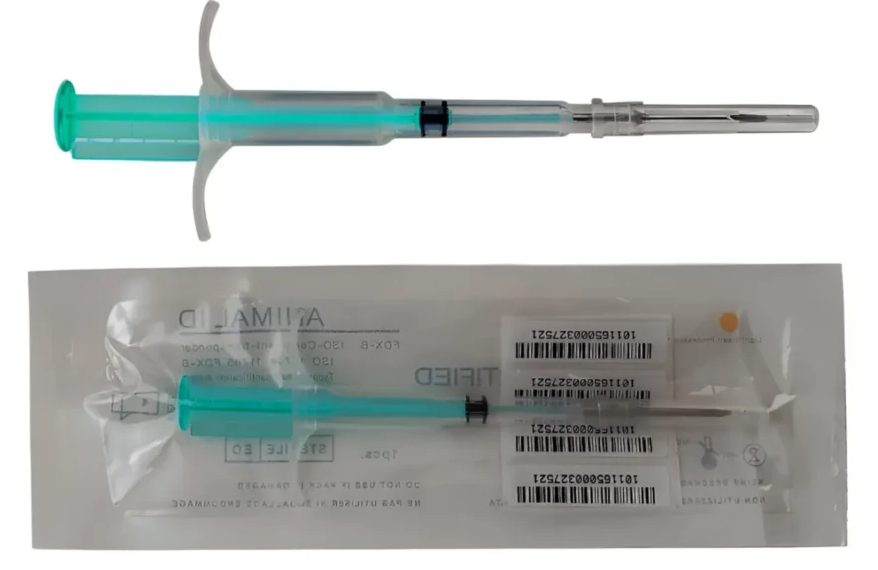
DO RFID Group’s 134.2kHz animal microchip in a sterile injector, compliant with global ISO standards for livestock and pet tracking.
3. Medical History and Health Monitoring
Advanced microchips are evolving. Some now integrate temperature sensors.
- Vital Signs: A vet can scan the chip and instantly get the animal’s body temperature, helping to detect fever or illness early.
- Medical Records: The ID number links to a cloud database containing vaccination records, allergies, and surgical history.
Products you might be interested in: ISO 11784 11785 Certified RFID Animal Microchips Bulk Supply
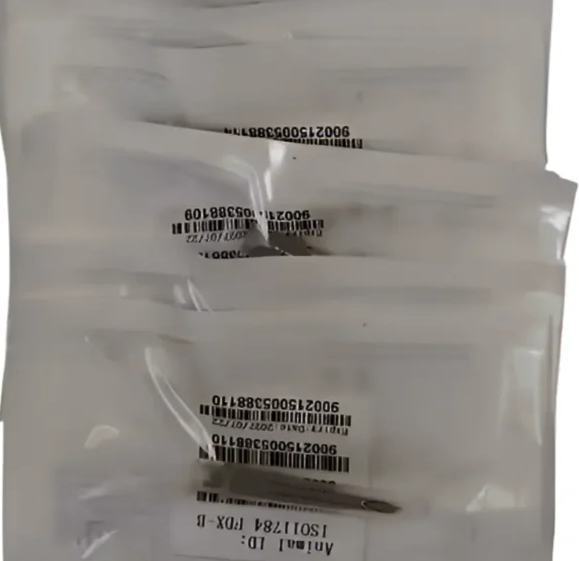
Wholesale supply of sealed animal ID microchips, ensuring hygiene and data accuracy for large-scale identification projects.
4. Laboratory Animal Management
In scientific research, accuracy is non-negotiable.
- Data Integrity: Microchips eliminate human error in recording data.
- Welfare: It reduces the stress on animals caused by repeated handling or tattooing for identification.
Products you might be interested in: RFID Animal Microchips ISO Compliant DO RFID GROUP Factory
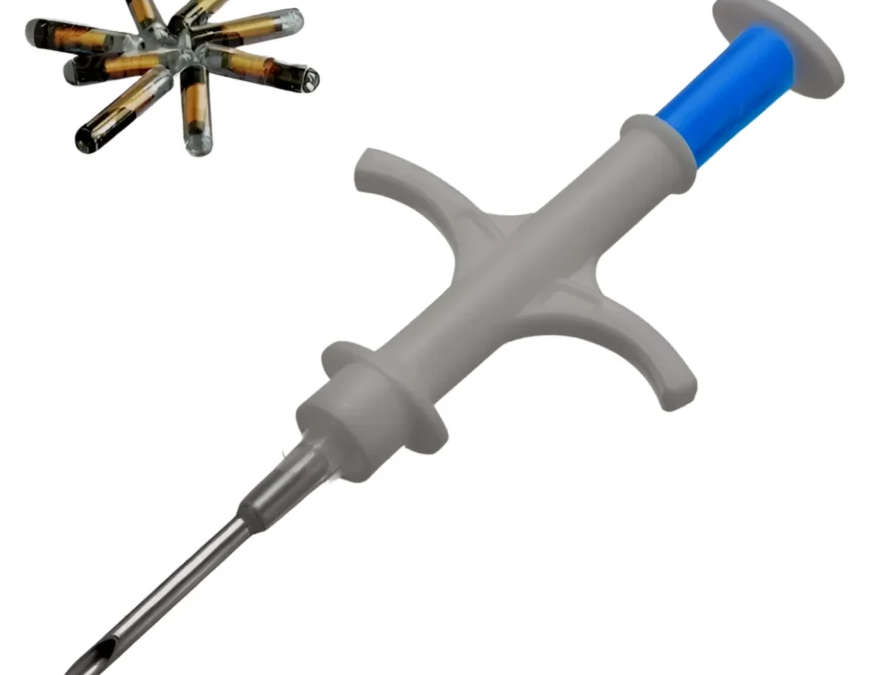
Close-up of bio-glass encapsulated RFID chips and a precision-engineered syringe for reliable animal identification.
5. Wildlife Conservation
Researchers use microchips to track migration patterns, population health, and breeding habits of endangered species without invasive tagging methods.
Microchip vs. GPS Tracker: Which Do You Need?
This is the most common question we get at DO RFID Reader. It is important to understand that these two technologies solve different problems.
| Feature | RFID Microchip | GPS Tracker |
|---|---|---|
| Primary Function | Identification & Proof of Ownership | Real-time Location Tracking |
| Power Source | None (Passive, lasts a lifetime) | Battery (Needs charging/replacing) |
| Range | Short (Inches to a few feet) | Global (via Satellite/Cellular) |
| Size | Tiny (Grain of rice) | Bulky (Requires a collar/harness) |
| Cost | Low (One-time fee) | High (Device + Monthly Subscription) |
| Best For | Permanent ID, Vet Visits, Travel | Active Monitoring, Hiking, Hunting |
Expert Tip: For the ultimate safety net, use both. A GPS tracker helps you find them while they are lost; a microchip ensures they are returned to you if the GPS tracker falls off.
The Implantation Process: Safety, Pain, and Aftercare
For pet owners, the idea of injecting a chip can be daunting. However, understanding the procedure can alleviate anxiety. As manufacturers, DO RFID Reader designs our injectors to make this process as smooth and safe as possible.
Is it Painful?
The procedure is comparable to a standard vaccination. The needle used for microchips is slightly larger than a typical vaccine needle because the chip must fit inside the bore, but the process takes less than a second. Most pets react no differently than they would to a routine shot. No anesthesia is required, though many owners choose to have it done while the pet is already under anesthesia for spaying or neutering.
Where is it Placed?
- Dogs and Cats: The standard injection site is subcutaneously (under the skin) along the dorsal midline, between the shoulder blades. This location minimizes the chance of the chip migrating and makes it easy for shelters to scan the “scruff” of the neck.
- Horses: Typically implanted in the nuchal ligament on the left side of the neck.
- Livestock: While ear tags are common, injectable boluses can be placed in the reticulum (a stomach compartment) for permanent internal identification.
| Animal Type | Recommended Chip Size | Implantation Site (ISO Standard) | Syringe Gauge |
|---|---|---|---|
| Dogs | 2.12mm x 12mm | Dorsal midline between the shoulder blades | 12G or 13G |
| Cats | 1.4mm x 8mm | Dorsal midline between the shoulder blades | 13G or 15G |
| Horses | 2.12mm x 12mm | Left side of the neck, nuchal ligament | 10G or 12G |
| Livestock | 3.85mm x 23mm (Bolus) | Rumen (stomach) via oral administration | N/A (Oral Gun) |
| Birds/Exotics | 1.25mm x 7mm | Breast muscle or subcutaneous (under anesthesia) | 16G or 18G |
Post-Implantation Care
Complications are extremely rare. However, owners should:
- Check the site: Ensure there is no swelling or bleeding immediately after.
- Scan verification: Always ask your vet to scan the chip immediately after injection to confirm it is readable and the ID number matches the paperwork.
- Registration: This is the most critical step. A chip is useless if it isn’t registered.
The Role of Quality Hardware: Why Readers Matter
A microchip is only as good as the scanner reading it. At DO RFID Reader, we understand that “Source Quality Products” is not just a slogan—it is a necessity.
The Challenge of Compatibility
With different frequencies (125kHz, 134.2kHz, UHF), using the wrong reader means missing data.
- For Vets: You need a scanner that supports the ISO 11784/11785 FDX-B standard to ensure you can read any pet, regardless of where they came from.
- For Farmers: You need rugged UHF readers that can withstand dust, moisture, and drops, while reading tags quickly on moving animals.
Why Choose DO RFID Reader?
As a manufacturer with 15 years of experience, we ensure our hardware meets the rigorous demands of the industry:
- Global Compatibility: Our readers are designed to work with major chip standards used worldwide.
- Durability: Built for professional use in clinics and farms.
- Support: We offer a 3-year warranty and 24-hour technical support, ensuring your operations never stop.
Common Concerns and Myths Debunked
“Is it painful?”
The procedure is similar to a standard vaccination. For pets, the needle is slightly larger, but the discomfort is momentary. For livestock, ear tagging is a standard, quick procedure.
“Can the chip move?”
Migration is rare. Modern chips are designed with bio-glass and anti-migration textures to encourage tissue growth around the chip, locking it in place.
“Does it track my pet?”
No. As mentioned, passive RFID chips do not emit signals on their own. They are completely private and safe.
The Future of Animal RFID
The industry is moving towards IoT (Internet of Things) integration. Imagine a smart farm where the ear tag not only identifies the cow but also communicates with automated gates, milking robots, and health monitoring systems in real-time.
At DO RFID Reader, we are at the forefront of this technology, providing the readers and tags that make this smart ecosystem possible. Whether you are managing a kennel, a cattle ranch, or a veterinary hospital, reliable RFID infrastructure is the key to efficiency.
Conclusion
Animal microchips are a small investment with a massive return—whether that return is the emotional relief of finding a lost family member or the financial efficiency of a well-managed farm. They provide a permanent, unalterable link between the animal and its data.
If you are looking for reliable RFID solutions, DO RFID Reader is here to help. With our commitment to quality products and efficient service, we ensure that your identification systems work perfectly, every time.
Ready to upgrade your animal management system? Contact DO RFID Reader today for a consultation.

Do RFID is a leading China-based manufacturer with over 15 years of experience. We specialize in customized RFID readers, tags, and cards, delivering high-quality, tailored solutions that meet your unique business needs and drive seamless, efficient identification.