July 16, 2026
As modern security systems continue to replace traditional mechanical locks, 125KHz Access Control RFID ABS Proximity Key Fobs have become one of the most widely used identification credentials worldwide. Their affordability, durability, and compatibility with legacy access control systems make them an ideal solution for offices, residential communities, schools, factories, hotels, and commercial buildings.
Designed for daily use, an RFID ABS proximity key fob combines a robust ABS plastic housing with a passive RFID chip, allowing users to unlock doors or access secure areas with a simple tap. For distributors, security system integrators, and OEM brands, these key fobs offer an excellent balance between performance, reliability, and cost.
This guide explains what a 125KHz RFID ABS Proximity Key Fob is, how it works, its applications, the challenges it solves, applicable industry standards, and how it compares with other RFID identification technologies.
What Is a 125KHz Access Control RFID ABS Proximity Key Fob?
A 125KHz RFID ABS Proximity Key Fob is a passive Low Frequency (LF) RFID credential designed specifically for access control systems. It consists of a 125KHz RFID chip, a copper antenna, and a durable ABS (Acrylonitrile Butadiene Styrene) plastic housing.
Unlike magnetic keys or mechanical locks, RFID key fobs use contactless radio frequency communication to transmit a unique identification number to an RFID reader. Because the device contains no battery, it requires virtually no maintenance while offering a service life of more than ten years.
Depending on project requirements, the key fob may incorporate different RFID chips, including:
- EM4200
- EM4305
- T5577
- TK4100
- Hitag-compatible chips
Typical technical specifications include:
| Specification | Value |
|---|---|
| Frequency | 125KHz |
| Operating Mode | Passive RFID |
| Reading Distance | 2–10 cm |
| Reading Time | Less than 100 ms |
| Housing Material | High-strength ABS |
| Waterproof Rating | Optional IP67 |
| Operating Temperature | -25°C to +70°C |
| Data Retention | Up to 10 Years |
| Rewrite Cycles | Chip Dependent |
The ABS housing provides excellent impact resistance, making the key fob suitable for both indoor and outdoor environments.
Working Principle
The 125KHz RFID ABS Proximity Key Fob operates through electromagnetic induction.
The authentication process includes the following steps:
- The RFID reader continuously emits a 125KHz electromagnetic field.
- When the key fob enters the reader’s operating range, the embedded antenna captures energy from the field.
- The RFID chip becomes temporarily powered without requiring an internal battery.
- The chip transmits its unique identification number or programmed data to the reader.
- The access controller compares the received credential with its authorization database.
- If authentication is successful, the controller unlocks the door, gate, or other secured equipment.
Because communication occurs only within a short distance, typically a few centimeters, accidental or unauthorized long-range reading is minimized.
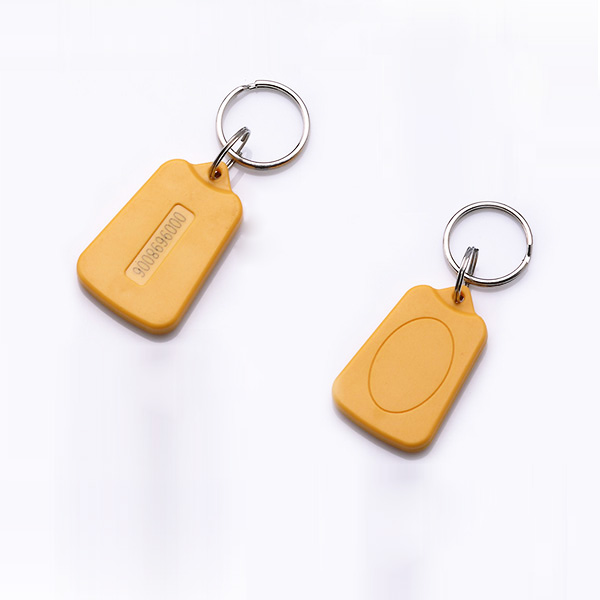
RFID ABS Proximity Key FOB is tough and durable with a beautiful appearance; the chip can be packaged inside the ABS shell. Silk screen logo is available on the surface. Can be customized according to customers. RFID ABS proximity key tag is widely used in access control management, etc.
RFID proximity key fob
Specifications:
| Item Name: | RFID Keyfob |
| Size: | 39*24*5.08 mm or customized size |
| Material: | ABS |
| Chips | TK4100,EM4200, EM4305, EM4450, EM4550.T5577,HID etc |
| Delivery Time: | 7-10 days based on QTY |
| MOQ: | 500 pcs |
| Sample: | Free sample for test and shipping cost collection by customer |


Main Applications
Office Access Control
Corporate buildings use RFID proximity key fobs to control employee access to offices, meeting rooms, elevators, and restricted work areas. Lost credentials can be disabled instantly without replacing physical locks.
Residential Communities
Apartment complexes and gated communities rely on RFID key fobs for building entrances, pedestrian gates, parking barriers, and shared facilities, offering residents secure and convenient access.
Factory and Warehouse Security
Manufacturing facilities use RFID key fobs to secure production areas, warehouses, maintenance rooms, and equipment storage while ensuring that only authorized personnel can enter.
Schools and Universities
Educational institutions issue RFID key fobs to students and staff for access to classrooms, laboratories, libraries, dormitories, and administrative offices.
Hospitals
Medical facilities protect sensitive areas such as pharmacies, laboratories, operating rooms, and staff-only zones with RFID-based access control.
Hotels and Commercial Buildings
RFID key fobs are commonly used for employee entrances, maintenance departments, parking areas, and back-office access where durable credentials are required.
Problems Solved by RFID Proximity Key Fobs
Replacing Traditional Keys
Mechanical keys are vulnerable to loss, unauthorized duplication, and physical damage. RFID credentials simplify key management while improving operational security.
Faster User Authentication
Contactless communication allows doors to unlock within milliseconds, reducing waiting times during peak traffic periods.
Simplified Access Management
Administrators can assign or revoke permissions through centralized software rather than replacing locks whenever a credential is lost.
Reduced Maintenance Costs
Passive RFID technology requires no batteries, reducing maintenance expenses while providing reliable long-term performance.
Improved Operational Efficiency
One RFID credential can replace multiple physical keys, simplifying daily operations for employees, residents, and facility managers.
International Standards
Professional RFID ABS proximity key fobs are manufactured according to internationally recognized quality and compliance standards.
Common standards include:
- ISO/IEC 11784/11785 (Applicable LF identification technologies)
- ISO/IEC 10373 (Identification card testing methods)
- ISO 9001 (Quality Management System)
- CE Compliance (European market)
- RoHS Compliance (Restriction of hazardous substances)
- REACH Compliance (Chemical safety requirements)
Manufacturers typically perform additional quality inspections such as waterproof testing, impact testing, high-temperature testing, low-temperature testing, and read/write verification before shipment.
OEM Customization Options
Professional RFID manufacturers provide complete OEM and ODM customization services.
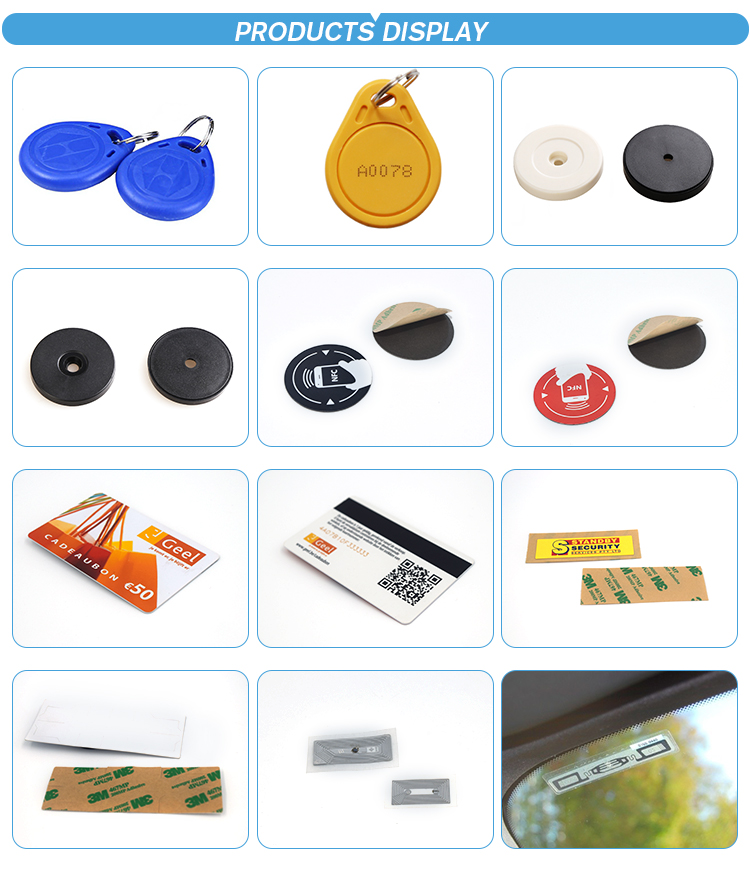
Housing Design
Customers can choose from:
- Round
- Oval
- Rectangle
- Teardrop
- House
- Animal
- Custom-designed molds
Material Selection
Available housing materials include:
- Standard ABS
- UV-resistant ABS
- Eco-friendly ABS
- Silicone
- Epoxy-coated plastic
Logo Printing
Brand customization options include:
- Silk screen printing
- UV digital printing
- Laser engraving
- Pad printing
- Hot stamping
Color Options
Manufacturers support:
- Standard colors
- Pantone color matching
- Dual-color molding
- Metallic finishes
Personalization
Each key fob may include:
- UID numbers
- Serial numbers
- QR codes
- Barcodes
- Laser engraving
Chip Selection
OEM manufacturers can integrate different RFID chips based on customer requirements for compatibility, memory capacity, or programming capability.
Competitive Analysis
Choosing the right RFID credential depends on system compatibility, security requirements, and budget.
| Feature | 125KHz ABS RFID Key Fob | RFID Card | NFC Key Fob | Mobile Credential |
| Frequency | 125KHz | 125KHz / 13.56MHz | 13.56MHz | NFC/BLE |
| Durability | Excellent | Good | Excellent | Excellent |
| Portability | Excellent | Good | Excellent | Excellent |
| Battery Required | No | No | No | Smartphone Battery |
| Access Control | Excellent | Excellent | Excellent | Excellent |
| Cost | Low | Low | Moderate | Higher System Cost |
ABS RFID Key Fob vs RFID Card
RFID cards provide a larger printable area for graphics and branding, while key fobs are more portable, durable, and less likely to be forgotten because they remain attached to keychains.
125KHz RFID vs 13.56MHz NFC
125KHz RFID systems are widely deployed in traditional access control installations due to their compatibility and lower cost. In contrast, 13.56MHz NFC solutions offer higher data capacity and enhanced security for multifunction applications.
RFID Key Fob vs Mobile Credentials
Mobile credentials eliminate physical devices, but they require smartphones, compatible software, and battery power. RFID key fobs remain popular because they are simple, inexpensive, highly reliable, and compatible with existing infrastructure.
Why Choose an OEM Manufacturer?
Purchasing directly from a professional RFID manufacturer provides several benefits:
- Factory-direct pricing
- Stable chip sourcing
- Strict quality control
- Custom logo and private-label packaging
- Professional chip programming
- Low minimum order quantities
- Fast sample production
- Global export experience
- Technical support before and after sales
Experienced OEM manufacturers can also provide complete product development, custom molds, and project-specific RFID solutions for distributors and access control equipment suppliers.
Conclusion
The 125KHz Access Control RFID ABS Proximity Key Fob remains one of the most dependable and cost-effective credentials for modern access control systems. Its rugged ABS construction, passive battery-free operation, broad compatibility with 125KHz readers, and long service life make it an ideal solution for offices, residential communities, factories, hospitals, schools, hotels, and commercial buildings.
Compared with traditional keys and magnetic cards, RFID ABS proximity key fobs deliver faster authentication, easier administration, lower maintenance costs, and greater operational efficiency. By partnering with a professional OEM RFID manufacturer, distributors and system integrators can obtain high-quality, customizable products that comply with international standards while meeting the diverse needs of global access control projects.