July 16, 2026
Overview of 13.56MHz MIFARE Ultralight EV1 RFID NFC Inlay
The 13.56MHz MIFARE Ultralight EV1 RFID NFC Inlay is a high-frequency (HF) RFID transponder designed for smart labels, NFC tags, product authentication, ticketing systems, and contactless identification applications.
Built with an NXP MIFARE Ultralight EV1 chip, this NFC inlay combines reliable wireless communication performance with a compact antenna design. It provides a cost-effective solution for businesses that require fast identification, digital interaction, and secure data storage in lightweight RFID label formats.
Unlike finished RFID cards, an RFID inlay is a semi-finished component consisting of an RFID chip, antenna, and PET substrate. It can be converted into NFC stickers, paper labels, RFID cards, wristbands, packaging labels, and other customized products.
With ISO14443A compatibility and 13.56MHz operating frequency, this NFC RFID inlay can be read by most NFC-enabled smartphones and RFID readers.
What Is a MIFARE Ultralight EV1 RFID NFC Inlay?
A MIFARE Ultralight EV1 RFID NFC Inlay is a passive NFC component that communicates through electromagnetic induction. It does not require a battery or external power source.
When a smartphone or RFID reader generates a 13.56MHz RF field, the inlay receives energy through its antenna and exchanges data with the reader.
The basic structure includes:
| Component | Function |
|---|---|
| MIFARE Ultralight EV1 Chip | Stores identification data and performs communication functions |
| Aluminum Antenna | Enables wireless communication at 13.56MHz |
| PET Substrate | Provides mechanical support and durability |
| Adhesive Layer (Optional) | Allows integration into labels and packaging |
This design makes the RFID NFC inlay suitable for large-scale production where low cost, reliability, and easy integration are required.
13.56mhz Mifare Ultralight ev1 RFID NFC inlay
Specification
1. Chip Model: All chips are available
2. Frequency: 13.56MHz
3. Memory: depend on the chips
4. Protocol: ISO14443A
5. Base material: PET
6. Antenna material: Aluminium foil
7. Antenna size: 26*12mm, 22mm Dia, 32*32mm, 37*22mm, 45*45mm,76*45mm, or as request
8. Working temperature: -25°C ~ +60°C
9. Store Temperature: -40°Cto +70°C
10. Read/Write Endurance: >100,000 time
11. Reading Range: 3-10cm
12. Certificates: ISO9001:2000, SGS
Chip Option
| ISO14443A | MIFARE Classic® 1K, MIFARE Classic® 4K |
| MIFARE® Mini | |
| MIFARE Ultralight®, MIFARE Ultralight® EV1, MIFARE Ultralight® C | |
| NTAG213 / NTAG215 / NTAG216 | |
| MIFARE ® DESFire® EV1 (2K/4K/8K) | |
| MIFARE® DESFire® EV2 (2K/4K/8K) | |
| MIFARE Plus® (2K/4K) | |
| Topaz 512 | |
| ISO15693 | ICODE SLIX, ICODE SLI-S |
| EPC-G2 | Alien H3, Monza 4D, 4E, 4QT, Monza R6, etc |
Product picture of 13.56mhz Mifare Ultralight ev1 RFID NFC inlay
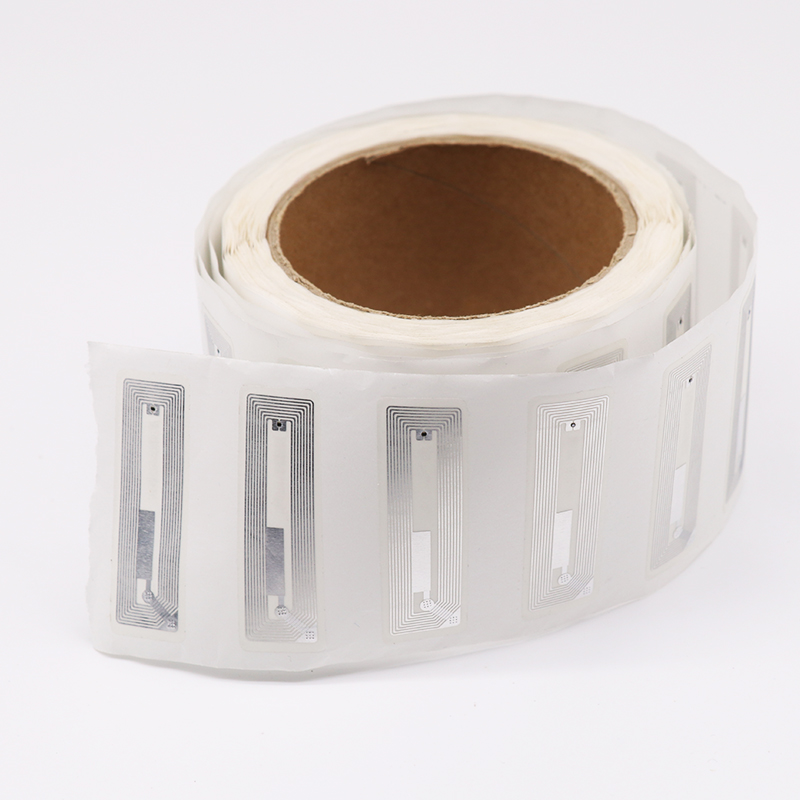
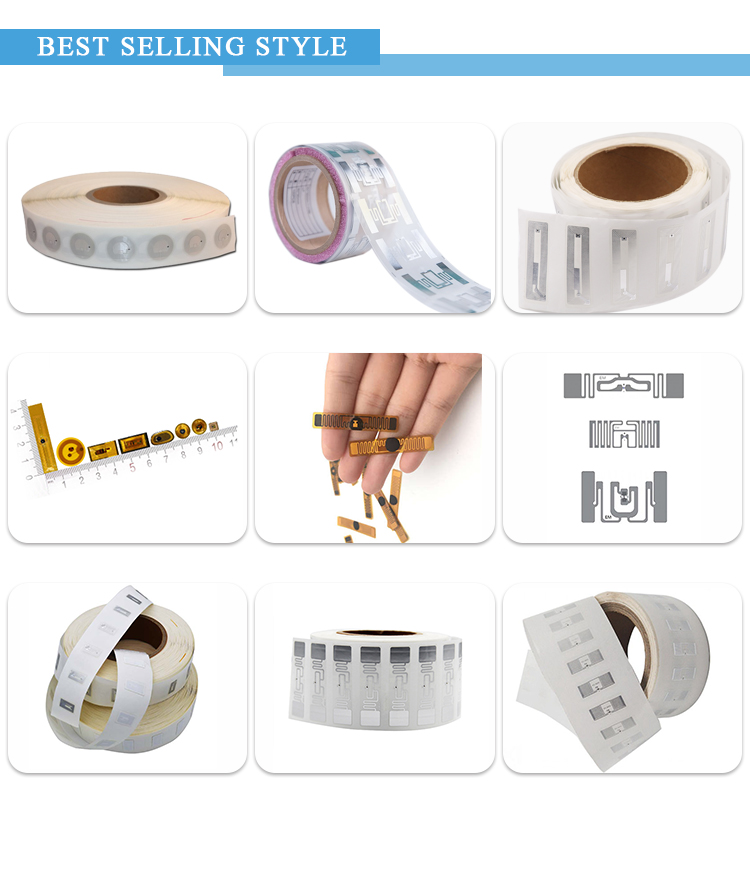
RFID Wet Inlays are described as “wet” due to their adhesive backing, so they are essentially industrial RFID stickers. Passive RFID Tags are comprised of two parts: an integrated circuit for storing and processing information and an antenna for receiving and transmitting the signal. They have no internal power supply. RFID Wet Inlays are best for applications where a low-cost “peel-and-stick” tag is needed. Any RFID Wet Inlay can also be converted into a paper or synthetic face label.


Key Features of MIFARE Ultralight EV1 NFC Inlay
13.56MHz High-Frequency RFID Technology
The inlay operates at 13.56MHz and follows the ISO14443A communication standard. This ensures compatibility with NFC mobile devices, access control readers, and industrial RFID systems.
Passive and Battery-Free Design
The NFC inlay uses energy from the reader’s RF field, eliminating the need for batteries. This provides:
- Long service life
- Low maintenance requirements
- Compact product design
- Lower production costs
Reliable Read and Write Performance
The MIFARE Ultralight EV1 chip supports repeated data operations and stable communication performance, making it suitable for applications requiring frequent scanning.
Flexible Customization Options
Manufacturers can customize:
- Antenna size
- Inlay dimensions
- Chip selection
- Adhesive type
- Printing and converting options
This allows the NFC inlay to be integrated into different products and industries.
Available Chip Options for RFID NFC Inlays
Different RFID projects require different memory capacity, security levels, and operating features. Besides MIFARE Ultralight EV1, various NFC and RFID chips can be integrated into the same inlay platform.
| Chip Model | Frequency | Memory | Main Applications |
|---|---|---|---|
| MIFARE Ultralight EV1 | 13.56MHz | Up to 192 bytes | Tickets, authentication labels, NFC marketing |
| NTAG213 | 13.56MHz | 144 bytes | Smart posters, product information tags |
| NTAG215 | 13.56MHz | 504 bytes | Gaming, NFC collectibles |
| NTAG216 | 13.56MHz | 888 bytes | Large data NFC applications |
| MIFARE Classic 1K | 13.56MHz | 1KB | Access control cards |
| MIFARE DESFire EV2/EV3 | 13.56MHz | Higher capacity | Secure identification systems |
| ICODE SLIX | 13.56MHz | Variable | Library and industrial tracking |
Choosing the correct chip depends on the required security level, memory capacity, and application environment.
MIFARE Ultralight EV1 vs NTAG213 vs MIFARE DESFire
Different NFC chips provide different levels of functionality. The following comparison helps select the right RFID inlay solution.
| Feature | MIFARE Ultralight EV1 | NTAG213 | MIFARE DESFire EV3 |
|---|---|---|---|
| Frequency | 13.56MHz | 13.56MHz | 13.56MHz |
| Protocol | ISO14443A | ISO14443A | ISO14443A |
| Security Level | Basic | Basic | Advanced |
| Cost | Low | Low | Higher |
| NFC Smartphone Support | Yes | Yes | Yes |
| Authentication Features | Limited | Limited | Strong Encryption |
| Best For | Tickets, labels, authentication | Marketing NFC tags | Secure access systems |
For cost-sensitive applications such as product labels, event tickets, and smart packaging, MIFARE Ultralight EV1 provides an excellent balance between performance and affordability.
For applications requiring advanced security protection, DESFire solutions are recommended.
RFID NFC Inlay Size Options
Antenna design has a significant impact on NFC reading performance. Larger antennas generally provide better communication distance, while smaller antennas allow easier product integration.
Common antenna sizes include:
| Size | Recommended Applications |
|---|---|
| 26 × 12mm | Small packaging, cosmetic labels, compact products |
| 22mm Diameter | Round stickers and small containers |
| 32 × 32mm | General NFC labels |
| 37 × 22mm | Retail packaging |
| 45 × 45mm | Industrial labels |
| 76 × 45mm | Large surface applications |
Custom antenna designs are available for special product requirements.
Applications of MIFARE Ultralight EV1 RFID NFC Inlay
The MIFARE Ultralight EV1 RFID NFC Inlay is widely used in industries that require convenient identification, digital interaction, and product-level tracking. Its low cost, compact structure, and smartphone compatibility make it an ideal solution for mass-market NFC applications.
Product Authentication and Anti-Counterfeiting Labels
NFC RFID inlays can be embedded into product labels to create smart authentication solutions.
Customers can simply tap their smartphones to verify product information, access digital certificates, or connect to online platforms.
Common applications include:
- Luxury goods authentication
- Wine and beverage protection
- Cosmetics verification
- Pharmaceutical packaging
- Electronic product identification
By combining NFC technology with cloud-based platforms, brands can improve customer trust and reduce counterfeit risks.
Smart Packaging and Digital Product Labels
Smart packaging is becoming increasingly popular as brands look for new ways to connect physical products with digital content.
A MIFARE Ultralight EV1 NFC inlay can be integrated into packaging to provide:
- Product information
- Usage instructions
- Brand stories
- Warranty registration
- Customer engagement programs
Compared with traditional printed QR codes, NFC tags provide a more convenient user experience because users do not need to open a camera application or manually scan a code.
Event Tickets and Contactless Ticketing
MIFARE Ultralight EV1 is commonly used for disposable or limited-use ticket applications.
Examples include:
- Concert tickets
- Exhibition passes
- Festival wristbands
- Theme park tickets
- Transportation tickets
The chip provides reliable identification while maintaining a low production cost, making it suitable for large-volume ticket production.
NFC Marketing and Customer Engagement
Businesses can use NFC RFID labels to create interactive marketing campaigns.
By placing an NFC inlay inside product packaging, posters, or promotional materials, customers can instantly access online content.
Typical uses include:
| Application | NFC Function |
|---|---|
| Smart posters | Open websites or promotional pages |
| Product displays | Provide additional product information |
| Loyalty programs | Connect customers with digital services |
| Retail campaigns | Enable interactive shopping experiences |
Healthcare and Medical Applications
NFC RFID inlays can support identification and information management in healthcare environments.
Potential applications include:
- Medical equipment tracking
- Patient identification solutions
- Pharmaceutical authentication
- Laboratory sample management
For highly sensitive medical data, organizations should select RFID solutions with appropriate security features.
Advantages of Choosing MIFARE Ultralight EV1 NFC Inlay
Cost-Effective NFC Solution
One of the main advantages of MIFARE Ultralight EV1 is its affordable price compared with higher-security RFID chips.
It allows manufacturers to add NFC functionality to products without significantly increasing production costs.
Compatible with Smartphones and RFID Readers
The 13.56MHz NFC frequency enables compatibility with:
- Android smartphones
- NFC-enabled iPhones
- Desktop NFC readers
- Industrial RFID scanners
This makes deployment easier because users can interact directly with products using everyday mobile devices.
Compact and Easy Integration
The thin RFID inlay structure allows it to be installed inside:
- Paper labels
- Plastic cards
- Packaging materials
- Stickers
- Wristbands
Its flexible design supports a wide range of product formats.
Long-Term Reliability
The RFID inlay provides stable performance under normal operating conditions.
Key benefits include:
- No battery replacement required
- High resistance to environmental changes
- Long data retention period
- Multiple read/write operations
MIFARE Ultralight EV1 NFC Inlay Compared with Other RFID Technologies
Different RFID technologies serve different market requirements. The table below compares HF NFC technology with UHF RFID.
| Feature | 13.56MHz NFC RFID Inlay | UHF RFID Inlay |
|---|---|---|
| Frequency | 13.56MHz | 860-960MHz |
| Reading Distance | Short range (cm level) | Long range (meters) |
| Smartphone Support | Excellent | Limited |
| Main Advantage | User interaction | Bulk inventory tracking |
| Typical Uses | NFC labels, authentication, marketing | Warehouse, logistics |
For consumer-facing products where smartphone interaction is important, 13.56MHz NFC inlays are usually the better choice.
For large-scale supply chain management, UHF RFID may provide better performance.
Custom RFID NFC Inlay Manufacturing Services
A professional RFID inlay manufacturer can provide customized solutions according to product requirements.
Available customization options include:
Chip Selection
Customers can choose from:
- MIFARE Ultralight EV1
- NTAG series
- MIFARE Classic
- MIFARE DESFire
- ICODE series
The chip selection depends on memory capacity, security requirements, and application environment.
Antenna Design
Custom antenna sizes and shapes can be developed to optimize:
- Reading distance
- Product size compatibility
- Material limitations
Label and Converting Services
The RFID inlay can be converted into finished products such as:
- NFC stickers
- RFID paper labels
- Smart cards
- RFID wristbands
- Custom packaging labels
Quality Testing
Professional RFID manufacturing includes testing procedures such as:
- Chip functionality testing
- Read/write performance testing
- Antenna inspection
- Environmental testing
These processes help ensure consistent performance during mass production.
How to Select the Right NFC RFID Inlay
Choosing the correct RFID inlay depends on several factors.
| Requirement | Recommended Solution |
|---|---|
| Low-cost NFC labels | MIFARE Ultralight EV1 |
| Smartphone interaction | NTAG213/215/216 |
| Secure authentication | MIFARE DESFire EV3 |
| Long reading distance | UHF RFID |
| Small product packaging | Small HF antenna design |
| Industrial tracking | Larger antenna or specialized RFID tags |
Before selecting an RFID inlay, consider:
- Required reading distance
- Available installation space
- Security requirements
- Data storage needs
- Production quantity
Frequently Asked Questions About MIFARE Ultralight EV1 RFID NFC Inlay
What is a MIFARE Ultralight EV1 RFID NFC Inlay?
A MIFARE Ultralight EV1 RFID NFC Inlay is a passive NFC component containing an RFID chip and antenna. It operates at 13.56MHz and is mainly used for smart labels, authentication, ticketing, and digital interaction applications.
Can MIFARE Ultralight EV1 NFC tags be read by smartphones?
Yes. MIFARE Ultralight EV1 supports NFC communication and can be read by most NFC-enabled Android phones and iPhones.
Does the NFC inlay require a battery?
No. It is a passive RFID product that receives power from the electromagnetic field generated by an NFC reader or smartphone.
What is the reading distance of this NFC inlay?
The typical reading distance is approximately 3-10cm depending on antenna size, reader performance, and installation environment.
Can the NFC inlay be customized?
Yes. Manufacturers can customize chip type, antenna dimensions, adhesive materials, and finished label formats according to project requirements.
Is MIFARE Ultralight EV1 suitable for secure applications?
MIFARE Ultralight EV1 provides basic security features and is suitable for authentication, tickets, and smart labels. Applications requiring advanced encryption should consider MIFARE DESFire products.
Why Choose Our 13.56MHz MIFARE Ultralight EV1 RFID NFC Inlay?
Our RFID NFC inlays provide a reliable solution for businesses looking to integrate contactless technology into their products.
With flexible customization options, multiple chip choices, and professional manufacturing capabilities, we support customers from prototype development to large-scale production.
Whether you need NFC product labels, smart packaging solutions, authentication tags, or custom RFID inlays, the MIFARE Ultralight EV1 platform provides a practical and scalable solution.