September 14, 2026
As RFID technology continues to revolutionize inventory management, logistics, manufacturing, and asset tracking, businesses are looking for RFID readers that offer the perfect balance between reading distance, accuracy, deployment flexibility, and cost-effectiveness. While short-range RFID readers may lack sufficient coverage and long-range readers can sometimes create unwanted tag reads, the UHF Middle Range Reader 5-8M has emerged as an ideal solution for many industrial and commercial applications.
A UHF Middle Range Reader with a reading distance of 5 to 8 meters provides reliable RFID identification in a controlled area, making it suitable for warehouses, production lines, retail inventory systems, vehicle management, and asset-tracking projects.
This article explains what a UHF Middle Range Reader 5-8M is, its specifications, working principles, application scenarios, business benefits, pain points solved, and how it compares with alternative RFID reader technologies.
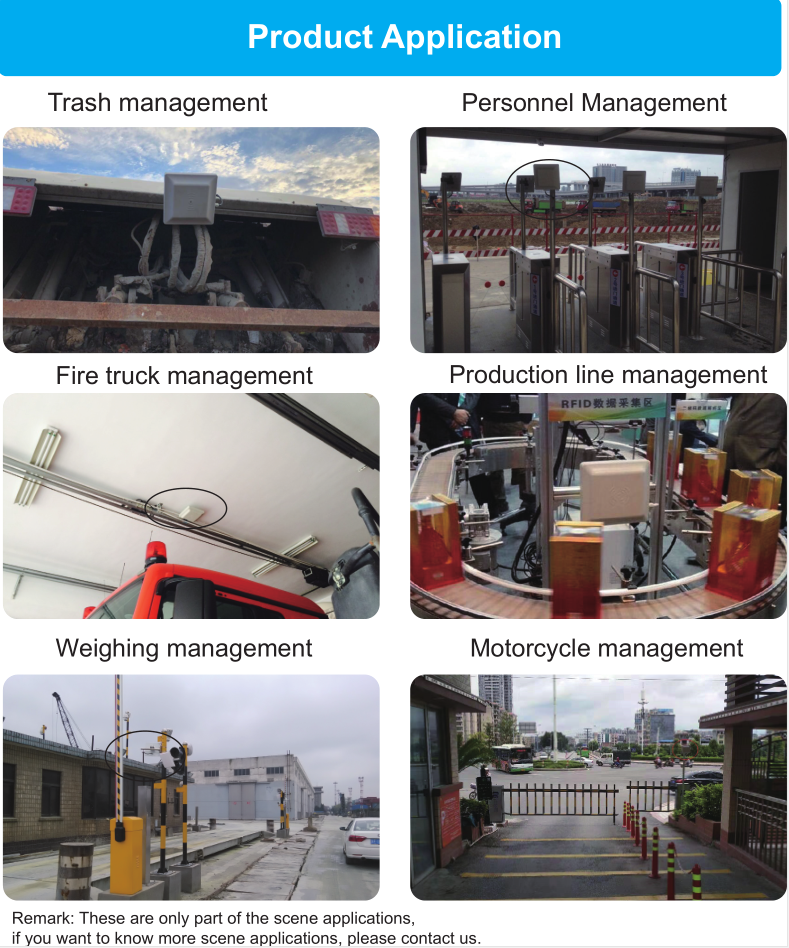
Application
1.Intelligent traffic such as ETC;
2. Customs border-crossing;
3. Parking lot ;
4. Automatic weighting;
5. Container management,pallet management ;
6. Asset management ;
7. Ticketing& access control;
8. Pharmaceuticals such as medical waste management.
Specification
| Item No | |
| DO-8280A | RS232,RS485,Wiegand |
| Performance parameters | |
| Working Frequency | 902~928 MHz or 865~868MHz |
| Protocol | ISO18000-6C(EPC C1 GEN2) |
| Radio frequency power | 0dBm~30dBm(Adjustable) |
| Software & SDK | DEMO and C#,VC,VB,Java,DELPHI, etc., |
| Encryption | Can be directly encrypted, copy prevention. |
| Reading range | stable reading range 5-8M(Depends on tag&environment) |
| Industrial lightning protection | 6000V industrial lightning protection |
| Low temperature protection | Northeast,Northwest extremely cold region,low temperature protection |
| Frequency modulation way | Broad spectrum frequency hopping or fixed frequency |
| Input/output port | Two-way relay output(customized), one-way trigger input |
| Antenna gain | 8dBi circular polarization |
| Working way | Buzzer |
| Power | 12V/3A Adaptor |
| Physical parameters: | |
| Item size | 280x280x40mm |
| Package size | 430x330x130mm |
| Net weight | 3KG |
| Shell material | ABS |
| Working temperature | -20℃~+65℃ |
| Storage temperature | -45℃~+95℃ |
What Is a UHF Middle Range Reader 5-8M?
A UHF Middle Range Reader 5-8M is a fixed RFID reader that operates in the Ultra High Frequency (UHF) band and is designed to read RFID tags at distances ranging from 5 to 8 meters.
The reader communicates with RFID tags compliant with EPC Class1 Gen2 and ISO18000-6C standards. By transmitting radio waves through an integrated or external antenna, it can automatically identify and collect data from tagged objects without direct contact or line-of-sight scanning.
Unlike handheld readers that require manual operation, a fixed UHF middle-range reader continuously monitors RFID tags within its coverage area and automatically sends data to management software.
Common functions include:
- RFID tag reading and writing
- Inventory management
- Asset tracking
- Warehouse automation
- Production monitoring
- Vehicle identification
- Personnel access control
- Logistics tracking
How Does a UHF Middle Range RFID Reader Work?
The reader generates radio frequency signals through its antenna.
The process works as follows:
- The reader transmits UHF RF energy.
- RFID tags within the reading zone receive the signal.
- The tag activates and transmits its EPC data.
- The reader captures and decodes the information.
- Data is transmitted to management software through network interfaces.
- Real-time tracking and reporting become available.
This entire process occurs within milliseconds and can identify hundreds of tags simultaneously.
Typical Technical Specifications
UHF Middle Range Reader 5-8M Specifications
| Parameter | Specification |
|---|---|
| RFID Standard | EPC Class1 Gen2 / ISO18000-6C |
| Frequency Range | 860-960 MHz |
| Reading Distance | 5-8 Meters |
| Writing Distance | 2-5 Meters |
| RF Output Power | 0-30 dBm Adjustable |
| Reading Speed | 200-400 Tags/Second |
| Communication Interface | TCP/IP, RS232, RS485, USB |
| Antenna Type | Integrated or External |
| Anti-Collision Function | Supported |
| GPIO Interface | Supported |
| Operating Voltage | DC 9V-24V |
| Operating Temperature | -20°C to +70°C |
| Protection Rating | IP54-IP65 Optional |
| SDK Support | Java, C#, Python, Android, C++ |
Actual performance depends on antenna gain, tag quality, installation conditions, and environmental interference.
Key Features
Optimized Reading Distance
The 5-8 meter range is considered ideal for many commercial and industrial applications.
Advantages include:
- Accurate reading zones
- Reduced interference
- Controlled tag detection
- Reliable performance
This distance minimizes unwanted tag reads that may occur with ultra-long-range systems.
Fast Multi-Tag Reading
Advanced anti-collision technology enables simultaneous identification of multiple RFID tags.
Benefits include:
- Bulk inventory processing
- Faster logistics operations
- Improved warehouse efficiency
- Reduced labor costs
Flexible Deployment
Readers can be installed in:
- Warehouses
- Factories
- Retail stores
- Parking facilities
- Distribution centers
- Office buildings
High Compatibility
The reader supports a wide range of RFID tags including:
- RFID labels
- RFID hard tags
- On-metal RFID tags
- Vehicle windshield tags
- Asset tracking tags
Real-Time Data Collection
The reader continuously transmits information to management systems, enabling:
- Live inventory updates
- Automated reporting
- Asset visibility
- Workflow optimization
Application Scenarios
Warehouse Inventory Management
Warehouse operators need accurate and efficient inventory control.
The reader can automatically identify:
- Pallets
- Cartons
- Storage bins
- Containers
Benefits include:
- Reduced inventory errors
- Faster stock counting
- Improved warehouse productivity
Logistics and Distribution
Distribution centers use RFID readers to monitor:
- Incoming shipments
- Outgoing orders
- Loading docks
- Package movement
RFID automation reduces manual scanning and increases throughput.
Manufacturing and Production Lines
Manufacturers use RFID readers to track:
- Raw materials
- Components
- Work-in-progress products
- Finished goods
This improves production visibility and traceability.
Asset Tracking
Organizations often manage thousands of valuable assets.
Examples include:
- Computers
- Medical devices
- Laboratory equipment
- Industrial tools
RFID readers provide automated asset identification and monitoring.
Vehicle Management
The 5-8 meter reading range is ideal for:
- Parking systems
- Fleet management
- Vehicle access control
- Logistics vehicle monitoring
Vehicles can be identified automatically without stopping.
Retail Inventory Management
Retailers use RFID technology for:
- Inventory visibility
- Shelf management
- Stock replenishment
- Loss prevention
The reader enables real-time inventory tracking.
Healthcare Equipment Tracking
Hospitals use RFID readers to monitor:
- Medical equipment
- Wheelchairs
- Diagnostic devices
- Mobile assets
This improves equipment utilization and reduces losses.
Pain Points Solved by UHF Middle Range Readers
Manual Inventory Counting
Traditional inventory audits are time-consuming and labor-intensive.
RFID automation allows:
- Rapid inventory verification
- Real-time updates
- Reduced labor requirements
Inventory tasks that once took days can often be completed in hours.
Asset Loss and Misplacement
Organizations frequently lose track of valuable assets.
RFID systems provide:
- Continuous monitoring
- Asset identification
- Location visibility
This reduces losses and improves accountability.
Barcode Scanning Limitations
Barcode systems require:
- Line-of-sight scanning
- Individual item processing
- Manual labor
RFID readers eliminate these limitations through automated bulk reading.
Inventory Inaccuracy
Manual processes often produce inconsistent inventory records.
RFID technology improves:
- Data accuracy
- Inventory visibility
- Operational efficiency
Lack of Real-Time Visibility
Many businesses struggle to monitor inventory movement.
RFID readers provide:
- Live data collection
- Instant reporting
- Better operational control
Competitive Analysis
UHF Middle Range Reader vs Short-Range RFID Reader
| Feature | Middle Range Reader | Short-Range Reader |
|---|---|---|
| Reading Distance | 5-8 m | 0.5-3 m |
| Coverage Area | Larger | Smaller |
| Deployment Flexibility | High | Moderate |
| Inventory Speed | Faster | Slower |
| Cost | Moderate | Lower |
Middle-range readers offer broader coverage and improved efficiency.
UHF Middle Range Reader vs Long-Range RFID Reader
| Feature | Middle Range Reader | Long-Range Reader |
|---|---|---|
| Reading Distance | 5-8 m | 10-20 m |
| Accuracy | Higher | Moderate |
| Controlled Reading Zone | Excellent | Moderate |
| Interference Risk | Lower | Higher |
| Cost | Lower | Higher |
For warehouses and production environments, middle-range readers often provide a better balance between accuracy and coverage.
UHF Middle Range Reader vs Handheld RFID Reader
Middle Range Reader Advantages
- Automated operation
- Continuous monitoring
- Real-time data collection
- Lower labor requirements
Handheld Reader Advantages
- Mobility
- Flexible inspections
- Portable inventory checks
Most enterprises combine fixed readers with handheld devices for maximum efficiency.
UHF Middle Range Reader vs Barcode Scanner
| Feature | RFID Reader | Barcode Scanner |
|---|---|---|
| Line-of-Sight Required | No | Yes |
| Reading Distance | 5-8 m | Few Centimeters |
| Multi-Tag Reading | Yes | No |
| Automation Level | High | Low |
| Inventory Speed | Very Fast | Moderate |
RFID technology significantly improves operational productivity.
UHF Middle Range Reader vs NFC Reader
UHF RFID Advantages
- Longer reading distance
- Simultaneous tag reading
- Better industrial performance
NFC Advantages
- Smartphone compatibility
- Short-range security applications
For logistics and inventory management, UHF RFID is the preferred solution.
Industry Benefits
Improved Operational Efficiency
Automated RFID identification reduces manual processes and increases productivity.
Better Inventory Accuracy
Real-time tracking ensures inventory records remain accurate.
Reduced Labor Costs
Fewer employees are required for inventory counting and asset tracking.
Enhanced Asset Visibility
Organizations gain complete visibility into inventory movement and asset location.
Faster Return on Investment
The combination of labor savings, reduced losses, and operational improvements often delivers a rapid ROI.
Future Trends
Future UHF Middle Range Readers are expected to include:
- AI-powered analytics
- Cloud-based RFID management
- IoT integration
- Edge computing
- Enhanced cybersecurity
- Smart warehouse automation
These technologies will further improve business intelligence and operational efficiency.
Conclusion
A UHF Middle Range Reader 5-8M is an ideal RFID solution for businesses seeking reliable, medium-distance identification and tracking capabilities. Operating on EPC Gen2 and ISO18000-6C standards, it offers the perfect balance between reading range, accuracy, cost, and deployment flexibility.
Whether used in warehouses, logistics centers, manufacturing facilities, retail stores, healthcare institutions, or vehicle management systems, the UHF Middle Range Reader delivers real-time visibility, automated data collection, and significant productivity improvements. Compared with barcode systems, short-range readers, long-range readers, and NFC solutions, it provides a highly effective and scalable RFID platform that helps organizations reduce costs, improve accuracy, and accelerate digital transformation.

Do RFID is a leading China-based manufacturer with over 15 years of experience. We specialize in customized RFID readers, tags, and cards, delivering high-quality, tailored solutions that meet your unique business needs and drive seamless, efficient identification.