July 16, 2026
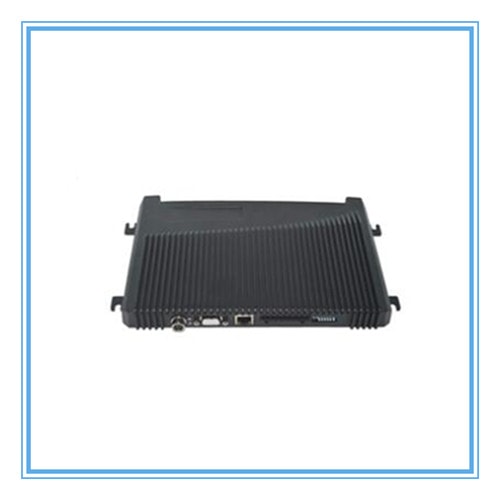
Feature:
- Built in RFID module of INDY R2000
- Multiple tags reading ability
- The material of case is aluminum alloy
- Provide various communication interface, such as RS232, TCP/IP.
- Provide DEMO for register and kill tag
| Performance Parameters | |
| Working Frequency | 902~928 MHz or 865~868MHz |
| Protocol | ISO18000-6C (EPC C1 GEN2) |
| RF connector | 2 SMA outer female connector |
| Chip | Impinj R2000 |
| Radio frequency power | 0~30dBm(Adjustable) |
| Communication port | RS232,TCP/IP or RS232,WIFI |
| Software & SDK | DEMO and C#, VC, Java |
| Tag handling volume | 0-200 tags |
| Storage space | 1M or 8M Flash save without power supply(customized) |
| Real-time clock | without power supply, real-time clock save and working(customized) |
| Frequency modulation | hopping or fixed frequency |
| Input/output port | One-way relay output, One-way I/O input |
| RSSI | RSSI numerical test |
| Physical Parameters | |
| Power | 7.5~12V/3A |
| Working temperature | -20℃~+75℃ |
| Storage temperature | -40℃~+85℃ |
| Item size | 180x131x27mm |
| Package size | 240x210x140mm |
| Net weight | 500g |
| Shell material | Aluminum Alloy |
As RFID technology continues to transform inventory management, logistics tracking, industrial automation, and asset visibility, businesses increasingly require RFID readers that offer high performance, stable operation, and cost-effective deployment. Among the most popular RFID reader solutions in the UHF RFID market is the R2000 UHF 2 Channel Reader.
Powered by the advanced Impinj R2000 RFID chip, this reader delivers excellent tag reading performance, fast identification speed, superior anti-collision capabilities, and flexible antenna configuration. The 2-channel design makes it particularly suitable for medium-sized RFID projects that require reliable performance without the higher cost of 4-channel or 8-channel RFID readers.
In this article, we will explore what an R2000 UHF 2 Channel Reader is, its specifications, operating principles, applications, advantages, the pain points it solves, and how it compares with competing RFID reader technologies.
What Is an R2000 UHF 2 Channel Reader?
An R2000 UHF 2 Channel Reader is a fixed RFID reader equipped with the Impinj R2000 RFID engine and two antenna ports for connecting external UHF RFID antennas.
The reader operates in the Ultra High Frequency (UHF) RFID band and supports EPC Class 1 Gen2 and ISO18000-6C RFID tags. By utilizing the high-performance R2000 chipset, the reader achieves excellent reading sensitivity, long reading distances, and rapid multi-tag processing.
The two antenna channels enable users to create multiple RFID reading zones while maintaining a compact, economical system architecture.
Typical functions include:
- RFID tag reading
- RFID tag writing
- Asset tracking
- Inventory management
- Vehicle identification
- Personnel management
- Production automation
- Warehouse monitoring
What Is the Impinj R2000 Chip?
The Impinj R2000 is one of the most widely used RFID reader chips in the industry.
Its popularity comes from:
- High receive sensitivity
- Excellent anti-collision performance
- Fast tag processing speed
- Long reading distance
- Stable operation
Compared with older RFID chips, the R2000 delivers significantly better performance in dense tag environments.
This makes it suitable for demanding industrial and commercial RFID applications.
How Does an R2000 UHF 2 Channel Reader Work?
The reader communicates with RFID tags via radio-frequency signals.
The process is straightforward:
- The reader transmits RF signals through connected antennas.
- UHF RFID tags receive energy from the signal.
- Tags respond with their unique EPC code.
- The reader captures and decodes the information.
- Data is transmitted to management software through network interfaces.
This process occurs in milliseconds and can identify hundreds of tags simultaneously.
Typical Specifications
R2000 UHF 2 Channel Reader Specifications
| Parameter | Specification |
|---|---|
| RFID Chip | Impinj R2000 |
| RFID Standard | EPC Class1 Gen2 / ISO18000-6C |
| Frequency Range | 860-960 MHz |
| Antenna Ports | 2 Channels |
| Output Power | 0-33 dBm Adjustable |
| Reading Distance | Up to 15 Meters |
| Writing Distance | Up to 8 Meters |
| Reading Speed | 400+ Tags/Second |
| Anti-Collision | Supported |
| Communication Interface | RS232, RS485, TCP/IP, USB |
| GPIO Interface | Supported |
| Operating Voltage | DC 9-24V |
| Operating Temperature | -20°C to +70°C |
| SDK Support | Java, C#, C++, Python |
| Protection Rating | IP54-IP65 Optional |
Actual performance depends on antenna gain, tag type, and installation environment.
Key Features
High-Performance R2000 RFID Engine
The Impinj R2000 chip provides:
- Fast tag processing
- Excellent signal sensitivity
- Stable operation
- High read accuracy
This makes the reader suitable for enterprise-grade RFID deployments.
Two Antenna Ports
The 2-channel design provides flexibility without high cost.
Benefits include:
- Multiple reading zones
- Entrance and exit monitoring
- Dual-side coverage
- Improved system scalability
Long Reading Distance
When paired with high-gain antennas, reading distances can reach:
- 5-8 meters in typical environments
- Up to 15 meters under ideal conditions
This enables efficient monitoring of assets, pallets, vehicles, and inventory.
High-Speed Multi-Tag Reading
The reader supports advanced anti-collision algorithms.
Advantages include:
- Simultaneous tag reading
- Bulk inventory processing
- Reduced scanning time
- Improved productivity
Flexible Integration
The reader can integrate easily with:
- ERP systems
- Warehouse management software
- Manufacturing execution systems
- Asset management platforms
- Access control systems
Application Scenarios
Warehouse Management
Warehouses require real-time inventory visibility.
The R2000 reader can track:
- Pallets
- Cartons
- Storage bins
- Shipping containers
Benefits include:
- Accurate inventory records
- Faster stock audits
- Reduced inventory discrepancies
Asset Tracking
Organizations use RFID readers to manage valuable assets.
Examples include:
- IT equipment
- Medical devices
- Industrial tools
- Laboratory instruments
RFID automation improves accountability and reduces losses.
Manufacturing Automation
Factories deploy RFID readers to monitor:
- Raw materials
- Work-in-progress items
- Finished products
- Production tools
The result is improved traceability and production efficiency.
Smart Shelf Systems
Retail stores use RFID readers for:
- Stock monitoring
- Shelf replenishment
- Loss prevention
- Product tracking
The reader can automatically detect inventory movement.
Access Control
RFID readers can identify:
- Personnel badges
- Vehicle tags
- Visitor credentials
Applications include:
- Parking systems
- Campus management
- Industrial facilities
Logistics and Distribution
Logistics companies use RFID readers to automate:
- Shipment verification
- Package sorting
- Loading dock management
- Vehicle identification
This improves supply chain visibility.
Pain Points Solved by R2000 UHF 2 Channel Readers
Manual Inventory Processes
Traditional inventory counting is labor-intensive.
RFID automation enables:
- Rapid inventory checks
- Real-time updates
- Reduced labor costs
Asset Loss
Organizations frequently lose track of valuable assets.
RFID systems provide:
- Continuous monitoring
- Asset identification
- Location visibility
Low Inventory Accuracy
Manual systems often produce inaccurate data.
The R2000 reader improves:
- Inventory precision
- Data reliability
- Operational decision-making
Slow Warehouse Operations
Barcode scanning requires line-of-sight and manual effort.
RFID technology allows:
- Bulk reading
- Automated identification
- Faster workflows
Lack of Real-Time Visibility
Many businesses struggle to obtain current asset information.
RFID readers deliver:
- Instant data collection
- Live inventory updates
- Better operational control
Competitive Analysis
R2000 2 Channel Reader vs R2000 4 Channel Reader
| Feature | 2 Channel Reader | 4 Channel Reader |
|---|---|---|
| Antenna Ports | 2 | 4 |
| Coverage Area | Medium | Large |
| Cost | Lower | Higher |
| Installation Complexity | Simpler | More Complex |
| Expansion Capability | Moderate | High |
The 2-channel reader is ideal for small and medium RFID deployments, while the 4-channel version is better suited for large-scale projects.
R2000 Reader vs Integrated RFID Reader
R2000 Fixed Reader Advantages
- External antenna flexibility
- Longer reading distance
- Higher performance
- Better scalability
Integrated Reader Advantages
- Compact design
- Easy installation
- Lower cost
For industrial applications, fixed R2000 readers usually provide superior performance.
R2000 Reader vs Handheld RFID Reader
| Feature | Fixed Reader | Handheld Reader |
|---|---|---|
| Continuous Monitoring | Yes | No |
| Automation Level | High | Medium |
| Labor Requirement | Low | Higher |
| Mobility | Limited | Excellent |
| Reading Coverage | Wide | User Controlled |
Fixed readers are preferred for automated environments.
R2000 Reader vs Barcode Scanner
RFID Advantages
- No line-of-sight requirement
- Multiple tag reading
- Longer reading distance
- Real-time automation
Barcode Advantages
- Lower initial cost
- Simpler implementation
For high-volume operations, RFID provides substantially greater efficiency.
Comparison Table
| Feature | RFID Reader | Barcode Scanner |
|---|---|---|
| Reading Distance | Up to 15 m | Few Centimeters |
| Multi-Tag Reading | Yes | No |
| Automation | High | Low |
| Labor Cost | Lower | Higher |
| Data Capacity | High | Limited |
R2000 Reader vs E710 Reader
The Impinj E710 is a newer RFID chipset generation.
R2000 Advantages
- Proven technology
- Lower cost
- Wide compatibility
- Stable ecosystem
E710 Advantages
- Higher sensitivity
- Better performance
- Lower power consumption
For many standard RFID projects, R2000 readers continue to offer excellent value and reliability.
Industry Benefits
Increased Productivity
Automation reduces manual labor and improves workflow efficiency.
Better Asset Visibility
Organizations gain real-time access to inventory and asset data.
Lower Operating Costs
RFID systems reduce labor expenses and operational inefficiencies.
Improved Accuracy
Automated identification minimizes human errors.
Scalable Deployment
The 2-channel architecture provides a balance between cost and expandability.
Future Trends
The future of R2000-based RFID systems includes:
- Cloud-based management
- IoT integration
- AI-powered analytics
- Smart warehouse automation
- Digital twin technologies
- Real-time asset intelligence
Although newer RFID chipsets continue to emerge, the R2000 platform remains one of the most trusted and widely deployed RFID reader technologies worldwide.
Conclusion
The R2000 UHF 2 Channel Reader is a powerful and cost-effective RFID solution designed for inventory management, asset tracking, logistics automation, manufacturing control, and access management. Equipped with the industry-proven Impinj R2000 chip, it delivers long reading distances, fast tag identification, excellent anti-collision performance, and flexible system integration.
Compared with barcode systems, handheld RFID readers, integrated RFID readers, and even larger multi-port RFID readers, the R2000 2 Channel Reader offers an outstanding balance of performance, affordability, scalability, and reliability. For businesses seeking to automate data collection, improve operational visibility, and enhance productivity, it remains one of the most practical RFID reader solutions on the market today.

Do RFID is a leading China-based manufacturer with over 15 years of experience. We specialize in customized RFID readers, tags, and cards, delivering high-quality, tailored solutions that meet your unique business needs and drive seamless, efficient identification.