September 14, 2026
High-Performance Alien H3 UHF RFID Inlay for Industrial and Commercial Applications
The Alien H3 UHF RFID Inlay is a high-performance RFID transponder designed for automatic identification, inventory management, and asset tracking applications. Built with advanced UHF RFID technology, this inlay provides excellent reading performance, stable communication, and flexible integration options for RFID label manufacturers and solution providers.
Available in both wet inlay and dry inlay formats, the Alien H3 RFID inlay can be customized for different application requirements, including retail inventory, logistics management, warehouse automation, supply chain tracking, and industrial asset identification.
With support for the EPC Class 1 Gen 2 / ISO 18000-6C protocol, the Alien H3 UHF RFID inlay delivers fast data transmission and reliable long-range reading capability, making it an ideal choice for modern RFID-enabled systems.
Our company provides Alien H3 UHF Wet Dry Rfid Inlay, Alien H3 UHF Wet Dry Rfid Inlay, and different kinds of sizes paper adhesive labels.
Adhesive paper tag has back gum (making of wet inlay), paper RFID tag doesn’t have back gum (making of dry inlay).
There are 13.65mhz HF RFID inlay and 860-960mhz Alien H3 UHF Wet Dry Rfid Inlay.
What Is an Alien H3 UHF RFID Inlay?
An RFID inlay is the core component inside an RFID label or tag. It consists of an RFID chip and antenna mounted on a substrate material. When combined with a label face material, adhesive layer, and protective coating, it becomes a complete RFID tag.
The Alien H3 UHF RFID Inlay uses the Alien Higgs-3 RFID chip, which is widely recognized for its balance between performance, memory capacity, and cost efficiency.
Unlike traditional barcode labels, UHF RFID technology allows multiple tags to be identified simultaneously without direct line-of-sight scanning.
Key Advantages of Alien H3 RFID Inlay
| Feature | Benefit |
|---|---|
| UHF RFID Technology | Long-distance and fast tag reading |
| EPC Gen2 Protocol | Global compatibility with RFID readers |
| High Sensitivity Antenna Design | Improved reading reliability |
| Compact Structure | Easy integration into different labels |
| Wet and Dry Options | Flexible manufacturing solutions |
| Custom Sizes Available | Suitable for various applications |

Chip Option
| HF ISO14443A | MIFARE Classic® 1K, MIFARE Classic® 4K |
| MIFARE® Mini | |
| MIFARE Ultralight®, MIFARE Ultralight® EV1, MIFARE Ultralight® C | |
| NTAG213 / NTAG215 / NTAG216 | |
| MIFARE ® DESFire® EV1 (2K/4K/8K) | |
| MIFARE® DESFire® EV2 (2K/4K/8K) | |
| MIFARE Plus® (2K/4K) | |
| Topaz 512 | |
| HF ISO15693 | ICODE SLIX, ICODE SLI-S |
| UHF EPC-G2 | Alien H3, Monza 4D, 4E, 4QT, Monza R6, etc |
Specifications:
| Item | Alien H3 UHF Wet Dry Rfid Inlay |
| Material | PET,Aluminum foil etching antenna |
| Frequency | 13.65mhz or 860~960MHZ |
| Chip | All chips are available |
| Size | Dia 25mm,30mm,25*25mm,30*30mm,As per your customized |
| Shape | Round/Square/Rectangle Or Custom made according to your request |
| Application | Logistics, supply chain, retail, asset management and other fields |
| Place of Origin | Guangdong, China (Mainland) |
| MOQ | 500 pcs |
| Free Sample | Free Samples Available at any time |
| Factory experience | Established in 1999, 17 years factory made us more professional |
| Packaging Details | 1.Packaging with or without polybag separate package |
| 2.200pcs,250pcs or 500pcs in 1 box or customized | |
| 3.2000pcs,3000pcs or 5000pcs per carton | |
| 4.1000pcs standard size rfid card, the gross weight is 6kg | |
| Delivery Detail | Shipped in 7-15 days after payment |
What ‘ s The difference between wet and dry RFID inlays?
RFID inlays are considered “wet” if an adhesive is applied to the inlay to adhere it to a pressure-sensitive liner that comprises
the label. Inlays are considered “dry” when the inlay is attached to the label without the use of an adhesive.
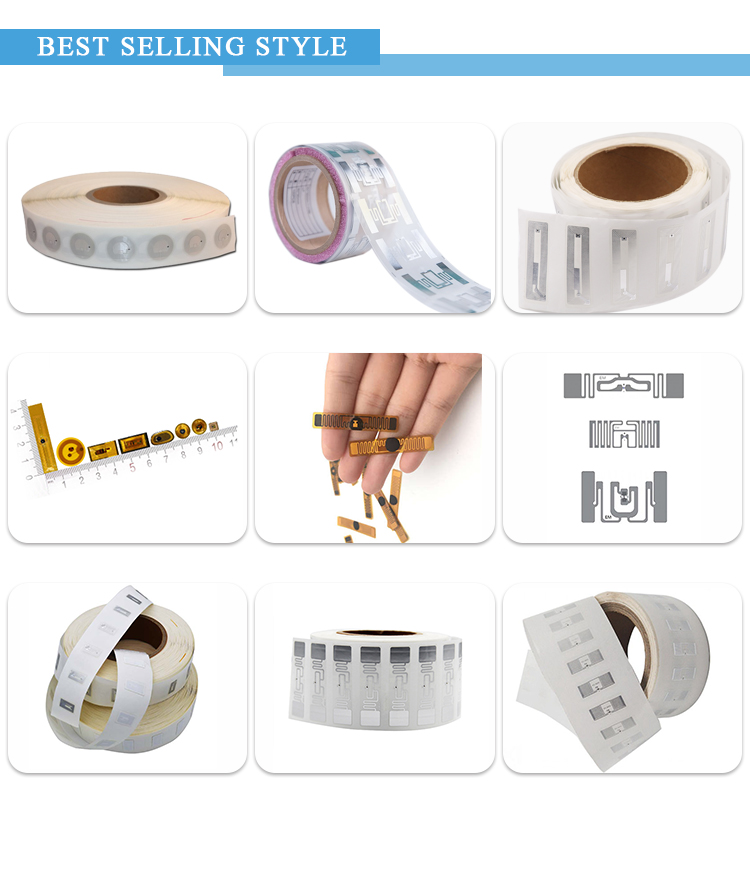

Alien H3 RFID Wet Inlay and Dry Inlay Options
To meet different manufacturing requirements, Alien H3 RFID inlays are available in two main formats: wet inlay and dry inlay.
Wet Inlay
A wet RFID inlay includes an adhesive layer and release liner, allowing it to be directly attached to products or packaging.
Wet inlays are commonly used for producing self-adhesive RFID labels.
Typical applications include:
- Retail product labels
- Shipping labels
- Warehouse identification tags
- Asset tracking stickers
- Inventory management tags
Dry Inlay
A dry RFID inlay does not contain adhesive. It is designed for RFID label manufacturers who integrate the inlay into finished products through lamination, printing, or other converting processes.
Typical applications include:
- RFID cards
- Smart packaging
- Industrial RFID tags
- Custom RFID solutions
Wet Inlay vs Dry Inlay: Which One Should You Choose?
Choosing between wet and dry RFID inlays depends on your production method and final application requirements.
| Comparison | Wet RFID Inlay | Dry RFID Inlay |
|---|---|---|
| Adhesive Layer | Included | Not included |
| Installation Method | Direct sticking | Requires lamination or conversion |
| Manufacturing Process | Faster for label production | More flexible for customization |
| Best For | Self-adhesive RFID labels | RFID products and special tags |
| Cost Efficiency | Suitable for high-volume labels | Suitable for customized production |
| Common Users | Label converters, retailers | RFID manufacturers, integrators |
For standard RFID label production, wet inlays provide a faster solution. For customized RFID products requiring special materials or structures, dry inlays offer greater flexibility.
Why Choose Alien H3 RFID Technology?
The Alien Higgs-3 chip has been widely adopted in supply chain and industrial RFID applications because of its reliable performance and cost-effective design.
Compared with basic RFID solutions, Alien H3 provides improved memory capacity and stable tag identification performance.
Alien H3 vs Other UHF RFID Chips
| RFID Chip | Performance | Typical Applications |
|---|---|---|
| Alien Higgs-3 | Stable performance and cost-effective | Logistics, retail, asset tracking |
| Monza 4D | High reliability and enhanced features | Industrial RFID projects |
| Monza R6 | Advanced sensitivity and performance | High-performance RFID systems |
| Basic UHF Chips | Lower cost option | General identification applications |
Alien H3 remains a popular choice for companies looking for a reliable balance between RFID performance and production cost.
Applications of Alien H3 UHF RFID Inlay
The Alien H3 UHF RFID Inlay is suitable for a wide range of industries that require fast identification, accurate tracking, and automated data collection. Its long-range reading capability and reliable performance make it an effective solution for supply chain and asset management systems.
Retail Inventory Management
Retail companies use UHF RFID labels to improve inventory visibility and reduce manual counting processes.
Common applications include:
- Clothing and footwear tracking
- Product identification
- Smart shelves
- Inventory auditing
- Loss prevention systems
Compared with traditional barcode systems, RFID enables faster scanning of multiple items at the same time, improving operational efficiency.
Logistics and Supply Chain Tracking
The logistics industry requires accurate tracking throughout transportation and storage processes. Alien H3 RFID inlays can be integrated into shipping labels, cartons, and pallets to provide real-time product identification.
Typical applications:
- Warehouse management
- Parcel tracking
- Pallet identification
- Distribution center automation
- Supply chain visibility
| Traditional Barcode | Alien H3 UHF RFID |
|---|---|
| Requires direct scanning | Supports non-contact reading |
| Usually reads one item at a time | Multiple tags can be read simultaneously |
| Limited data storage | Stores electronic identification data |
| Manual inventory processes | Enables automated tracking |
Industrial Asset Tracking
Many industrial companies use RFID technology to manage valuable equipment, tools, and components.
Alien H3 RFID inlays can help organizations:
- Monitor equipment location
- Improve asset utilization
- Reduce missing tools
- Automate maintenance records
- Increase operational efficiency
For industrial environments, customized RFID labels with protective materials can be produced according to temperature, surface, and durability requirements.
Healthcare and Laboratory Management
Healthcare facilities and laboratories require accurate identification and management of medical assets.
Possible applications include:
- Medical equipment tracking
- Laboratory sample management
- Pharmaceutical inventory
- Healthcare supply monitoring
RFID solutions help reduce manual errors and improve traceability.
RFID Label Manufacturing Process with Alien H3 Inlay
The Alien H3 RFID inlay can be converted into finished RFID labels through several manufacturing steps.
A typical RFID label production process includes:
- RFID Inlay Preparation
The Alien H3 chip and antenna structure are inspected to ensure stable performance.
- Label Material Selection
Manufacturers select suitable materials based on application requirements, such as paper, PET, PP, or synthetic materials.
- Lamination and Adhesive Processing
For dry inlays, additional layers are added during the converting process. Wet inlays already include an adhesive layer for direct application.
- Printing and Encoding
RFID labels can be printed with logos, text, barcodes, or QR codes while encoding unique RFID information.
- Quality Testing
Finished RFID labels are tested for:
- Reading performance
- Data accuracy
- Adhesion quality
- Environmental resistance
Customization Options for Alien H3 RFID Inlay
Different industries have different RFID requirements. Therefore, customization is an important part of RFID inlay manufacturing.
Available customization options include:
| Customization Item | Description |
|---|---|
| Size | Custom dimensions according to product requirements |
| Antenna Design | Optimized for different reading environments |
| Shape | Round, square, rectangular, or special designs |
| Adhesive Type | Different adhesives for various surfaces |
| Packaging | Roll form or sheet form supply |
| Printing | Logo, barcode, and product information printing |
Customized RFID inlays can improve reading performance when used on challenging materials such as plastic, glass, or industrial packaging.
Factors Affecting RFID Reading Performance
Although Alien H3 RFID inlays provide reliable performance, actual reading distance depends on several environmental factors.
1. RFID Reader Power
A higher-performance RFID reader can provide a longer communication range.
2. Antenna Design
The antenna size and structure directly influence RFID sensitivity and reading stability.
3. Installation Environment
Materials such as metal and liquid may affect UHF RFID signals.
4. Tag Orientation
The position and angle between the RFID reader antenna and tag antenna can influence performance.
| Factor | Impact on RFID Performance |
|---|---|
| Reader Power | Determines communication range |
| Antenna Size | Affects signal strength |
| Metal Surface | May reduce performance without special design |
| Liquid Environment | Can absorb UHF signals |
| Tag Position | Influences reading consistency |
For special environments, customized RFID inlays or on-metal RFID tags may provide better results.
How to Select the Right UHF RFID Inlay
Selecting the correct RFID inlay depends on your application requirements.
Consider the following factors:
Application Environment
Determine whether the RFID tag will be used on:
- Paper products
- Plastic packaging
- Metal surfaces
- Outdoor equipment
- Industrial products
Reading Distance Requirement
Different applications require different RFID performance levels.
For example:
- Retail inventory may require short-to-medium reading distance.
- Warehouse pallet tracking may require longer reading capability.
Production Method
Choose the appropriate inlay type:
| Requirement | Recommended Choice |
|---|---|
| Self-adhesive RFID labels | Wet RFID Inlay |
| Custom RFID products | Dry RFID Inlay |
| Large-volume label production | Wet Inlay |
| Special material integration | Dry Inlay |
Benefits of Using Alien H3 UHF RFID Inlay
Businesses choose Alien H3 RFID inlays because they offer several practical advantages.
Improved Operational Efficiency
RFID automation reduces manual scanning and improves inventory accuracy.
Faster Data Collection
Multiple RFID tags can be identified simultaneously, saving time in warehouses and retail environments.
Better Product Traceability
RFID provides unique identification throughout the entire product lifecycle.
Flexible Integration
The inlay format allows integration into various label designs and products.
Frequently Asked Questions About Alien H3 RFID Inlay
What frequency does the Alien H3 RFID inlay use?
The Alien H3 RFID inlay operates in the UHF frequency range of 860-960 MHz and supports the EPC Class 1 Gen 2 / ISO 18000-6C standard.
What is the difference between RFID wet inlay and dry inlay?
A wet RFID inlay includes adhesive and can be directly attached to products. A dry RFID inlay does not include adhesive and is designed for further processing by RFID manufacturers.
How far can an Alien H3 RFID tag be read?
The reading distance depends on factors including RFID reader power, antenna design, installation environment, and tag size. Under suitable conditions, UHF RFID tags can achieve several meters of reading range.
Can Alien H3 RFID inlays be customized?
Yes. RFID inlays can be customized in size, shape, antenna design, adhesive type, and packaging format to meet different application requirements.
Are Alien H3 RFID inlays suitable for retail applications?
Yes. Alien H3 RFID inlays are widely used for retail inventory management, apparel tracking, supply chain monitoring, and product identification.
Why Partner with a Professional RFID Inlay Supplier?
Choosing a reliable RFID supplier ensures consistent product quality, stable performance, and efficient project implementation.
A professional supplier can provide:
- High-quality RFID inlays
- Customized antenna solutions
- Flexible production options
- Technical support
- Bulk manufacturing capability
For companies developing RFID systems, selecting the right inlay supplier is essential for achieving reliable identification performance.
Order Alien H3 UHF RFID Wet Dry Inlay for Your RFID Project
The Alien H3 UHF RFID Wet Dry Inlay provides a reliable and flexible foundation for RFID label production, inventory management, logistics tracking, and industrial identification solutions.
With excellent compatibility, customizable options, and proven UHF RFID performance, it is an ideal choice for businesses looking to implement efficient RFID solutions.
Whether you need standard RFID wet inlays, dry inlays for custom products, or large-volume RFID label production, a professional RFID manufacturer can help provide the right solution for your application.