September 14, 2026
In the age of smart logistics, automated warehousing, and retail digitalization, RFID labeling has evolved from a niche technology into a core infrastructure component. Among the most widely adopted solutions is the 860–960MHz UHF RFID paper label powered by the Impinj Monza 4E chip, specifically designed for thermal printer compatibility.
This article provides a deep, practical guide to help manufacturers, distributors, and system integrators understand:
What Monza 4E RFID labels are
How they integrate with thermal printers
Why they outperform traditional barcode labels
How they compare with competing RFID chips (Monza 4D, 4QT, Higgs, UCODE, etc.)
Real-world applications and ROI
If you are building a scalable RFID system for inventory tracking, logistics, retail, or manufacturing, this guide will give you a complete, actionable understanding.
What Are 860–960MHz Monza 4E Paper UHF RFID Labels?
860–960MHz UHF RFID labels are passive radio-frequency identification tags operating in the global UHF band. When embedded with the Monza 4E chip, they provide reliable, cost-effective identification and tracking for high-volume applications.
Key Technical Overview
Frequency: 860–960 MHz (global UHF band)
Protocol: ISO/IEC 18000-6C (EPC Gen2v2)
Chip: Impinj Monza 4E
EPC Memory: 96–496 bits
User Memory: 128 bits
TID: 96-bit unique identifier
Material: Thermal paper / synthetic paper
Operating Mode: Passive (no battery required)
These labels are typically supplied in roll format, making them ideal for thermal RFID printers such as Zebra, SATO, and TSC.
Physical Features: | ||||
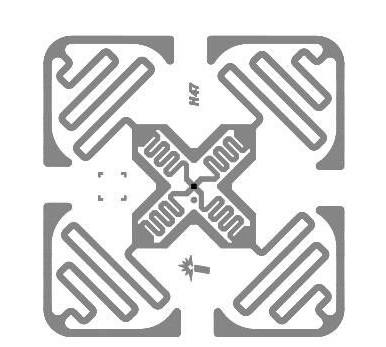
Model | H47 | Name | UHF H47 Adhesive Label | |
Material | PET/Coated Paper | Dimensions | 50x50mm (Customizable) | |
Working Temp | -20℃~+75℃ | Storage Temp | -40℃~+85℃ | |
RFID Features: | ||||
RFID Standard | ISO/IEC 18000-6 TypeC (EPC Gen2) | |||
Chip Type | Impinj Monza M4E | |||
EPC Memory | 128 bits | |||
User Memory | 496 bits | |||
Read Range | 902-928 MHz | 0–20.0m | ||
865-868 MHz | 0–20m | |||
| Other Features: | ||||
Data Storage | > 10 years | |||
Re-write | 100,000 times | |||
Installation | Adhesive | |||
Customization | Printing,Encoding, Designing,Barcode,etc | |||
Application | Ø Apparel management, Ø Logistics management, Ø Airport Luggage Control, Ø Assets management, etc. | |||
Why Monza 4E Is a Preferred RFID Chip
The Monza 4E chip has become a popular industry choice due to its balance between performance, memory, and cost.
Advantages of Monza 4E
Extended EPC memory (up to 496 bits)
Stable read performance in dense environments
Cost-effective for large deployments
Reliable encoding for supply chain systems
Compared to entry-level chips, Monza 4E offers greater flexibility in data storage, making it suitable for applications that require more detailed item information.
How Thermal Printer RFID Labels Work
The Integration Mechanism
Thermal RFID printers perform two operations simultaneously:
Print visual information (barcode, text, logo)
Encode RFID data into the chip
This dual functionality enables a single label to carry both human-readable and machine-readable data.
Printing Process
Label roll loaded into printer
RFID encoding antenna writes EPC data
Thermal head prints barcode and text
Label is verified before output
This process ensures high-speed, real-time labeling in production environments.
Why Thermal Printer Compatibility Matters
Thermal printers are the industry standard for logistics labeling, and compatibility with RFID labels is critical.
Key Benefits
On-demand printing and encoding
Reduced inventory of pre-printed labels
High-speed production lines
Lower operational costs
Material Options for Paper RFID Labels
Monza 4E RFID labels are available in different materials:
1. Thermal Paper
Direct thermal printing
Cost-effective
Short to medium lifespan
2. Synthetic Paper (PP)
Water-resistant
Durable
Suitable for industrial use
3. Coated Paper
Better print quality
Compatible with thermal transfer
Performance Characteristics
Reading Distance
Typically 1–10 meters depending on antenna and environment
Sensitivity
High read sensitivity enables fast scanning
Suitable for bulk reading
Durability
Temperature range: -40°C to 70°C (typical)
Long data retention
Anti-Collision Capability
UHF RFID allows multiple tags to be read simultaneously, which is impossible with barcodes.
Applications of Monza 4E RFID Labels
Retail
Inventory management
Smart shelves
Loss prevention
Logistics & Warehousing
Parcel tracking
Pallet identification
Automated sorting
Manufacturing
Work-in-progress tracking
Asset management
E-commerce
Order fulfillment
Returns processing
Healthcare
Medical supply tracking
Pharmaceutical labeling
Advantages Over Barcode Labels
| Feature | RFID Label | Barcode |
|---|---|---|
| Read Range | Up to 10m | Line-of-sight only |
| Bulk Reading | Yes | No |
| Data Capacity | High | Low |
| Durability | High | Medium |
| Automation | Advanced | Limited |
Monza 4E vs Competing RFID Chips
To understand its value, let’s compare Monza 4E with other popular chips.
Monza 4E vs Monza 4D
| Feature | Monza 4E | Monza 4D |
|---|---|---|
| EPC Memory | Up to 496 bits | 128 bits |
| User Memory | 128 bits | 32 bits |
| Use Case | Advanced tracking | Basic tracking |
| Cost | Medium | Lower |
👉 Conclusion:
Monza 4E offers greater flexibility and scalability.
Monza 4E vs Monza 4QT
| Feature | Monza 4E | Monza 4QT |
|---|---|---|
| User Memory | 128 bits | Up to 512 bits |
| Privacy Features | Basic | QT privacy mode |
| Cost | Lower | Higher |
| Application | General use | Secure applications |
👉 Conclusion:
4QT is better for privacy-sensitive use, but 4E is more cost-efficient.
Monza 4E vs Alien Higgs 3
| Feature | Monza 4E | Higgs 3 |
|---|---|---|
| EPC Memory | Up to 496 bits | 96–496 bits |
| Ecosystem | Strong | Strong |
| Performance | Stable | Stable |
👉 Conclusion:
Both are competitive, but Monza 4E often offers better compatibility with thermal systems.
Monza 4E vs NXP UCODE Series
| Feature | Monza 4E | UCODE 8 |
|---|---|---|
| Memory | Medium | Medium |
| Read Range | High | High |
| Security | Standard | Enhanced |
👉 Conclusion:
UCODE chips are stronger in security, but Monza 4E excels in cost-performance balance.
Key Advantages of Monza 4E Paper RFID Labels
1. Cost Efficiency
Ideal for large-scale deployment
Lower cost than advanced chips
2. High Compatibility
Works with major RFID printers
Supports global standards
3. Scalability
Suitable for millions of labels
Easy system integration
4. Fast Encoding Speed
High throughput
Reduced production delays
Limitations
1. Not Suitable for Metal Surfaces
Requires special anti-metal labels.
2. Limited User Memory
Compared to high-end chips.
3. Environmental Constraints
Paper labels may not withstand extreme conditions.
Customization Options
A professional RFID label manufacturer provides:
Custom sizes (e.g., 48×48 mm, 60×40 mm)
Logo printing
Barcode and QR integration
Pre-encoding services
Adhesive customization
Thermal Printer Compatibility Guide
Compatible Printer Brands
Zebra RFID printers
SATO RFID printers
TSC RFID printers
Printer Requirements
UHF RFID encoding module
Correct antenna alignment
Label calibration
Installation and Usage Tips
Store labels in dry conditions
Avoid bending antenna
Calibrate printer before use
Test encoding before mass production
ROI Analysis
Benefits
Reduced labor cost
Faster inventory tracking
Improved accuracy
Example ROI
Companies adopting RFID labels often see:
20–40% efficiency improvement
50% reduction in inventory errors
Future Trends
Smart Retail
RFID replacing barcodes in major retail chains.
IoT Integration
RFID data connected to cloud systems.
Sustainable Labels
Eco-friendly materials gaining popularity.
Conclusion
The 860–960MHz Monza 4E Paper UHF RFID Label for thermal printers is one of the most practical, scalable, and cost-effective RFID solutions available today.
It offers:
Reliable performance
Strong compatibility with thermal printers
Balanced memory and cost
Wide application across industries
Compared with competitors like Monza 4D, 4QT, Alien Higgs, and NXP UCODE, Monza 4E stands out as the best all-around solution for large-scale deployment.
If you are building a modern RFID system, integrating Monza 4E thermal printable labels is not just a smart choice—it’s a strategic upgrade from traditional labeling.
And in a world where every item can be tracked in real time… even your coffee mug might soon have better logistics than your last online order

Do RFID is a leading China-based manufacturer with over 15 years of experience. We specialize in customized RFID readers, tags, and cards, delivering high-quality, tailored solutions that meet your unique business needs and drive seamless, efficient identification.