September 14, 2026
Our customized NFC MIFARE Ultralight EV1 cards combine reliable contactless communication, compact memory, configurable security features, and professional card personalization in one versatile NFC card solution. Based on the NXP MIFARE Ultralight EV1 IC, these cards are designed for applications such as event ticketing, loyalty programs, access credentials, vouchers, membership cards, product identification, and other limited-use NFC applications.
Operating at 13.56 MHz and compliant with ISO/IEC 14443 Type A, MIFARE Ultralight EV1 provides fast and convenient contactless data communication. The chip is available with 48-byte or 128-byte user memory, depending on the selected version, allowing you to choose a suitable capacity for your application.
We provide customized NFC MIFARE Ultralight EV1 cards with options for card material, size, printing, artwork, encoding, UID management, and other personalization requirements. Whether you need a small batch of branded NFC cards or a large-volume production run, we can manufacture cards according to your technical and visual specifications.
What Is a MIFARE Ultralight EV1 Card?
MIFARE Ultralight EV1 is a contactless IC developed by NXP for smart tickets, cards, tokens, loyalty applications, and other limited-use applications. It is designed for ISO/IEC 14443 Type A environments and provides a practical alternative to traditional paper tickets, magnetic stripe cards, barcodes, and QR codes.
The EV1 family includes versions with 48-byte and 128-byte user memory. The 128-byte version provides 32 pages of freely available user memory, while the 48-byte version provides 12 user-memory pages. In addition to user memory, the IC provides a manufacturer-programmed 7-byte UID, OTP functionality, locking mechanisms, counters, and configurable password protection.
This combination makes MIFARE Ultralight EV1 particularly suitable when you need a cost-effective NFC card with more functionality than a basic NFC memory tag, without the complexity of a high-security smart card.
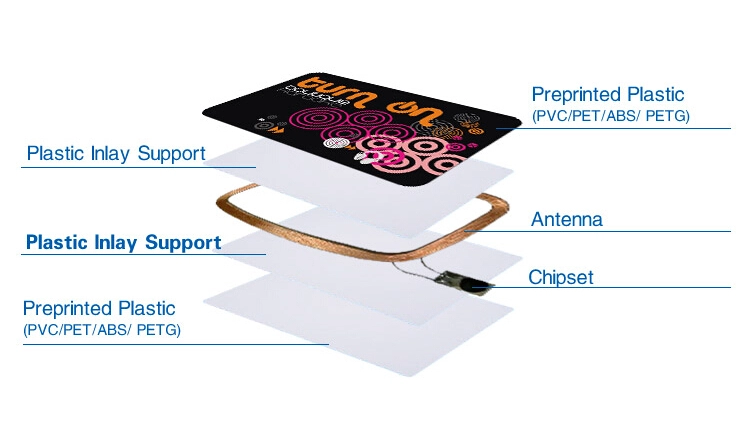
specifications
1.PVC,ABS,PET,PETG etc
2. Available Chips:NXP NTAG213, NTAG215 and NTAG216, NXP MIFARE Ultralight® EV1,etc
3. SGS approved
| Item | Cashless Payment MIFARE Ultralight® NFC Card |
| Chip | MIFARE Ultralight® EV1 |
| Chip Memory | 64 bytes |
| Size | 85*54*0.84mm or customized |
| Printing | CMYK Digital/Offset printing |
| Silk-screen printing | |
| Available craft | Glossy/matt/frosted surface finish |
| Numbering: Laser engrave | |
| Barcode/QR Code printing | |
| Hot stamp: gold or silver | |
| URL,text,number,etc encoding/lock to read only | |
| Application | Event management, Festivel, concert ticket, Access control etc |
Chip Options
| Chip Options | |
| ISO14443A | MIFARE Classic® 1K, MIFARE Classic ® 4K |
| MIFARE® Mini | |
| MIFARE Ultralight ®, MIFARE Ultralight ® EV1, MIFARE Ultralight® C | |
| Ntag213 / Ntag215 / Ntag216 | |
| MIFARE ® DESFire ® EV1 (2K/4K/8K) | |
| MIFARE ® DESFire® EV2 (2K/4K/8K) | |
| MIFARE Plus® (2K/4K) | |
| Topaz 512 | |
| ISO15693 | ICODE SLI-X, ICODE SLI-S |
| 125KHZ | TK4100, EM4200,EM4305, T5577 |
| 860~960Mhz | Alien H3, Impinj M4/M5 |
Remark:
MIFARE and MIFARE Classic are trademarks of NXP B.V.
MIFARE DESFire are registered trademarks of NXP B.V. and are used under license.
MIFARE and MIFARE Plus are registered trademarks of NXP B.V. and are used under license.
MIFARE and MIFARE Ultralight are registered trademarks of NXP B.V. and are used under license.
MIFARE Ultralight EV1 Card Applications
MIFARE Ultralight EV1 is particularly well suited to applications where cards need to be inexpensive, compact, contactless, and suitable for repeated or limited-use transactions.
| Application | How the Card Can Be Used |
|---|---|
| Event Ticketing | Contactless event admission |
| Public Transportation | Limited-use or single-trip ticketing |
| Loyalty Programs | Customer identification and rewards |
| Membership Cards | Contactless member identification |
| Vouchers | Digital voucher identification |
| Stadium Access | Ticket or access validation |
| Amusement Parks | Attraction or admission tickets |
| Festivals | Event passes and credentials |
| Product Identification | NFC-based product records |
| Marketing | NFC-enabled branded cards |
NXP specifically lists public transportation, event ticketing, loyalty programs, day passes, amusement parks, stadiums, festivals, vouchers, and similar applications for the MIFARE Ultralight EV1 family.

Standard size: 85.5*54*0.86 mm
Frequently used RFID chip for hotel key card: NXP MIFARE Classic® 1K (for guest) NXP MIFARE Classic® 4K (for staff) NXP MIFARE Ultralight® EV1,

Key Features of Customized MIFARE Ultralight EV1 Cards
- 13.56 MHz contactless NFC technology
- ISO/IEC 14443 Type A compatibility
- 7-byte manufacturer-programmed UID
- 48-byte or 128-byte user memory options
- 32-bit One-Time Programmable (OTP) area
- Three independent 24-bit one-way counters
- Configurable 32-bit password protection
- Page-level read-only locking
- ECC-based originality signature
- Anti-collision support
- 106 kbit/s data transfer rate
- Contactless power and data transmission
- Up to approximately 100 mm operating distance depending on antenna and reader configuration
- Data retention of up to 10 years
- High write endurance for suitable applications
These features allow the same card platform to support different requirements, from simple NFC identification to controlled-use tickets and loyalty applications.
48-Byte vs. 128-Byte MIFARE Ultralight EV1
Choosing the correct memory version is important when designing an NFC card. MIFARE Ultralight EV1 is available with 48-byte and 128-byte user memory options. NXP identifies these as 384-bit and 1024-bit user-memory versions.
| Feature | 48-Byte EV1 | 128-Byte EV1 |
|---|---|---|
| User Memory | 48 bytes | 128 bytes |
| User Pages | 12 pages | 32 pages |
| Typical Use | Simple identification and ticketing | More data-intensive NFC applications |
| Data Capacity | Basic | Higher |
| Product Cost | Generally lower | Generally higher |
| Suitable For | Simple URLs, IDs, compact data | Loyalty, ticketing, structured data |
| Flexibility | Good | Better |
If your NFC application only requires a small identifier, URL, or limited amount of application data, the 48-byte version may be sufficient. For applications requiring more writable information or a larger data structure, the 128-byte version provides considerably more user memory.
MIFARE Ultralight EV1 Memory Structure
Understanding the memory architecture helps developers determine whether this chip is suitable for a particular application.
The EV1 memory is organized into 4-byte pages. Depending on the chip version, the IC contains either 20 or 41 total pages, including manufacturer data, configuration areas, and user memory. The 48-byte and 128-byte versions provide 12 and 32 freely available user-memory pages respectively.
The card also provides a 32-bit OTP area. OTP functionality can be useful for applications where selected bits need to be permanently changed during a transaction or personalization process.
Lock bits can be used to make memory areas read-only. This is useful for preventing application data from being unintentionally modified after card issuance.
For applications requiring controlled data updates, the three independent 24-bit one-way counters provide an additional mechanism for tracking usage without allowing the counter value to be decreased.
NFC Security Features
MIFARE Ultralight EV1 is not designed as a high-end encrypted smart card, but it includes several features that improve control, data integrity, and resistance to unauthorized modification.
A configurable 32-bit password protection mechanism can be used to restrict access to protected memory operations. The chip also includes an optional limit for unsuccessful authentication attempts.
Other security-related features include:
- Manufacturer-programmed 7-byte UID
- ECC-based originality signature
- Configurable password protection
- Read-only locking
- One-way counters
- OTP memory
- Anti-tearing support for selected memory and configuration operations
For high-security applications involving sensitive credentials, payment information, or advanced cryptographic authentication, a higher-security NFC IC such as MIFARE DESFire or MIFARE Ultralight AES may be more appropriate. The correct chip should always be selected according to the actual security requirements of the system.
MIFARE Ultralight EV1 vs. NTAG213
MIFARE Ultralight EV1 and NTAG213 are both popular 13.56 MHz NFC products, but they are designed with somewhat different application priorities.
| Feature | MIFARE Ultralight EV1 | NTAG213 |
|---|---|---|
| Frequency | 13.56 MHz | 13.56 MHz |
| Interface | ISO/IEC 14443 Type A | ISO/IEC 14443 Type A |
| User Memory | 48 or 128 bytes | 144 bytes total memory class |
| UID | 7 bytes | 7 bytes |
| Password Protection | 32-bit | Password protection available |
| Counters | 3 × 24-bit | Not equivalent |
| OTP | 32-bit | Yes |
| Typical Applications | Tickets, loyalty, limited-use cards | NFC tags, smart marketing, product information |
| Best For | Controlled-use applications | General NFC data sharing |
The best choice depends on how the NFC card will be used. If the project requires counters and ticket-oriented functionality, MIFARE Ultralight EV1 can be a strong option. If the main requirement is storing an NFC URL or product information for smartphone interaction, an NTAG product may be more appropriate.
MIFARE Ultralight EV1 vs. MIFARE Ultralight C
MIFARE Ultralight C is another member of the MIFARE Ultralight family, but its security architecture is different.
| Feature | MIFARE Ultralight EV1 | MIFARE Ultralight C |
|---|---|---|
| User Memory | 48 / 128 bytes | 144 bytes |
| Security | 32-bit password protection | 3DES authentication |
| OTP | 32-bit | 32-bit |
| Counters | 3 × 24-bit | 1 × 16-bit |
| Originality | ECC-based signature | Different security architecture |
| Main Application | Limited-use cards and tickets | Applications requiring 3DES authentication |
NXP positions EV1 as a solution for limited-use smart tickets and cards, while Ultralight C provides 3DES-based cryptographic protection.
Customized NFC Card Options
A major advantage of ordering customized MIFARE Ultralight EV1 cards is that the NFC chip can be integrated into a card designed specifically for your brand or application.
Available customization options may include:
| Customization | Available Options |
|---|---|
| Card Material | PVC, PET, paper and other suitable materials |
| Card Size | Standard or customized dimensions |
| Printing | CMYK, full-color, custom artwork |
| Surface | Matte, glossy or customized finish |
| Logo | Custom brand logo |
| Serial Number | Printed or encoded |
| QR Code | Optional |
| NFC Data | URL, ID or application-specific data |
| Chip Encoding | Customized according to project requirements |
| Packaging | Customized packaging options |
| Shape | Standard card or special-shaped formats |
For large projects, we recommend confirming the card artwork, chip version, memory requirements, encoding structure, and reader compatibility before mass production.
NFC Card Printing and Personalization
Customized printing allows an NFC card to function as both a digital credential and a physical brand asset.
We can support personalized card designs including company logos, product graphics, event information, serial numbers, QR codes, barcodes, and other visual elements.
For projects requiring individual card identification, printed serial numbers can be matched with the electronic card data. This creates a convenient relationship between the physical card and its NFC record.
For example, an event organizer can assign a unique card number to each ticket, while a loyalty program can connect each NFC card with a customer account in the backend system.
NFC Encoding Services
NFC encoding is an important part of customized card production. The physical card provides the NFC interface, while encoded data determines how the card interacts with your application.
Depending on your project, the card may be personalized with:
- Unique identification numbers
- URLs
- Application data
- Product identifiers
- Ticket information
- Membership identifiers
- Predefined NFC records
- Customized data structures
The encoding process should be designed together with the NFC reader, mobile application, backend system, and security requirements.
If your project requires every card to contain unique data, provide the required encoding format or data file before production so the personalization process can be correctly configured.
Why Choose Customized MIFARE Ultralight EV1 Cards?
A standard NFC tag may be suitable for simple projects, but a customized NFC card provides greater control over the physical appearance, data structure, card format, and production process.
The MIFARE Ultralight EV1 platform offers a useful balance between functionality and cost. It provides more application-oriented features than a basic memory-only tag while remaining suitable for high-volume contactless applications.
Customization also allows businesses to maintain consistent branding. The same NFC technology can be integrated into membership cards, event tickets, loyalty cards, promotional cards, or other branded products.
For high-volume projects, selecting the appropriate memory capacity and personalization method can also help control the total cost per card.
How Does an NFC MIFARE Ultralight EV1 Card Work?
The card does not require a battery. When it is placed near a compatible NFC/RFID reader, the reader generates the electromagnetic field required to power the chip and establish communication.
The chip communicates with the reader using the 13.56 MHz contactless interface. The reader can identify the card, access permitted memory areas, and perform the required transaction according to the application software.
Because the card is passive, it can be produced in a thin and convenient form factor. The same basic technology can also be integrated into tickets, paper products, wristbands, key fobs, and other formats.
Reader Compatibility
Before placing a production order, it is important to confirm that your NFC reader supports the MIFARE Ultralight EV1 protocol and the required ISO/IEC 14443 Type A operations.
Reader performance is affected by several factors, including:
- Reader antenna design
- Card antenna size
- Operating environment
- Card material
- Reader output power
- Distance between card and reader
- Orientation of the card
Although NXP specifies an operating distance of up to approximately 100 mm under appropriate conditions, actual read distance should be validated with the intended reader and finished card construction.
MIFARE Ultralight EV1 Card Production Process
A typical customized NFC card project can follow these steps:
1. Requirement Confirmation
Confirm chip version, memory capacity, card dimensions, material, printing, encoding, and application requirements.
2. Artwork Preparation
Provide the card design, logo, colors, serial numbers, QR codes, and other visual elements.
3. Sample Production
Produce samples for appearance, NFC performance, encoding, and reader compatibility testing.
4. Data Preparation
Prepare the card data according to the agreed encoding structure.
5. Mass Production
Manufacture the NFC inlays or cards and perform the required printing and personalization.
6. Quality Inspection
Check card appearance, dimensions, printing, NFC performance, and encoding accuracy.
7. Packaging and Delivery
Package the finished cards according to the agreed requirements and arrange shipment.
This process helps reduce the risk of discovering compatibility or personalization issues after mass production has started.

Quality Control for Customized NFC Cards
Quality control is important for NFC cards because both the physical card and electronic chip need to perform correctly.
A typical quality inspection may include:
- Visual inspection
- Card dimension inspection
- Printing quality inspection
- Antenna and chip function testing
- NFC read/write testing
- Encoding verification
- UID verification where applicable
- Surface and lamination inspection
- Random sampling during production
For projects involving unique card data, data verification is particularly important. The electronic information should correspond correctly to the printed card number or other physical identifier.
MIFARE Ultralight EV1 vs. Other NFC Solutions
Not every NFC project requires the same chip. The following simplified comparison can help with initial selection.
| Requirement | Recommended Direction |
|---|---|
| Simple NFC URL | NTAG series |
| Basic product information | NTAG series |
| Limited-use ticketing | MIFARE Ultralight EV1 |
| Loyalty or voucher applications | MIFARE Ultralight EV1 |
| 3DES-based authentication | MIFARE Ultralight C |
| Advanced cryptographic security | MIFARE Ultralight AES / DESFire |
| Large application data | Higher-memory NFC IC |
| Custom branded NFC card | MIFARE Ultralight EV1 or suitable NFC IC |
The final selection should always be based on the required memory, security level, reader compatibility, transaction design, and total system architecture.
Frequently Asked Questions
What is MIFARE Ultralight EV1?
MIFARE Ultralight EV1 is an NXP contactless IC designed for smart tickets, cards, loyalty applications, and other limited-use contactless applications. It operates at 13.56 MHz and uses the ISO/IEC 14443 Type A interface.
How much memory does MIFARE Ultralight EV1 have?
There are 48-byte and 128-byte user-memory versions. The 128-byte version provides 32 user-memory pages, while the 48-byte version provides 12 user-memory pages.
Does MIFARE Ultralight EV1 have a UID?
Yes. The IC has a manufacturer-programmed 7-byte UID.
Can MIFARE Ultralight EV1 be password protected?
Yes. The chip supports configurable 32-bit password protection, with an optional limit for unsuccessful attempts.
Can the card be customized with a logo?
Yes. Customized printing can include company logos, artwork, serial numbers, QR codes, barcodes, and other design elements according to the project requirements.
Can you encode each card with unique information?
Yes. Individual NFC data can be encoded according to the agreed data structure. Unique card IDs, URLs, application data, or other supported information can be personalized during production.
What is the read range of MIFARE Ultralight EV1?
NXP specifies an operating distance of up to approximately 100 mm, but actual performance depends on antenna geometry, reader configuration, card construction, and operating environment.
Is MIFARE Ultralight EV1 suitable for payment cards?
MIFARE Ultralight EV1 is intended primarily for limited-use applications such as ticketing, loyalty, vouchers, and similar applications. It should not be selected for a payment application simply because it has NFC functionality. Payment systems require appropriate security, certification, and system architecture.
Is MIFARE Ultralight EV1 secure?
It provides several security and integrity features, including password protection, locking functions, OTP, one-way counters, and an ECC-based originality signature. However, it is not equivalent to a high-security payment or advanced cryptographic smart card. The security requirements of the complete system should determine the appropriate IC.
How to Order Customized NFC MIFARE Ultralight EV1 Cards
To request a quotation, please provide the following information:
- Required chip version: 48-byte or 128-byte
- Card dimensions
- Card material
- Quantity
- Artwork or logo
- Required printing method
- NFC encoding requirements
- Reader model or system information, if available
- Required packaging
- Target delivery date

Normal package :
200pcs rfid cards into white box .
5 boxes /10boxes /15boxes into one carton.
Customized Package based on your request.
Our team can then evaluate the technical requirements and recommend a suitable card configuration.
Whether you need customized NFC membership cards, event tickets, loyalty cards, vouchers, or other contactless products, MIFARE Ultralight EV1 provides a practical platform for many low-cost, high-volume NFC applications.