September 14, 2026
Our RFID Epoxy NFC Tag combines contactless NFC technology, QR code identification, custom printing, and an epoxy-coated construction in one compact hang tag. Designed for brands, manufacturers, retailers, event organizers, and smart product applications, this custom RFID hang tag provides a convenient way to connect physical products with digital information.
The tag can be customized with different NFC and RFID chips, printed graphics, serial numbers, QR codes, barcodes, and encoded digital information. Standard round sizes are available, while OEM sizes, shapes, and production details can also be customized according to your requirements.
With no battery and no subscription required, an RFID Epoxy NFC Tag can provide a simple and scalable solution for product identification, digital interaction, authentication, asset management, marketing, and other applications.
What Is an RFID Epoxy NFC Tag?
An RFID Epoxy NFC Tag is a compact identification tag that combines an RFID/NFC chip with a printed surface and an epoxy protective layer. Users can interact with the NFC chip using a compatible NFC-enabled smartphone or reader, while the printed QR code provides an alternative way to access digital information.
The epoxy finish gives the tag a smooth, professional appearance and adds a protective layer around the printed construction. Depending on the selected chip and application, the tag can be programmed with information such as a URL, text, number, or VCard.
For businesses, this means one physical tag can support both digital interaction and visual identification.
NFC and RFID in One Tag
NFC is based on HF RFID technology operating at 13.56 MHz. However, not every RFID technology is NFC. RFID also includes LF and UHF technologies, which are designed for different applications.
For example, NTAG and many MIFARE products are commonly used for NFC-related applications, while UHF RFID chips such as UCODE are generally intended for longer-range RFID identification rather than direct smartphone NFC interaction.
This distinction is important when selecting a chip for your custom RFID hang tag.
RFID Epoxy NFC Tag Features
- No battery required
- No subscription required
- No expiration
- Equipped with NFC (RFID 13.56 MHZ)
- Equipped with QR Code
- Protection of sensitive data
MaterialCoated paper,pvc,epoxy,ABS etcPrintingDouble side CMYK offset printingCraftsNumber printing (Serial No & Chip UID etc), QR, Barcode etc Chip program/encode/lock/encrption will be available as well (URL ,TEXT ,Number and Vcard)Epoxy, Hole punch etcSizeDiameter 25mm,30mm,35mm,40mm,50mm stocke mould size ,0.5-0.9mm thicknessOEM size ,shape and crafts according to you required

RFID Epoxy NFC Tag Specifications
The following specifications summarize the main options available for this product.
| Item | Specification |
|---|---|
| Product | RFID Epoxy NFC Tag |
| NFC frequency | 13.56 MHz |
| LF option | 125 kHz |
| UHF option | 860–960 MHz |
| NFC chips | NTAG, MIFARE, Ultralight, DESFire, ICODE options |
| LF chip | HITAG S256 |
| UHF chip family | UCODE options |
| Printing | Double-sided CMYK offset printing |
| Materials | Coated paper, PVC, epoxy, ABS, etc. |
| Standard sizes | 25 / 30 / 35 / 40 / 50 mm diameter |
| Thickness | 0.5–0.9 mm |
| QR code | Available |
| Barcode | Available |
| Serial number | Available |
| Chip UID | Available |
| Encoding | URL, text, number, VCard |
| Epoxy | Available |
| Hole punch | Available |
| OEM customization | Available |
Actual specifications may vary according to the selected chip, materials, dimensions, and customization requirements.
Available Chips
| LF: 125KHz | HITAG® S256; |
| HF: 13.56MHz | NTAG® 203, NTAG® 213, NTAG® 215, NTAG® 216; MIFARE Classic® 1K, MIFARE Classic® 4K; MIFARE Plus® 1K, MIFARE Plus® 2K, MIFARE Plus® 4K; MIFARE Ultralight® EV1, MIFARE Ultralight® C; MIFARE® DESFire® 2K, MIFARE® DESFire® 4K, MIFARE® DESFire® 8K;ICODE® SLIX, ICODE® SLIX-S, ICODE® SLIX-L, ICODE® SLIX 2 |
| UHF: 860-960MHz | UCODE® etc |
Remark:
NTAG are registered trademarks of NXP B.V. and are used under license.
ICODE are registered trademarks of NXP B.V. and are used under license.
MIFARE and MIFARE Classic are trademarks of NXP B.V.
MIFARE and MIFARE Ultralight are registered trademarks of NXP B.V. and are used under license.
MIFARE and MIFARE Plus are registered trademarks of NXP B.V. and are used under license.
MIFARE DESFire are registered trademarks of NXP B.V. and are used under license
HITAG is a registered trademark of NXP B.V.
NFC + QR Code: Two Ways to Connect
One of the main advantages of this product format is the combination of NFC and QR code technology.
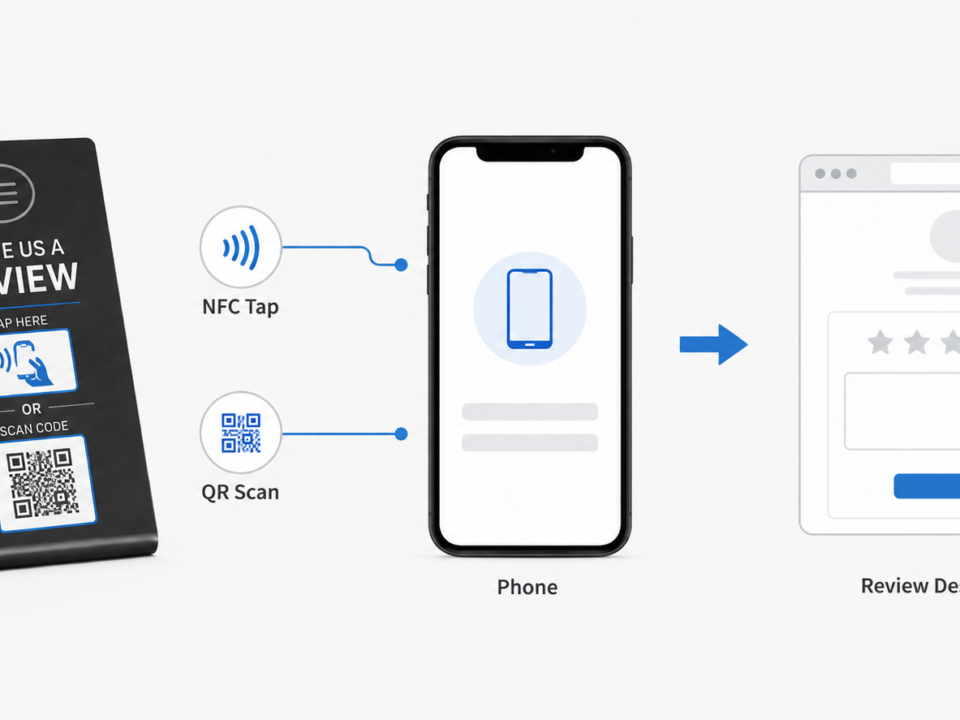
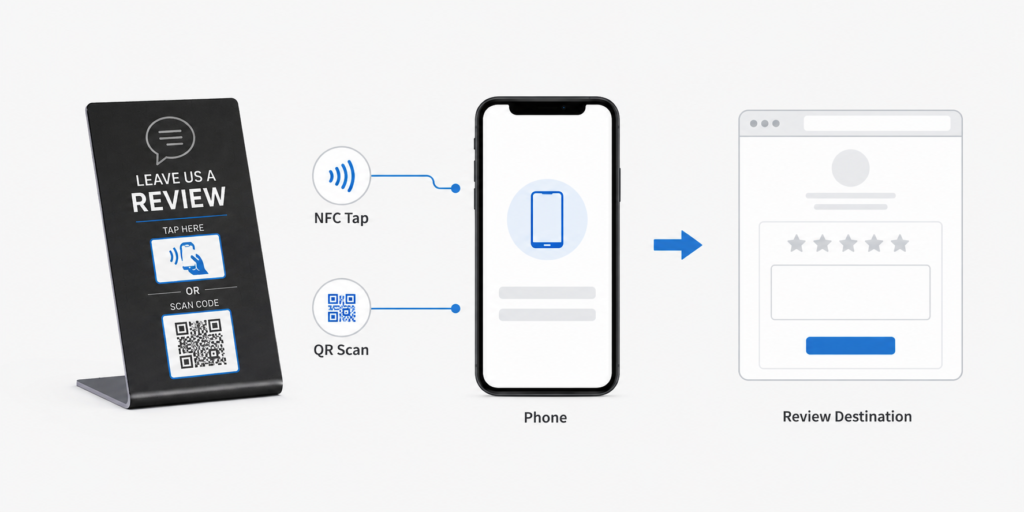
An NFC-enabled smartphone can interact with the embedded NFC chip without requiring the user to manually enter a web address. At the same time, the printed QR code provides a visible alternative for users whose devices or usage conditions are not suitable for NFC.
This dual-access design can be useful for packaging, product information, marketing campaigns, digital business cards, product registration, and other applications.
| NFC | QR Code |
|---|---|
| Contactless interaction | Camera-based scanning |
| No visible code required for interaction | Easy to see and understand |
| Can store or link to digital information | Can link to a URL or digital content |
| Convenient for compatible smartphones | Works with devices that support QR scanning |
| Integrated into the physical tag | Printed directly on the tag |
Using both technologies can give users more than one way to access the same digital destination.
NFC Epoxy Tag vs. Standard Printed Hang Tag
A traditional printed hang tag primarily provides visual information. An NFC-enabled tag can add a digital interaction layer to the same physical product.
| Feature | Standard Printed Hang Tag | RFID Epoxy NFC Tag |
|---|---|---|
| Printed branding | Yes | Yes |
| QR code | Optional | Available |
| NFC interaction | No | Available |
| Digital content | Limited to printed information | Can connect to digital content |
| Serial identification | Printed only | Printed + chip-based options |
| Chip UID | No | Available with compatible RFID/NFC chips |
| Product customization | Yes | Yes |
| Digital customer experience | Limited | Supported |
For brands looking to connect physical products with online content, an RFID Epoxy NFC Tag can extend the function of a conventional hang tag without requiring a separate device or label.
Available RFID and NFC Chip Options
Different projects require different memory capacities, security functions, reading methods, and compatibility requirements. The available chip family can therefore be selected according to the intended application.
The current product offering supports a broad selection of LF, HF/NFC, and UHF RFID chips.
HF / NFC Chips
HF chips operate at 13.56 MHz and are the most relevant choice when the tag needs to support NFC interaction with compatible smartphones or NFC readers.
Available options include:
- NTAG 203
- NTAG 213
- NTAG 215
- NTAG 216
- MIFARE Classic 1K
- MIFARE Classic 4K
- MIFARE Plus 1K
- MIFARE Plus 2K
- MIFARE Plus 4K
- MIFARE Ultralight EV1
- MIFARE Ultralight C
- MIFARE DESFire 2K
- MIFARE DESFire 4K
- MIFARE DESFire 8K
- ICODE SLIX
- ICODE SLIX-S
- ICODE SLIX-L
- ICODE SLIX 2
The best chip depends on the required memory, security, compatibility, and application.
LF and UHF RFID Options
LF RFID options such as HITAG S256 operate at 125 kHz and may be suitable for applications designed around LF RFID infrastructure.
UHF RFID operates in the 860–960 MHz range and is different from NFC. UHF is commonly considered when longer-range RFID identification is required and the application uses compatible UHF readers.
| RFID Technology | Typical Frequency | NFC Smartphone Interaction | Typical Consideration |
|---|---|---|---|
| LF RFID | 125 kHz | No | Specific LF RFID systems |
| HF / NFC | 13.56 MHz | Yes, with compatible chips | Mobile interaction and short-range identification |
| UHF RFID | 860–960 MHz | No | Longer-range RFID identification |
If you are unsure which chip to select, provide your reader model, smartphone requirement, application, and desired read distance so the appropriate technology can be evaluated.
Choosing the Right NFC Chip
There is no single NFC chip that is ideal for every project. Chip selection should be based on how much data needs to be stored, how the tag will be used, and whether security features are required.
For simple URL applications, a compact NFC chip may be sufficient. Projects requiring more memory or more advanced security may need a different chip family.
| Requirement | Chip Selection Consideration |
|---|---|
| Simple URL | Entry-level NTAG options |
| More memory | Higher-capacity NTAG options |
| Digital contact information | NFC chip with sufficient user memory |
| Product identification | NFC/RFID chip + UID/serial number |
| Advanced security | Consider MIFARE Plus or DESFire families |
| UHF inventory identification | Select a compatible UHF RFID chip |
| Existing RFID system | Match the chip to the reader and protocol |
Chip compatibility should always be confirmed before mass production.
Custom Printing and Branding
The RFID Epoxy NFC Tag can be customized to match your brand identity. Double-sided CMYK offset printing can be used for logos, product information, instructions, promotional graphics, serial numbers, and other printed elements.
A custom tag can include both branding and machine-readable information.
Common printed elements include:
- Company logo
- Product name
- Website address
- QR code
- Barcode
- Serial number
- Chip UID
- Product number
- Instructions
- Marketing graphics
- Contact information
For projects that require unique identification, serial numbers and chip UID information can also be incorporated into the production and encoding workflow.
QR Code, Barcode, Serial Number, and Chip UID
Different identification methods serve different purposes. They can also be combined on the same RFID hang tag.
A QR code is convenient for smartphone scanning. A barcode can support conventional inventory or point-of-sale workflows. A serial number provides a visible product identifier, while the chip UID can provide an electronic identifier associated with the RFID/NFC chip.
| Identification Method | Physical / Digital | Typical Use |
|---|---|---|
| QR Code | Printed | Website access and digital content |
| Barcode | Printed | Inventory and product identification |
| Serial Number | Printed | Individual product identification |
| Chip UID | Electronic | RFID/NFC identification |
| NFC Data | Electronic | URL, text, number, VCard, etc. |
The appropriate combination depends on your existing software, readers, database, and product workflow.
Epoxy Finish and Materials
The product can be produced using materials such as coated paper, PVC, epoxy, ABS, and other suitable constructions depending on the design.
The epoxy finish creates a smooth coated surface and gives the tag a more distinctive appearance than a basic paper label. It can be particularly useful when the hang tag is part of a premium product presentation.
Material selection should be based on the required appearance, flexibility, thickness, printing method, attachment method, and application environment.
Because different materials and constructions can affect RFID performance, the final material and chip combination should be tested before large-scale production.
Standard Sizes and Custom Shapes
Standard round mold sizes include 25 mm, 30 mm, 35 mm, 40 mm, and 50 mm diameters. The listed product thickness is approximately 0.5–0.9 mm.
Custom OEM sizes and shapes can also be considered for projects that require a specific visual identity or attachment format.
| Option | Specification |
|---|---|
| Diameter | 25 mm |
| Diameter | 30 mm |
| Diameter | 35 mm |
| Diameter | 40 mm |
| Diameter | 50 mm |
| Thickness | Approx. 0.5–0.9 mm |
| Shape | Round or OEM custom shape |
| Hole | Hole punch available |
| Custom production | Available according to requirements |
For a custom design, provide the desired dimensions, artwork, hole position, chip type, and intended application when requesting a quotation.
How Does an RFID Epoxy NFC Tag Work?
The basic workflow is straightforward.
First, an RFID/NFC chip is integrated into the tag structure. The front and back surfaces can then be printed with the required graphics, identification information, and QR code.
The chip can be programmed or encoded with the required information, such as a URL, text, number, or VCard. Depending on the selected chip, additional locking, encryption, or security functions may be available.
Finally, an epoxy finish can be applied to complete the tag construction.
Typical Production Workflow
- Confirm the application and RFID technology.
- Select the appropriate chip.
- Confirm tag dimensions and material.
- Prepare the artwork.
- Generate QR codes and serial numbers if required.
- Print the tag.
- Encode or program the RFID/NFC chips.
- Apply the epoxy finish.
- Perform quality control and verification.
- Pack the finished tags for delivery.
For large projects, chip encoding and printed serial numbers can be coordinated to create individually identifiable tags.
Where Can Custom RFID NFC Hang Tags Be Used?
The compact format allows the tag to be attached to products, packaging, displays, or other physical items.
Retail and Product Marketing
Brands can use an NFC hang tag to connect physical products with product information, promotional pages, websites, registration forms, or other digital content.
Product Identification
A unique serial number, QR code, and RFID/NFC chip can be combined to support product-level identification.
Smart Packaging
An NFC-enabled hang tag can add a digital interaction layer to conventional packaging without significantly changing the visual appearance of the product.
Events and Promotions
Custom NFC tags can be used to connect physical promotional materials with digital landing pages, registration information, or campaign content.
Digital Business Information
When encoded with VCard information or a digital contact link, the tag can provide a convenient way to share contact information through an NFC-enabled device.
Asset and Inventory Applications
When the appropriate RFID technology and reader system are selected, the tag can also be incorporated into identification and inventory workflows.
The actual application should determine the RFID frequency, chip, memory, encoding method, and tag construction.
Custom RFID Epoxy NFC Tag vs. Other RFID Formats
Different RFID products are designed for different environments and attachment methods.
| Product Type | Main Advantage | Typical Application |
|---|---|---|
| Epoxy NFC Hang Tag | Branding + NFC + QR code | Retail and smart products |
| Paper RFID Label | Lightweight and economical | Packaging and labeling |
| PVC RFID Card | Rigid card format | Identification and access applications |
| RFID Key Fob | Compact attachment | Access and identification |
| UHF RFID Label | Longer-range RFID | Inventory and logistics |
| NFC Sticker | Easy surface attachment | Marketing and digital interaction |
The epoxy hang tag is particularly useful when the tag itself is part of the product presentation and needs to combine physical branding with digital functionality.
Why Use Both NFC and RFID Identification?
A major benefit of this product family is flexibility. One tag can be configured for a particular RFID infrastructure while also providing printed information and, where applicable, NFC interaction.
For example, an NFC-based tag can provide a smartphone-friendly experience, while a serial number or QR code can support visual identification. A UHF version may instead be selected when the project is based on a UHF RFID reader system.
The important point is to select the technology based on the actual workflow rather than choosing a chip simply because it is an RFID chip.
NFC Tag Encoding Options
The available programming options can include URL, text, number, and VCard data.
A URL is useful when the tag needs to direct users to a website or landing page. Text can be used for basic information, while a VCard can provide contact information.
For projects with unique tags, encoding can also be coordinated with serial numbers or other identifiers.
Before production, it is recommended to define whether the NFC data will remain fixed or whether the tag will be programmed later as part of your own workflow.
Security and Data Protection
Some RFID/NFC chip families provide security and access-control capabilities in addition to basic data storage. The suitable security level depends on the selected chip and application.
For example, a simple marketing URL generally has different requirements from a product authentication or secure identification system.
If your project involves sensitive information, authentication, encryption, password protection, or secure data exchange, specify these requirements before selecting the chip.
Security capabilities should be evaluated at the chip and system level rather than assuming that every NFC tag provides the same level of protection.
OEM and Custom Manufacturing
OEM customization allows the RFID Epoxy NFC Tag to be adapted to your product design and technical requirements.
Customization can include:
- NFC or RFID chip selection
- Tag diameter
- Custom shape
- Material construction
- Epoxy finish
- Double-sided printing
- QR code
- Barcode
- Serial number
- Chip UID
- Hole punch
- Data encoding
- Chip locking or security configuration where supported
For repeat production, a defined specification can be established so that subsequent orders maintain consistent dimensions, chip configuration, artwork, and encoding requirements.
What Information Should You Provide for a Quote?
Providing complete specifications helps reduce quotation time and makes it easier to recommend a suitable chip and construction.
Please include the following information where available:
| Specification | Example |
|---|---|
| Product type | RFID Epoxy NFC Hang Tag |
| Chip | NTAG213 / NTAG215 / NTAG216 |
| Frequency | 13.56 MHz |
| Size | 30 mm diameter |
| Shape | Round |
| Thickness | 0.5–0.9 mm |
| Printing | Double-sided CMYK |
| QR code | Yes |
| Serial number | Yes |
| Chip UID | Required / Not required |
| Encoding | URL / Text / VCard |
| Hole punch | Yes / No |
| Quantity | Required quantity |
| Artwork | Supplied by customer |
If you do not know which chip is suitable, provide the intended application and reader or smartphone requirements instead. The chip can then be selected based on the actual use case.
Frequently Asked Questions
Is an RFID Epoxy NFC Tag the same as an NFC tag?
Not necessarily. NFC is a specific short-range technology based on HF RFID at 13.56 MHz. The product family can also be configured with other RFID technologies, including LF and UHF, depending on the selected chip.
Can the tag work with a smartphone?
When a compatible 13.56 MHz NFC chip is selected, the tag can be designed for NFC interaction with compatible NFC-enabled smartphones. UHF and LF versions are intended for their respective RFID reader systems rather than normal smartphone NFC interaction.
Can I print a QR code on the NFC tag?
Yes. QR codes can be included together with NFC functionality. This provides users with both a contactless NFC option and a camera-based QR code option.
Can each tag have a unique serial number?
Yes. Serial numbers, chip UID information, QR codes, and other identifiers can be incorporated into the production process according to the project requirements.
Can the NFC chip be programmed?
Yes. Available programming options include URL, text, number, and VCard data. Programming, locking, and security functions depend on the selected chip.
What sizes are available?
Standard round sizes include 25, 30, 35, 40, and 50 mm. Custom OEM sizes and shapes can also be discussed.
Can the RFID Epoxy NFC Tag be customized with our logo?
Yes. The tag supports custom printing, including double-sided CMYK printing, logos, QR codes, barcodes, serial numbers, and other artwork.
Which NFC chip should I choose?
The answer depends on your application. Simple URL projects may use a basic NTAG chip, while projects requiring greater memory or advanced security may require another chip family. If you provide your application and requirements, the appropriate chip can be evaluated.
Request a Custom RFID Epoxy NFC Tag
Whether you need a small batch of branded NFC hang tags or a larger OEM RFID project, the tag can be customized around your required chip, size, material, printing, encoding, and identification system.
When requesting a quotation, please provide your preferred tag size, quantity, chip type if known, artwork, QR code requirements, encoding requirements, and intended application.
If you are not sure which RFID or NFC chip to use, you can also provide your reader model, smartphone requirements, desired data, and application environment. These details can help determine the appropriate RFID technology and tag configuration for your project.
Choose the chip, shape, size, printing, and encoding options that fit your application, and create an RFID Epoxy NFC Tag that connects your physical products with digital information.